Dog Trainers in Champaign, IL

Champaign-Urbana is a university town of about 130,000 people wrapped around a campus of roughly 57,000 students, and that single fact shapes the dog-training market here more than anything else. Two things follow from it. The first is churn: a large share of the dog-owning population arrives in August and leaves in May, which produces a steady supply of adolescent dogs whose owners need results inside one academic year rather than over a leisurely eighteen months. The second is that a lot of what looks like dog training here is really a club, a class series or a volunteer organization rather than a business you can hire on a Tuesday afternoon — and telling those apart is most of the work of choosing well.The good news is that the genuinely bookable supply, though small, is unusually varied for a market this size. Champaign proper has a private board-and-train operation, a long-running class facility with a public registration calendar, a behavior and wellness practice that works in person locally and online worldwide, and a boarding kennel that also trains. Urbana has an AKC-licensed training club that runs puppy, obedience, rally, agility, tracking and nosework classes four times a year at fees no private practice can match. Rantoul has a mobile trainer who does every session in the client’s own home. Monticello has a group-class and in-home trainer running the APDT Canine Life and Social Skills curriculum. Out east toward the Indiana line there is a former police-K9 handler running a full facility, and country kennels that take dogs in residence for weeks at a time. What the metro does NOT have, at any price, is depth in off-leash and e-collar work, protection training, or service-dog programs — there is one provider for the first two and effectively none for the third, and this page will send you elsewhere for those rather than pretend otherwise.Geography matters here in a way it does not in a suburban metro. Champaign, Urbana and Savoy run together into one continuous built-up area you can cross in fifteen minutes, and Mahomet is another ten west on I-74. After that the map opens into farmland: Rantoul is fifteen miles north on I-57, Monticello twenty-five west, Tolono and Philo ten south, and Danville is a full thirty-five miles east on I-74 at the Indiana state line. A trainer in Tilton or Fairmount is not a Champaign trainer who happens to live out of town — that is a forty-minute drive each way, twice, for every session, and it is the single most common reason a training plan quietly stops after week three. Ask about travel fees and about who drives before you book anything east of St. Joseph.One local quirk worth knowing before you start: off-leash space in Champaign-Urbana is membership-gated. Both cities have a fenced dog park and both charge an annual membership with a gate fob. Urbana’s park district also asks visitors to keep pets out of its natural areas entirely — not merely leashed. So if your training plan depends on regular off-leash practice in a safe enclosure, budget for a membership or a Sniffspot rental, and do not assume you can improvise it in a public park.
- Top-Rated Dog Trainers in Champaign
- What Kind of Training Does Your Dog Need?
- Training Formats and Typical US Dog-Training Prices
- Dog Training Schools & Classes in Champaign
- How to Pick the Right Trainer
- Dog Training by Champaign Neighborhood
- Champaign Dog Training Resources
- Common Questions About Dog Training in Champaign
- Start Here
This page is your starting point. Whether you need puppy socialization, basic obedience, off-leash training, or help with a serious behavior problem, we’ll help you understand your options, what to expect, and how to connect with the right professional in Champaign.
Top-Rated Dog Trainers in Champaign
Compare Champaign’s top-rated dog trainers below — each listing shows real Google reviews and, where we’ve checked them, certified credentials, so you can reach out with confidence.

What Kind of Training Does Your Dog Need?
Before you start comparing trainers, figure out which category your dog falls into. This determines the type of training, the format, and the realistic timeline.
Puppy (8 weeks to 5 months)
Priority: socialization and foundation habits. This is the most time-sensitive stage — the critical socialization window closes around 16 weeks, and what your puppy is exposed to during this period shapes their temperament permanently. Group puppy classes are ideal. Read our full guide: Puppy Training in Champaign.
Adolescent dog (5 to 18 months)
Priority: obedience and impulse control. This is the stage where most owners hit the wall — the cute puppy has turned into a teenager who jumps on guests, pulls on the leash, and has developed selective hearing. Group obedience classes or private lessons work well here. Consistency is everything.
Adult dog — new to training
Priority: basic obedience and household manners. It’s never too late. Adult dogs are often faster learners than puppies because they have longer attention spans.
Adult dog — specific behavior issue
Priority: targeted behavior modification. Reactivity, aggression, separation anxiety, resource guarding, excessive barking. These issues need a qualified trainer or behaviorist — not a group class. Start with a behavior consultation.
Any dog — intensive training needed fast
Priority: results on a compressed timeline. Board-and-train programs offer intensive daily training over 2 to 6 weeks — the fastest path to results when done right.
Training Formats and Typical US Dog-Training Prices
The formats below are the same everywhere; the figures are national ranges, not Champaign rates. Prices vary by city and by trainer — confirm directly with the trainer before you book.
Group classes
Best for socialization and foundation obedience. Meet once a week for 5 to 6 weeks with other dogs. Most affordable option. Typical US range: $150 to $300 for a full course.
Private lessons
One-on-one with a trainer at their facility or your home. Best for specific goals, reactive dogs, or customized plans. Typical US range: $100 to $175 per session (facility) or $125 to $200 (in-home).
Day training
Your dog goes to the trainer during the day and comes home at night. Great for working professionals. Typical US range: $75 to $125 per day.
Board and train
Your dog stays with the trainer for 2 to 6 weeks. Most intensive option. Typical US range: $1,500 to $6,000+ depending on length and complexity.
Behavior consultation
A diagnostic assessment for serious behavioral issues — a professional evaluation that produces a treatment plan. Typical US range: $200 to $400 for the initial assessment.
Dog Training Schools & Classes in Champaign
Looking for a dog training school or group obedience classes in Champaign? Plenty of local trainers and facilities run weekly group classes — a structured, affordable way to cover socialization and basic obedience alongside other dogs. Browse dog obedience classes in Champaign, or use the trainer directory above to compare every dog school and trainer in the Champaign area by specialty, reviews and price.
How to Pick the Right Trainer
Choosing a dog trainer is a lot like choosing a doctor — credentials matter, but so does communication style, philosophy, and whether you trust them with someone you care about.
Training methodology
This is the most important factor and the one most people skip. Dog training ranges from purely positive reinforcement (rewards only) to balanced training (rewards plus corrections). There is no single “right” approach — but there IS a right approach for your dog. A fearful rescue needs a different approach than a confident, drive-y working breed. Ask every trainer what tools and methods they use, and don’t commit until you understand and agree with their philosophy.
Credentials
Look for recognized certifications — CPDT-KA (Certified Professional Dog Trainer), KPA-CTP (Karen Pryor Academy), IACP, AKC CGC Evaluator, or for complex behavior, a CAAB or veterinary behaviorist. Credentials aren’t everything — some of the best trainers built their skills through decades of hands-on experience — but a trainer with no credentials AND no verifiable track record is a risk.
Transparency — red flags and green flags
Red flags: won’t let you observe a class or tour the facility, gets defensive about methodology, guarantees specific results, pressures you to sign up immediately, or trash-talks every other trainer. Green flags: welcomes questions, offers to let you observe a class first, gives references, is honest about what training can and cannot achieve, and tells you upfront if your dog’s issue is outside their expertise.
Dog Training by Champaign Neighborhood
The Champaign metro is large, and driving 45 minutes for a weekly class isn’t sustainable for most people. Here’s a quick overview of training availability by area:
Campustown, Downtown Champaign and the University District
The dense core between Green Street, the Main Quad and downtown Champaign is where the metro’s most concentrated dog problems live. Apartment blocks, shared stairwells, narrow sidewalks and a pedestrian population that peaks and empties on a class timetable produce a very specific complaint list: leash pulling, door-dashing into a shared hallway, barking at the dog on the other side of a thin wall, and reactivity that exists only because there is no way to add distance on a street this busy. Two other pressures are particular to a campus town. Adolescent dogs acquired in the first weeks of a semester hit their difficult phase around midterms, when their owner’s schedule is worst; and a serious share of local dogs are living in a rental with a weight limit, a breed clause and a neighbor who will complain. A trainer who works this district should be able to talk fluently about apartment management — settle on a mat, quiet on cue, controlled greetings at a doorway — and not just about obedience commands in an open field.
West and Southwest Champaign, Savoy and the Willard Airport edge
South of Windsor Road and west of Mattis the town turns into single-family subdivisions with fenced yards, attached garages and quiet cul-de-sacs, running through Robeson Meadows and Ironwood down into Savoy and out toward Willard Airport. The problem list flips completely. Here the dogs get exercise but very little structure: recall that works in the backyard and fails everywhere else, fence-running, over-aroused greetings at the front door, and the classic profile of a dog that is perfect at home and impossible on a walk. This is also where most of the metro’s off-leash-capable space sits — the Champaign Bark District is at Windsor and Rising, on the far southwest edge — so it is the natural catchment for anyone building toward off-leash reliability. Savoy in particular is close enough to Champaign that a Champaign trainer will usually treat it as a local call with no travel fee; check, because a few price by drive time rather than by town.
North Champaign, Garden Hills and the Bradley-Mattis corridor
The blocks north of Bradley Avenue — Garden Hills, Beardsley Park, the streets running out toward Market Street and the interstate — are older, denser and more mixed than the southwest, with smaller lots, more unfenced yards, more dogs living on chains or tie-outs by inheritance rather than choice, and a strong word-of-mouth network that operates entirely on Facebook rather than through search. Two practical consequences. First, a good deal of the real training supply in this part of town is a person with a phone number and a Facebook page, not a website — which is exactly why the directory’s contact details matter more here than a slick site does. Second, cost sensitivity is real: a four-week board-and-train at two thousand dollars is not the relevant option, and the honest recommendation for most households here is a group class series or a handful of in-home lessons with homework between them.
Urbana — downtown, west Urbana and the Philo Road corridor
Urbana is the quieter half of the metro and the half with the deepest class-based training tradition. West Urbana, between the campus and downtown, is a grid of older houses with mature trees, porch-front streets and a lot of walking — which produces leash-manners work and dog-to-dog reactivity on narrow sidewalks. East of Vine and down the Philo Road corridor the lots get bigger and the picture looks more suburban. Urbana’s specific advantage is infrastructure: the AKC-licensed training club runs a facility on the east edge of town with a published class calendar and fees in the eighty-to-one-hundred-and-twenty-dollar range for a four- to eight-week course, and the Kickapoo Rail Trail starts from Weaver Park on East Main and gives you six and a half paved miles of low-traffic practice ground heading east. If you want a cheap, competent, structured start for a normal family dog, this is where the metro is strongest.
Mahomet and the Sangamon River corridor
Mahomet sits ten minutes west of Champaign on I-74 and functions as the metro’s commuter village: newer subdivisions, larger lots, a lot of first dogs in first houses, and Lake of the Woods Forest Preserve on the doorstep. It is a genuine gap in local supply. The Google map for Mahomet returns a veterinary practice, a feed store, a human gym and an equestrian ranch before it returns a dog trainer, and none of the businesses in the village publish a bookable training program. In practice Mahomet households are served from Champaign, twelve minutes east, or from the Monticello trainer fifteen minutes southwest, and both treat it as in-area. The one thing Mahomet does have in abundance is somewhere to practice: the forest preserve is nine hundred acres, allows leashed dogs, and has a paved path linking the two parking lots that makes a very good place to proof loose-leash walking around distraction.
Rantoul and the northern county — Thomasboro, Gifford, Ludlow, Paxton
Rantoul is fifteen miles north on I-57, built around the former Chanute Air Force Base, and the villages beyond it thin out fast. This is the part of the metro where a mobile trainer is not a luxury but the only realistic model — and Rantoul has one, working entirely in clients’ homes with a published price list and an explicit in-area/out-of-area travel band drawn at about forty minutes’ drive from the trainer’s house. That structure tells you something useful about the whole north county: expect to pay a travel differential of roughly fifteen to twenty dollars a session once you are past Gifford or Ludlow, and expect group classes to mean a drive into Urbana. The upside is space. Nobody up here is short of somewhere to work a long line, and the recall and boundary problems that dominate rural properties respond well to the in-home format.
Monticello, Bement and Piatt County
Monticello is twenty-five miles west of Champaign on the far side of the Sangamon, a town of about six thousand with its own small but real training supply: group obedience classes on the APDT Canine Life and Social Skills curriculum capped at six dogs, agility classes, private sessions, in-home visits and online courses, running out of a room at a local kennel rather than a dedicated facility. That arrangement — a trainer renting space from a boarding business — is common in towns this size and is worth understanding, because it means the training business and the kennel at the same street address are separate companies with separate phone numbers. Piatt County households also sit within easy reach of Decatur and Bloomington-Normal, both of which are closer than Danville, so a Monticello owner shopping for a specialty this metro lacks has better options west than east.
The south and east village ring — Tolono, Philo, Sidney, St. Joseph, Homer
The ring of villages ten to fifteen miles out from Urbana on the south and east sides is farmland with a train line through it, and its dog population skews sporting and working: retrievers, pointers, farm dogs with a job. That is reflected in what is actually available. Tolono has a hunting preserve and kennel that takes dogs in residence for gun-dog and general training at a published weekly rate, which is a genuinely different product from a suburban board-and-train and suits a different dog. St. Joseph is the eastern end of the paved Kickapoo Rail Trail. Homer Lake Forest Preserve, twenty minutes east of downtown Urbana, is eight hundred-odd acres with a large trail network and allows leashed dogs, which makes it the best distraction-proofing ground on this side of the metro. For pet-dog obedience and puppy work, though, this ring is served from Champaign and Urbana — nothing in these villages runs a class calendar.
Danville, Tilton and Vermilion County
Danville is thirty-five miles east of Champaign on I-74, effectively at the Indiana line, and it is a separate market that this hub reaches rather than contains. Some of the metro’s most capable providers are here: a full-service facility in Tilton run by a former police-K9 handler, offering board-and-train, group obedience, private training, agility, day school, in-home puppy work, therapy-dog training, personal protection and police-K9 work — the single deepest service menu anywhere in this catchment — and a family kennel near Fairmount running gun-dog and board-and-train obedience programs with three-month minimums. Danville proper, though, has no trainer of its own that we know of: what the map shows there is a boarding kennel, a breeder-photographer and a couple of listings that other directories describe as training but that publish nothing of the sort on their own pages. If you live in Danville, the honest picture is that your nearest bookable trainer is in Tilton, five minutes south, not in the city itself.
Champaign Dog Training Resources
Beyond professional training, Champaign has some excellent resources for dog owners.
Parks and off-leash areas
- Champaign Bark District — 4409 Copper Ridge Rd (Windsor & Rising) — Champaign’s fenced off-leash park, run by the Champaign Park District and open dawn to dusk on about seven acres on the southwest edge of town. It is membership-gated, not drop-in: fifty dollars a year for the first dog and ten for each additional one, plus a gate fob, with a ten-dollar monthly trial pass available in person. Dogs need current vaccinations and county registration tags, must be leashed entering and leaving, and the handler must be sixteen or over with no more than three dogs at a time; puppies under four months and females in heat are excluded. The park has been open since 2007 and has separate areas for large and small dogs. Practical training note: the vaccination and registration requirement is the reason a new puppy usually cannot start here on day one, so plan the first weeks of socialization somewhere else.
- Urbana Dog Park, Perkins Road Site — The Urbana Park District’s off-leash park and, by the district’s own rules, the ONLY place in Urbana where a dog may legally be off leash — everywhere else, the rule is that all animals stay leashed. Like Champaign’s, it is a membership park with a fob rather than an open gate, and members are required to carry a leash inside at all times. If you are working an off-leash recall program in Urbana, this is the enclosure to build it in; if you are working reactivity, a busy shared dog park is usually the wrong tool and a private rental field is the better answer.
- Kickapoo Rail Trail — from Weaver Park, 2205 E Main St, Urbana — A converted railway corridor running east out of Urbana, with about six and a half paved miles open through to St. Joseph and a long-term plan to reach twenty-four and a half miles to Kickapoo State Park in Vermilion County. Dogs are welcome on a leash, and you pick up. For training purposes this is the best loose-leash and distraction-proofing surface in the metro: it is flat, straight, sightlines are long enough that you can see an approaching dog with a hundred meters to spare, and there are enough cyclists and joggers to give a reactive dog graded exposure without ever being cornered. Start early on a weekday if your dog is not ready for traffic.
- Lake of the Woods Forest Preserve, Mahomet — A nine-hundred-acre Champaign County Forest Preserve District property just north of Mahomet on Route 47, along the Sangamon River corridor, with a museum, botanical garden, golf course, picnic areas and restrooms. Dogs are permitted on leash. A paved path links the two parking lots and works for handlers at every level, and the adjoining Buffalo Trace prairie gives you a quieter loop when the main path is busy. It is the closest thing the west side of the metro has to a proper proofing ground — large enough that you can find low-distraction space on a Saturday, and varied enough that a dog cannot pattern-train to one route.
- Homer Lake Forest Preserve, east of Urbana — Roughly eight hundred acres about twenty minutes east of downtown Urbana, and the best distraction-proofing ground on that side of the metro. Dogs are welcome on a leash. There is a real trail network rather than a single loop — Collins Pond at about six tenths of a mile, Flicker Woods just under a mile, Sand Beach Cove, Timberdoodle at one and a fifth, Oak Ridge at nearly two, and West Lake at four and a half — which lets you scale a session honestly from a ten-minute settle-and-watch to a long working walk. The mix of prairie and forest cover also means wildlife scent, which is the right challenge once basic recall is solid and the wrong one before that.
- Hessel Park and the Champaign neighborhood parks — Hessel Park, at Kirby and Grandview, is twenty-two acres with a fully paved loop around a playground, open grass, tennis and pickleball courts and picnic tables, and it is busy with walkers, joggers, strollers and children on bikes almost all day. That is precisely what makes it useful: it is the cheapest place in Champaign to practice polite behavior around exactly the distractions that cause problems, on a surface you can measure your distance on. The Champaign Park District’s rule across all of its parks and trails is that dogs stay on a leash — this is not a place to test off-leash recall, and the district posts reminders about it.
- Urbana’s natural areas — where NOT to take your dog — This one is a warning rather than a recommendation, and it catches visitors out. The Urbana Park District’s natural areas — Busey Woods at the north end of Crystal Lake Park, the Meadowbrook prairie, Weaver Park and the Perkins Road Wet Prairie — carry guidance asking visitors to help maintain them by NOT walking pets there, on the district’s stated reasoning that dogs on leash or off are read as predators by wildlife and that scent marking keeps animals away long after the dog has gone. Whatever you make of the argument, it is the district’s published position, so check the signage at the entrance before you plan a training session in any of them. The Kickapoo Rail Trail, which starts from Weaver Park’s East Main frontage, is a different matter — dogs are explicitly welcome there on leash.
These parks are great for socialization practice AFTER your dog has a foundation of training. Taking an untrained dog to an off-leash park is asking for trouble.
Veterinary behaviorists
For complex behavior cases that may require medication alongside training, ask your primary vet for a referral to a veterinary behaviorist serving the Champaign area.
Dog Trainers by Community in the Champaign Area
Looking for a trainer in a specific Champaign-area community? Here are the local options town by town.
Dog Trainers in Urbana, IL
- Polite Pups Dog Training — 5.0★ (3)
- Dog Training Club of Champaign-Urbana — 4.8★ (28)
Dog Trainers in Tolono, IL
- Koeberlein’s Hunting Preserve — 5.0★ (5)
Dog Trainers in Monticello, IL
- Best Paw Forward Dog Training — 5.0★ (6)
Dog Trainers in Farmer City, IL
Dog Trainers in Tilton, IL
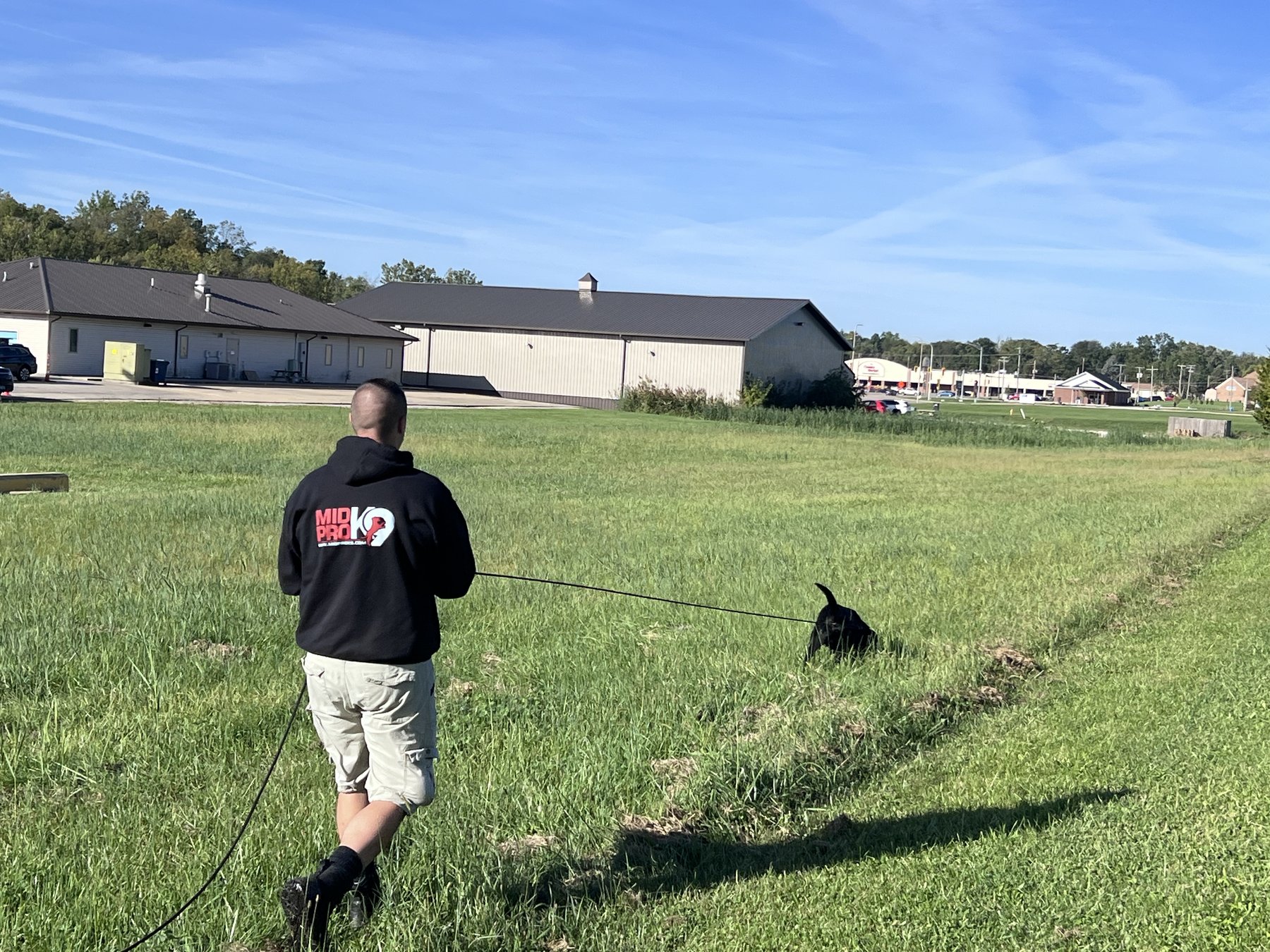
- MidproK9 — 5.0★ (8)
Dog Trainers in Fairmount, IL
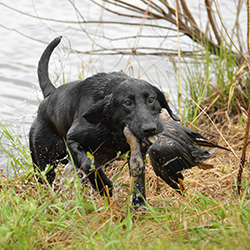
- Rural Route Retrievers — 5.0★ (46)
Also in Champaign: K9 collab, Bark & Run dog training, Why Fuss Dog Training, PetSmart Dog Training, Jodie Vee’s, Dog House on the Prairie, Your Inner Dog – Dog Training and Behavior
Dog Training by Specialty in Champaign
Champaign-specific guides for each type of training:
- Puppy Training
- Puppy Socialization
- Dog Obedience Classes
- Dog Boot Camp
- Aggressive Dog Training
- Leash-Reactive Dog Training
- Off-Leash Dog Training
- Separation Anxiety Training
- In-Home Dog Training
- Protection & K9 Training
- Service Dog Training
- Therapy Dog Training
Also live across Illinois: Aurora · Belleville · Bloomington · Carbondale · Chicago · Crystal Lake · DeKalb · Elgin · Evanston · Kankakee · LaSalle County · Naperville · Orland Park · Peoria · the Quad Cities · Rockford · Schaumburg · Springfield · Waukegan.
Common Questions About Dog Training in Champaign
What does dog training cost in Champaign-Urbana?
The published prices in this metro sit in three bands. Group classes are the cheapest structured option: the Urbana training club charges eighty dollars for a four-week course and one hundred and twenty for an eight-week one, and private-practice group series in Monticello and Champaign run in a similar range per course. Private and in-home lessons are the middle band — a Rantoul trainer publishes twenty-five dollars for the initial consultation, seventy-five per hour-long obedience session and ninety for behavioral work, with a fifteen-to-twenty-dollar surcharge once you are more than about forty minutes from base; a Champaign trainer sells five-lesson in-home packages at three hundred dollars for puppies and four hundred for problem-solving. Residential programs are the top band and vary enormously by type: a Champaign board-and-train runs two thousand and fifty dollars for four weeks and two thousand two hundred and fifty for five, while the country kennels east of town charge by the week or month — three hundred a week or a thousand a month in Tolono, eight hundred a month with a three-month minimum near Fairmount. Personal protection work starts at four and a half thousand. Always confirm current pricing directly; these are the figures published at the time of writing.
Is there anywhere my dog can run off-leash?
Yes, but you have to join. Both cities gate their off-leash parks behind an annual membership with an electronic fob rather than an open gate: Champaign’s Bark District at Windsor and Rising charges fifty dollars a year for one dog, and Urbana’s Perkins Road park operates on the same model and is the only place in the entire Urbana Park District where a dog may legally be off leash. Everywhere else — every Champaign park, every Urbana park, the rail trail, both big forest preserves — is leash-required, and Urbana’s natural areas ask you not to bring a dog at all. If you need a private enclosure for reactivity work or for a puppy that is not yet fully vaccinated, there are hourly private field rentals in the Champaign area listed on the usual booking platforms, which is often the better tool anyway.
I am a student with a dog. Is anything here set up for a nine-month academic year?
This is the most common local situation and it changes what you should book. Group class series here run in fixed sessions — the Urbana club runs four a year, and the fall session starting in mid-September is the one that lines up with an academic calendar — so if you arrive in August, registering in the first two weeks matters more than choosing perfectly. If your dog’s problem is specific rather than general, an in-home package of five lessons finishes inside six weeks and is usually a better use of a single semester than a class series you may only half-attend. And check the vaccination and county-registration requirements early: both dog parks and most class providers require them, and the paperwork is the thing that most often delays a start by three weeks.
Which trainer takes an aggressive or reactive dog?
Several of the metro’s providers publish work of this kind, which for a market this size is decent coverage. A Champaign board-and-train practice lists aggression and reactivity as a named program and addresses the root cause rather than suppressing the behavior; a Rantoul in-home trainer prices behavioral work — aggressive, fearful or assertive presentations — as its own line item; a Monticello trainer takes reactive and aggressive cases as one-to-one behavioral work in the client’s home; the Tilton facility runs behavioral programs from general behavior issues through to aggression; and the Champaign class facility takes fear-reactive and easily-overstimulated dogs into private lessons rather than group classes. Two practical notes: for a dog with a bite history, in-home or private work is almost always the right starting format rather than a group class; and ask directly whether the trainer will take your specific case before you pay, because several local providers screen at the consultation stage.
Can I find off-leash, e-collar or protection training locally?
Only barely, and you should know that going in. One Champaign practice publishes an off-leash foundation as part of its board-and-train, and a kennel in Tolono teaches recall as part of a gun-dog program — which is real recall training, but in a field-work frame rather than a pet off-leash-freedom one. Personal protection and police-K9 work come from a single provider, in Tilton, thirty-five miles east. Service-dog training is effectively absent: a Rantoul trainer offers task work described as a basis for service-dog work, and the university has a student-run non-profit that raises and places service dogs but does not sell training to the public. If any of these is your actual requirement, the honest advice is to look at Bloomington-Normal, Decatur or Chicago rather than to make do locally, and this site’s pages for those specialties will point you there.
How far will a Champaign trainer travel?
Further than you would expect, and the local convention is a two-band travel fee rather than a flat refusal. The Rantoul mobile trainer draws the line at about forty minutes’ drive from base and adds fifteen to twenty dollars a session beyond it, and publishes a service list that reaches Champaign, Urbana, Mahomet, St. Joseph, Monticello, Tolono, Villa Grove, Tuscola, Danville and as far as Bloomington. Monticello’s trainer covers Piatt County and runs classes at two locations, one of them in Forsyth toward Decatur. The realistic advice is to think in drive time rather than miles: anything inside the Champaign-Urbana-Savoy-Mahomet block is fifteen minutes and priced as local, the north-county villages and Monticello are a half-hour, and Danville and Tilton are a genuine thirty-five-mile trip that will end most weekly-lesson plans early unless the trainer is the one driving.
Are the training clubs open to the public, or do I have to be a member?
Champaign-Urbana has more club-and-volunteer training than most markets of its size, and the distinction matters. The AKC-licensed Urbana club publishes an open class-registration page with a fee schedule and a class-progression chart, and runs foundation courses — puppy kindergarten, puppy elementary, home companion — alongside sport classes in agility, rally, tracking and nosework; membership is a separate thing it also offers, and it holds licensed trials and tests through the year. Both of the metro’s dog parks, by contrast, are genuinely members-only and will not admit a visitor without a fob. As a rule of thumb: if a place publishes a fee per course, you can book it; if it publishes a fee per year, it is a membership.
My dog is a retriever or a working breed. Is there specialist help here?
More than for almost anything else, and it is the one specialty where this metro is genuinely deep for its size. There is a pointing-breed kennel and hunting preserve at Tolono running AKC hunt-test training and handling — whoa breaking, heel work, recall, trained retrieve, conditioning — at a published weekly rate with the dog in residence. There is a retriever kennel near Fairmount in southwest Vermilion County running a gun-dog program with a three-month minimum that covers steadiness to gunfire, delivery to hand, multiple marks and blind retrieves with hand signals, and the same kennel runs a straight board-and-train obedience program for dogs that just need manners. And the Tilton facility’s police-K9 background brings detection and tracking work into range. If you want a hunting dog finished properly without shipping it to another state, that is unusually well covered from Champaign.
Start Here
The best time to start training is today. Whether your puppy needs socialization, your adolescent dog needs impulse control, or your adult dog has a behavior issue that’s been building for years — the sooner you start, the faster things improve.
Browse dog trainers in Champaign on GetDogSchool.com. Compare programs, read reviews, and connect with professionals who fit your dog’s needs and your budget.
Find Dog Trainers in Champaign →
Ready to find the right trainer for your dog in Champaign?
Get matched with a trainer in Champaign →