
Puppy Training: A Practical Guide for New Owners
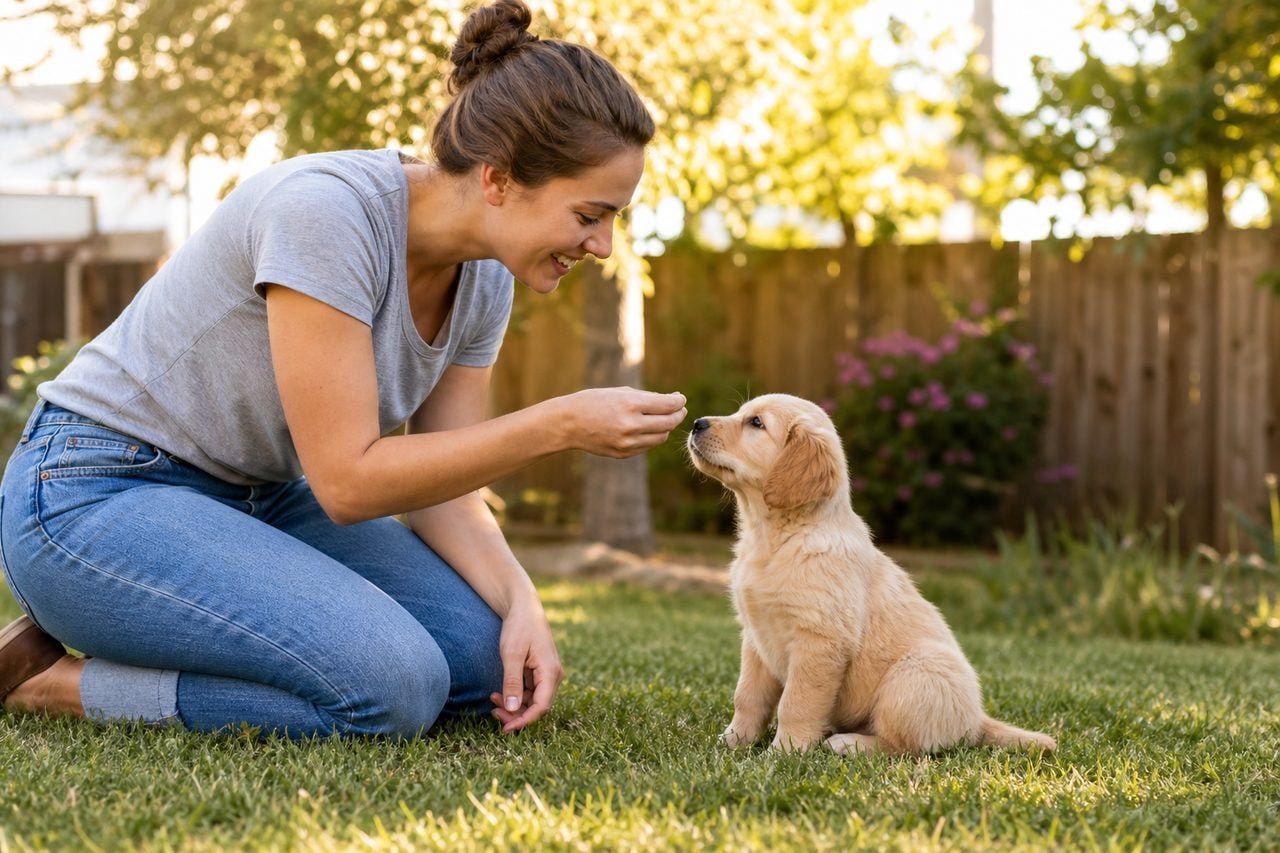
Puppy training is the foundation work of a dog’s first six months — house-training, socialization, bite inhibition, and basic manners — done during the short window when habits form fastest. The biggest mistake owners make is waiting. Start the week your puppy comes home, not after the chewing and jumping have already become routine.
Why the first months matter so much
Puppies have a socialization window that runs roughly from 3 to 14 weeks. What a dog meets, hears, and stands on during that stretch shapes how it handles the world for life. A puppy that calmly experiences vacuum cleaners, kids, car rides, slippery floors, men with hats, and nail trims tends to become a steady adult. One that meets none of it often grows into the dog that barks at everything.
That creates a real tension with vaccinations, which aren’t complete until about 16 weeks. The answer most modern vets and trainers agree on: socialize carefully rather than not at all. Clean, vaccinated-only puppy classes, friends’ healthy dogs, and carrying your puppy through new environments all count — you don’t need a dog park to socialize a puppy.
What good puppy training actually covers
- House and crate training — a predictable routine and a crate the puppy likes.
- Socialization — structured, positive exposure to people, dogs, sounds, and surfaces.
- Bite inhibition — teaching a soft mouth before the adult teeth come in.
- Name and early recall — the most valuable cue your dog will ever learn.
- Handling tolerance — paws, ears, mouth, so vet and grooming visits aren’t a fight.
- Manners — sit, settle, four-on-the-floor instead of jumping.
Class, private lessons, or DIY?
For most puppies, a group puppy class is the best first step — not because the cues are special, but because the supervised socialization with other puppies is hard to replicate at home. Expect six weeks or so. If you’ve got a specific problem, an odd schedule, or a nervous puppy, private lessons let a trainer tailor things to your house. Board-and-train is rarely the right call for a young puppy; this is the age where the bond and the handler skills are built, and that happens with you holding the leash.
What puppy training costs
Group puppy classes usually run $150–$300 for a four-to-six-week course. Private in-home lessons land around $75–$150 per session depending on your area and the trainer’s experience. You’ll get further with a cheap class plus consistent practice at home than with an expensive program you don’t follow up on.
How to choose a puppy trainer
Look for reward-based methods, small class sizes, a requirement that puppies show proof of vaccinations, and a calm room. A good trainer coaches you as much as the puppy. Walk away from anyone who talks about “dominance” or “being the alpha” with a baby dog, straps a prong or e-collar on a puppy, or runs a class with no real socialization component. None of that belongs anywhere near a four-month-old.
What to realistically expect
House-training is usually mostly reliable by four to six months, with the occasional accident. Manners are a longer game — jumping and mouthing fade with consistency, not by a certain birthday. The honest truth is that what you do in the other 23 hours matters more than the one hour in class.
Frequently asked questions
What age should puppy training start?
As soon as your puppy is home, usually around 8 weeks. Early manners and careful socialization start immediately; formal puppy classes typically begin once your puppy has its first round of vaccinations.
How long does puppy training take?
Basic house-training and manners take a few weeks to a couple of months of consistent practice. A typical puppy class runs four to six weeks, but socialization and reinforcement continue through the first year.
Can I train my puppy myself?
Yes — a lot of it. The cues are simple; the value of a class is supervised socialization and a pro catching mistakes early. Many owners do a class for socialization and handle the rest at home.
Is it safe to socialize before vaccinations are complete?
Carefully, yes. Clean puppy classes, healthy known dogs, and carrying your puppy through new places are low-risk and far better than missing the socialization window. Avoid dog parks and high-traffic ground until fully vaccinated.
Ready to find a trainer who fits your dog? Browse reviewed, local trainers and filter by specialty, price, and location.