
Puppy Socialization in Akron, OH
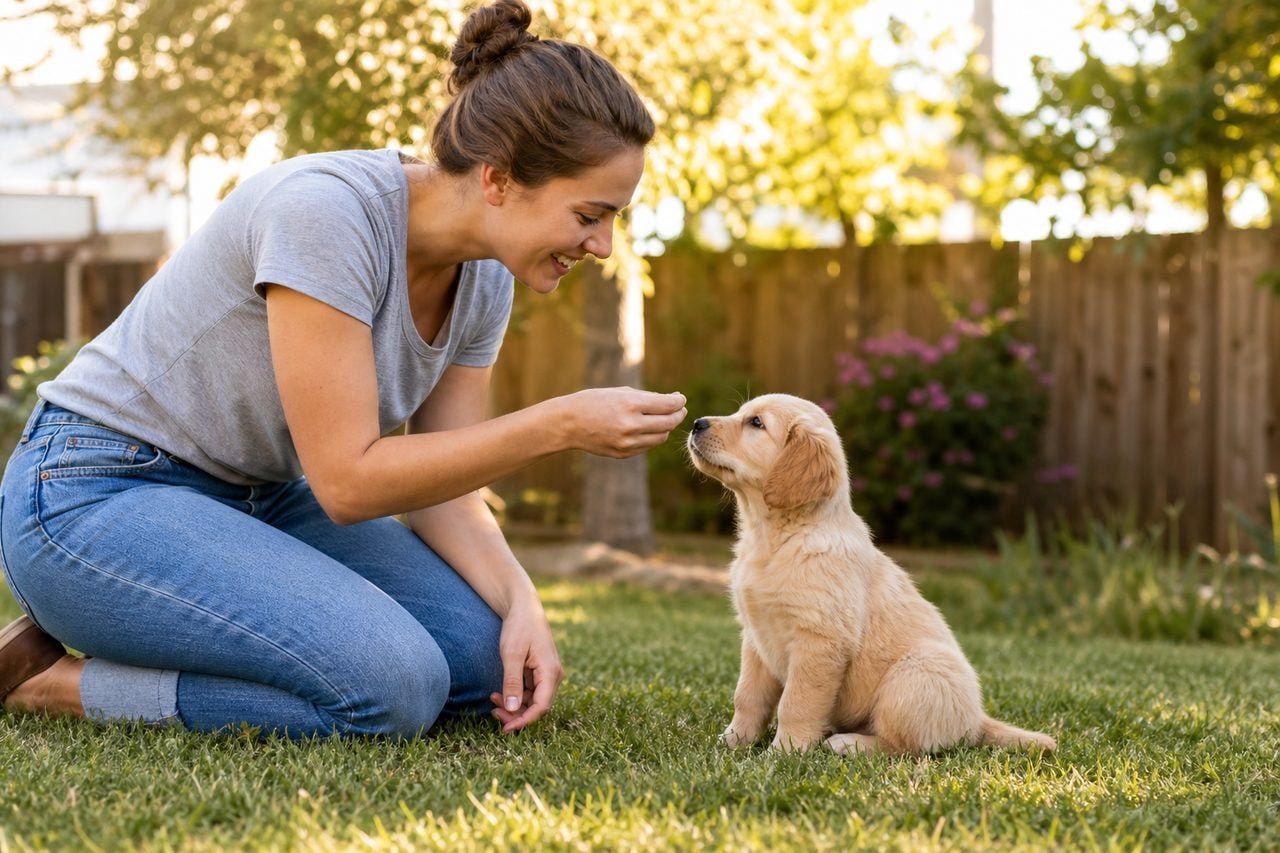
Socialization is the part of raising a puppy that owners most often misunderstand, and getting it right in Akron is the difference between a confident dog that takes the Rubber City in stride and an anxious one that flinches at every passing snowplow. Socialization does not mean letting your puppy play with every dog it meets. It means systematically building positive associations with the enormous range of people, animals, environments, sounds, and surfaces your dog will encounter over its life, all while it is young enough for those impressions to stick deeply and permanently.
- What Socialization Really Means
- Safe Socialization Before Vaccinations Are Done
- A Week-by-Week Socialization Plan
- Socializing Around Akron's Seasons
- Where to Socialize Your Puppy in and Around Akron
- Reading Your Puppy and Avoiding Common Mistakes
- Carrying Socialization Into Adolescence and Beyond
- Reviewed trainers
- FAQ
The window for this work is brutally short. The most influential socialization period runs from roughly three to sixteen weeks of age, and the door does not slam shut so much as gradually close after that. What happens during these weeks shapes your dog’s emotional baseline for years. A puppy that learns the world is full of pleasant, predictable experiences becomes a resilient adult. A puppy that misses this window, or that has scary experiences during it, often becomes fearful or reactive in ways that take far more effort to manage later.
This guide is written specifically for Akron and Summit County owners, because socializing a puppy through Northeast Ohio’s long winters, around our particular parks and neighborhoods, and within the rhythms of a working-family city is a distinct challenge. We will cover what real socialization includes, how to do it safely before vaccinations are complete, a week-by-week approach, how the seasons reshape your plan, where to go locally, and the mistakes that quietly sabotage well-meaning owners. We reference local trainers generically; the directory will help you find the right one to coach you through it.
What Socialization Really Means
The biggest misconception about socialization is that it equals dog-to-dog play. Play with other friendly puppies is one piece, but it is a small fraction of the whole project. True socialization is the deliberate, positive exposure of your puppy to the full spectrum of life it will encounter, structured so that each experience builds confidence rather than fear. That spectrum is far broader than most owners realize.
It includes people of every description: men with deep voices and beards, children who move unpredictably, people in hats and hoods and winter coats, people using wheelchairs or walkers, delivery workers, and strangers of every age and appearance. Akron is a diverse, working-family city, and a well-socialized dog here needs to be comfortable with that variety rather than startled by it.
It includes environments and surfaces: grass, gravel, the metal grating on a bridge over the Cuyahoga, slick floors, wobbly surfaces, stairs, car interiors, and the inside of a busy hardware store. It includes sounds, which matter enormously in our climate, from thunderstorms and the beep of a backing truck to the scrape of a snowplow at five in the morning and the roar of a leaf blower in October. And it includes handling: being touched on the paws, ears, mouth, and tail, having a collar grabbed, and being gently restrained, all of which make future vet and grooming visits dramatically easier.
The mechanism that makes socialization work is positive association. Every new thing should predict something good, usually food, play, or praise, delivered while your puppy is calm and curious rather than overwhelmed. The goal is not to flood your puppy with intensity but to let it observe and approach new things at its own pace, paired with rewards. A puppy that approaches a noisy new object, gets a treat, and chooses to investigate further is being socialized correctly. A puppy that is dragged toward something it fears and forced to endure it is being sensitized in the wrong direction, which can create the exact problem you were trying to prevent.
Safe Socialization Before Vaccinations Are Done
Here is the genuine dilemma every Akron puppy owner faces. The critical socialization window largely closes by sixteen weeks, but most puppies are not fully vaccinated until around that same age. Lock your puppy away to avoid disease and you risk a lifetime of fear-based behavior. Take it everywhere and you risk illness before its immune system is ready. The path forward is controlled exposure that minimizes disease risk while maximizing positive experiences.
Start with experiences that carry essentially no disease risk. Invite friends and family of all ages into your home so your puppy meets varied people on its own turf. Have those visitors wear hats, sunglasses, and winter gear so your puppy learns that bundled-up Northeast Ohio humans are normal. Play recordings of thunderstorms, fireworks, traffic, and other sounds at low volume, pairing them with treats, gradually increasing the volume over days as your puppy stays relaxed. Introduce household surfaces and objects, the vacuum, the doorbell, an umbrella opening, all paired with rewards.
Next, add controlled outdoor exposure that avoids high-traffic dog areas. Carry your puppy, since paws never touch contaminated ground that way, through a quiet corner of a neighborhood or the edge of a park so it can watch the world go by safely. Sit on a bench in a calm part of West Akron or Wallhaven and let your puppy observe people, cars, and distant dogs from your lap. Take car rides to nowhere in particular so motion and the car become routine rather than associated only with the vet.
For dog-to-dog socialization before full vaccination, the safest route is supervised play with specific, known dogs that are fully vaccinated, healthy, and gentle, ideally in your own yard or a friend’s. Avoid public dog parks, pet store floors, and rest stops where the vaccination status of other dogs is unknown until your vet gives the all-clear. A well-run puppy class is often the exception worth asking your vet about, because reputable classes require proof of age-appropriate vaccination and clean facilities, which makes them a much lower-risk environment than a public park. When in doubt, ask your veterinarian what controlled exposure they are comfortable with for your specific puppy.
A Week-by-Week Socialization Plan
Socialization works best as a steady, deliberate drip rather than a few big outings. A useful target many trainers suggest is exposing your puppy to a wide variety of new, positive experiences across the early weeks, but quality and the puppy’s emotional state matter far more than hitting a number. Here is a structure Akron owners can adapt.
- Weeks 1 to 2 home (around 8 to 10 weeks old): Focus on the home environment. Introduce household sounds, surfaces, and gentle handling. Invite a few calm visitors. Begin pairing the crate, car, and new objects with treats. Keep everything low-key while your puppy settles in.
- Weeks 3 to 4 home (around 10 to 12 weeks): Expand the cast of people, men, women, children, people in winter gear, and add carried outings to quiet outdoor spots. Start controlled meetings with one or two known, vaccinated, gentle dogs. Begin a sound-desensitization routine for thunder and traffic.
- Weeks 5 to 6 home (around 12 to 14 weeks): If your vet approves, enroll in a reputable puppy class for structured peer socialization. Continue varied human exposure and add new low-traffic environments. Practice handling that mimics vet and grooming exams.
- Weeks 7 to 8 home (around 14 to 16 weeks): Push gently toward the edge of the window. As vaccinations complete, broaden to more public settings, busier sidewalks, the calmer Metro Parks trails, and outdoor patios. Keep rewarding calm curiosity and back off anything that frightens your puppy.
Throughout, read your puppy constantly. Signs of a good experience are a loose body, willingness to approach, and eagerness to take treats. Signs you have gone too far are a tucked tail, flattened ears, trembling, refusing food it would normally take, or trying to retreat. When you see those, you have crossed from socialization into overwhelm; calmly create distance, let your puppy recover, and make the next exposure easier. Forcing a frightened puppy to stay in a scary situation does lasting harm. Always leave a session on a positive note, and never do so many new things in one day that your puppy ends up exhausted and stressed.
Socializing Around Akron's Seasons
Akron’s calendar shapes socialization more than owners expect, and the season your puppy is born into changes your entire strategy. The challenge is that the critical window is fixed by your puppy’s age, not by the weather, so a winter-born puppy hits its most important socialization weeks during the hardest possible time to get out.
If your puppy’s window falls in winter, you must bring the world indoors. Northeast Ohio winters are long, icy, and dark by late afternoon, which makes outdoor socialization limited and sometimes unsafe for a small puppy. Lean heavily on in-home experiences: a steady rotation of visitors, deliberate sound work, varied surfaces and objects, and controlled play dates with known healthy dogs in heated indoor space. Reputable indoor puppy classes become especially valuable in winter because they offer safe, warm, structured exposure when the parks are frozen. Crucially, expose your winter puppy to winter-specific stimuli on purpose: people in heavy coats and boots, the sound and sight of snowplows and snow blowers, salt on the sidewalks, and the general muffled strangeness of a snowy world.
If your puppy’s window falls in the warmer months, you have a tremendous advantage and should use it fully, while respecting heat. Once your vet clears outdoor exposure, the Towpath Trail through the Cuyahoga Valley, Sand Run Metro Park, Munroe Falls Metro Park, and the wider Summit Metro Parks system are excellent for confident exposure to bikes, joggers, other dogs at a safe distance, water, bridges, and varied terrain. Outdoor dining patios, farmers markets, and busy but calm sidewalks in Highland Square give rich human and environmental variety. Mind the heat: go early or late, keep sessions short on hot days, and never let a puppy’s pads burn on hot pavement.
Spring and fall are the easiest seasons and the best for banking outdoor socialization. The footing is good and the temperatures forgiving. Whatever season you are in, the principle holds: identify the experiences your puppy is missing because of the weather and find a deliberate way to provide them, because the window will not wait for better conditions.
Where to Socialize Your Puppy in and Around Akron
Once your puppy is cleared for broader exposure, Akron and Summit County offer a wealth of socialization settings, and variety is the goal. Rotating locations teaches your puppy to be confident anywhere rather than only in its own backyard.
The Summit Metro Parks system is the backbone of outdoor socialization here. Sand Run Metro Park offers shaded trails and a relaxed atmosphere good for early outings. Gorge Metro Park and Munroe Falls Metro Park add different terrain, water features, and moderate foot traffic. The Towpath Trail through the Cuyahoga Valley National Park is ideal for practicing calm exposure to a steady stream of walkers, runners, and cyclists at a controlled distance, which is exactly the kind of neutral, non-interactive socialization that builds a stable adult dog.
For dog-to-dog play once your puppy is older, fully vaccinated, and has a reliable recall, Bow Wow Beach dog park in Stow is a well-known off-leash destination. Approach it with caution for young puppies, though; a crowded off-leash park can be overwhelming or even frightening for a small or under-socialized puppy, and one bad experience can set back your progress. It is better suited to confident adolescents than to babies still in their critical window.
Do not overlook everyday urban and suburban settings, which are some of the most valuable. Quiet sidewalks in Highland Square, Merriman Valley, Firestone Park, and the surrounding suburbs like Cuyahoga Falls, Stow, Hudson, Fairlawn, and Tallmadge expose your puppy to normal neighborhood life. Pet-friendly stores, outdoor cafe patios, and the edges of busy areas let your puppy observe activity from a comfortable distance. A well-run local puppy class remains one of the single best socialization venues because it combines supervised peer play, human variety, and professional coaching in one safe place. A local trainer can help you build a rotation that matches your puppy’s confidence level and gradually raises the difficulty.
Reading Your Puppy and Avoiding Common Mistakes
The most important socialization skill is not finding new experiences; it is reading your puppy accurately so you know whether an experience is helping or hurting. Owners who learn to read body language make rapid, fear-free progress. Owners who push past their puppy’s signals create the very problems socialization is meant to prevent.
Confidence looks like a loose, wiggly body, a soft open mouth, willingness to approach new things, and eagerness to take treats. Stress looks like a tucked tail, ears pinned back, a tight closed mouth or excessive lip-licking and yawning, trembling, freezing, trying to hide behind you, or suddenly refusing food it would normally devour. The moment you see stress signals, your job is to increase distance and lower the intensity, not to encourage your puppy to push through. Letting a puppy retreat and recover, then trying again later at an easier level, is how you build genuine confidence.
Several specific mistakes trip up well-meaning Akron owners. The first is flooding, overwhelming a puppy with too much at once, like taking a twelve-week-old to a loud festival or a packed dog park, in the belief that more exposure is always better. It is not; intensity must match the puppy’s tolerance. The second is forcing interactions, making a frightened puppy accept petting from strangers or approach a scary object, which teaches it that its discomfort will be ignored. The third is neglecting winter socialization, letting the cold become an excuse, and then being surprised by a fearful spring adolescent. The fourth is focusing only on dogs and people while ignoring sounds, surfaces, handling, and environments, which leaves dangerous gaps. The fifth is quitting too early, treating socialization as finished after a single puppy class rather than continuing the work, in lighter form, through adolescence.
If you are ever unsure whether your puppy is coping or struggling, that uncertainty is the signal to bring in help. A local trainer can watch your puppy’s body language in real time, tell you whether you are reading it correctly, and adjust your plan so you are building confidence rather than accidentally cementing fear. Especially for puppies that already seem shy or sensitive, professional guidance early is the single best investment you can make.
Carrying Socialization Into Adolescence and Beyond
One of the quietest mistakes owners make is treating socialization as a box to check during puppyhood and then stopping. The critical window is when foundational impressions form, but socialization is maintained, not completed. Dogs that are beautifully socialized at four months can backslide into fearfulness or reactivity during adolescence if the exposure stops, because adolescence brings a second, less famous fear period and a general testing of everything the dog thought it knew.
Adolescence in dogs runs roughly from six months to two years, and it is when many Akron owners are caught off guard. A previously friendly young dog may suddenly bark at strangers, become wary of other dogs, or react to things it used to ignore. This is normal developmental turbulence, not a failure of your early work, and the response is to keep up gentle, positive exposure rather than to retreat. Continue the neutral park outings, keep introducing your dog to calm new people and dogs, and maintain the sound, surface, and handling work in lighter form. Consistency through adolescence is what locks in the confident adult.
Set realistic expectations about temperament, too. Socialization can make any dog more confident and resilient than it would otherwise have been, but it cannot turn a naturally cautious or genetically shy dog into a bombproof extrovert. The goal is not a dog that loves every stranger and every dog; it is a dog that can cope calmly with the world it actually lives in, here in Summit County, with its plows and parks and busy sidewalks. A dog that ignores other dogs politely on a Towpath walk is a socialization success even if it never wants to wrestle at the dog park.
If you put in the early work and maintain it through adolescence, you will have a dog that handles Akron life with ease: comfortable on snowy walks, relaxed around visitors, steady in the Metro Parks, and unbothered by the ordinary chaos of a working city. When questions come up, and they will, having a local trainer you already know makes it simple to get quick guidance before a small wobble becomes an entrenched problem. The directory connects you with local trainers across Akron and the surrounding suburbs who can support you from the critical window all the way through adulthood.
Reviewed Puppy Socialization Trainers in Akron
These reviewed Akron-area trainers from our directory handle puppy socialization. Each links to a full profile with specialties, verified credentials, reviews, and contact info:
- The People’s Pup – Adventures and Training — 5.0★ (45 reviews)
- Focus Dog Training — 5.0★ (36 reviews)
- Jackie the Dog Trainer / SouthPaw Pet Care & Training — 5.0★ (27 reviews)
- AB Dog Training, LLC — 5.0★ (23 reviews)
- Hakuna Dogtata — 5.0★ (8 reviews)
- Ace Dog Training — 5.0★ (6 reviews)
- Sit Means Sit Dog Training Cleveland & Akron — 4.9★ (272 reviews)
- American Caniner Akron Dog Training Services — 4.9★ (152 reviews)
- The Dog Wizard Medina — 4.9★ (100 reviews)
- The Naughty Dog Training — 4.9★ (56 reviews)
See all Akron puppy socialization trainers →
Frequently Asked Questions
What age is best for socializing a puppy?
The most influential socialization period runs from roughly three to sixteen weeks of age, and it gradually closes after that. The earlier you start within this window, the better. Because most owners get their puppy around eight weeks, you typically have about eight crucial weeks to do focused socialization, so begin the week you bring your puppy home.
How do I socialize my puppy before it is fully vaccinated?
Use controlled, lower-risk exposure. Invite varied people into your home, play sound recordings paired with treats, introduce surfaces and objects, carry your puppy through quiet outdoor areas so paws avoid contaminated ground, and arrange play only with specific known, vaccinated, healthy dogs. Avoid public dog parks and pet store floors until your vet clears them. Reputable puppy classes that require vaccination proof are often a safe exception worth asking your vet about.
Is socialization just about playing with other dogs?
No. Dog-to-dog play is only a small part. Real socialization means positive exposure to varied people, sounds like snowplows and thunder, surfaces, environments, car rides, and handling of paws, ears, and mouth. Many well-socialized adult dogs are calm and polite around other dogs without needing to play with them, and that is a perfectly good outcome.
Where can I socialize my puppy in Akron?
Once your vet clears outdoor exposure, the Summit Metro Parks system, including Sand Run, Gorge, and Munroe Falls Metro Parks, plus the Towpath Trail through the Cuyahoga Valley, are excellent for calm exposure to people and dogs at a distance. Quiet neighborhood sidewalks, pet-friendly stores, and outdoor patios add variety. Bow Wow Beach dog park in Stow is best saved for confident, fully vaccinated, older puppies rather than young ones still in their critical window.
How do I socialize a puppy during an Akron winter?
Bring the world indoors. Rotate visitors through your home, do deliberate sound and surface work, arrange play with known healthy dogs in heated indoor space, and consider a reputable indoor puppy class. Importantly, expose your puppy to winter-specific things on purpose: people in heavy coats and boots, the sound of snowplows and snow blowers, and salted, snowy sidewalks, so winter itself does not become frightening.
What are the signs my puppy is overwhelmed during socialization?
Watch for a tucked tail, pinned-back ears, a tight closed mouth, excessive lip-licking or yawning, trembling, freezing, hiding behind you, or refusing treats it would normally take. These mean you have pushed too far. Calmly create distance, let your puppy recover, and make the next exposure easier. Never force a frightened puppy to endure a scary situation, as that can create lasting fear.
Related: read our complete puppy socialization guide or the full Akron dog training overview.
Ready to find the right puppy socialization pro in Akron?