
Puppy Training in Middletown, OH
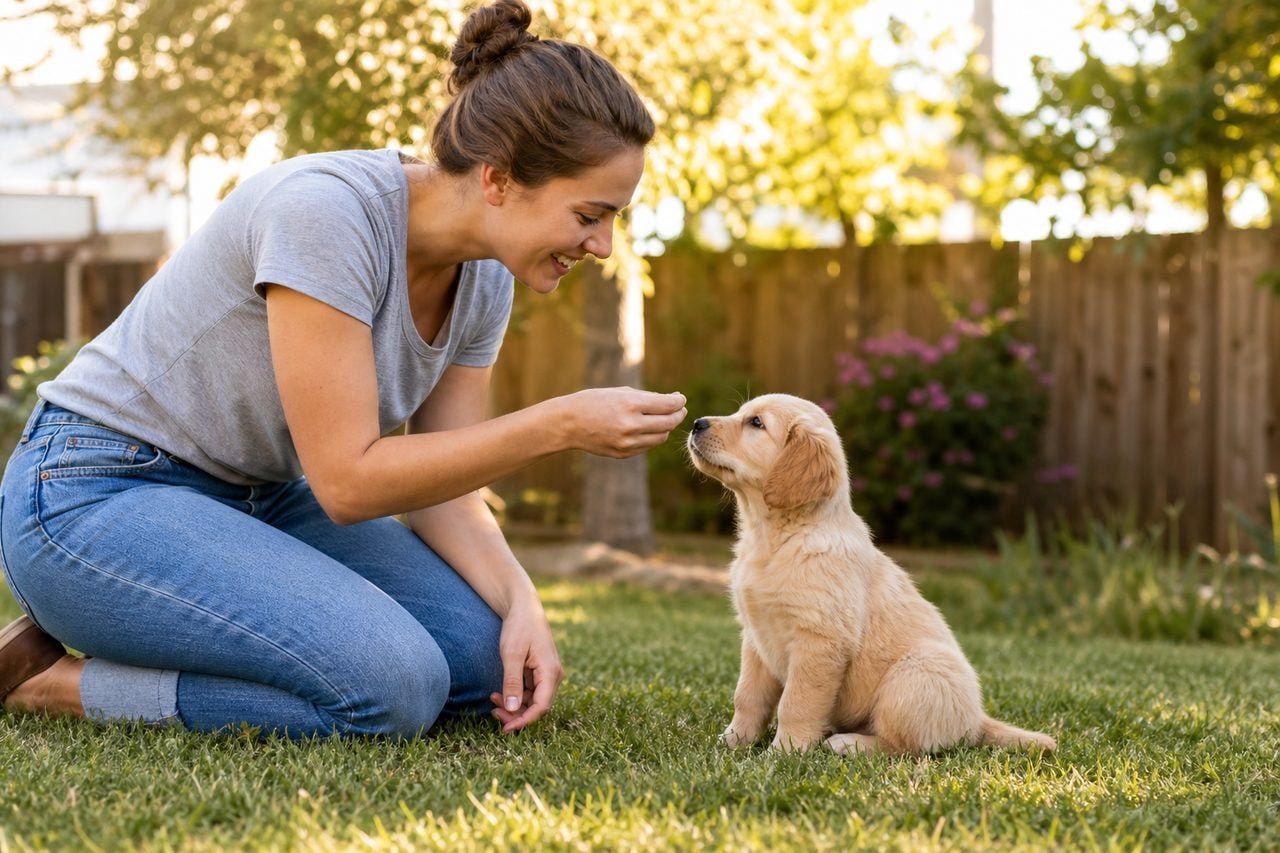
Bringing a new puppy home in Middletown is one of those moments that flips your whole household upside down in the best possible way. Whether you picked up your pup from a breeder out toward Trenton, adopted from a Butler County shelter, or found a litter through a friend near the Highlands, those first weeks set the tone for the next decade-plus of life together. The good news is that this stretch of the Great Miami River valley, sitting on I-75 between Cincinnati and Dayton, is a genuinely good place to raise a well-mannered dog. You’ve got open parks, walkable downtown blocks, river trails, and a steady supply of training options within a short drive.
- Why the First Few Months Matter More Than People Realize
- Foundation Skills Worth Building First
- How Puppy Classes in the Middletown Area Are Usually Structured
- Putting Training to Work Around Middletown
- Choosing a Puppy Trainer in Middletown
- What Puppy Training Tends to Cost in Southwest Ohio
- Reviewed trainers
- FAQ
This guide walks through what puppy training actually involves in the Middletown area: the critical developmental windows you can’t get back, the foundation skills worth building first, how local group classes tend to be structured, and what to expect on cost. The aim isn’t to turn you into a professional trainer overnight. It’s to help you understand what good early training looks like so you can choose the right class, the right trainer, and the right pace for your puppy.
Why the First Few Months Matter More Than People Realize
Puppies aren’t blank slates that stay blank until you decide to start training. From the moment they’re born, they’re learning constantly, and the early weeks are when their brains are most flexible. There’s a well-documented developmental window, roughly from 3 to 16 weeks of age, when puppies form their lasting impressions of the world. What they experience as safe and normal during this period tends to stay safe and normal for life. What they miss, or what frightens them, can become a lifelong source of fear or reactivity.
This is why waiting until your dog is six months old to “start training” is one of the most common and costly mistakes new owners make. By six months, that flexible window has largely closed. A puppy who never met friendly strangers, never heard the rumble of traffic on Verity Parkway, never walked on different surfaces, and never met other vaccinated dogs can grow into an adult who is anxious, jumpy, or hard to handle in public. The dog isn’t being stubborn. It’s simply that the foundation was never poured.
The flip side is the encouraging part: if you do the work now, you bank a return that pays out for years. A puppy who learns that the world is interesting and safe, who is gently introduced to handling and grooming, and who picks up a few basic skills early, tends to become an easygoing adult that’s a pleasure to live with around Middletown.
Foundation Skills Worth Building First
When people picture dog training, they often jump straight to sit, down, and shake. Those are fine, but they’re not actually the most important things to teach a young puppy. The real foundation is about communication, focus, and impulse control. Here are the building blocks that matter most in the early weeks:
- Name recognition and attention. Before you can teach anything else, your puppy needs to look at you when you say their name. This single skill underpins everything else.
- House training. A consistent potty routine, frequent trips outside, and generous praise for getting it right. Crate training usually speeds this along.
- Bite inhibition. Puppies explore with their mouths. Teaching them to soften their jaws now prevents painful nipping later.
- Settling and alone time. A puppy who can relax in a crate or pen, and tolerate short periods alone, is far less likely to develop separation anxiety.
- Coming when called. Recall built early, in low-distraction settings like your backyard, becomes the skill that one day keeps your dog safe near a road or the river.
- Loose-leash walking basics. You won’t get a perfect heel from a 10-week-old puppy, but you can lay the groundwork so walks along the Great Miami River Trail aren’t a tug-of-war later.
Notice that classic obedience commands sit fairly far down this list. They’re useful, and they’re fun to teach, but a puppy who has solid attention, decent house training, and a calm relationship with handling is in far better shape than one who can do a flashy trick but panics at the vet.
How Puppy Classes in the Middletown Area Are Usually Structured
Local puppy classes in and around Middletown generally fall into a few recognizable formats, and knowing the differences helps you pick well.
Puppy socialization / kindergarten classes
These are designed for the youngest dogs, often accepting puppies as soon as they’ve had their first round of vaccinations. The focus is less on obedience and more on supervised play, exposure to new sights and sounds, gentle handling exercises, and a few basic cues woven in. If your puppy is under about four months, this is usually the right starting point.
Basic obedience / foundation classes
For slightly older puppies and young adolescents, these classes lean harder into structured skills: sit, down, stay, recall, polite greetings, and loose-leash walking. They’re typically run as a multi-week course rather than a single drop-in session.
Private sessions
If your schedule is unpredictable, your puppy is shy or overwhelmed in a group, or you’re dealing with a specific issue, one-on-one training in your home or at a facility can be a better fit. You trade the socialization benefit of a group for personalized pacing and attention.
A typical group course in the area runs over several weeks, with weekly hour-long sessions and homework in between. The homework matters more than the class itself, because dogs learn through daily repetition, not one weekly burst. Good trainers will send you home each week with specific exercises to practice in short, frequent sessions.
Putting Training to Work Around Middletown
One of the underrated advantages of training in this part of Butler County is the variety of real-world environments within easy reach. Once your puppy is appropriately vaccinated and your trainer gives the green light, the Middletown area gives you plenty of places to practice skills in increasingly distracting settings.
Smith Park, the 96-acre green space off Tytus Avenue and Verity Parkway, has trails, open fields, and picnic areas that make a good middle step between your quiet backyard and a busy public space. It’s a place where you can work on focus and loose-leash walking with mild distractions around. Note that it isn’t a fenced off-leash dog park, so keep your puppy leashed and under control.
The Great Miami River Trail, the paved path that runs along the river and connects Middletown south toward Trenton, is an excellent proving ground for calm leash walking once your pup has the basics. The level, paved surface is easy on young joints, and you’ll encounter cyclists, joggers, and other dogs, which are exactly the kinds of controlled distractions that build a steady adult dog.
Downtown Middletown, with its sidewalks, storefronts, and traffic noise, is the next level up. Short, upbeat outings here help a puppy learn that busy environments are nothing to fear. Keep the sessions brief and positive, and bring high-value treats.
Sunset Park and other neighborhood greens give you quieter options for early outings when a full park feels like too much. The Highlands historic district, with its tree-lined streets, is a pleasant low-traffic place for foundational neighborhood walks.
The principle behind all of this is gradual exposure. You don’t take a 10-week-old puppy straight to the busiest corner downtown on a Saturday. You build up: backyard, quiet street, neighborhood park, river trail, then the busier public spots, each step only when the previous one feels easy.
Choosing a Puppy Trainer in Middletown
Because GetDogSchool.com lists the actual trainers serving the Middletown area, your job is to know what to look for so you can evaluate the options well. A few things to weigh:
- Training philosophy. Modern, reward-based methods are the standard for puppies. Look for trainers who emphasize positive reinforcement and avoid harsh corrections, which can damage a young puppy’s confidence during that sensitive socialization window.
- Class size and supervision. Smaller puppy classes mean more individual attention and safer, better-managed play sessions.
- Vaccination requirements. A responsible trainer will ask about your puppy’s vaccination status and structure classes to balance early socialization with health safety.
- Credentials and experience. Professional certifications and continuing education are good signals, though hands-on experience with puppies matters just as much.
- Owner education. The best puppy classes train the human as much as the dog. You should leave each session understanding what to practice and why.
Don’t be shy about asking a prospective trainer how they handle a puppy who gets overwhelmed, what their refund or makeup policy is, and whether you can observe a class before enrolling. A trainer who welcomes those questions is usually one worth working with.
What Puppy Training Tends to Cost in Southwest Ohio
Pricing in the Middletown area lines up with the broader Southwest Ohio market, and it helps to know the typical ranges so you can budget and spot outliers.
- Group puppy classes: roughly $150 to $300 for a multi-week course. This is the most cost-effective option and bundles in valuable socialization.
- Private sessions: roughly $100 to $175 per session. More expensive per hour, but personalized and flexible, and often the right call for specific challenges.
- Board-and-train programs: roughly $1,500 to $6,000, depending on length and intensity. These are immersive programs where your dog stays with a trainer. They’re more common for older dogs or serious behavior work than for typical puppy foundations.
For most Middletown puppy owners, the best value is a group foundation class paired with consistent practice at home. Save private or board-and-train spending for situations that genuinely call for it. Remember that the homework you do between sessions is free and arguably the most important ingredient, so the cheapest path to a well-trained dog is simply showing up and putting in daily reps.
Reviewed Puppy Training Trainers in Middletown
These reviewed Middletown-area trainers from our directory handle puppy training. Each links to a full profile with specialties, verified credentials, reviews, and contact info:
- Whole Dog University — 4.9★ (74 reviews)
- Sit Means Sit Cincinnati — 4.8★ (156 reviews)
- Homeland K-9 Dog Training Academy — 4.7★ (34 reviews)
See all Middletown puppy training trainers →
Frequently Asked Questions
When should I start training my puppy in Middletown?
Right away. The critical developmental window runs from about 3 to 16 weeks of age, so meaningful training and socialization should begin the moment you bring your puppy home, not at six months. Even an 8-week-old puppy can start learning its name, basic house training, and gentle handling. Many local puppy kindergarten classes accept dogs as soon as they’ve had their first round of vaccinations.
Is it safe to take my puppy to Smith Park or the river trail before they're fully vaccinated?
Be cautious. Until your puppy has completed its core vaccinations, your vet may advise avoiding places where lots of unknown dogs go. You can still socialize safely by carrying your puppy in busy areas, inviting healthy vaccinated dogs to your home, and enrolling in a puppy class that screens for vaccination status. Once your vet gives the go-ahead, places like Smith Park and the Great Miami River Trail become excellent practice grounds. Always keep your puppy leashed since these are not fenced off-leash areas.
How much does puppy training cost around Middletown?
Group puppy classes typically run about $150 to $300 for a multi-week course, private sessions about $100 to $175 each, and immersive board-and-train programs anywhere from $1,500 to $6,000 depending on length. For most puppy owners, a group foundation class plus daily practice at home offers the best value.
What's the single most important thing to teach a new puppy?
If you had to pick one, it’s that the world is safe and good things come from you. That means thoughtful socialization, gentle handling, and reward-based training during the early weeks. Practical skills like name recognition, house training, and recall flow naturally once your puppy trusts you and sees you as the source of good things.
Should I choose a group class or private training for my puppy?
For a typical, confident puppy, a group class is usually the better first step because it bundles socialization with skill-building and costs less. Private training is a strong choice if your puppy is shy or easily overwhelmed, if you have an unpredictable schedule, or if you’re working through a specific issue. Many owners do both: a group foundation course, plus a private session or two for anything that needs extra attention.
How long does it take to train a puppy?
Foundation training is a process, not a one-time event. A typical group course runs several weeks, but real training continues through your puppy’s first year and beyond, especially through the adolescent stage around six to eighteen months when many dogs test boundaries. Short, frequent daily practice sessions produce far better results than occasional long ones, so consistency over months is what truly shapes a well-mannered adult dog.
Related: read our complete puppy training guide or the full Middletown dog training overview.
Ready to find the right puppy training pro in Middletown?