
Puppy Training in Lorain, OH
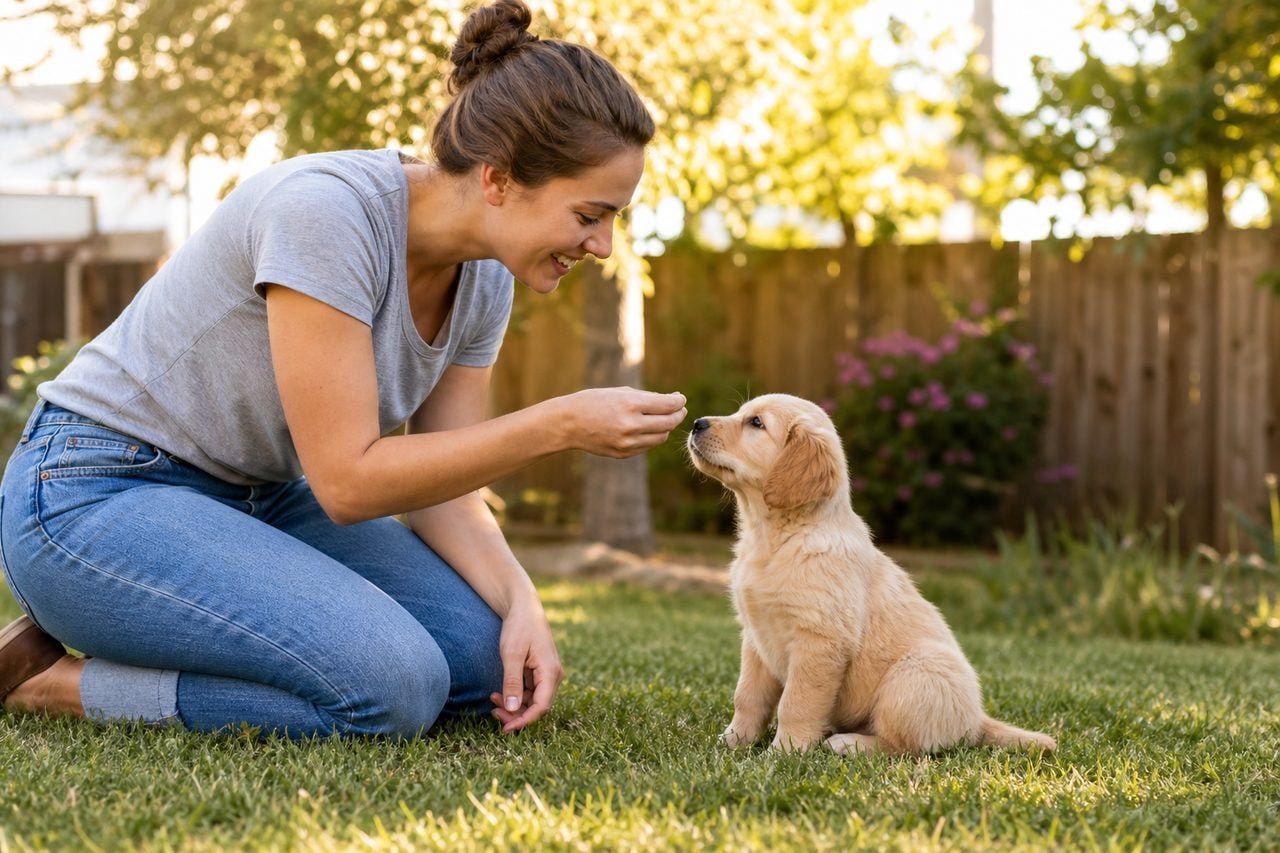
Bringing a puppy home in Lorain means starting a partnership against a backdrop most dog owners never think about until they’re standing in it: a lakefront town at the mouth of the Black River where the weather, the geography, and the rhythm of the year all quietly shape how training goes. Lorain sits on the Lake Erie shore in Lorain County, about 30 to 40 minutes west of Cleveland by way of SR-2 and US-6, and that position on the water is not a postcard detail. It’s a training variable. Lake-effect snow rolls in off Erie from late November through February and can bury a planned outdoor session under a foot of fresh powder overnight, which is exactly why so much serious puppy work here happens indoors during the cold months and why timing your puppy’s arrival matters more than most new owners expect.
The good news is that Lorain and the surrounding cluster of towns — Elyria just south, Amherst, Vermilion, Avon and Avon Lake along Lake Road, Sheffield Lake, and North Ridgeville — give you an unusually rich set of real-world environments to train in once the weather cooperates. You have the Lorain Lighthouse and the Black River harbor downtown, the historic streets of Charleston Village, and a deep bench of Lorain County Metro Parks within a short drive. A well-raised Lorain puppy can grow up encountering boardwalks, paved multi-use trails, lakefront wind, gulls, anglers, cyclists, and the general bustle of a working harbor town — the kind of varied exposure that builds a steady adult dog.
This guide walks through what puppy training actually looks like in Lorain: when to start, what to prioritize in the first weeks, how the seasons dictate your plan, where local handlers take young dogs, what classes and private work tend to cost in the Cleveland-area market, and how to choose help from the trainers listed on this directory. The aim is to give you a realistic, locally grounded roadmap rather than generic advice that ignores the fact that you live on a lake.
When to Start Training Your Lorain Puppy
Training starts the day your puppy comes home — not at six months, and not after some imagined “settling in” period. Every interaction in those first days teaches the puppy something about how your household works, so the question isn’t whether you’re training but whether you’re doing it on purpose. The most important developmental window, the period when a puppy most readily accepts new experiences without fear, runs roughly from 8 to 16 weeks of age. What happens during that window shapes the adult dog more than almost anything you do later.
In Lorain, the calendar interacts with that window in ways worth planning around. A puppy that lands in your home in April or May gets to do its early socialization and house-training as the weather opens up — long evenings, dry sidewalks, the Black River Reservation trails fully accessible, and plenty of low-pressure outdoor exposure. A puppy that arrives in December faces the opposite: short days, icy footing, lake-effect snow, and a stretch where most outdoor work is brief and bundled. Neither timing is wrong, but they call for different plans. A winter puppy needs a deliberate indoor enrichment and socialization strategy because you simply can’t lean on the parks the way a spring puppy’s owner can.
Regardless of season, the first priorities are the same: establish a house-training routine, build a positive association with the crate, start gentle handling so vet visits and grooming aren’t traumatic, and begin short, upbeat sessions on name recognition and a few foundation behaviors. Keep sessions to a few minutes — a young puppy’s attention is short, and ending while they’re still engaged keeps training something they look forward to. Many Lorain owners book an initial private session or a puppy class in those first couple of weeks specifically to get the foundation right before bad habits set in.
House-Training Through a Lake Erie Winter
House-training is hard enough without a Lake Erie winter working against you, and Lorain owners who bring home a cold-weather puppy need a plan that accounts for it. The standard advice — take the puppy out frequently, reward immediately outside, supervise closely indoors, and keep a consistent schedule — still holds. The complication is that lake-effect snow and biting wind off the water make a small puppy reluctant to go out, slow to relieve itself once there, and prone to learning that “outside” means “cold and unpleasant.”
A few adaptations help. Shovel and clear a small, sheltered potty spot close to the door so your puppy isn’t wading through drifts taller than it is; consistency of location speeds up the learning. Go out with your puppy rather than sending it out alone, both so you can reward the instant it finishes and so a tiny dog isn’t left exposed to wind chill any longer than necessary. Keep outings short and purposeful in deep cold — potty first, play later, ideally indoors. For very young or small-breed puppies, some Lorain owners use an indoor potty option as a temporary bridge during the harshest stretches, then transition fully outdoors as the dog matures and the weather breaks.
The flip side of a winter puppy is that indoor confinement makes crate training and routine easier to enforce, because you’re inside and supervising more anyway. Use that. A puppy that comes home in summer often gets more freedom sooner and can backslide on house-training; a winter puppy, kept on a tight indoor routine, frequently ends up with rock-solid habits by spring. Whatever the season, accidents are normal, punishment after the fact teaches nothing useful, and the dogs that house-train fastest are the ones whose owners stayed consistent rather than perfect.
Where to Train and Walk a Young Dog in Lorain
One of Lorain’s real advantages is the Lorain County Metro Parks system, which gives you a range of environments to grow a puppy in once it’s old enough and protected enough to be out in public. The Black River Reservation, with its paved Bridgeway Trail running roughly five and a half miles along the river, is a standout for young dogs: a wide, flat, predictable surface where you can work on loose-leash walking, exposure to cyclists and joggers, and calm passing of other dogs without the chaos of an off-leash setting. The famous steel-mill section gives an older puppy a dose of industrial scenery, echoes, and texture changes that build confidence.
Lakeview Park, 35 acres on the Lake Erie shore with its rose garden and lakefront, offers a different flavor of exposure — open lawns, wind off the water, gulls, families, and the sights and sounds of a busy public space. French Creek Reservation and Sandy Ridge Reservation (a 526-acre wetland in North Ridgeville) add wooded trails and wildlife sights, while Vermilion River Reservation and the harbor town of Vermilion itself give you a small-town main-street environment for urban socialization. Down in Elyria, Cascade Park — where the east and west branches of the Black River meet over sandstone ledges — is a scenic, varied walking environment for a maturing puppy.
A word of caution that matters specifically for puppies: until your veterinarian confirms your puppy’s core vaccinations are sufficiently along, you should be careful about where it walks and what it contacts, since young puppies are vulnerable to diseases picked up in high-traffic public areas. This is the central tension of puppy raising — you need early socialization during the 8-to-16-week window, but you also need to manage disease risk. The practical answer most Lorain trainers endorse is to socialize aggressively in controlled settings (a clean class environment, friends’ healthy vaccinated dogs, carrying the puppy through busy areas to watch the world) while waiting on the all-clear before letting an unvaccinated puppy sniff every patch of grass at a popular trailhead.
Foundation Behaviors Every Lorain Puppy Should Learn
Beyond house-training, a handful of foundation behaviors make life with a young dog dramatically easier and set up everything that comes later. Name recognition and a reliable response to it come first — a puppy that looks at you when you say its name is a puppy you can redirect out of trouble. Build it with short, rewarded repetitions in a quiet room before testing it anywhere distracting like a park.
A solid recall is arguably the most valuable thing you can teach, and it’s worth starting young and indoors before the stakes get high. Lorain’s lakefront and open park spaces are wonderful, but they also mean a dog that bolts has a lot of room to get into trouble — near water, near roads like US-6 and Lake Road, near wildlife. Make coming when called the best deal in the dog’s life: high-value rewards, never a punishment when they arrive, and lots of easy reps before you ever test it off-leash in a safe, enclosed area.
Loose-leash walking is the third foundation, and the paved Metro Park trails are ideal training grounds for it once your puppy is ready. A puppy that learns early not to pull becomes an adult you actually enjoy walking, which matters in a town where so much of the appeal is being outside near the water. Round it out with a settle or place behavior (so the dog can relax calmly when you’re home or out at a dog-friendly spot), gentle handling and consent-based grooming practice, and basic impulse control like waiting at doors. These aren’t tricks — they’re the operating system of a well-adjusted dog, and they’re far easier to install at 12 weeks than to retrofit at two years.
Group Classes vs. Private Training for Puppies
Most Lorain puppy owners end up choosing between a group puppy class, private one-on-one training, or some combination of the two, and each has a clear role. Group puppy classes shine for socialization: a well-run class introduces your puppy to other puppies, new people, and a novel environment in a controlled way, which is gold during the 8-to-16-week window. They also tend to be the most affordable option and give you a coach watching you handle your own dog. The trade-off is that a class moves at a set pace and can’t deeply troubleshoot a problem unique to your dog or your home.
Private training flips that. A trainer coming to your Lorain home (or meeting you at a park) sees your actual setup — the layout, the family routine, the specific thing your puppy does — and tailors the plan accordingly. It’s the better choice if you’re dealing with something pressing like resource guarding, fearfulness, severe nipping, or a household with young kids or other pets that complicates the picture. The trade-off is cost and the lack of built-in puppy-to-puppy socialization, which you’d then need to arrange separately.
Many owners do both: a private session or two early to nail the foundation and address anything specific, plus a group class for the socialization a one-on-one can’t provide. Board-and-train — where the dog stays with a trainer for an intensive stretch — exists too, but it’s generally not the first recommendation for very young puppies, who benefit most from learning with their own family in their own environment during this formative period. Whatever route you choose, the trainers listed on this directory for the Lorain area can walk you through which format fits your puppy, your schedule, and your goals.
What Puppy Training Costs in the Lorain Area
Pricing in Lorain tracks the broader Cleveland-area market, so the numbers below are useful planning ranges rather than quotes — always confirm directly with the trainer you choose. Group classes, typically sold as a multi-week course, generally run somewhere in the range of $150 to $300 for the full course in this market. That usually buys you a set number of weekly sessions, a curriculum covering foundation behaviors and socialization, and a coach to guide your handling.
Private, in-home or one-on-one sessions in the Cleveland-area market commonly land around $100 to $175 per session, with package pricing often bringing the per-session cost down. Private work costs more per hour but delivers customized attention, which can be worth it when you have a specific problem or simply want faster, tailored progress. Board-and-train programs — the most intensive and hands-off-for-you option — are a different tier entirely, broadly ranging from about $1,500 to $6,000 depending on length and scope; these are far more common for older dogs or specific behavior goals than for routine puppy raising.
When you compare options, look past the sticker price to what’s actually included: number of sessions, follow-up support, the trainer’s methods and philosophy, and whether the format matches your puppy’s needs. The cheapest class isn’t a deal if it doesn’t fit, and the priciest program isn’t automatically better. Browse the Lorain-area trainers on this directory, reach out to a couple, and ask about their approach to puppy work specifically — a good trainer will happily explain how they’d handle your dog before you commit a dollar.
Reviewed Puppy Training Trainers in Lorain
These reviewed Lorain-area trainers from our directory handle puppy training. Each links to a full profile with specialties, verified credentials, reviews, and contact info:
- The Dog Wizard Westlake — 5.0★ (86 reviews)
- Sit Means Sit Dog Training – Cleveland Westside — 4.7★ (74 reviews)
- Canine Sports LLC — 4.6★ (15 reviews)
See all Lorain puppy training trainers →
Frequently Asked Questions
What age should I start training my puppy in Lorain?
Start the day you bring your puppy home. Even at 8 weeks, your puppy is learning constantly, and the prime socialization window runs from about 8 to 16 weeks of age. Early, gentle, positive training during this period — house-training, crate work, handling, name recognition, and short foundation sessions — shapes the adult dog far more than waiting until six months. Many Lorain owners book a private session or puppy class in the first couple of weeks to get the foundation right.
How do I house-train a puppy during a Lorain winter?
Lake-effect snow and wind off Lake Erie make winter house-training harder. Clear a small, sheltered potty spot near the door so your puppy isn’t wading through drifts, go outside with your puppy so you can reward it the instant it finishes, and keep cold-weather outings short and purposeful. Stay consistent with location and schedule. For very young or small-breed puppies, an indoor potty option can serve as a temporary bridge during the harshest stretches, then transition fully outdoors as the weather breaks.
Where can I socialize and walk my puppy in the Lorain area?
The Lorain County Metro Parks give you excellent options: the paved Bridgeway Trail at Black River Reservation for loose-leash work, Lakeview Park’s lakefront and lawns for open-space exposure, and French Creek, Sandy Ridge, and Vermilion River Reservations for varied environments. Until your vet confirms your puppy’s vaccinations are sufficiently along, be cautious in high-traffic public areas where unvaccinated puppies can pick up disease — socialize in controlled settings first and get the all-clear before letting a young puppy sniff everywhere.
Should I choose group puppy classes or private training?
Group classes are best for socialization and are usually the most affordable; they introduce your puppy to other puppies, people, and new environments during the key developmental window. Private training is tailored to your dog and home, making it the better choice for specific problems like fearfulness, severe nipping, or complicated households. Many Lorain owners do both — a private session or two for the foundation plus a group class for socialization. The trainers on this directory can advise which fits your puppy.
How much does puppy training cost in Lorain?
Pricing tracks the Cleveland-area market. Group classes generally run about $150 to $300 for a multi-week course. Private one-on-one or in-home sessions commonly land around $100 to $175 per session, often cheaper in packages. Board-and-train programs range broadly from about $1,500 to $6,000 depending on length and scope, though these are more common for older dogs than routine puppy raising. Always confirm exact pricing directly with the trainer, and compare what’s included, not just the sticker price.
Is it too cold to train my puppy outside in Lorain in winter?
Not entirely, but you’ll do most serious work indoors during the coldest months. Lake-effect snow and wind make long outdoor sessions impractical and uncomfortable for a small puppy, so keep outdoor trips short and focused on potty and brief exposure. Use the indoor time for crate training, foundation behaviors, recall games, handling practice, and enrichment. A winter puppy kept on a tight indoor routine often ends up with excellent habits by the time spring opens up the Metro Park trails again.
Related: read our complete puppy training guide or the full Lorain dog training overview.
Ready to find the right puppy training pro in Lorain?