
Puppy Training in Indianapolis, IN
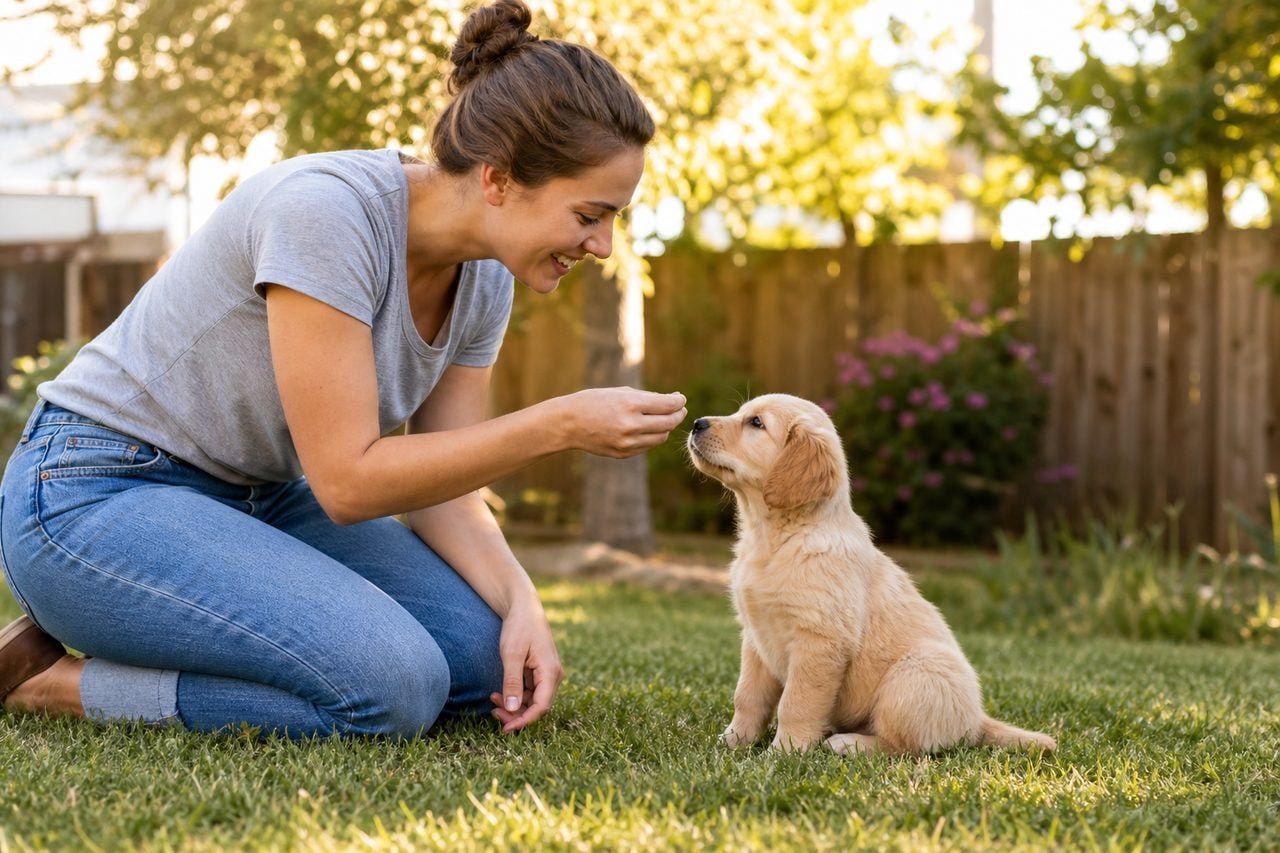
Bringing a puppy home in Indianapolis is its own kind of adventure. Between the Monon Trail dog-walkers in Broad Ripple, the family backyards of Carmel and Fishers, and the older porches of Irvington, this is a city that loves its dogs — and a city where an untrained puppy quickly becomes the talk of the block. Puppy training is the foundation phase: it is where a wiggly eight-week-old learns to live politely inside a human household, from house-training and crate manners to gentle leash skills and the first reliable responses to its name.
- What Puppy Training Actually Covers
- Why the Indianapolis Climate Shapes Your Training Calendar
- House-Training and Crate Work: The First Priority
- Leash Foundations and Early Manners
- Choosing a Puppy Program by Neighborhood
- Group Classes vs. In-Home Puppy Training
- What Puppy Training Typically Costs in Indianapolis
- Setting Realistic Expectations for Your Puppy
- Reviewed trainers
- FAQ
What makes puppy training distinct from general obedience is its focus on the youngest dogs and the most foundational habits. You are not yet drilling competition-level commands; you are shaping a clean slate. Done well in the first few months, this work prevents the chewing, soiling, mouthing, and bolting-out-the-door problems that fill up rehoming listings later. Done poorly or skipped, it leaves families in Greenwood and Zionsville scrambling at six months with a half-grown dog and a lot of bad habits.
This guide walks through how Indianapolis-area trainers approach puppy training, how the local climate shapes the schedule, what a typical program covers, and how to choose a program that fits your neighborhood, your budget, and your puppy.
What Puppy Training Actually Covers
Puppy training is foundational manners for dogs typically between eight weeks and around five or six months old. It is the groundwork that everything else is built on. While the exact curriculum varies between Indianapolis-area trainers, a solid early program almost always centers on the same core building blocks.
- House-training — teaching your puppy to reliably eliminate outside, on a predictable schedule tied to meals, naps, and play.
- Crate training — building positive associations with a crate so it becomes a calm den, not a punishment, and a tool for both house-training and safe rest.
- Name recognition and attention — the very first step toward any reliable command is a puppy that looks at you when you say its name.
- Bite inhibition and mouthing — channeling the natural nipping of a teething puppy onto appropriate toys instead of hands and ankles.
- Foundation cues — gentle introductions to sit, down, and come, using food rewards and short, upbeat sessions.
- Handling and grooming tolerance — getting a puppy comfortable with paws, ears, and mouth being touched, which pays off at every future vet and groomer visit.
Notice what is not the priority here: long-duration stays, off-leash recall in distracting parks, or polished heeling. Those belong to later obedience work. Puppy training is about a young dog learning the basic rules of living with people.
Why the Indianapolis Climate Shapes Your Training Calendar
Indiana weather has a real effect on how puppy training unfolds, and good local trainers plan around it. Summers here are hot and humid, with stretches of high-90s heat index that make midday outdoor sessions risky for a small puppy whose body cannot regulate temperature well. Winters swing the other way — gray, cold, and often icy, which complicates the frequent potty trips that house-training demands.
That seasonal reality pushes a lot of structured puppy work indoors. Many Indianapolis-area trainers run their group programs in climate-controlled facilities precisely so a January litter and a July litter both get consistent, comfortable sessions. It also means your home routine has to flex with the seasons: in summer, schedule outdoor potty breaks and play for early morning and evening; in winter, keep trips short, clear a safe path in the yard, and watch for salt and ice-melt on little paws.
The upside is that house-training and crate work happen mostly indoors anyway, so a cold or sweltering month is no excuse to delay. The foundational habits can all be built inside your home regardless of what the weather is doing on the Monon Trail.
House-Training and Crate Work: The First Priority
For most Indianapolis families, house-training is the make-or-break issue of the first month, and it is where puppy-specific training really earns its keep. The principle is simple but demands consistency: prevent accidents through supervision and scheduling, reward elimination in the right spot immediately, and never punish after the fact.
A predictable schedule is everything. Young puppies generally need to go out after waking, after eating, after play, and roughly every couple of hours in between. Pairing this with a crate — sized so the puppy can stand, turn, and lie down but not soil one end and sleep in the other — gives you a management tool that prevents the unsupervised wandering that leads to accidents.
Crate training does double duty. Beyond house-training, it teaches a puppy to settle calmly when alone, which heads off separation anxiety and destructive chewing. Local trainers typically coach families to feed meals in the crate, use stuffed chew toys to build positive associations, and gradually extend alone-time rather than shutting a puppy in for long stretches on day one. The goal is a dog that walks into its crate willingly, whether you live in a downtown condo or a Noblesville two-story.
Leash Foundations and Early Manners
Indianapolis is a walkable dog town in the right pockets — the Monon Trail threading through Broad Ripple and up into Carmel, the loops at Holliday Park, the quiet sidewalks of Irvington — and a puppy that walks politely is far more likely to actually get out and enjoy them. Leash foundations start indoors and in the yard long before you tackle a busy trail.
Early leash work is not formal heeling. It is teaching a puppy that pressure on the collar or harness means slow down, that staying near you pays off in treats and praise, and that the leash is nothing to fear. Trainers often start with a lightweight harness, plenty of rewards for a loose leash, and very short outings so the puppy succeeds before it gets overwhelmed.
Alongside leash skills, this stage builds the small day-to-day manners that make a puppy livable: not jumping on guests, settling on a mat, waiting at doorways instead of bolting, and trading rather than guarding. These habits are easiest to install at this age, before a puppy is big and strong enough for them to become genuine problems.
Choosing a Puppy Program by Neighborhood
Indianapolis sprawls across a wide metro, and the most sustainable training program is usually the one closest to home — because foundational puppy work depends on consistency, and a 40-minute drive each way wears thin fast with a young dog. Here is roughly how the metro breaks down for families looking for puppy training.
- Downtown and the Near-North Side — apartment and condo living puts a premium on crate manners, potty logistics without a private yard, and elevator and hallway calm. Look for programs experienced with urban puppies.
- Broad Ripple and the Mid-North neighborhoods — close to the Monon, so leash foundations and polite trail manners matter; plenty of options within a short drive.
- The East Side and Irvington — older walkable streets and a strong dog culture; good ground for early leash work once basics are in place.
- The North Suburbs — Carmel, Fishers, and Noblesville — the most options and the most family puppies; many climate-controlled group programs.
- The South Suburbs — Greenwood and Franklin — growing options; check for both group puppy classes and in-home support.
- The West Suburbs — Avon, Plainfield, Brownsburg, and Speedway — spread out, so proximity is worth weighing against curriculum.
- The Northwest — Zionsville and Westfield — a mix of acreage and newer subdivisions; both group and private formats are common.
The directory below lists Indianapolis-area trainers by location so you can start with the ones nearest you.
Group Classes vs. In-Home Puppy Training
Indianapolis-area trainers generally offer puppy training in two formats, and many families end up using both at different points.
Group puppy classes bring several young dogs and their owners together in a controlled setting. The clear advantage is mild, supervised exposure to other puppies and people while you learn the same handling techniques as everyone else. They tend to be more affordable per session and are a great fit once your puppy has started its vaccine series and a trainer has cleared it to attend.
In-home or private puppy training brings a trainer to your house. This shines for house-training and crate problems specifically, because the trainer can see your actual layout, your yard access, your daily schedule, and the exact spots where accidents happen. It is also the better route for very young or under-vaccinated puppies who should not yet be around unfamiliar dogs.
A common Indianapolis pattern: start with one or two private sessions to nail house-training and crate routines at home, then graduate into a group puppy class for the social and manners side. Ask any trainer how they blend the two.
What Puppy Training Typically Costs in Indianapolis
Pricing varies with format, trainer experience, and how much one-on-one time is involved, but a few general norms hold across the Indianapolis market. Group puppy classes — usually sold as a multi-week course of weekly sessions — commonly land in the range of roughly $150 to $300 for the full course in the Indianapolis area. Private, in-home puppy sessions typically run higher per visit, often somewhere around $75 to $150 per session, reflecting the customization and travel involved.
Some trainers bundle several private visits into a discounted package, and a handful offer more intensive options for families who want faster results. Treat these figures as general ranges rather than quotes — always confirm current pricing, what is included, and whether materials or follow-up support come with the program.
The more useful way to think about cost is value: foundational puppy training is among the highest-return money a dog owner spends, because the habits you prevent now are far cheaper than the behavior problems you would otherwise pay to fix later.
Setting Realistic Expectations for Your Puppy
Puppies are not small adult dogs, and one of the most valuable things a good trainer gives Indianapolis families is realistic expectations. House-training is a process measured in weeks, not days, and occasional accidents are normal as a young bladder matures. Attention spans are short, so several brief, upbeat sessions a day beat one long one. And teething puppies will chew — the job is to redirect, not to eliminate the urge.
Consistency across the whole household matters more than any single technique. If one person allows jumping and another scolds it, the puppy stays confused. The best results come when everyone — including the kids — uses the same cues and the same rules, every day.
Finally, remember that puppy training is the first chapter, not the whole book. Once the foundations are solid, many Indianapolis families move on to broader socialization and structured obedience to keep building. Use the directory below to find a local trainer to get that foundation started.
Reviewed Puppy Training Trainers in Indianapolis
These reviewed Indianapolis-area trainers from our directory handle puppy training. Each links to a full profile with specialties, certified credentials, reviews, and contact info:
- Dog Training Elite Carmel / Fishers — 5.0★ (150 reviews)
- Good Bones K9 Training — 5.0★ (31 reviews)
- Pup Club — 5.0★ (20 reviews)
- Steven’s Bootcamp Dog Training Indianapolis — 5.0★ (9 reviews)
- Brooks Canine Training Services — 5.0★ (1 reviews)
- Ultimate Canine — 4.9★ (435 reviews)
- Club Canine — 4.9★ (233 reviews)
- Big N’ Small Paws 317 — 4.9★ (97 reviews)
- Ridgeside K9 Indy — 4.9★ (53 reviews)
- U Dirty Dawg — 4.8★ (1202 reviews)
See all Indianapolis puppy training trainers →
Frequently Asked Questions
At what age should puppy training start in Indianapolis?
You can start foundational work the day your puppy comes home, typically around eight weeks. House-training, crate manners, name recognition, and gentle handling can all begin immediately at home, while group classes usually start once a trainer confirms your puppy has begun its vaccine series.
How long does it take to house-train a puppy?
Most puppies become reliably house-trained over several weeks to a few months, depending on age, consistency, and routine. Predictable scheduling and crate management speed it up considerably, but occasional accidents are normal while a young bladder matures.
Is the Indiana winter a reason to delay puppy training?
No. House-training, crate work, name recognition, and basic manners all happen indoors, and many Indianapolis-area trainers run climate-controlled programs year-round. Cold or hot weather just means adjusting the timing and length of outdoor potty breaks.
Should I choose group classes or in-home puppy training?
In-home sessions are best for house-training and crate issues because the trainer sees your actual home and routine. Group classes add supervised exposure to other puppies and people once your dog is cleared to attend. Many Indianapolis families use both.
How much does puppy training cost in the Indianapolis area?
As a general norm, multi-week group puppy courses often run roughly $150 to $300 total, while private in-home sessions typically fall around $75 to $150 each. Always confirm current pricing and what is included directly with the trainer.
Related: read our complete puppy training guide or the full Indianapolis dog training overview.
Ready to find the right puppy training pro in Indianapolis?