
Puppy Socialization in Indianapolis, IN
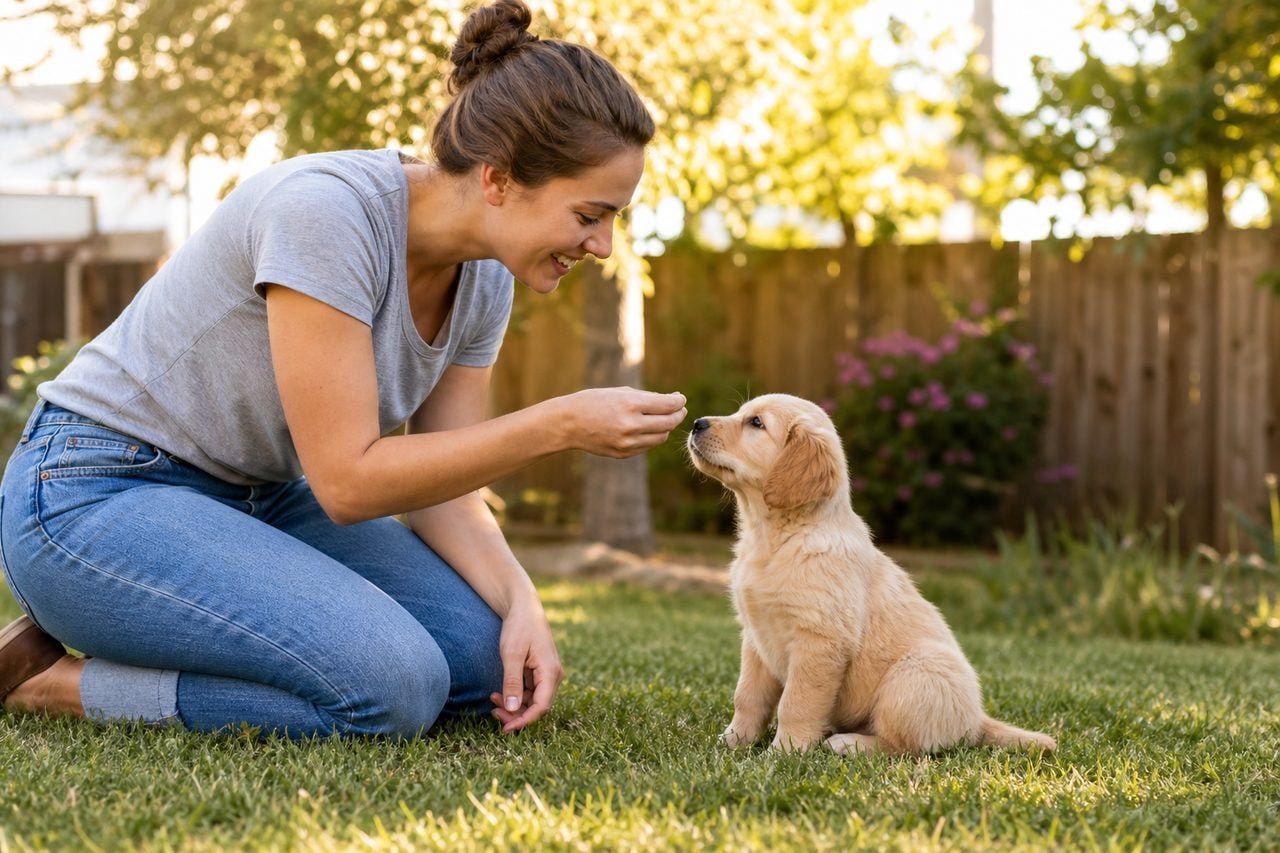
There is a short, irreversible window early in a puppy’s life that shapes who that dog becomes — and most Indianapolis owners do not realize it is closing until it has already shut. Roughly between three and sixteen weeks of age, a puppy’s brain is wired to accept new sights, sounds, surfaces, people, and animals as normal. The experiences a puppy banks during this socialization window become its baseline of what is safe; the experiences it misses can turn into lifelong fears. This is why puppy socialization is its own distinct discipline, separate from teaching sit and stay.
For a city as varied as Indianapolis — the noise and crowds downtown, the strollers and skateboards on the Monon, the wide-open quiet of Zionsville acreage, the constant family traffic of Carmel and Fishers — a well-socialized puppy is one that takes all of it in stride. The challenge, and the part that trips up many owners, is doing this safely while a puppy is still building immunity through its vaccine series.
This guide explains the critical window, the fear periods to watch for, how to balance socialization against vaccination safety, and how Indianapolis-area trainers structure safe early exposure.
The Critical Window: 3 to 16 Weeks
Socialization is not the same as training, and it is not the same as simply owning a friendly puppy. It is the deliberate process of exposing a young puppy to the variety of the world during the developmental window when its brain is most open to forming positive associations — generally from about three weeks to sixteen weeks of age.
During this period, novelty is processed as ordinary. A puppy that meets calm children, hears a vacuum, walks on grass and tile and gravel, sees an umbrella open, and rides in a car before sixteen weeks tends to file all of it under normal. The same puppy encountering those things for the first time at eight months old may react with fear, because the window for easy acceptance has narrowed.
The practical takeaway for Indianapolis owners is urgency. Much of the most valuable socialization happens before a puppy is even fully vaccinated, which creates a real tension — one that good local trainers help families navigate rather than avoid. Waiting until a puppy is ‘safe to go everywhere’ usually means waiting until the most important window has already closed.
Balancing Socialization Against Vaccination Safety
This is the question that paralyzes the most Indianapolis puppy owners: how do you expose a puppy to the world before it is fully protected by vaccines? The answer is not to choose one over the other — it is to socialize smartly, managing risk rather than retreating from it.
The widely shared view among trainers and behavior professionals is that the behavioral risks of under-socialization generally outweigh the disease risk of carefully managed early exposure. Behavior problems rooted in missed socialization are a leading reason dogs are surrendered — a far more common outcome than the diseases owners fear. The key word is managed.
- Avoid high-traffic, unknown-dog ground — skip public dog parks, busy pet-store floors, and rest stops until vaccinations are complete. The open runs at Eagle Creek Park can wait.
- Seek clean, controlled settings instead — a friend’s healthy, vaccinated adult dog; a well-run puppy class on a sanitized floor; your own fenced yard.
- Carry the puppy where you cannot control the ground — a sling or your arms let a puppy see and hear a Broad Ripple sidewalk or a downtown street without paws touching contaminated pavement.
- Bring the world home — invite a steady stream of different people and gentle handling into your house.
Always coordinate the specifics with your veterinarian, who knows your puppy’s vaccine status. The goal is maximum exposure with minimum risk — not zero of either.
Understanding Fear Periods
Socialization is not a smooth, constant climb. Puppies pass through one or more fear periods — developmental phases, often noted around eight to eleven weeks and again later in adolescence, when a puppy becomes temporarily more sensitive and reactive. Something it accepted happily last week may suddenly seem alarming.
This matters enormously for how you socialize. A frightening or overwhelming experience during a fear period can leave a lasting impression far more easily than at other times. So the rule during these stretches is gentleness: keep experiences positive, let the puppy approach new things at its own pace, never force an interaction, and back off the moment a puppy shows real distress rather than pushing through it.
A skilled Indianapolis-area trainer reads these signals and adjusts. The aim of socialization is not flooding a puppy with intensity; it is a steady diet of mild, positive, confidence-building experiences. One bad scare during a sensitive window can undo weeks of careful work, so quality and emotional tone matter far more than sheer quantity.
What to Expose Your Puppy To
Effective socialization is broader than ‘meeting other dogs.’ The richest checklists span people, animals, environments, sounds, surfaces, and handling. The Indianapolis metro offers plenty of variety to draw from, much of it accessible safely even before full vaccination.
- People of all kinds — men, women, children, people in hats and uniforms, people with beards, glasses, canes, and wheelchairs. Variety builds tolerance.
- Sounds — traffic, thunderstorms (Indiana summers deliver plenty), vacuums, doorbells, fireworks recordings at low volume; build positive associations before the real thing.
- Surfaces — grass, tile, hardwood, metal grates, gravel, wet sidewalks, stairs.
- Environments — the car, the vet’s lobby for a happy treat-only visit, a quiet stretch of a suburban street, the sights and sounds of a sidewalk viewed from your arms.
- Handling — paws, ears, mouth, nails, and being gently restrained, so future vet and grooming visits are stress-free.
- Other animals — calm, known, healthy dogs and, where relevant, cats, all in controlled settings.
The principle throughout is to pair each new thing with something good — treats, praise, play — so the puppy learns that novelty predicts pleasant outcomes.
Puppy Playgroups and Structured Classes
One of the safest and most efficient ways to socialize in Indianapolis is a well-run puppy class or supervised playgroup. These bring together puppies of similar age and vaccination status, on a clean and sanitized floor, with a trainer watching every interaction. That supervision is what makes the difference between healthy socialization and a bad experience.
Good puppy playgroups are carefully managed: puppies are matched for size and play style, overwhelmed pups are given breaks, and pushy or fearful behaviors are gently interrupted before they escalate. This is very different from turning loose a crowd of dogs at an unsupervised park — the controlled environment is precisely the point, especially during fear periods.
Because Indiana’s summers and winters drive so much activity indoors, many Indianapolis-area trainers run their socialization classes in climate-controlled spaces year-round. That makes consistent weekly exposure possible regardless of a heat advisory or an ice storm — a real advantage when the critical window is measured in weeks and cannot be paused for the weather.
Socializing by Neighborhood
Where you live in the Indianapolis metro shapes both the socialization challenges your puppy faces and the resources within reach. Matching exposure to your environment makes a confident adult dog.
- Downtown and the Near-North Side — rich in urban stimuli: sidewalks, traffic, elevators, crowds. Carry-and-watch sessions here build a bombproof city dog before full vaccination.
- Broad Ripple and the Mid-North neighborhoods — the Monon Trail offers a steady parade of cyclists, joggers, and strollers to observe from a safe distance.
- The East Side and Irvington — walkable older streets and a friendly dog culture make for gentle, low-key exposure.
- The North Suburbs — Carmel, Fishers, and Noblesville — abundant puppy classes and playgroups; the densest concentration of structured socialization options.
- The South Suburbs — Greenwood and Franklin — a mix of suburban and quieter settings; seek out structured classes for the social-dog piece.
- The West Suburbs — Avon, Plainfield, Brownsburg, and Speedway — more spread out; deliberate trips to varied environments help fill exposure gaps.
- The Northwest — Zionsville and Westfield — quieter, more rural in spots, which means owners must work harder to expose puppies to urban noise and crowds before the window closes.
Use the directory below to find Indianapolis-area trainers running puppy socialization classes near you.
Common Socialization Mistakes
Even well-meaning Indianapolis owners stumble in predictable ways, and knowing the traps helps you avoid them.
Waiting until vaccinations are fully complete. This is the most consequential error, because the puppy often turns sixteen weeks — and the window closes — before that point. Smart, managed early exposure beats waiting.
Confusing exposure with overwhelm. Dragging a frightened puppy into a loud, crowded situation is not socialization; it can be sensitization, teaching the puppy the world is scary. More is not better — positive is better.
Forcing interactions. Letting a stranger loom over a shrinking puppy, or pushing it to greet a dog it is avoiding, backfires. Let the puppy choose to approach.
Neglecting the non-dog stuff. Owners fixate on dog-to-dog play and forget surfaces, sounds, handling, and unusual people — often the bigger gaps. A broad, gentle, positive program across all these categories is what produces a steady adult dog.
Reviewed Puppy Socialization Trainers in Indianapolis
These reviewed Indianapolis-area trainers from our directory handle puppy socialization. Each links to a full profile with specialties, certified credentials, reviews, and contact info:
- Dog Training Elite Carmel / Fishers — 5.0★ (150 reviews)
- Good Bones K9 Training — 5.0★ (31 reviews)
- Pup Club — 5.0★ (20 reviews)
- Steven’s Bootcamp Dog Training Indianapolis — 5.0★ (9 reviews)
- Brooks Canine Training Services — 5.0★ (1 reviews)
- Ultimate Canine — 4.9★ (435 reviews)
- Club Canine — 4.9★ (233 reviews)
- Big N’ Small Paws 317 — 4.9★ (97 reviews)
- Ridgeside K9 Indy — 4.9★ (53 reviews)
- U Dirty Dawg — 4.8★ (1202 reviews)
See all Indianapolis puppy socialization trainers →
Frequently Asked Questions
When is the puppy socialization window in Indianapolis?
The critical socialization window runs roughly from three to sixteen weeks of age. This is the same everywhere; what matters locally is making safe exposure happen during those weeks, since much of it falls before a puppy is fully vaccinated.
Is it safe to socialize my puppy before vaccinations are complete?
Yes, with managed risk. Avoid public dog parks and high-traffic, unknown-dog areas, and instead use clean, controlled settings, known healthy dogs, well-run puppy classes, and carry-and-watch outings. Coordinate the specifics with your veterinarian.
What is a fear period and why does it matter?
Fear periods are developmental phases, often around eight to eleven weeks and again in adolescence, when a puppy is temporarily more sensitive. Keep experiences gentle and positive during these times, since a bad scare can leave a lasting impression.
Are puppy playgroups better than the dog park for socialization?
For young puppies, yes. Supervised puppy classes and playgroups match dogs by age and play style on a sanitized floor with a trainer managing every interaction, which is far safer than an unsupervised public dog park.
What should I socialize my puppy to besides other dogs?
A broad mix: different people, varied sounds like traffic and thunderstorms, surfaces like tile and gravel, handling of paws and ears, car rides, and happy vet visits. Pair each new experience with treats and praise.
Related: read our complete puppy socialization guide or the full Indianapolis dog training overview.
Ready to find the right puppy socialization pro in Indianapolis?