
Puppy Socialization in Lafayette, IN
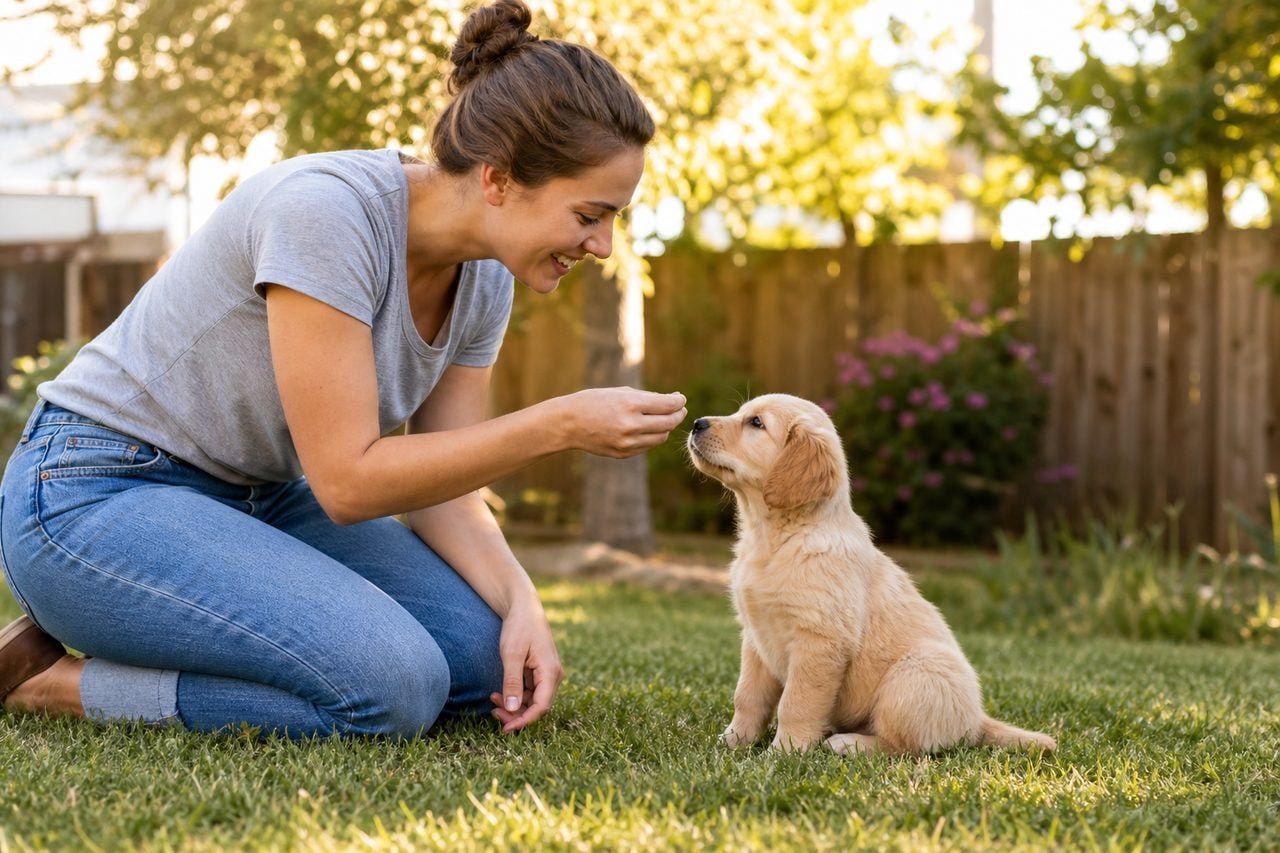
Socialization is one of the most talked-about and most misunderstood parts of raising a puppy. It is not simply letting your dog meet as many other dogs as possible, and it is not a box you check once and forget. Done well, socialization builds a confident, adaptable adult dog that handles the noise, movement, and unpredictability of everyday life with ease. Done poorly, or skipped, it leaves gaps that can show up years later as fear or reactivity.
- What Socialization Actually Means
- The Critical Window and Why Timing Matters
- Building a Socialization Checklist
- Local Places to Socialize a Puppy in Greater Lafayette
- Reading Your Puppy and Keeping Experiences Positive
- Common Socialization Mistakes to Avoid
- Continuing Socialization Through Adolescence and Beyond
- Reviewed trainers
- FAQ
Greater Lafayette is an unusually good place to raise a well-socialized dog, precisely because it contains so many different environments within a short drive. A puppy here can experience the crowds and skateboards of the Purdue campus, the quiet woods of the Celery Bog, the open expanse of Prophetstown State Park, the small-town sidewalks of Delphi or Battle Ground, and the family bustle of Columbian Park, all in the same week. The trick is introducing these experiences in the right way, at the right pace.
This guide explains what socialization really means, why timing matters so much, and how to use the Lafayette area’s variety to raise a dog that takes the world in stride.
What Socialization Actually Means
Socialization is the process of teaching a puppy that the ordinary features of human life are normal and safe. That includes people of different ages and appearances, other animals, a wide range of sounds, various surfaces underfoot, novel objects, vehicles, and new places. The goal is not to make your dog love everything, but to make it comfortable and unbothered by the everyday.
A common mistake is equating socialization with dog-to-dog play. Play is part of it, but a dog that only learns to interact with other dogs while ignoring humans, or one that becomes so focused on playing that it cannot settle, is not well socialized. Equally important is teaching a puppy to be calm around other dogs without needing to greet or engage every one it sees, a skill that makes walks along busy trails far more pleasant.
Good socialization is also about the quality of experiences, not just the number. One frightening encounter can do more harm than a dozen positive ones do good. The aim is a steady diet of experiences that the puppy finds neutral or pleasant, always at a level it can handle.
It helps to think of socialization as building a bank account of positive associations. Every calm, pleasant encounter with something new adds a deposit, and the fuller that account, the more resilient your dog becomes when it eventually meets something genuinely startling, as every dog does at some point. A well-stocked account means a dropped pan or a passing garbage truck registers as a mild surprise rather than a crisis. This is why breadth matters so much in the early weeks: you are not just teaching your puppy about the specific things it meets, but teaching it a general expectation that new things tend to turn out fine.
There is also a distinction worth drawing between socialization and habituation. Socialization refers specifically to learning about social partners, people and animals, while habituation is the broader process of getting used to non-social features of the environment like noises, objects, and surfaces. Both fall under the everyday umbrella of socialization and both matter enormously, but naming them separately reminds owners not to pour all their effort into dog play while neglecting the vacuum cleaner, the umbrella, or the man in the reflective vest.
The Critical Window and Why Timing Matters
Puppies pass through a sensitive period for socialization that runs roughly from three weeks to sixteen weeks of age. During this window, their brains are especially primed to accept new experiences as normal. Positive exposure during these weeks pays lifelong dividends, while a lack of exposure can leave a puppy wary of things it never encountered.
Most puppies come home partway through this window, around eight weeks, which leaves a precious but short span of time to work with. This creates a well-known tension: the critical window closes before a puppy has completed its full vaccination series. The old advice to keep a puppy home until fully vaccinated is now understood to carry its own serious risk, because a puppy that misses socialization can develop behavior problems that are, statistically, a far more common reason dogs lose their homes than the diseases owners fear.
The modern approach is to socialize safely rather than not at all. Work with your veterinarian to balance exposure and protection. Choose clean, lower-risk environments, favor controlled encounters with known healthy dogs, and avoid places where lots of unknown dogs congregate until vaccinations are complete. Missing the window entirely is not something you can simply make up later; while older dogs can still learn, it takes much more work.
Within the sensitive period there is also a well-documented fear period, often around eight to eleven weeks, when puppies can be especially prone to forming lasting negative associations from a single scary event. This overlaps precisely with the age most puppies come home, which is one more reason to keep early experiences gentle and to protect a young puppy from being frightened or overwhelmed. If something startles your puppy during this stage, respond calmly, create distance, and rebuild the association with treats rather than making a fuss. A second, milder fear period can appear later during adolescence, so the same calm approach stays useful well past the first few months.
The practical takeaway is urgency without panic. You have a limited, valuable window and should use it deliberately, but the work is pleasant: short outings, treats, and letting your puppy meet the world at a pace it can manage. Owners who plan a loose weekly socialization routine during these weeks, rather than leaving it to chance, tend to end up with noticeably more confident adult dogs.
Building a Socialization Checklist
Rather than socializing at random, it helps to work through a deliberate checklist so no major category gets overlooked. Aim for variety across several dimensions, introducing each in a calm, rewarding way.
People
- Adults and children, though always with supervised, gentle child interactions
- People wearing hats, sunglasses, hoods, and high-visibility vests
- People using canes, wheelchairs, strollers, and bicycles
- People with beards, uniforms, and different voices
Sounds and surfaces
- Traffic, sirens, and the general hum of a busy street
- Household noises like vacuums, doorbells, and kitchen clatter
- Grass, gravel, metal grates, wood decking, and slick floors
- Thunderstorms, which are common in Indiana summers, introduced gently at low volume first
Situations
- Car rides that do not always end at the vet
- Being handled by others, including gentle vet-style exams at home
- Brief, calm periods of being alone to prevent separation distress
Keep a simple log if it helps. Checking off categories ensures your puppy experiences a genuinely broad slice of the world rather than the same few things repeatedly.
Local Places to Socialize a Puppy in Greater Lafayette
The Lafayette area’s range of environments is a genuine asset for socialization, provided you match the setting to your puppy’s current confidence level. Start easy and work up.
For early, low-key exposure, quiet residential streets and the edges of parks are ideal. The Celery Bog Nature Area in West Lafayette offers a calm natural setting with occasional walkers and wildlife scents, a gentle step up from the neighborhood. As your puppy gains confidence, the Wabash Heritage Trail and the Cattail Trail add more foot traffic and varied terrain.
For open space and new sights, Prophetstown State Park and the grounds around the Tippecanoe Battlefield in Battle Ground give a puppy room to observe from a comfortable distance. Fort Ouiatenon along the river is another scenic, generally low-pressure option. When your puppy is ready for real-world intensity, the sidewalks around the Purdue campus deliver skateboards, bicycles, crowds, and squirrels in abundance, and small downtowns like Delphi, Monticello, or Frankfort offer main-street bustle on a smaller scale.
Wherever you go, keep your puppy leashed unless you are in a clearly designated off-leash area, and confirm the rules for each location, since ordinances differ across the Lafayette area. The goal at every stop is a relaxed puppy taking things in, not an overwhelmed one being dragged through a gauntlet.
Everyday errands can double as socialization outings, often more effectively than dedicated trips. A calm sit outside a busy store entrance while people come and go, a short visit to an outdoor patio where your puppy practices settling, or simply parking near an active area and letting the puppy watch the world from the safety of the car all provide rich exposure with little effort. The variety of Greater Lafayette’s downtowns and campus edges means you rarely have to go far to find a fresh, manageable environment.
Seasonality shapes the options too. Purdue’s academic calendar means West Lafayette swings between crowded, energetic weeks during the semester and quieter stretches over breaks and summer, giving you a natural way to dial the intensity of an outing up or down. Football Saturdays and campus events offer high-stimulation practice for a confident puppy, while a snowy winter morning at a park delivers a calm, low-key setting for one still building confidence. Reading the calendar and the weather lets you match the challenge to your puppy’s current level.
Reading Your Puppy and Keeping Experiences Positive
The single most important skill in socialization is learning to read your puppy’s body language so you can keep every experience within its comfort zone. A confident, relaxed puppy has a loose body, a soft mouth, and natural curiosity. A stressed puppy may tuck its tail, flatten its ears, lick its lips, yawn out of context, freeze, or try to move away.
When you see signs of stress, do not push forward and do not force the puppy toward whatever worries it. Instead, add distance, let the puppy observe from a spot where it feels safe, and pair the experience with treats and a calm voice. Allowing a puppy to approach something new at its own pace builds confidence; forcing it can create a lasting fear.
Flooding, the practice of overwhelming a puppy with a scary stimulus until it stops reacting, is not socialization and often backfires. A puppy that shuts down is not learning that the thing is safe; it is learning that it has no way to escape. Gentle, gradual exposure with the puppy always feeling it has a choice is the approach that produces genuine confidence.
Reward generously. Every time your puppy encounters something new and nothing bad happens, and especially when good things like treats appear, its brain files that experience as safe. You are, in effect, paying your puppy to build a positive worldview.
Learn to recognize the more subtle stress signals too, because puppies rarely go straight from calm to panic. The early, quiet signs, a lip lick, a quick yawn, turning the head away, a paused sniff that is really avoidance, are your cue to ease off before the puppy tips into genuine fear. Owners who catch these small signals and respond by adding a little distance almost never end up with an overwhelmed dog. Those who miss them, or push through, are the ones who find themselves dealing with a puppy that suddenly seems to react to everything.
Puppies also socialize best when they are not tired, hungry in a distracting way, or already overstimulated. A short, positive outing when your puppy is fresh beats a long one when it is worn out, and ending each experience on a good note, before the puppy hits its limit, leaves it eager for the next one. Quality over quantity is the rule, and a puppy that comes home from an outing relaxed rather than frazzled is one that got the dose right.
Common Socialization Mistakes to Avoid
Even well-meaning owners fall into a few predictable traps. Being aware of them makes them easier to sidestep.
- Doing too much too fast. A packed schedule of new experiences can overwhelm a puppy and teach the opposite of what you intend. Space things out and watch for fatigue.
- Focusing only on other dogs. Dog play is valuable, but people, sounds, surfaces, and handling matter just as much and are often neglected.
- Allowing every greeting. Letting a puppy rush up to every dog and person teaches it that pulling toward others is always rewarded, which undermines leash manners and can create frustration-based reactivity later.
- Ignoring fear. Telling a scared puppy to tough it out, or comforting it in a way that reinforces panic, both miss the mark. The right response is to reduce the intensity and rebuild at a level the puppy can handle.
- Stopping too soon. Socialization does not end at sixteen weeks. Continued positive exposure through adolescence maintains what you built, because dogs can regress if new experiences dry up during that stage.
Continuing Socialization Through Adolescence and Beyond
The critical window gets the most attention, but socialization is really a lifelong project. Adolescence, from roughly five months to a year and a half, is a period when fears can resurface and previously accepted things may suddenly seem alarming. This is normal, and the response is the same as always: calm, positive exposure at a manageable level.
Keep taking your dog to new places and revisiting familiar ones. A dog that stopped experiencing variety after puppyhood can become narrower and more reactive over time, while one that keeps encountering the world stays adaptable. For Lafayette owners, the seasonal rhythm helps: summer festivals and busy trails, autumn walks through changing woods, winter’s quiet snow-covered parks, and spring’s return of activity all give a dog fresh, ordinary experiences to absorb.
Ongoing socialization does not have to mean constant new places. Revisiting familiar environments keeps a dog fluent in them, while occasionally adding something novel stretches its comfort zone a little further. A practical routine might pair your regular walks with an occasional new outing, a different trailhead one week, a quiet downtown the next, so variety stays part of your dog’s normal life rather than something that stopped when puppyhood ended. Dogs are creatures of habit, and the habits you keep alive are the ones that stick. A dog that experienced a bustling farmers market or a busy trailhead as a puppy but never again in the years after can lose some of that early ease, whereas one that keeps meeting the ordinary variety of the area stays comfortable in it.
If your dog does develop fear or reactivity despite your efforts, that is not a failure and not a life sentence. A qualified, reward-based trainer or a veterinary behavior professional can build a structured plan to help. Browsing a local directory of trainers who work with fearful or reactive dogs is a sensible first step, since these cases benefit from experienced, humane guidance rather than trial and error. The earlier you seek help when a pattern emerges, the easier it usually is to turn around, so it is better to ask sooner than to wait and hope a growing fear resolves on its own.
Reviewed Puppy Socialization Trainers in Lafayette
These reviewed Lafayette-area trainers from our directory handle puppy socialization. Each links to a full profile with specialties, certified credentials, reviews, and contact info:
- Whetstone Canines — 5.0★ (11 reviews)
- Pals and Paws Academy
- Swiss Army K9 Academy
- H.W. Canine Design — 5.0★ (47 reviews)
- Engineering Change: Canine + Equine Training — 5.0★ (22 reviews)
- Greater Lafayette Kennel Club — 5.0★ (2 reviews)
- Leader of the Pack Canine — 4.9★ (107 reviews)
- VonBernd K9 Training Center — 4.8★ (61 reviews)
- Rin Tin Inn — 4.8★ (37 reviews)
- Pawsitive Pets, LLC — 4.7★ (80 reviews)
See all Lafayette puppy socialization trainers →
Frequently Asked Questions
What is the socialization window for puppies?
The sensitive period for socialization runs roughly from three to sixteen weeks of age, when a puppy’s brain is especially open to accepting new experiences as normal. Most puppies come home around eight weeks, so owners have a short but valuable stretch of time to provide positive, varied exposure before this window begins to close.
Can I socialize my puppy before its vaccinations are complete?
Yes, and most experts now recommend it, done carefully. The behavior problems that come from missed socialization are a more common reason dogs lose their homes than the diseases owners worry about. Work with your veterinarian to choose lower-risk settings, favor controlled meetings with known healthy dogs, and avoid places where many unknown dogs gather until vaccinations are finished.
Is socialization just about meeting other dogs?
No. Dog-to-dog interaction is only one part. Equally important is positive exposure to people of all kinds, everyday sounds, different surfaces, vehicles, handling, and new places, plus learning to stay calm around other dogs without needing to greet every one. A dog socialized only to other dogs can still struggle with the rest of the world.
Where can I socialize my puppy around Lafayette?
Start with quiet streets and calm natural areas like the Celery Bog Nature Area, then work up to busier spots such as the Wabash Heritage Trail, Prophetstown State Park, and eventually the lively sidewalks around the Purdue campus. Small downtowns like Delphi, Monticello, and Battle Ground offer manageable main-street activity. Keep your puppy leashed unless an area is clearly designated off-leash, and confirm local rules first.
What if my puppy seems scared during socialization?
Do not force it forward. Add distance, let the puppy observe from where it feels safe, and pair the experience with treats and a calm voice so it can approach at its own pace. Overwhelming a scared puppy tends to create lasting fear rather than confidence. If fear is frequent or intense, a reward-based trainer can help you build a gradual plan.
Is it too late to socialize an older dog?
It is never too late to improve, though it takes more time and patience than during the puppy window. Adult dogs can learn that new things are safe through gradual, positive exposure kept within their comfort level. For dogs with established fear or reactivity, a qualified trainer or veterinary behavior professional can design a structured program that produces real progress.
Related: read our complete puppy socialization guide or the full Lafayette dog training overview.
Ready to find the right puppy socialization pro in Lafayette?