
Board & Train in Lafayette, IN
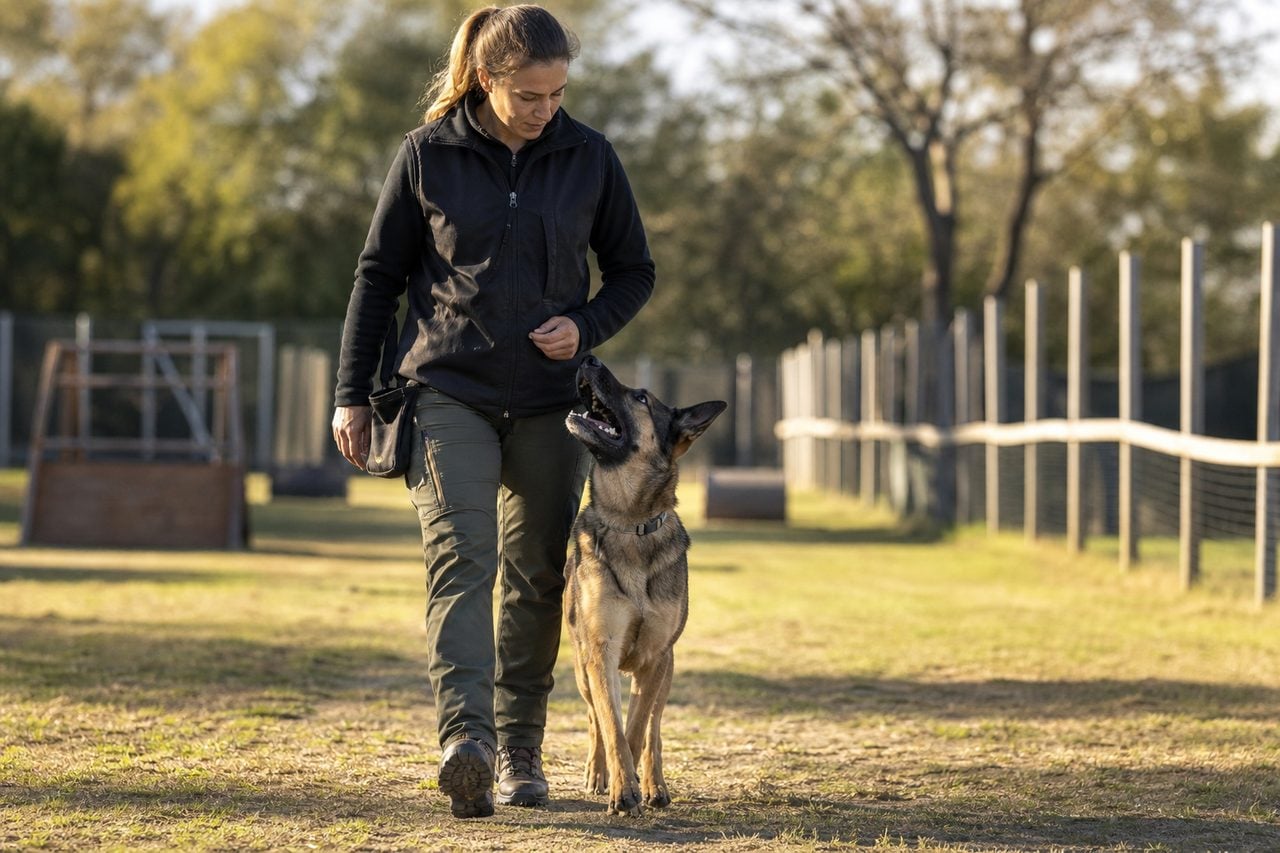
Board and train programs send a dog to live with a professional trainer for a set stretch of time — often two to four weeks — so the day-to-day teaching happens in the trainer’s hands rather than the owner’s. For a lot of busy households across Greater Lafayette, from the neighborhoods near Purdue in West Lafayette to the older streets on the east side of Lafayette proper, this format solves a real problem: the dog gets consistent, structured repetition every single day, which is exactly what accelerates learning.
- What a Board and Train Program Actually Is
- How In-Kennel Training Works Day to Day
- Choosing a Board and Train in Greater Lafayette
- The Handoff: Why the Turnover Lesson Decides Everything
- Costs, Timelines, and Setting Realistic Expectations
- Preparing Your Dog and Home for the Stay
- Is Board and Train Right for Your Dog?
- Reviewed trainers
- FAQ
It is not a magic fix, and it is not right for every dog or every family. A board and train is a tool, and like any tool it works when it is matched to the right job. This guide explains how in-kennel programs actually function, what to look for in a Tippecanoe County trainer, how the handoff back to you determines whether the results last, and the honest trade-offs so you can decide whether boarding is the right path or whether private lessons closer to home in Lafayette or West Lafayette would serve you better.
Throughout, the emphasis is on questions to ask and standards to hold, not on any single program. The local training market here is small enough that reputation travels, and the right fit is the one that lines up with your dog’s temperament, your goals, and your willingness to keep up the work after the dog comes home.
What a Board and Train Program Actually Is
In a board and train, your dog boards with the trainer — either at a dedicated facility or in the trainer’s home — and receives daily training sessions over the length of the program. The dog eats, sleeps, and lives in the training environment, which means the trainer controls the variables that usually derail progress at home: inconsistent cues, competing family members, distractions, and the gap between sessions that lets a dog forget what was taught yesterday.
Most programs run in tiers. A shorter two-week option typically targets foundation obedience — reliable sit, down, place, recall, and loose-leash walking. A three or four-week program adds duration, distance, and distraction work, and often introduces off-leash reliability where the dog and environment allow it. Longer programs are usually reserved for serious behavior work or for building toward advanced off-leash control.
The core advantage is repetition density. A dog in a good board and train might get several short, focused sessions a day, every day, with a handler who reads canine body language fluently and adjusts in real time. That compression is what produces visible change in weeks rather than months. The core limitation is equally important: the dog learns to perform for the trainer, in the trainer’s environment, and transferring that reliability to you and to your home in Lafayette is a separate step that many owners underestimate.
Who it suits
- Households with limited time to run daily structured sessions themselves
- Dogs that need to break an entrenched habit — pulling, door-dashing, jumping — through consistent daily repetition
- Owners who want a strong obedience foundation installed quickly and are committed to maintaining it
- Families juggling work, kids, and a young or high-energy dog where a jump-start genuinely helps
How In-Kennel Training Works Day to Day
A well-run program follows a predictable arc. The first few days are decompression and assessment. The trainer lets your dog settle into the new environment, observes how it handles kennel time, feeding, other dogs, and novel spaces, and identifies the real starting point — which is often different from what the intake form suggested.
From there, sessions build in layers. Early on, the trainer teaches individual behaviors in a low-distraction setting: a clean sit, a solid down, a place command that the dog will hold. As those become fluent, the trainer proofs them — adding duration (hold the down longer), distance (respond from across the room), and distraction (respond while something interesting is happening). This proofing stage is where the value is created, because a cue that only works in a quiet room is not a trained behavior, it is a party trick.
The best programs deliberately generalize the training. That means practicing in varied environments so the dog does not learn that obedience only applies in one room. In the Lafayette area, a trainer might work a dog around the trails and open space at Prophetstown State Park near Battle Ground, along the Wabash Heritage Trail, in a parking lot with car noise, or near the edges of the Celery Bog Nature Area in West Lafayette where there is wildlife scent and foot traffic. Exposure to real-world distraction is what makes obedience hold up when the dog is finally back home walking a normal Tippecanoe County sidewalk.
What a good daily structure includes
- Multiple short sessions rather than one long grind — dogs learn better in focused bursts
- Structured rest and crate time so the dog learns to settle, not just to work
- Controlled socialization or neutrality work where appropriate
- Progress notes or short video clips shared with you during the stay
Choosing a Board and Train in Greater Lafayette
Because there is no single licensing body that governs dog trainers, the burden of vetting falls on you. That is not a reason to be anxious — it is a reason to ask direct questions and expect clear answers. A confident professional will welcome them.
Start with methodology. Ask the trainer to describe how they teach a new behavior and how they handle a dog that gets it wrong. You want to hear a coherent, humane philosophy — not vague promises. Ask what equipment they use and why, and ask them to explain how any tool is introduced and conditioned rather than simply applied. A trainer who cannot explain their approach in plain language is a trainer to pass on.
Then look at the environment your dog will actually live in. Ask for a tour, in person, of where the dogs are kenneled and trained. You are checking for cleanliness, secure fencing and gating, climate control, and a calm atmosphere. A facility that is reluctant to show you the boarding area is telling you something. If the program runs out of a trainer’s home, the same standards apply — you should still see where your dog sleeps and trains.
Questions worth asking before you book
- What specific, measurable behaviors will my dog reliably perform when the program ends?
- How many dogs are in your care at once, and how many trainers handle them?
- What is your daily session structure, and how much rest does each dog get?
- How do you handle a medical issue or emergency — which local veterinarian do you use?
- What does the transfer process look like when my dog comes home, and how many follow-up lessons are included?
- Can you connect me with recent local clients whose dogs had similar issues to mine?
Ask about vaccination and health requirements too. A responsible program requires proof of core vaccinations and will have a plan for parasite prevention and for isolating any dog that shows signs of illness. If your dog has never boarded before, ask how they ease anxious dogs into kennel life.
The Handoff: Why the Turnover Lesson Decides Everything
This is the single most important part of a board and train, and the part most likely to be skimped. When your dog comes home, it has learned to respond to a specific handler using specific cues, timing, and body language. If you do not learn to reproduce that, the training decays fast. The dog is not being stubborn — it simply never learned that the rules apply to you the way they applied to the trainer.
A serious program treats the turnover as a required, structured phase, not an afterthought. Expect at least one hands-on session where the trainer teaches you the cues, the timing, the leash mechanics, and the way to reward and correct consistently. Many good programs build in several follow-up lessons over the weeks after homecoming, because problems predictably resurface once real life — kids, guests, the mail carrier, the squirrel in the yard — re-enters the picture.
Plan for a transition period at home. The first week back is about you enforcing the new standards calmly and consistently. Keep the dog on a leash or long line indoors at first if the trainer recommends it, practice the commands in short daily sessions, and resist the urge to let old habits creep back because the dog seems to know better now. It does know better — but only if you hold the line.
Signs the program takes the handoff seriously
- Follow-up or transfer lessons are included in the price, not sold separately later
- You are given a written or video summary of the exact cues and routines
- The trainer offers a clear maintenance plan for the first 30 to 60 days
- There is a channel to ask questions after the dog is home
Costs, Timelines, and Setting Realistic Expectations
Board and train is generally the most expensive training format because you are paying for boarding, daily one-on-one professional time, and facility overhead all at once. Pricing varies widely by program length, the trainer’s experience, and what the program targets, so rather than quoting numbers, the practical advice is to compare programs on what is included: total number of training days, number of follow-up lessons, any equipment provided, and whether the turnover lessons are bundled in.
On timelines, be honest with yourself about what a few weeks can and cannot do. A two-to-four week program can install a solid obedience foundation and meaningfully reduce common nuisance behaviors. It cannot rewire a deeply rooted fear, resolve serious aggression in a single pass, or guarantee flawless off-leash reliability the moment the dog gets home. Those outcomes depend on the dog, the underlying cause, and — again — your follow-through.
Be skeptical of any program promising a permanent, hands-off cure. Real training is a skill the whole household maintains. The value of a board and train is the head start and the professional foundation, and the return on that investment is directly proportional to how consistently you keep up the work afterward.
What to weigh before committing
- Total cost against the included lesson count and follow-up support
- Whether your dog’s specific issue is a good fit for the intensive format
- Your own bandwidth to maintain the training for the following months
- Whether private in-home lessons might achieve your goals for less
Preparing Your Dog and Home for the Stay
The weeks before a board and train, and the days right after, do a lot to determine how smoothly the whole thing goes. A little preparation reduces your dog’s stress, protects its health, and makes the eventual transfer of training easier.
On the health side, make sure vaccinations are current and get any required documentation in order well ahead of the start date; a responsible program will specify what it needs. If your dog has never boarded before, it can help to build a little positive association with crate time and short separations in the weeks leading up, so the environment is less of a shock. Talk to the trainer about your dog’s diet and bring its regular food to avoid a sudden change that could upset its stomach during an already novel experience. Share an honest, complete history — including any past bites, fears, medical conditions, or failed training attempts — because withholding information does not protect your dog, it handicaps the trainer and can put both dog and handler at risk.
Prepare your home too, especially if the goal includes fixing household-specific problems like door-dashing, counter-surfing, or jumping on guests. Think through the routines and rules you want to hold once the dog is back, and get the whole household on the same page before the dog returns, so everyone enforces the new standards identically from day one. If the trainer recommends specific equipment or a management setup — a particular leash, a crate, baby gates, a long line for the yard — have it ready in advance. The smoother the reentry, the better the training holds.
A simple pre-stay checklist
- Confirm and document required vaccinations and health requirements
- Bring your dog’s regular food and share any medical or dietary needs
- Give the trainer a complete, honest behavior history
- Align the whole household on the rules and routines for homecoming
- Have any recommended equipment ready before the dog returns
Is Board and Train Right for Your Dog?
For some dogs and households, boarding is the clear best option. For others, it is the wrong tool. Knowing the difference saves money and spares your dog an experience it does not need.
Board and train tends to shine for foundation obedience, for breaking entrenched nuisance habits through daily repetition, and for owners whose schedules genuinely prevent them from running consistent sessions at home. It is a strong choice for a young, energetic dog that needs structure installed quickly and for households that have tried group classes and found the once-a-week cadence too slow to stick.
It is a poorer fit for a few situations. A dog with severe separation-related distress may struggle badly with weeks away from its family, and the stress can undercut the training. A dog with serious fear or aggression rooted in a medical or emotional cause often needs a different path — a veterinary workup and a behavior professional — before or instead of a general obedience board and train. And an owner who wants to be deeply involved in the teaching process, or who simply enjoys training, may get more lasting value from private lessons where they build the skills alongside their dog.
Consider alternatives when
- Your dog has significant separation anxiety and would find boarding distressing
- The core problem is fear, reactivity, or aggression that needs a behavior assessment first
- You want to learn to train the dog yourself, not have it trained for you
- Your budget favors a longer, lower-intensity path like private or group lessons
Whatever you choose, the goal is the same: a dog that is easier to live with and a household that knows how to keep it that way. A good local trainer will tell you honestly if boarding is not the right call for your situation — and that honesty is itself a strong sign you have found a professional worth trusting.
Reviewed Board & Train Trainers in Lafayette
These reviewed Lafayette-area trainers from our directory handle board & train. Each links to a full profile with specialties, certified credentials, reviews, and contact info:
- Engineering Change: Canine + Equine Training — 5.0★ (22 reviews)
- Greater Lafayette Kennel Club — 5.0★ (2 reviews)
- Leader of the Pack Canine — 4.9★ (107 reviews)
- Markay’s Castle of the Dogs — 4.7★ (46 reviews)
- Swiss Army K9 Academy
- Salty Raccoon Ranch Kennels & Training
See all Lafayette board & train trainers →
Frequently Asked Questions
How long does a typical board and train program last?
Most fall between two and four weeks. A two-week program usually targets foundation obedience — sit, down, place, recall, and leash manners. Three to four weeks adds duration, distance, and distraction proofing and often introduces off-leash reliability. Longer programs are typically reserved for serious behavior work. The right length depends on your dog’s starting point and your goals, so ask a Lafayette-area trainer to recommend a duration based on an assessment rather than picking by price alone.
Will my dog forget everything once it comes home?
Not if the handoff is done properly. Dogs learn to respond to the handler who trained them, so the transfer lesson — where you learn the exact cues, timing, and leash mechanics — is what makes the results last. Expect to keep up short daily practice and to enforce the new standards consistently for the first several weeks. Programs that include follow-up lessons and a written or video summary of the routines give you the best chance of holding the gains.
How do I vet a board and train facility in the Lafayette area?
Ask to tour in person where your dog will actually sleep and train, and check for cleanliness, secure gating, and a calm atmosphere. Ask the trainer to explain how they teach a behavior and how they handle mistakes, what equipment they use and why, how many dogs are in their care at once, and which local veterinarian they rely on in an emergency. Request references from recent clients whose dogs had issues similar to yours. A professional will answer all of this directly.
Is board and train worth the higher cost?
It can be, when it is matched to the right job. You are paying for boarding plus daily one-on-one professional time, so it is usually the priciest format. The return depends on two things: whether your dog’s issue suits an intensive daily program, and whether you maintain the training afterward. For a foundation jump-start or breaking an entrenched habit with a busy schedule, many owners find it worthwhile. For fear or aggression cases, a behavior assessment first is often the smarter spend.
Can a board and train fix aggression or severe anxiety?
Be cautious with any program that promises this. General obedience boarding is built for teaching commands and manners, not for resolving deep-rooted fear, reactivity, or aggression, which often have a medical or emotional component. A dog with severe separation distress may also find weeks away from home genuinely harmful. For serious behavior cases, start with a veterinary workup and a qualified behavior professional — the Purdue College of Veterinary Medicine in West Lafayette is a regional veterinary resource — before considering an intensive obedience program.
What should I do during the first week my dog is home?
Treat it as a transition. Keep sessions short and daily, use the exact cues the trainer taught you, and enforce the new rules calmly and consistently even when the dog seems to already know them. Follow any recommendation to keep the dog on a leash or long line indoors at first. Reintroduce real-life challenges — guests, other dogs, the yard, walks around your Tippecanoe County neighborhood — gradually, and lean on the trainer’s follow-up support when a behavior wobbles. Consistency in this window is what locks the training in.
Related: read our complete board & train guide or the full Lafayette dog training overview.
Ready to find the right board & train pro in Lafayette?