
Puppy Socialization in New Albany, IN
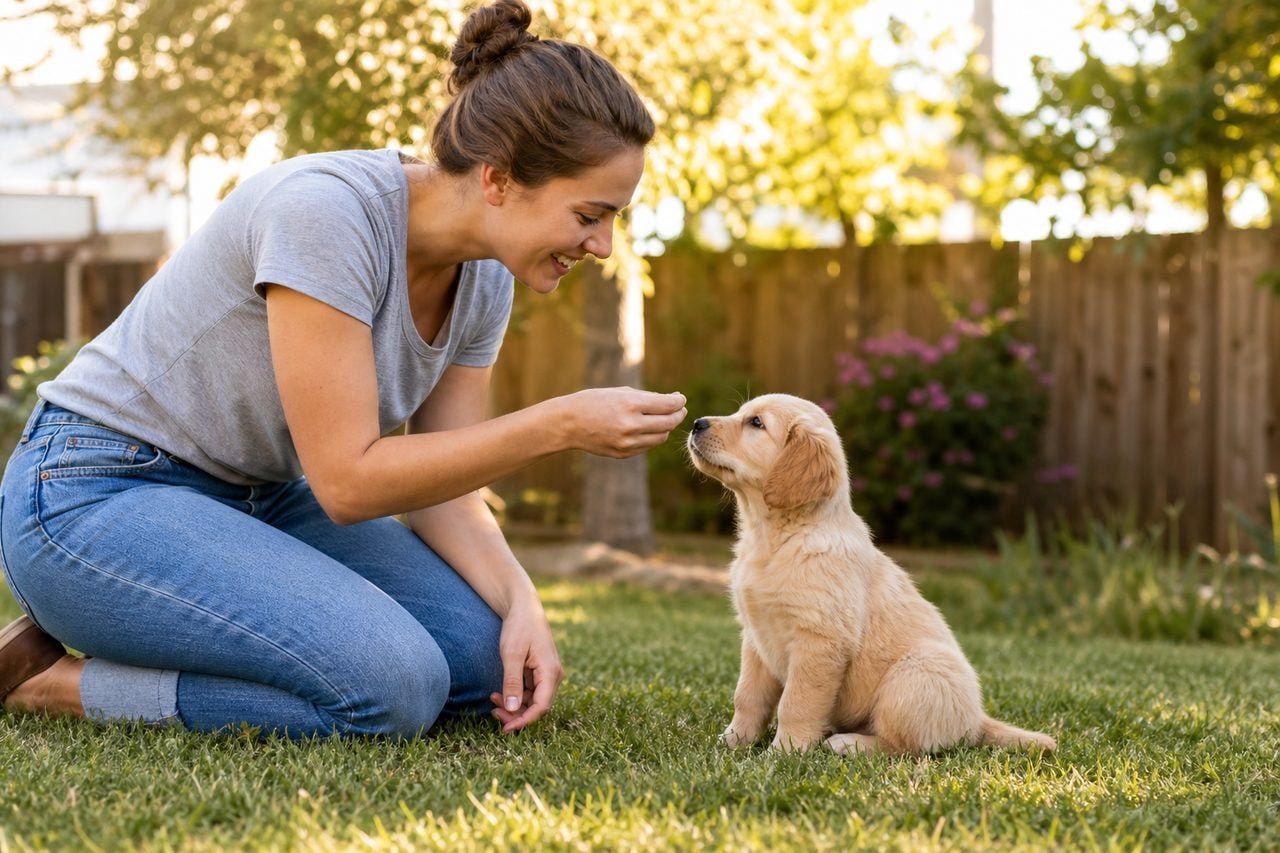
Socialization is one of the most misunderstood parts of raising a puppy. Many owners assume it means letting their dog play with as many other dogs as possible, but true socialization is broader and more careful than that. It is the deliberate process of introducing a young puppy to the full range of people, animals, environments, sounds, and surfaces it will encounter in life — and doing so in a way that builds positive associations rather than fear. For a puppy growing up in New Albany, that world includes the river cities of southern Indiana, the busier pull of the Louisville metro just across the Ohio, and everything in between.
- What Socialization Really Means
- The Critical Window and Why Timing Matters
- Safe Socialization Before Full Vaccination
- People, Sounds, and Surfaces: Building a Broad Comfort Zone
- Using the New Albany Area for Socialization
- Puppy Classes and Structured Socialization
- Avoiding Common Socialization Mistakes
- Reviewed trainers
- FAQ
The stakes are high because the socialization window is narrow. A puppy’s most receptive period for accepting novelty closes surprisingly early, typically within the first few months of life. Experiences during that window shape whether a dog grows up curious and resilient or nervous and reactive. Missed socialization is one of the most common roots of adult behavior problems, and it is far harder to repair later than to build correctly the first time.
This guide covers what socialization actually means, how to do it safely before a puppy is fully vaccinated, and how to use the specific environments of the New Albany and Kentuckiana area — from the Ohio River Greenway to the wooded Knobs — to raise a confident, well-adjusted dog. The emphasis throughout is on quality of exposure over quantity, because a few good experiences beat many overwhelming ones.
What Socialization Really Means
Socialization is often reduced to dog-to-dog play, but that is only a fraction of the picture. A properly socialized puppy is comfortable with a wide variety of people — different ages, appearances, voices, and ways of moving. It is at ease on many surfaces, from grass and gravel to metal grates and slick tile. It has heard household appliances, traffic, thunderstorms, and the general hum of a busy area without concluding that these things are threats. And yes, it has learned to read and interact appropriately with other dogs.
The goal is not to expose a puppy to everything at maximum intensity. It is to build a bank of positive or neutral experiences so that novelty, when it appears later, is met with curiosity rather than alarm. A dog that met dozens of calm, friendly people as a puppy tends to greet strangers politely as an adult. A dog that never encountered children may find them baffling or frightening years down the road.
Crucially, socialization is about the puppy’s emotional experience, not the checklist. Flooding a nervous puppy with overwhelming stimulation can create the exact fear the owner hoped to prevent. The art lies in reading the puppy’s body language — loose and curious versus tense and shrinking — and adjusting distance and intensity so each experience lands as manageable. Done well, socialization is a series of small wins that teach a puppy the world is safe and interesting.
It helps to think of socialization as building a savings account of good experiences that the dog draws on for the rest of its life. Every calm, positive encounter is a small deposit; every frightening or overwhelming one is a withdrawal that can be costly to recover. Owners who keep this framing in mind naturally slow down, watch the puppy, and prioritize how each experience feels rather than how many boxes they can tick in a weekend. That mindset is what separates socialization that builds resilience from socialization that accidentally breeds anxiety.
Learning to read a puppy’s body language is a skill worth developing deliberately, because it tells an owner in real time whether an experience is helping or hurting. A comfortable puppy moves loosely, sniffs and investigates, and takes treats readily. A stressed puppy shows the opposite: a tucked tail, ears pinned back, a lowered or frozen posture, lip-licking or yawning out of context, turning away, or refusing food it would normally take. When those signals appear, the answer is always more distance and less intensity, never pushing the puppy to power through.
Because New Albany sits at the edge of a full metro, its puppies have the raw material for excellent socialization close at hand. The task is to harness that variety thoughtfully rather than letting it hit the puppy all at once.
The Critical Window and Why Timing Matters
There is a developmental period, generally spanning the early weeks and months of a puppy’s life, when the young brain is unusually open to accepting new experiences as normal. During this window, a puppy that meets a vacuum cleaner, a man in a hat, or a skateboard is likely to file each away as unremarkable. After the window narrows, those same novelties are more likely to trigger caution or fear, and it takes far more work to change the dog’s mind.
This biology is why the socialization window is precious and non-renewable. It is also why responsible breeders and shelters begin gentle exposure before puppies even go home, and why owners should hit the ground running once a puppy arrives. Every week of the window is a resource that cannot be recovered later.
The window also explains a common and painful pattern: a puppy that seemed friendly and bold suddenly becomes wary of new things around adolescence. Sometimes this reflects a normal fear period, and sometimes it reveals gaps in early socialization that only surface once the dog is older. Consistent, positive exposure during the early window is the best insurance against both.
There is a tension worth naming. The socialization window overlaps with the period before a puppy has completed its vaccination series, which means owners must balance disease safety against social development. The resolution is not to lock the puppy away — that trades one risk for another — but to socialize smartly in ways that minimize disease exposure, a topic covered in the next section. The key point is that timing is not flexible; the window opens and closes on the puppy’s schedule, not the owner’s.
Safe Socialization Before Full Vaccination
The most common mistake well-meaning owners make is keeping a puppy completely isolated until its vaccinations are finished, then discovering the socialization window has largely closed. The safer approach threads the needle: expose the puppy richly to the world while avoiding the specific settings where disease risk is highest, such as places heavily trafficked by unknown or unvaccinated dogs.
Plenty of high-value socialization requires no contact with strange dogs at all. Carrying a puppy through a busy outdoor area lets it observe traffic, crowds, and city sounds from safe arms. Sitting on a bench near the Ohio River Greenway allows the puppy to watch cyclists, joggers, and other dogs pass at a comfortable distance without ground contact. Inviting a rotating cast of calm, healthy people to the home introduces variety in a controlled setting.
Controlled dog interactions are still possible and valuable — the key word is controlled. Playdates with a known, fully vaccinated, dog-friendly adult or another healthy puppy provide safe canine social learning. Well-run puppy classes, which typically require proof of appropriate vaccination and clean facilities, offer supervised interaction in a managed environment. These are very different from an open dog park, where the health and temperament of other dogs are unknown.
Owners should always confirm timing and specific precautions with their own veterinarian, since recommendations depend on the individual puppy and local conditions. The guiding principle is exposure without unnecessary risk: fill the socialization window with sights, sounds, surfaces, people, and carefully chosen dogs, while steering clear of the settings that pose the greatest disease danger until the vet gives the all-clear. A simple habit that makes this practical is to keep a small stash of treats by the door and reward the puppy for calm curiosity toward whatever it encounters on each short outing, turning ordinary errands and porch time into steady, low-risk socialization.
People, Sounds, and Surfaces: Building a Broad Comfort Zone
Dogs generalize poorly, which means a puppy that is comfortable with the adults in its household may still be uneasy around children, or people who move with canes, or someone wearing a bulky coat. Deliberately broadening the range of people a puppy meets — always positively and at the puppy’s pace — builds a dog that takes human variety in stride. Pairing new people with treats and calm praise helps the puppy form good associations.
Sound sensitivity is a frequent and preventable problem. Household noises like vacuums, blenders, and doorbells, plus outdoor sounds like traffic, sirens, and thunder, are all worth introducing gently. In the Ohio River valley, summer thunderstorms are common, and puppies that experience early, low-key exposure to storm sounds — kept calm and rewarded during mild weather — often cope far better than those who first encounter a loud storm as adults. Starting quiet and building up, rather than forcing a puppy to endure a startling noise, is the reliable path.
Surfaces matter more than owners expect. A puppy that has only ever walked on carpet and grass may freeze on metal, tile, gravel, or a wobbly ramp. Providing varied footing early — different textures at home, sidewalks and packed trails outdoors, the occasional novel surface — builds physical confidence that carries into adulthood, including at the vet clinic where slick floors and exam tables are unavoidable.
Throughout all of this, the puppy’s comfort dictates the pace. Signs of stress — tucked tail, pinned ears, trying to retreat, refusing treats — mean the intensity is too high and distance or a break is needed. A relaxed, curious puppy that willingly investigates is learning; a frightened one is being sensitized to fear. Reading that difference is the core skill of good socialization.
Using the New Albany Area for Socialization
The New Albany area offers an unusually rich menu of socialization settings because it pairs small-city calm with metro variety. The Ohio River Greenway is a standout resource: its wide, paved path linking New Albany, Clarksville, and Jeffersonville lets an owner choose exactly how much stimulation the puppy faces, sitting well back from the action or walking a quiet stretch as confidence grows. The passing mix of people, strollers, bikes, and leashed dogs is ideal controlled exposure.
Downtown New Albany and the adjacent river cities provide gentle urban socialization — sidewalks, storefronts, outdoor seating, and the ordinary bustle of a walkable district. For a puppy, simply observing this activity from a safe vantage point, rewarded for calm curiosity, builds the kind of city-comfort that a purely rural upbringing cannot. The proximity of Louisville across the river means additional environments are a short trip away when the puppy is ready.
Natural settings round out the picture. The wooded Floyds Knobs area and regional parks such as Charlestown State Park and the areas around Deam Lake near Borden expose a puppy to new terrain, wildlife scents, and outdoor sounds once vaccinations allow. Falls of the Ohio State Park in Clarksville, known for its fossil beds, offers yet another distinct environment. These varied outdoor experiences teach a puppy that new places are worth exploring rather than fearing.
Local ordinances across the New Albany area govern leashing in public spaces, and keeping a socializing puppy leashed on shared paths is both compliant and safer, since a young dog’s recall cannot yet be trusted among distractions. The abundance of settings is an advantage, but the principle stays the same everywhere: choose exposures the puppy can handle, keep them positive, and let the dog build its bank of good experiences one manageable step at a time.
Puppy Classes and Structured Socialization
Well-run puppy classes are among the most efficient socialization tools available, because they combine several benefits in one supervised setting. Puppies get to interact with peers of similar age and size under the watchful eye of an instructor who can step in before play tips into overwhelm or bullying. Owners get coaching on reading canine body language and managing interactions — skills that transfer to every future encounter.
The structure matters. Good classes are not free-for-all play sessions; they alternate short, monitored socialization with training and calm settling, teaching puppies that being near other dogs does not automatically mean wild play. This balance helps prevent the frustrated, over-aroused greeting behavior that plagues dogs who learned that every dog sighting equals a party. A quality instructor also matches playmates thoughtfully, keeping a bold puppy from steamrolling a shy one.
Beyond dogs, classes expose puppies to a new location, new people, and the mild stress of a novel routine — all valuable in themselves. For New Albany owners, class options are available on the Indiana side and across the river in the Louisville area, giving families a reasonable range to choose from based on schedule and approach.
When evaluating a class, look for reasonable vaccination requirements, clean and safe facilities, small enough group sizes for real supervision, and an instructor who uses reward-based methods and explains what the puppies are learning. A class that lets play get too rough, or that relies on fear or force, can do more harm than good. The right class, by contrast, gives a puppy a strong social foundation and gives the owner a durable set of handling skills.
For families near New Albany, a puppy class also doubles as a low-pressure introduction to the wider training world before committing to a longer program. Owners get a sense of how their puppy handles a new place and other dogs, meet an instructor whose approach they can evaluate firsthand, and pick up the reading-the-dog skills that make every later outing on the Greenway or around the river cities safer and more productive.
Avoiding Common Socialization Mistakes
The most damaging mistake is under-socializing out of an abundance of caution — keeping a puppy home until the vaccination series ends and missing the window entirely. As covered earlier, the fix is smart, lower-risk exposure rather than isolation. The second most common mistake is the opposite: over-facing a puppy by pushing it into intense situations it is not ready for, on the theory that more is always better.
Flooding — forcing a frightened puppy to endure something overwhelming until it stops reacting — is particularly harmful. It does not build confidence; it teaches the puppy that its distress signals are ignored, which can produce a dog that either shuts down or escalates to more dramatic warnings. The correct response to a scared puppy is always to increase distance, lower intensity, and let the dog approach on its own terms while good things happen.
Another frequent error is over-relying on dog parks and unrestricted dog interactions as the whole of socialization. Open dog parks expose puppies to dogs of unknown health and temperament, and a single frightening or rough encounter during the sensitive window can create lasting reactivity. Controlled playdates and structured classes are far safer sources of canine social learning.
A subtler mistake is letting the owner’s own nervousness travel down the leash. Dogs are acutely sensitive to human emotion, and an owner who tenses up, tightens the leash, and holds their breath every time another dog approaches teaches the puppy that other dogs are a reason for alarm. Staying loose, breathing normally, and keeping a light, cheerful tone during introductions does more than any technique to communicate that the situation is safe. If an owner genuinely dreads a certain type of encounter, it is worth working on their own handling calm in easy situations first.
Finally, owners sometimes stop socializing once the puppy stage ends, assuming the job is finished. In reality, adolescence often brings fresh fear periods and testing of boundaries, and continued positive exposure through the first year and beyond helps consolidate a stable temperament. Socialization is best understood not as a checklist to complete but as an ongoing investment — front-loaded heavily in puppyhood, then maintained as the dog grows into the confident adult that early effort makes possible.
Reviewed Puppy Socialization Trainers in New Albany
These reviewed New Albany-area trainers from our directory are the local options for puppy socialization. Each links to a full profile with specialties, certified credentials, reviews, and contact info:
- SeerK9
- Feeders Pet Supply Obedience & Training
- Rovan Dogs LLC — 5.0★ (7 reviews)
- K9K Solutions — 5.0★ (5 reviews)
- K9K Solutions, LLC — 5.0★ (4 reviews)
- Dedicated Training to K-9 Success — 5.0★ (2 reviews)
- The K9 Coach LLC. — 5.0★ (1 review)
- Resort 4 Paws | Louisville & Indiana’s Premier Pet Facility — 4.8★ (184 reviews)
- Hunter’s Dog Training — 4.8★ (22 reviews)
- Flying Feet Agility LLC — 4.7★ (39 reviews)
See all New Albany puppy socialization trainers →
Frequently Asked Questions
What is the difference between socialization and training?
Training teaches a dog specific behaviors like sit, down, and recall. Socialization builds a dog’s emotional comfort with the world — people, other animals, places, sounds, and surfaces. The two overlap and reinforce each other, but they are distinct goals. A well-socialized dog handles novelty calmly, while a well-trained dog responds to cues; the best-adjusted dogs have both.
Can I socialize my puppy before it is fully vaccinated?
Yes, and it is important to, because the socialization window overlaps with the vaccination period. The safe approach avoids high-risk settings like open dog parks while still providing rich exposure — carrying the puppy through busy areas, watching activity from a distance on the Greenway, controlled playdates with known healthy dogs, and reputable puppy classes. Always confirm specific timing with your own veterinarian.
How many new experiences does my puppy need?
Quality matters more than a specific number. The aim is broad, positive variety — different people, surfaces, sounds, and controlled dog interactions — delivered at an intensity the puppy can handle. A handful of calm, successful experiences each week builds far more confidence than cramming in many overwhelming ones. Watch the puppy’s body language and let its comfort set the pace.
Are dog parks good for puppy socialization?
Open dog parks are generally not ideal for puppies. The health and temperament of other dogs are unknown, and a single rough or frightening encounter during the sensitive window can create lasting fear or reactivity. Controlled playdates with known, vaccinated, friendly dogs and well-supervised puppy classes are much safer ways to build positive canine social experiences.
My puppy seems scared of new things — what should I do?
Never force a frightened puppy toward what worries it. Instead, increase distance until the puppy is comfortable, pair the sight or sound with treats and calm praise, and let the puppy choose to approach. Building confidence slowly at the puppy’s pace works; flooding it with the scary thing tends to make fear worse. If fear seems significant or persistent, consult a qualified trainer or your veterinarian.
Is it too late to socialize an older puppy or adult dog?
The prime window is early, but socialization efforts still help older puppies and adults — it simply takes more patience and careful, gradual exposure. The process focuses on building positive associations at a comfortable distance and never overwhelming the dog. Progress may be slower and some sensitivities may persist, so an older dog with significant fear often benefits from professional guidance to structure the work safely.
Related: read our complete puppy socialization guide or the full New Albany dog training overview.
Ready to find the right puppy socialization pro in New Albany?