
Puppy Training in Kokomo, IN
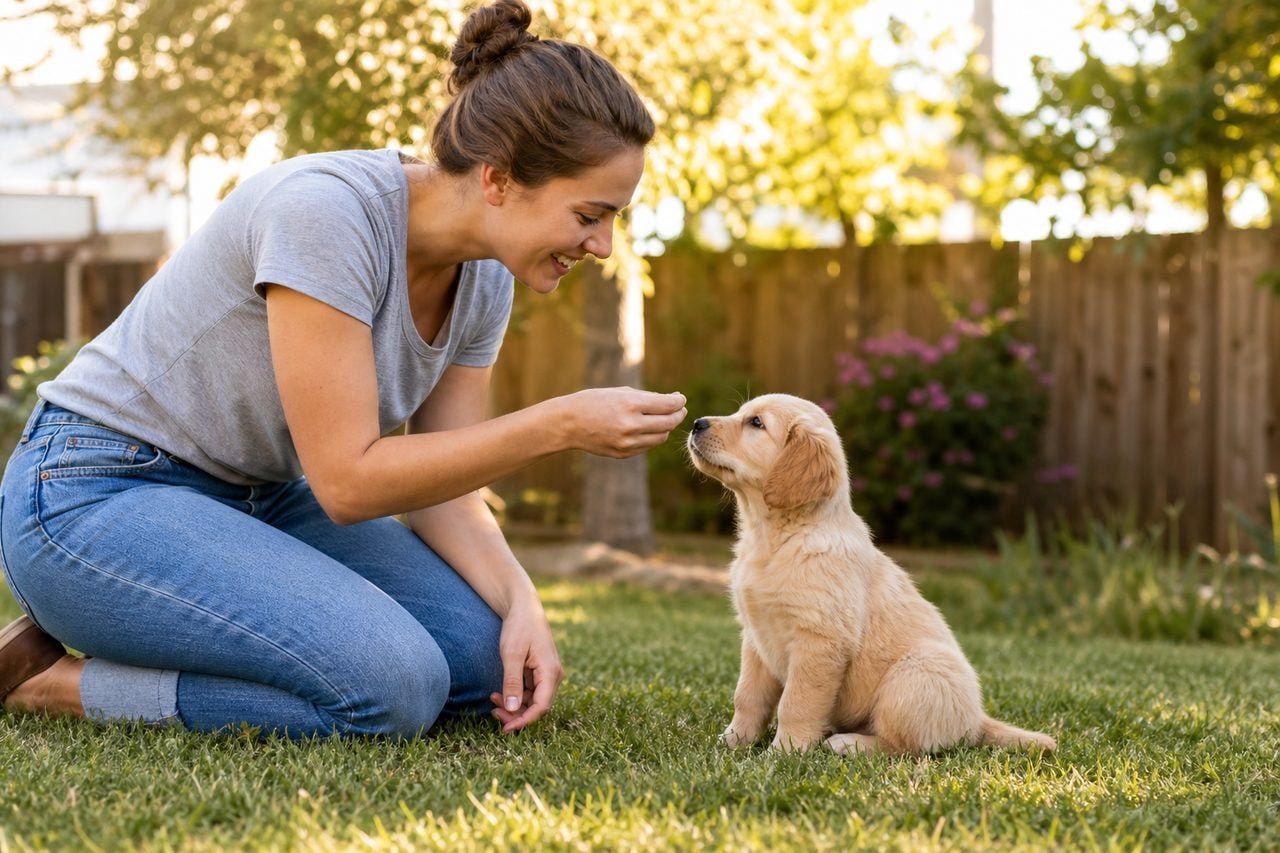
Bringing a puppy home in Kokomo or anywhere across north-central Indiana is one of the most rewarding things a household can do, and also one of the busiest. The first few months set the tone for the next decade or more, which is why so many local families start looking for structured puppy training almost as soon as the crate is unpacked. Whether you are in Howard County near Wildcat Creek, out in the farm country around Greentown or Russiaville, or driving in from Marion, Wabash, Peru, or Logansport, the fundamentals of raising a well-mannered dog are the same, but the practical details are shaped by the region you live in.
- When to Start Puppy Training in the Kokomo Area
- House Training Through Indiana's Four Seasons
- Crate Training and Teaching a Puppy to Settle
- Foundation Cues Every Puppy Should Learn
- Where to Practice Around Kokomo and North-Central Indiana
- Group Classes, Private Training, or Doing It Yourself
- Handling Common Puppy Problems Early
- Reviewed trainers
- FAQ
This guide walks through when to begin, what to prioritize, and how to make the most of the parks, trails, and rural spaces around the Kokomo area. The goal is a puppy that is calm at home, comfortable in the world, and easy to live with. None of it happens by accident, but almost all of it is within reach for an owner who is consistent and patient.
When to Start Puppy Training in the Kokomo Area
The best time to start training is the day your puppy comes home. Many people assume a dog needs to be several months old before any real learning can happen, but the opposite is true. Puppies begin absorbing information the moment they arrive, and every interaction is teaching them something, whether or not you intend it. A puppy that is picked up every time it whines is learning that whining works. A puppy that is calmly ignored until it settles is learning that quiet earns attention. Training simply means deciding what you want your dog to learn and being deliberate about it.
For most puppies in this region, that means starting gentle foundation work at eight to ten weeks of age. Keep sessions short, only a few minutes at a time, and end while the puppy is still interested. A young dog has a very limited attention span, and a five-minute session repeated three or four times a day will do far more than one long, frustrating stretch.
Formal group classes usually accept puppies a little later, often once a first round of vaccinations is on board, but you do not have to wait for a class to begin. The early weeks are precious, and the habits you build at home during that window carry through everything that comes after. If you live outside town, on a farm near Windfall, Converse, or Fairmount, the drive to a class may feel like a barrier. That is normal for this part of Indiana, and it makes the at-home foundation even more important.
Consistency across the household is what makes early training stick. A puppy cannot make sense of rules that change depending on who is home. If one person allows the puppy on the couch and another shoos it off, or if the recall word is come for one family member and here for another, the puppy simply learns that the rules are unpredictable and stops trying to follow them. Before the puppy even arrives, it helps to sit down as a family and agree on the basics: what the house rules will be, which words you will use for which behaviors, and who is responsible for feeding, potty trips, and training sessions. A shared plan, written down if that helps, turns several well-meaning individuals into a single coherent teacher, and that coherence is often the difference between a puppy that learns quickly and one that seems confused for months.
House Training Through Indiana's Four Seasons
House training is the first real project for most new owners, and north-central Indiana adds a seasonal wrinkle that owners in milder climates never face. Winters here are cold, gray, and often snowy, and a young puppy with a tiny bladder is not going to enjoy standing in the yard when the wind is coming off the fields. Summers bring heat and humidity that can make midday potty trips uncomfortable in a different way.
The core method does not change with the weather. Take the puppy out on a consistent schedule, after waking, after eating, after play, and roughly every hour or two in between for a very young dog. Go to the same spot, wait, and reward calmly the moment the puppy finishes. Supervise closely indoors and use a crate or a small confined area when you cannot watch directly.
What the seasons change is your logistics. In deep winter, shovel and clear a small patch near the door so the puppy has a defined, snow-free spot to use, and keep trips brief so nobody freezes. Go outside with the puppy rather than sending it out alone, because a puppy left shivering by the door will simply learn to come back inside and then relieve itself. In summer, favor early morning and evening for longer outings, and never leave a puppy on hot pavement. Accidents will happen in any season; clean them thoroughly with an enzymatic cleaner so lingering odor does not invite a repeat.
Two mistakes derail more house training efforts than any others. The first is punishing accidents after the fact. A puppy cannot connect a scolding to something it did minutes earlier; all it learns is to fear you or to hide when it needs to go, which makes the problem worse. If you catch the puppy mid-accident, calmly interrupt and carry it outside to finish, then reward. If you find a mess later, simply clean it up and resolve to supervise more closely. The second mistake is giving a puppy too much freedom too soon. A young dog that is allowed to wander the whole house unsupervised will find quiet corners to use, and every accident is a rehearsal that slows progress. Keep the puppy in the same room as you, use baby gates or a leash tethered to your belt to keep it close, and expand its freedom only as it earns your trust with a clean record. Patience here pays off; most puppies become reliable with consistent effort, and pushing too fast almost always backfires.
Crate Training and Teaching a Puppy to Settle
A crate is one of the most useful tools available to a new owner, and it serves double duty in a region where families often travel between towns for work, church, and family visits. A dog that is comfortable in a crate is easier to house train, safer in the car on US-31 or the state roads, and calmer when left alone. The crate should never be a punishment. It is a den, a safe place the puppy chooses to rest.
Introduce it slowly. Toss treats inside, feed meals near or in it, and let the puppy explore with the door open before you ever close it. Build up the time gradually, starting with a few seconds and working toward longer stretches. A puppy that cries the moment the door closes has been moved along too fast; back up and rebuild the positive association.
Settling is a separate but related skill. Many puppies do not know how to be calm; they only know how to be asleep or fully wound up. Teaching a puppy to lie quietly on a mat while the household goes about its business is one of the most valuable lessons you can offer. Reward calm behavior when it happens naturally, keep a chew or stuffed toy handy for downtime, and resist the urge to entertain the puppy every waking minute. A dog that learns to switch off at home will be a far better companion on a patio in downtown Kokomo or at a friend’s house in Marion.
Foundation Cues Every Puppy Should Learn
Before you worry about advanced obedience, focus on a short list of foundation behaviors that make daily life smoother and set up everything else. The first is a reliable response to the puppy’s name. Say the name, and when the puppy looks at you, reward it. This simple game builds the attention that all other training depends on.
Next comes a recall, or coming when called. Start indoors and in the yard where distractions are low, make it a party every time the puppy comes to you, and never call the puppy to do something it dislikes. In rural areas around the Kokomo region, where a loose dog might head toward a road or a field, a solid recall is not just convenient, it is a safety measure.
Basic position cues like sit and down are easy wins that give the puppy a job and give you a way to ask for calm. Loose-leash walking deserves early attention too, because a habit of pulling is far harder to fix later than to prevent now. Finally, work on handling and gentle restraint so vet visits, nail trims, and grooming are not battles. Touch the paws, ears, and mouth regularly, pairing each touch with a treat, so the puppy grows up expecting handling to be pleasant.
Reward-based methods are the backbone of all of this foundation work. Reinforcing the behavior you want, with food, praise, play, or whatever your puppy values most, teaches faster and builds a more willing, confident dog than punishment-based approaches, which tend to create anxiety and can damage the trust between you and your puppy. Timing is everything: mark and reward the instant the puppy does the right thing, so it can connect the reward to the specific action. A treat delivered a few seconds too late teaches the wrong lesson or nothing at all. Keep a small pouch of soft treats handy during the day so you are always ready to catch and reward good choices as they happen. Over time, you can fade the food rewards and shift to praise and life rewards, but in the beginning, generous reinforcement is what gets the behaviors on board and makes training a game the puppy wants to play.
Where to Practice Around Kokomo and North-Central Indiana
Training that only happens in the living room produces a dog that only listens in the living room. Once your puppy has some vaccinations and a bit of foundation, gradually practice in new places so the skills generalize. The Kokomo area offers a good mix of options for this.
Highland Park and the Wildcat Creek trails give you open, walkable space in town where you can practice loose-leash walking and attention with mild distractions. Jackson Morrow Park has a fenced dog park, which can be useful for controlled off-leash time once your puppy is old enough and well socialized, though a young puppy is often better served by quiet edges of the park than the busy dog run itself. For longer, low-traffic walks, the Nickel Plate Trail rail-trail through Peru and Miami County is a scenic option that lets a growing puppy build confidence on a flat, predictable surface.
Matter Park in Marion, along with the shorelines at Mississinewa Lake and Salamonie Lake, add variety with water, wildlife smells, and new footing. The key is to raise the difficulty gradually. Start where your puppy can succeed, keep rewards high, and only add distraction as the puppy proves ready. A parking lot with a few cars is a big step up from the backyard, and a busy trail on a Saturday is a big step up from an empty one on a weekday morning.
Group Classes, Private Training, or Doing It Yourself
Owners in this region generally choose among three broad paths: group classes, private or in-home training, and self-directed learning at home. Each has a place, and many families end up combining them.
Group classes offer structure, a set schedule, and controlled exposure to other dogs and people, which is valuable for a social puppy. The trade-off is the drive. If you live in Wabash, Logansport, or one of the smaller farm towns, the nearest class may be a real commitment, and rural distance is simply part of life here. Private or in-home training removes the drive and lets a trainer address your specific home setup, which is helpful for issues tied to your house, yard, or family routine. Self-directed learning, guided by reputable books and courses, costs the least and works well for motivated owners, especially for foundation behaviors.
There is no single right answer. A common and sensible approach is to build the foundation yourself at home, use a group class for structured socialization once the puppy is ready, and bring in private help if a specific problem proves stubborn. Whatever you choose, consistency across the whole household matters more than the method. A puppy that hears five different rules from five different people will struggle no matter how good the training program is.
Handling Common Puppy Problems Early
A few predictable problems show up in nearly every puppy, and handling them early saves a great deal of frustration. Nipping and mouthing top the list. Puppies explore the world with their mouths and have not yet learned how hard is too hard. Redirect the biting onto an appropriate chew toy, and when teeth land on skin, calmly end the interaction for a moment so the puppy learns that biting makes the fun stop. Shouting or rough corrections tend to wind a puppy up further rather than teaching restraint.
Chewing is related and equally normal, especially during teething. Manage the environment by putting valuables out of reach, provide plenty of appropriate chew items, and supervise so the puppy is not rehearsing bad choices. A frozen chew can be a genuine relief during the sore-gum weeks.
Jumping up is usually an attention-seeking behavior, and the fix is counterintuitive: give attention for four paws on the floor and withhold it when the puppy jumps. Everyone in the family, and ideally visitors too, needs to follow the same rule. Finally, watch for early signs of separation distress. Practice short, low-key departures and returns so the puppy learns that being alone is ordinary and temporary, rather than a crisis. Addressed early, these issues rarely become serious. Ignored, they can harden into habits that take much longer to undo.
A theme runs through all of these common problems: most of them are normal puppy behavior rather than defiance, and most respond far better to management and redirection than to correction. Managing the environment so the puppy cannot rehearse the unwanted behavior does half the work. A puppy that cannot reach the shoes will not learn to chew shoes; a puppy greeted only when calm will not learn that jumping earns a fuss. It also helps to remember that a tired puppy is a well-behaved puppy, but tired means the right kind of tired. Mental work such as short training games, sniffing walks along the Wildcat Creek trails, and food puzzles often settles a puppy more effectively than pure physical exercise, which can simply build a fitter, more energetic dog. Balancing physical activity with mental enrichment, and matching both to the puppy’s age and stage, prevents a great deal of the boredom-driven mischief that owners mistake for stubbornness.
Reviewed Puppy Training Trainers in Kokomo
These reviewed Kokomo-area trainers from our directory handle puppy training. Each links to a full profile with specialties, certified credentials, reviews, and contact info:
- Mississinewa Valley Obedience — 4.7★ (10 reviews)
- Perspective K9 Training — 5.0★ (44 reviews)
- Canine Connoisseur Relationship-based Dog Training — 5.0★ (39 reviews)
- Lisa’s Dog Training — 5.0★ (15 reviews)
- Country Road Boarding & Obedience — 5.0★ (10 reviews)
- Anarchy K9 — 5.0★ (10 reviews)
- Impact Dogs — 4.8★ (25 reviews)
- County Line K9 — 4.7★ (63 reviews)
- My Dog Trainer.com — 4.7★ (14 reviews)
- Vohne Liche Kennels — 4.6★ (99 reviews)
See all Kokomo puppy training trainers →
Frequently Asked Questions
What age should I start training my puppy?
Start the day your puppy comes home, typically around eight to ten weeks of age. Early training means keeping sessions very short and positive rather than drilling formal commands. Foundation habits around house training, crate comfort, name recognition, and gentle handling can all begin immediately. Formal group classes in the Kokomo area usually accept puppies a bit later, often after an initial round of vaccinations, but you should not wait for a class to begin teaching at home.
How long does it take to train a puppy?
There is no fixed finish line. Basic house training often takes several weeks to a few months, with reliability improving as the puppy matures and its bladder grows. Foundation cues can start showing up within days, but proofing them so they hold up in distracting places like Highland Park or a busy trail takes ongoing practice over many months. Think of the first year as the main investment, with maintenance and refinement continuing well into adulthood.
How do I potty train a puppy during an Indiana winter?
Keep the core method the same, a consistent schedule and calm rewards, but adjust your logistics for the cold. Clear a small snow-free patch near the door so the puppy has a defined spot, go outside with the puppy rather than sending it out alone, and keep trips brief. A puppy left shivering by itself will simply come back in and have an accident indoors, so your presence and quick rewards make winter house training far more effective.
Should I do group classes or private training?
Both work, and many families combine them. Group classes offer structure and controlled exposure to other dogs and people, which is great for socialization, though the drive can be a factor if you live in an outlying town. Private or in-home training removes the travel and targets issues specific to your household. A practical approach is to build the foundation at home, use a group class for structured socialization, and bring in private help for any stubborn problem.
Does my puppy need vaccinations before joining a class?
Most reputable puppy classes in the region require proof of an initial round of vaccinations before a puppy can attend, both for your dog’s protection and the other dogs’. Requirements vary by program, so confirm the specific expectations with the trainer or facility before enrolling. In the meantime, you can safely socialize and train at home and in low-risk controlled settings while the vaccination schedule is completed.
How much time per day does puppy training take?
Less than most people expect, if you use it well. Several short sessions of just a few minutes each, spread through the day, work far better than one long session. Beyond those focused sessions, much of training happens through everyday routines: rewarding calm behavior, reinforcing house training on schedule, and practicing name response and handling during normal interactions. Consistency across the whole household matters more than total minutes logged.
Related: read our complete puppy training guide or the full Kokomo dog training overview.
Ready to find the right puppy training pro in Kokomo?