
Board & Train in Pittsburgh, PA
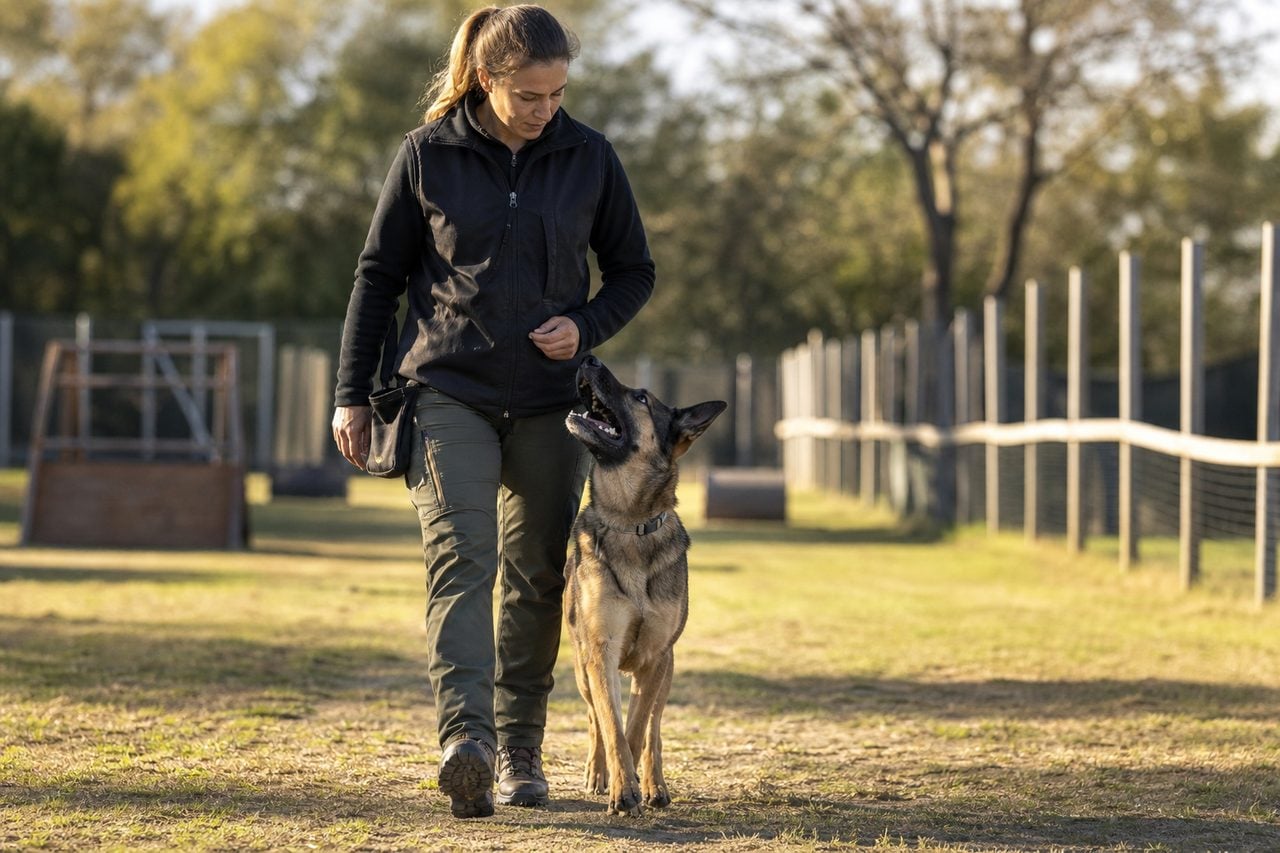
Pittsburgh is a hard city to live in with an unruly dog. The terrain alone makes daily handling a challenge — narrow Shadyside sidewalks, the public stairs that climb the hillsides of Mount Washington and the South Side Slopes, leashed walks across bridges with traffic noise echoing off the rivers below. A dog that lunges, bolts, or ignores a recall turns every one of those everyday routes into a fight. For owners who have tried weekly group classes and still feel stuck, a residential board-and-train program offers a different path: the dog moves in with a trainer for a stretch of days or weeks and learns under full-time, consistent supervision.
- What Residential Board & Train Actually Means
- Board & Train vs. Day-Program Options Around Pittsburgh
- Region by Region: Where Pittsburgh Owners Find Programs
- Vetting a Residential Program Before You Commit
- Weather, Terrain, and the Real-World Skills That Stick
- The Handoff: Making Skills Survive the Drive Home
- Cost, Duration, and Setting Realistic Expectations
- Reviewed trainers
- FAQ
Board-and-train is fundamentally a residential model. Your dog lives at the trainer’s facility or home, sleeping there, eating there, and working through structured sessions woven into a normal daily rhythm. That immersion is the point — behaviors get reinforced dozens of times a day instead of once a week, and the trainer can shape habits around real life rather than a sterile classroom. In a region as varied as Greater Pittsburgh, where a Squirrel Hill apartment dog and a Cranberry Township yard dog face completely different environments, that around-the-clock context matters.
The trade-off is that you hand over your dog for the duration, so trust and a clear transfer plan are everything. The best Pittsburgh programs treat the residential stay as the start, not the finish, building in handoff sessions so the skills survive the trip back to Bethel Park, Monroeville, or wherever home is. A dog that learned a flawless recall at a trainer’s quiet property in Butler County still has to perform it on a busy Squirrel Hill corner, and that bridge has to be built deliberately. This guide walks through what board-and-train actually involves locally, how the residential model differs from day programs, how to vet a facility before you book, and what to realistically expect when your dog comes home.
What Residential Board & Train Actually Means
In a board-and-train program, your dog physically lives with the trainer for the length of the stay — commonly anywhere from two to six weeks, depending on goals. This is the defining feature: it is a residential arrangement, not a daytime drop-off. The dog sleeps, eats, rests, and trains in the same place, which lets a trainer build and reinforce habits continuously rather than in isolated sessions.
That continuity is the value proposition. A recall practiced fifteen times a day across a real Pennsylvania week — rain, a squirrel in the yard, a delivery truck on the street — cements far faster than the same skill rehearsed once at a Tuesday-night class. Trainers can also layer in real-world generalization: leashed walks through a quiet suburban neighborhood, exposure to household sounds, calm behavior around mealtimes and doorways.
- Best fit for: obedience foundations, leash manners, house manners, recall, and impulse control
- Less ideal alone for: deeply rooted fear or aggression, which need assessment-first handling and owner involvement
- Key variable: how much the program invests in transferring skills back to you
If a program promises a “finished” dog with no follow-up from you, treat that as a warning sign — the work has to come home to Pittsburgh with the dog.
Board & Train vs. Day-Program Options Around Pittsburgh
Owners researching intensive training in the region usually run into two distinct formats, and it helps to keep them straight. Board-and-train is residential — the dog stays overnight for the full program. A day-style boot camp, by contrast, is a drop-off-and-pick-up model where the dog comes home every evening. Both are intensive; only one involves your dog living away from home.
The residential route makes sense when your home environment is part of the problem — say a dog that has rehearsed door-dashing in a Lawrenceville rowhouse for two years, where removing it from the trigger-rich setting speeds progress. It also suits owners whose schedules genuinely can’t support twice-daily handling during a training push.
Choose based on three honest questions:
- Can you commit to consistent daily handling at home right now, or not?
- Is your home setting reinforcing the unwanted behavior every day?
- How far is the facility — a daily Wexford-to-city commute may rule out a day program but be irrelevant for a residential stay?
Neither format is automatically superior. Residential immersion buys speed and consistency; a day program keeps you in the loop nightly. Match the format to your dog and your honest bandwidth.
Region by Region: Where Pittsburgh Owners Find Programs
Residential trainers are spread across the metro, and proximity matters less than usual because your dog stays put for the duration — but the pickup-and-dropoff drive and the location of follow-up sessions still factor in.
- The City & the Three Rivers: fewer large residential facilities inside the Golden Triangle and dense neighborhoods like Shadyside or the Strip District; many city owners drive out for the stay.
- The South Hills: Mount Lebanon, Bethel Park, Upper St. Clair, and Bridgeville offer more space-based options within a reasonable drive of town.
- The North Hills: Wexford, Cranberry Township, Gibsonia, and McCandless sit near open land suited to residential kennels and acreage-based trainers.
- The Eastern Suburbs: Monroeville, Plum, Murrysville, and out toward Greensburg widen the radius for owners on the east side.
- The Mon & Airport Corridors: McKeesport and North Versailles in the Mon Valley; Moon, Robinson, and Sewickley near the airport.
- Washington & Butler Counties: Peters Township, Washington, and Butler-area properties often have the acreage residential programs favor.
Because the dog lives on-site, weigh the quality and approach of the program above raw mileage — a strong trainer 40 minutes away beats a mediocre one nearby.
Vetting a Residential Program Before You Commit
Handing your dog over for weeks demands real due diligence. Ask to tour the facility in person before booking — see where dogs sleep, how they’re housed, and how clean and secure the space is. A trainer confident in their setup will welcome the visit.
Questions worth asking every Pittsburgh program:
- What methods do you use, and how do you handle a dog that struggles? Look for clear, humane, reward-based answers and a refusal to rely on intimidation.
- What is the daily schedule — how much training, rest, and enrichment per day?
- How will you keep me updated? Photo or video check-ins during the stay are a green flag.
- What does the handoff look like, and how many owner sessions are included?
- What happens if my dog gets sick or injured, and what vet is nearby?
Avoid any program that guarantees specific results or won’t let you observe. With Pennsylvania’s real winters, also confirm dogs are housed in properly climate-controlled space — a January cold snap is no time for marginal heating. Trust your read of the place; if something feels off during the tour, keep looking.
Weather, Terrain, and the Real-World Skills That Stick
A board-and-train graduate has to function in actual Pittsburgh conditions, so the strongest programs build training around them rather than around an idealized environment. The city’s four real seasons each test a dog differently.
Winter brings ice on sidewalks and those steep neighborhood stairs, salt on the paws, and short daylight — a dog needs solid leash manners to walk safely on a slick Mount Washington incline. Humid summers mean heat management and early-morning or evening walks; a reliable recall matters most when a dog wants to bolt toward the cool of Frick Park or Schenley Park. Spring mud and fall leaves both hide footing on the trails along the Three Rivers Heritage Trail.
Ask whether a program practices skills in varied weather and on varied surfaces — pavement, grass, stairs, gravel. Generalization is the whole game: a dog that only ever heeled on a dry indoor floor may fall apart on an icy Pittsburgh hill. The point of residential immersion is the chance to rehearse behaviors across the same messy conditions your dog will actually live in.
The Handoff: Making Skills Survive the Drive Home
The single biggest predictor of whether board-and-train “works” is the transfer back to you. Dogs are context learners — skills built at the trainer’s property don’t automatically transplant to your Bethel Park kitchen or your Monroeville backyard without deliberate handoff.
A serious program reserves the final phase for owner training. Expect to be coached on the exact cues, timing, and reward markers the dog learned, then to practice them yourself under the trainer’s eye before the dog comes home. Some programs send the owner home with written protocols and schedule follow-up sessions in the weeks after pickup.
Plan for a transition period once the dog is home:
- Keep the same cue words and rules the trainer used — consistency is everything
- Reintroduce real-world distractions gradually: quiet streets before a busy Strip District sidewalk
- Hold the structure for several weeks; old habits can resurface if the household goes lax
If a program offers no owner sessions and no follow-up, the residential stay’s gains may erode fast. Budget time and effort for your own part — the dog learned, now the family has to.
Cost, Duration, and Setting Realistic Expectations
Residential board-and-train is generally the most expensive training format because you’re paying for full-time care, housing, and intensive daily work over weeks. Costs vary widely across the Pittsburgh market based on program length, the trainer’s experience, the facility, and how many follow-up sessions are bundled in. Rather than chase the lowest number, weigh what’s included — especially owner-transfer sessions, which are where lasting value lives.
On duration, match the timeline to the goal. Foundational obedience and manners often fit a shorter stay; more involved behavior change takes longer. Be wary of anyone promising to fix everything in a few days — meaningful behavior change has a floor that no amount of intensity erases.
Set expectations honestly:
- A residential stay accelerates learning but does not make a dog self-maintaining — your follow-through sustains it
- Results depend on the dog’s history, temperament, and age as much as the program
- No reputable trainer guarantees outcomes; behavior isn’t a machine with a switch
Think of board-and-train as a strong head start delivered under expert supervision — powerful, but only as durable as the structure you keep up once the dog is back home in Pittsburgh.
Reviewed Board & Train Trainers in Pittsburgh
These reviewed Pittsburgh-area trainers from our directory handle board & train. Each links to a full profile with specialties, certified credentials, reviews, and contact info:
- Sit Means Sit Dog Training Pittsburgh North — 5.0★ (130 reviews)
- H-D Interactions Dog Training Co. — 5.0★ (72 reviews)
- Paw & Order Dog Training Westmoreland — 5.0★ (66 reviews)
- Paw & Order Dog Training Washington PA — 5.0★ (64 reviews)
- Suburban K9 Dog Training — 5.0★ (53 reviews)
- Paw & Order Dog Training Harmony — 5.0★ (38 reviews)
- McWreath Dog Training – Washington, PA — 5.0★ (36 reviews)
- Control Is Key Dog Training — 5.0★ (36 reviews)
- Everywhere Dog Training — 5.0★ (33 reviews)
- Cochran K9 Training — 5.0★ (30 reviews)
See all Pittsburgh board & train trainers →
Frequently Asked Questions
How long does a board-and-train stay usually last in the Pittsburgh area?
Most residential programs run somewhere from two to six weeks, depending on the goals. Foundational obedience tends toward the shorter end, while more involved behavior work needs longer. Ask each trainer to tie the timeline to your specific dog rather than quoting a flat package.
Will my dog forget everything once it comes home to my neighborhood?
Dogs learn in context, so skills can fade if the household drops the structure. That’s why the owner handoff and follow-up sessions matter so much — keep the same cues and rules the trainer used, and reintroduce distractions gradually as you move from quiet streets to busier areas like the Strip District.
How much does residential board-and-train cost around Pittsburgh?
It’s generally the priciest training format because you’re paying for weeks of full-time care plus intensive daily work, and rates vary widely across the metro. Focus on what’s included — especially owner-transfer sessions — rather than just the headline number.
Can I visit my dog during the stay?
Policies differ by program. Many trainers limit in-person visits to avoid disrupting the dog’s routine but provide photo or video check-ins instead. Ask up front, and treat regular updates as a positive sign of a transparent operation.
Is board-and-train the right choice for serious aggression?
Aggression needs an assessment-first approach and heavy owner involvement, so a residential stay alone is rarely the full answer. A responsible trainer evaluates the dog before recommending any format and will never guarantee a fix. For aggression specifically, look for programs built around behavior modification with you actively in the loop.
Should I pick a program close to home or is distance fine?
Because the dog stays on-site for the duration, the daily commute matters far less than with a drop-off program. Prioritize the trainer’s methods and facility quality — a strong program a bit farther out, say in Butler or Washington County, can beat a closer but weaker one. Just factor in the drive for pickup and any in-person follow-up sessions.
Related: read our complete board & train guide or the full Pittsburgh dog training overview.
Ready to find the right board & train pro in Pittsburgh?