
Puppy Training in Allentown, PA
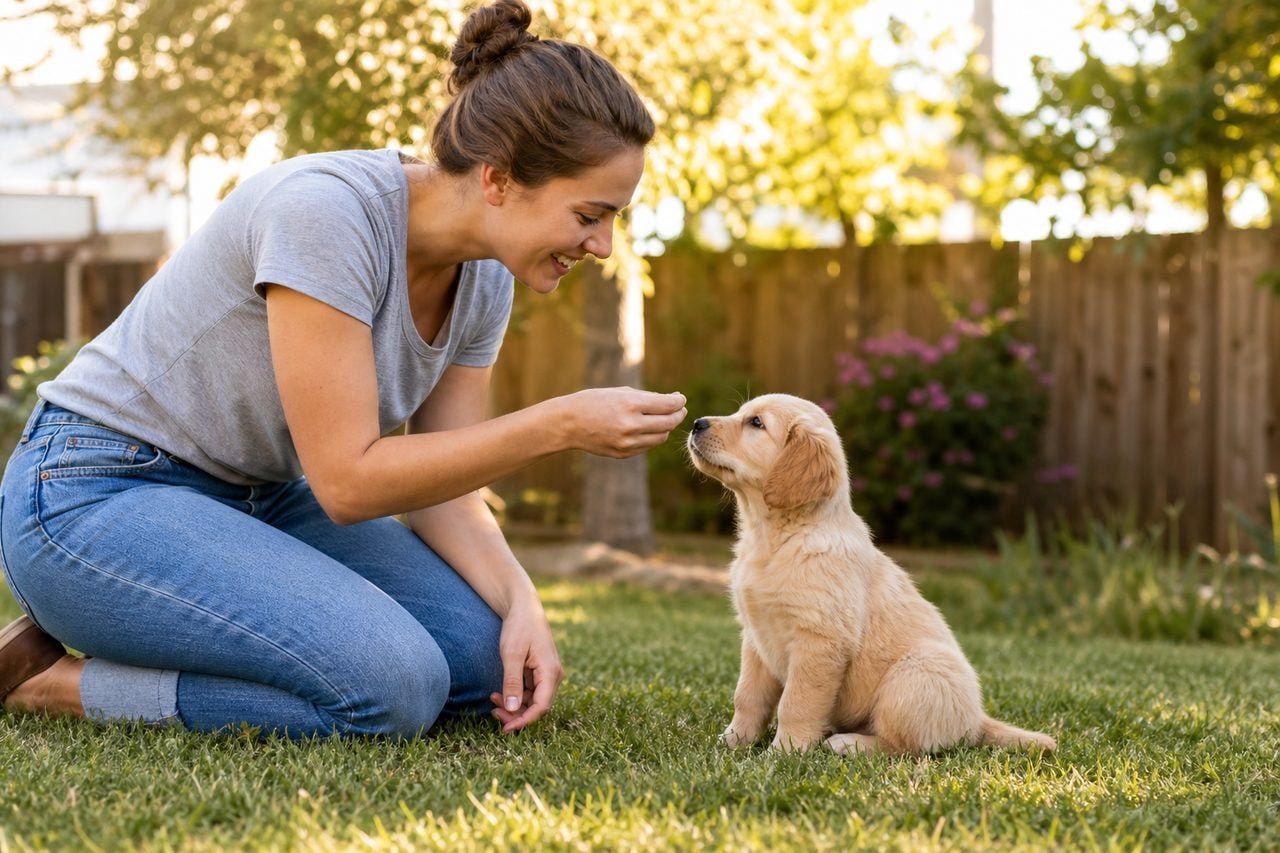
Bringing a new puppy home in the Lehigh Valley means navigating a region of sharp contrasts — the dense rowhome blocks of center-city Allentown, the leafy historic streets around Bethlehem’s SteelStacks and the old Bethlehem Steel grounds, the riverfront neighborhoods of Easton where the Lehigh meets the Delaware near the New Jersey line, and the open farm country rolling north toward Nazareth, Bath, and Northampton. Each of those settings shapes how you raise a dog, and the smartest owners start training before the first bad habit ever takes root. A puppy that learns the rules during its first few months in Whitehall, Emmaus, Macungie, or Catasauqua grows into the calm, confident adult you actually wanted.
Early training here is as much about the calendar as the curriculum. Lehigh Valley winters arrive cold and snowy, tucked between the Poconos to the north and the river valleys to the south, which means house-training and crate routines often begin while the backyard is buried and walks are short and icy. Summers swing humid and hot, pushing outdoor practice to the cool early mornings along the Lehigh Parkway or the shaded sections of the D&L Trail and the Saucon Rail Trail. Building a training plan that bends with the seasons — indoor focus work in January, longer field sessions in May — keeps progress steady year-round instead of stalling every time the weather turns. Owners who plan around the valley’s climate end up months ahead of those who wait for “nice weather” to begin.
This guide walks Lehigh Valley puppy owners through what to teach first, how to choose between group classes and private sessions, and how to use the parks, trails, college campuses, and town sidewalks of Lehigh and Northampton counties as your training ground. The goal is a puppy that handles the realities of valley life — the foot traffic of a Bethlehem festival, the squirrels of Trexler Nature Preserve, the cyclists on the rail trails, and the long quiet of a snowed-in week — without losing its head. Get the foundation right in these early weeks and nearly everything else falls into place.
Why The First Sixteen Weeks Matter Most
A puppy’s brain is at its most absorbent during the first four months, and what it experiences in that window tends to stick for life. For Lehigh Valley families, this is the time to gently expose a pup to the sights and sounds it will live with — the rumble of trucks on Route 22, the crowds of a downtown Allentown weekend, the hiss of snow blowers in a Macungie cul-de-sac, the festival noise drifting off the SteelStacks campus.
- Handling habits: Touch paws, ears, and mouth daily so vet visits and winter paw-cleaning stay stress-free for the life of the dog.
- Name and attention: A reliable name response is the foundation every other skill is built on, so reward eye contact generously.
- Surface variety: Walk pups across grass, gravel, snow, brick sidewalk, and the wood of a porch so nothing feels alien later.
- Short positive reps: A few good experiences a day beats one long overwhelming outing every time.
Because pups aren’t fully vaccinated yet, balance exposure with safety — carry your puppy through busy areas rather than letting it sniff every patch of ground a sick dog may have crossed. The aim is a flood of positive impressions while the brain is still wiring its sense of what counts as normal.
House-Training Through A Lehigh Valley Winter
Few things test a new owner like house-training a puppy in January, when single-digit mornings make both of you reluctant to step outside. The trick is consistency over comfort: a tight schedule beats good weather every time, and the dogs that learn fastest are the ones whose owners refuse to skip a trip just because it’s snowing. A valley winter is long, so the routine you set in the first weeks carries you straight through to spring.
- Fixed potty trips: Take the pup out after waking, eating, playing, and napping, snow or no snow.
- A cleared spot: Shovel a small patch in the yard so a tiny dog isn’t wading through drifts taller than it is.
- Reward fast: Praise and treat the instant the job is done outside, before you both retreat indoors.
- Watch for salt: Wipe paws after every trip, since road and sidewalk de-icer irritates pads and can sicken a pup that licks it off.
For apartment dwellers in Allentown, Bethlehem, or Easton without quick yard access, an indoor training pad near the door can bridge the gap on the bitterest days — just phase it out as the pup’s bladder control and the weather both improve. Crate use, sized so the pup can stand and turn but not roam, dramatically speeds the whole process by tapping into a dog’s instinct to keep its den clean.
Group Classes Versus Private Sessions
Most Lehigh Valley owners do best with a mix of formats rather than committing to just one. Group puppy classes — common offerings around Allentown, Bethlehem, and the Whitehall corridor — give your dog supervised exposure to other puppies and the mild chaos of a shared room, which is exactly the kind of controlled distraction a young dog needs to learn focus. Private sessions, by contrast, let an instructor zero in on your household’s specific headaches without a roomful of distractions.
- Choose group classes for: socialization, working around distractions, and learning from an instructor in real time.
- Choose private sessions for: specific issues like nipping or leash pulling, or for shy pups overwhelmed by a crowd.
- Watch the method: Favor reward-based trainers; harsh corrections on a young pup can create fear that’s hard to undo.
- Mind the group size: Smaller classes mean more individual attention and a calmer room for a sensitive dog.
Ask any program how many puppies share a class and whether sessions move outdoors as the weather allows. A small group that occasionally practices on a quiet park sidewalk gives far more useful experience than a packed room that never leaves the building. Many owners fix one sharp problem privately, then roll into a group class to proof the new skills under real-world pressure.
Leash Skills For Valley Sidewalks And Trails
The Lehigh Valley rewards a dog that walks well. From the brick sidewalks of historic Bethlehem to the crushed-stone D&L Trail, the Saucon Rail Trail, and the open paths of the Lehigh Parkway, there’s no shortage of places to practice — if your puppy can keep its feet under it instead of hauling you toward every smell. Loose-leash walking is one of the most useful skills a valley dog can own, and it’s far easier taught early than fixed in an adult dog that has rehearsed pulling for a year.
- Start indoors: Teach the pup to follow a loose leash in a hallway before adding the world’s distractions.
- Reward position: Treat when the pup is beside you, not when it’s straining ahead at the end of the line.
- Graduate outdoors: Move from a quiet street to a busier one to a trail as focus builds.
- Stop when it pulls: Standing still until the leash loosens teaches that pulling never gets the dog where it wants to go.
A six-foot leash and a properly fitted harness give you control without choking a growing dog. Save retractable leashes for open, low-traffic spots like a quiet stretch of the Lehigh Parkway, never a downtown Allentown corner where a sudden lunge toward the street could spell trouble. Consistency from every family member matters here — one person who lets the pup pull undoes a week of everyone else’s work.
Bite Inhibition And The Nipping Phase
Every puppy explores with its mouth, and the needle-teeth weeks can fray a family’s patience fast. The aim isn’t to stop mouthing overnight but to teach your dog that human skin is delicate and that teeth belong on toys. This phase peaks during the long indoor stretches of a valley winter, exactly when families are cooped up together and a mouthy puppy is hardest to ignore, so a clear plan keeps everyone sane.
- Yelp and pause: A sharp “ouch” and a brief stop in play tells the pup it bit too hard.
- Redirect: Always have a chew toy within reach to swap for your hand or sleeve.
- Drain energy: A tired puppy nips less — short play and sniff sessions burn the fuel that fuels biting.
- Reward soft mouths: Praise gentle contact so the pup learns that calm play keeps the game going.
Kids in the household should learn to stand still rather than flail, since waving arms read as a thrilling game to a young dog. On the long indoor days of a valley winter, structured chew time and food puzzles channel mouthy energy productively instead of toward your furniture or your ankles. If the nipping seems to spike, check whether the pup is simply overtired — an overstimulated puppy bites harder, and a nap often fixes what looks like aggression.
Using Local Parks And Trails As Classrooms
Once your pup’s vaccinations are complete, the Lehigh Valley becomes one big training ground. Each spot offers a different lesson, and rotating among them builds a dog that stays focused anywhere rather than one that only behaves in your living room. The valley’s mix of urban parks, wooded preserves, and long rail trails means you can match the setting to the skill you’re working on that week.
- Lehigh Parkway: open grass and gentle foot traffic make it ideal for practicing recall and long-line work.
- Trexler Nature Preserve: wildlife and wide trails test attention against real distractions.
- Jacobsburg State Park: wooded quiet up toward Nazareth for confidence-building on uneven ground.
- D&L and Saucon Rail Trails: long, flat paths perfect for proofing loose-leash walking around cyclists.
Keep early outings short and end on a win — a successful sit or a calm leash walk — so the dog associates these places with good things. Always carry water in summer humidity and check paws for road salt or ice balls in winter before heading home. As the pup’s skills sharpen, gradually add distraction by visiting busier sections, but never push so far that the dog stops responding entirely; that just teaches it that ignoring you is an option.
Building A Routine That Sticks
The single biggest predictor of a well-trained valley dog isn’t talent or breed — it’s consistency. Puppies thrive on predictable rhythms, and a household that runs on a loose schedule trains almost by accident, because every meal, walk, and door becomes a tiny lesson. The owners who struggle are usually the ones who train hard one week and forget the next, leaving the puppy guessing about what the rules actually are.
- Same words: Everyone in the home uses one cue per behavior, so “down” never doubles as both lie-down and get-off.
- Short and often: Three five-minute sessions beat one long drill a puppy can’t sustain.
- Track progress: Note what your pup has mastered so you keep raising the bar instead of repeating easy wins.
- Anchor to daily life: A sit before meals and a recall before walks turn practice into habit.
Tie sessions to daily anchors — a quick sit before meals, a recall game before the evening walk — and training stops feeling like a chore. By the time spring opens up the trails again, a puppy trained steadily through the winter will be miles ahead of one whose lessons stalled in the cold. Patience pays compounding interest here; the small, boring daily reps are exactly what build the dog you can take anywhere across the valley.
Reviewed Puppy Training Trainers in Allentown
These reviewed Allentown-area trainers from our directory handle puppy training. Each links to a full profile with specialties, certified credentials, reviews, and contact info:
- Leader of the Pack Canine Institute II (Easton) — 5.0★ (147 reviews)
- Raise Your Right Paw Dog Training — 5.0★ (94 reviews)
- Kerber Dog Training — 5.0★ (28 reviews)
- Points of Wisdom Dog Training, LLC — 5.0★ (16 reviews)
- The Wizard of Dogs LLC — 5.0★ (15 reviews)
- The Art of Dog Training — 5.0★ (10 reviews)
- K9 Leadership Academy — 5.0★ (2 reviews)
- Allentown Dog Training Club — 5.0★ (1 reviews)
- Get Connected Canine Coaching — 5.0★ (1 reviews)
- Leader of the Pack Canine Institute — 4.9★ (533 reviews)
See all Allentown puppy training trainers →
Frequently Asked Questions
When should I start training my puppy in the Lehigh Valley?
Start the day your puppy comes home. The first sixteen weeks are the most important learning window, so even an eight-week-old pup should begin gentle handling, name recognition, and house-training routines right away — long before formal classes begin.
How do I house-train a puppy during a cold valley winter?
Stick to a strict potty schedule regardless of the weather, shovel a small cleared spot in the yard so a small dog isn’t lost in the snow, and reward immediately when the pup goes outside. Crate use between trips speeds the process, and always wipe paws to remove de-icing salt.
Are group puppy classes or private sessions better?
Most owners benefit from both. Group classes around Allentown and Bethlehem offer socialization and distraction practice, while private sessions target specific problems or suit shy pups. Look for reward-based methods and smaller class sizes either way.
Where can I take my puppy to practice once it’s vaccinated?
The Lehigh Parkway, Trexler Nature Preserve, Jacobsburg State Park, and the D&L and Saucon Rail Trails all make excellent classrooms. Rotate among them to build a dog that stays focused in different settings, and keep early sessions short and positive.
How do I stop my puppy from biting?
Teach bite inhibition with a sharp yelp and a brief pause in play when teeth touch skin, redirect to a chew toy, and make sure the pup gets enough exercise. A tired puppy nips far less than a bored one, and overtired pups often bite hardest, so watch for the need for a nap.
How much time should I spend training each day?
Several short sessions of about five minutes each work far better than one long drill, since puppies have brief attention spans. Tying quick practice to daily anchors like meals and walks keeps training consistent without feeling like a burden.
Related: read our complete puppy training guide or the full Allentown dog training overview.
Ready to find the right puppy training pro in Allentown?