
Puppy Training in Lancaster, PA
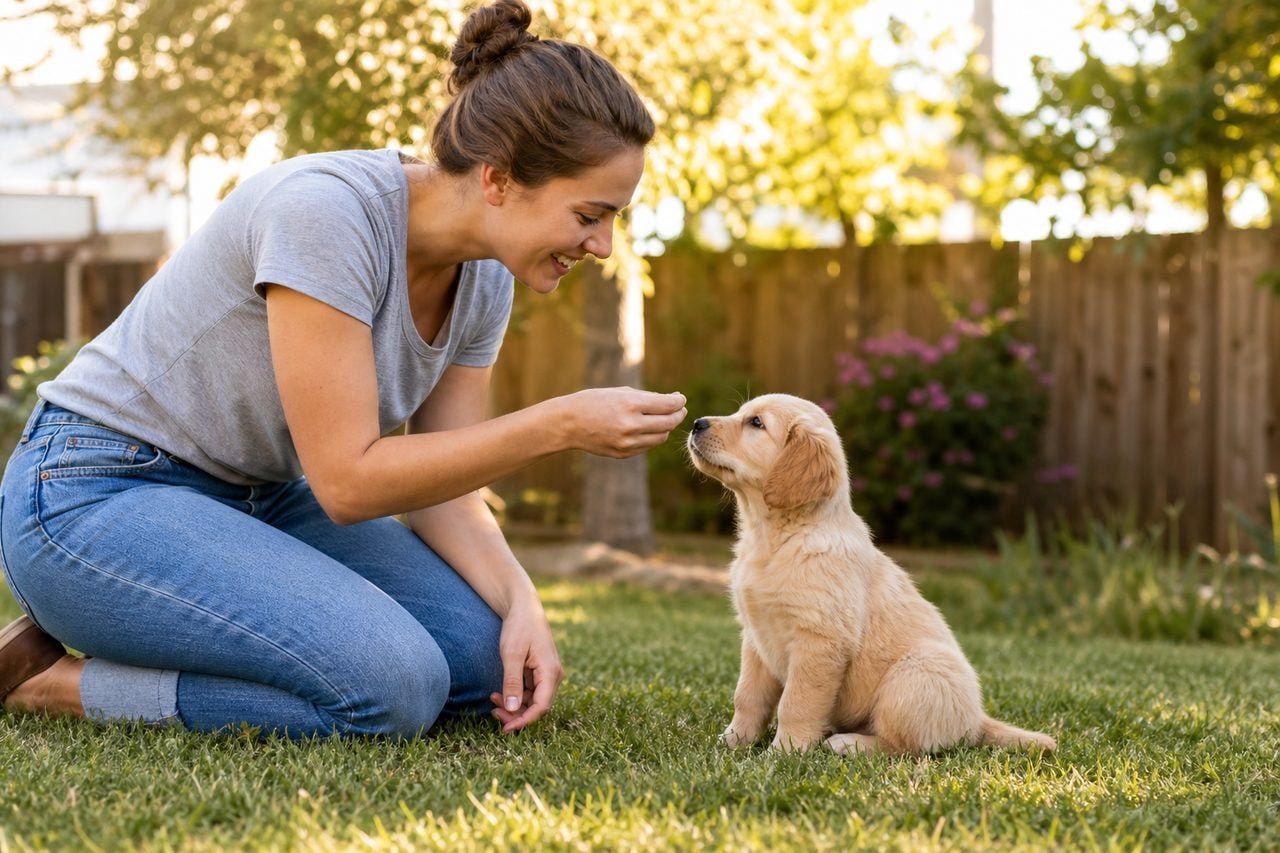
Bringing a puppy home in Lancaster County means your dog will grow up around a little of everything — the buzz of Central Market on a Saturday morning, the clip-clop of horse-drawn buggies on the back roads near Strasburg and Intercourse, wide stretches of farm fields out past Quarryville and Willow Street, and the cold, snowy winters that can make those first house-training weeks a real test of patience. Early training is where you turn all of that variety from a source of stress into an advantage. A puppy that learns young to settle in busy places and stay calm around unusual sights tends to become an easygoing adult dog, the kind you can take from a quiet walk on the Enola Low Grade Trail to a crowded sidewalk in downtown Lancaster without a meltdown.
The goal of this guide is to help Lancaster-area families build a sensible, week-by-week training plan that fits the way people actually live here — whether you are in a Lititz borough rowhome, on acreage near Manheim or Ephrata, or in a Mount Joy or Elizabethtown development with a fenced yard. We cover what to teach first, how to house-train through a Pennsylvania Dutch country winter, which cues matter most, how to socialize a puppy around farm equipment and tourist crowds, when group classes make sense versus private work, how to vet a local trainer without falling for marketing hype, and how to build a home practice routine that survives a busy week.
None of this requires fancy equipment or a big budget. What it does require is consistency, a clear picture of what you want your puppy to learn, and an honest read on your own schedule. The county itself does a lot of the heavy lifting if you let it — the boroughs, the trails, the working farms, and the changing seasons are all built-in training grounds for a puppy that is introduced to them thoughtfully. Done well, the first few months set the tone for the next decade, turning a wriggly, overwhelmed pup into a steady companion you can take just about anywhere in Lancaster County.
Why The First Sixteen Weeks Matter Most
A puppy’s brain is wired to soak up experiences during a short window that runs roughly from three to sixteen weeks of age. What your dog meets — calmly and positively — during this time shapes how it reacts to the world for life. In a county as varied as Lancaster, that window is precious. A puppy that experiences farm machinery, traffic on Route 30, friendly strangers downtown, and the sound of a passing buggy before sixteen weeks is far less likely to fear those things later.
- Prioritize quality over quantity: a handful of calm, positive outings beats a dozen overwhelming ones.
- Watch your puppy’s body language: a loose, wiggly dog is learning; a tucked tail or frozen posture means back off and go slower.
- Pair new things with food: high-value treats turn a strange noise into a good memory.
- Mind vaccination timing: ask your vet about safe socialization spots before your puppy is fully vaccinated — carrying a small puppy through a quiet shop is often safer than a busy dog park.
Miss this window and you are not doomed, but you will be doing remedial work instead of prevention. Front-load the effort now.
House-Training Through A Lancaster Winter
Potty training a puppy is hard enough; doing it when the yard is buried under January snow and the wind is howling off the Susquehanna adds a wrinkle. Many Lancaster owners struggle because the cold tempts everyone — puppy included — to rush the process and cut corners.
- Keep a tight schedule: take your puppy out after waking, after eating, after play, and right before bed. Young puppies cannot hold it long.
- Shovel a small potty patch: clear a sheltered spot near the door so your puppy is not wading through deep snow and learning to hate going outside.
- Go out with them: do not just open the door. Stand with your puppy, mark the moment they finish, and reward immediately — outside, not back in the kitchen.
- Use a crate wisely: a properly sized crate taps a puppy’s instinct to keep its sleeping area clean and prevents unsupervised accidents.
Older homes around Lancaster city sometimes have drafty mudrooms or basements that confuse a puppy about where the “indoors” line is. Supervise closely and clean accidents with an enzymatic cleaner so lingering odor does not invite repeats. Most puppies are reliably trained within a few months of consistent effort.
The First Five Cues Every Puppy Should Learn
Before you worry about fancy tricks, nail down the handful of cues that make daily life with a dog actually pleasant. These five do the heavy lifting for Lancaster families whose dogs share space with kids, livestock, visitors, and the occasional curious tourist.
- Name response: your puppy should turn toward you when it hears its name — the foundation of all attention.
- Sit: a default polite behavior that replaces jumping on guests at the door.
- Come (recall): the single most important safety cue, especially on open farm property where a runaway dog could reach a road fast.
- Leave it: protects your puppy from dropped food, road debris, and the things farm dogs find in fields.
- Settle on a mat: teaches calm, useful at home and at dog-friendly spots around the county.
Keep sessions short — two or three minutes, several times a day. Puppies learn in bursts, not marathons. Use a soft, happy voice, reward generously at first, and slowly fade treats as the behavior becomes a habit.
Socializing A Puppy In Amish Country
Lancaster County throws sights and sounds at a puppy that you simply will not find in most American towns. Horse-drawn buggies, farm equipment, livestock, large family gatherings, and a steady stream of tourists all become normal — if you introduce them thoughtfully.
- Buggies and horses: watch from a comfortable distance at first, feeding treats as one passes. Never force a nervous puppy closer.
- Farm sounds: tractors, grain augers, and barn machinery are great desensitization tools when paired with calm rewards.
- Downtown stimulation: the sidewalks and shops near Penn Square and Central Market expose a puppy to crowds, strollers, and city noise in small doses.
- People variety: aim to have your puppy meet many different kinds of people — different ages, hats, beards, and walking styles — all in a positive way.
The rule throughout is calm exposure, never flooding. If your puppy hides, trembles, or refuses food, you have pushed too far. Back up, add distance, and let the dog choose to engage. Good socialization is a slow drip, not a fire hose.
Group Puppy Class Versus Private Training
Lancaster owners generally have two paths for professional help, and the right choice depends on your puppy and your goals. Neither is automatically better — they solve different problems.
- Group puppy classes shine for socialization. Supervised play with other puppies of similar age teaches bite inhibition and dog-to-dog manners that you cannot replicate at home. They also expose your puppy to a novel environment and distractions.
- Private training suits owners with a specific issue — a fearful puppy, a hectic schedule, or a rural property far from class locations — and offers a plan tailored to your home setup.
Many families do both: a group class for the social side, plus a session or two of private coaching to troubleshoot. Expect group classes to cost less per session than private work, with private fees varying by trainer and travel distance — ask for ranges up front. When weather closes the roads, as it sometimes does north toward Ephrata and Lititz in winter, confirm a trainer’s cancellation policy so you are not paying for storms.
Choosing A Puppy Trainer Near You
Trainer quality varies widely, and the dog-training field is unregulated, so the burden is on you to vet whoever you hire. A polished website does not guarantee skill. Focus on methods, transparency, and fit with your family.
- Ask about methods: look for reward-based, positive-reinforcement training. Be cautious of anyone leaning heavily on fear, pain, or intimidation tools.
- Check for ongoing education: good trainers keep learning and can explain why they do what they do in plain language.
- Watch a class or request a consult: a reputable trainer will let you observe or talk through their approach before you commit.
- Consider logistics: a Strasburg or Quarryville family may prefer a trainer who travels, while a city dweller can pick the closest facility.
Trust your gut on the human side, too. You will work closely with this person, so clear communication and a calm demeanor matter. If a trainer pressures you into long contracts or promises guaranteed results, treat that as a warning sign — honest professionals talk about progress, not guarantees.
Building A Realistic Home Practice Routine
The single biggest predictor of a well-trained dog is not the trainer you hire — it is the practice that happens at home between sessions. Lancaster families juggling work, kids, and property upkeep need a routine that survives busy weeks.
- Stack training onto existing habits: ask for a sit before meals, a wait at the door, a recall when you come in from chores.
- Keep treats stationed around the house: a small container in the kitchen and by the door means you are always ready to reward good choices.
- Get the whole family on the same page: agree on cue words and rules so the puppy is not confused by mixed messages.
- Use Lancaster’s outdoors: a short, calm practice walk on a quiet stretch of the Northwest Lancaster County River Trail builds focus around real-world distractions.
Aim for several tiny sessions a day rather than one long one. Five minutes here and there adds up faster than you would expect, and it keeps training feeling like a normal part of life rather than a chore. Consistency, not intensity, wins.
Reviewed Puppy Training Trainers in Lancaster
These reviewed Lancaster-area trainers from our directory handle puppy training. Each links to a full profile with specialties, certified credentials, reviews, and contact info:
- Pups Unleashed — 5.0★ (33 reviews)
- Always Stay Pawsitive Dog Training, LLC — 5.0★ (18 reviews)
- Canine Compass LLC — 5.0★ (15 reviews)
- Tried and True Canines — 5.0★ (12 reviews)
- Magnus K9 — 5.0★ (11 reviews)
- The Structured K9 — 5.0★ (1 reviews)
- Ducey’s Dogs — 4.9★ (33 reviews)
- Kaye Ames People Training For Dogs — 4.6★ (62 reviews)
- Winsome Wags Dog Training LLC — 4.4★ (14 reviews)
- Faithful Companion Dog Training, LLC — 4.3★ (31 reviews)
See all Lancaster puppy training trainers →
Frequently Asked Questions
What age should I start training my puppy in Lancaster?
Start the day you bring your puppy home, typically around eight weeks. Gentle, reward-based training and careful socialization during the three-to-sixteen-week window have the biggest lifelong payoff. You do not need formal classes immediately — simple name games, potty routines, and calm exposure to Lancaster sights can begin right away.
How do I potty train a puppy during a Lancaster winter?
Keep a tight schedule of trips outside, shovel a small sheltered potty patch near the door so deep snow does not discourage your puppy, go outside with them to reward the instant they finish, and use a properly sized crate to prevent accidents when unsupervised. Most puppies are reliable within a few months of consistent effort.
Are group puppy classes or private training better?
They serve different goals. Group classes are best for socialization and play with other puppies, which builds dog-to-dog manners. Private training suits a specific problem, a fearful puppy, or rural families far from class locations. Many Lancaster owners combine both for the strongest results.
How much does puppy training cost in Lancaster County?
Costs vary by trainer, format, and travel distance, so ask for ranges before committing. Group classes generally cost less per session than private, in-home work. Be wary of long mandatory contracts or guaranteed-result promises — reputable trainers discuss progress, not guarantees.
How do I socialize my puppy around buggies and farm equipment?
Use calm exposure at a comfortable distance, pairing each new sight or sound with high-value treats. Let a buggy or tractor pass while your puppy watches and eats, never forcing them closer. If your puppy hides or refuses food, add distance and slow down. Positive, gradual introductions are the goal.
What should I teach my puppy first?
Focus on five fundamentals: name response, sit, come (recall), leave it, and settling on a mat. These cover daily life and safety — recall and leave it are especially important on open farm property where a dog could reach a road. Keep sessions to a few minutes and reward generously at first.
Related: read our complete puppy training guide or the full Lancaster dog training overview.
Ready to find the right puppy training pro in Lancaster?