
Puppy Training in York, PA
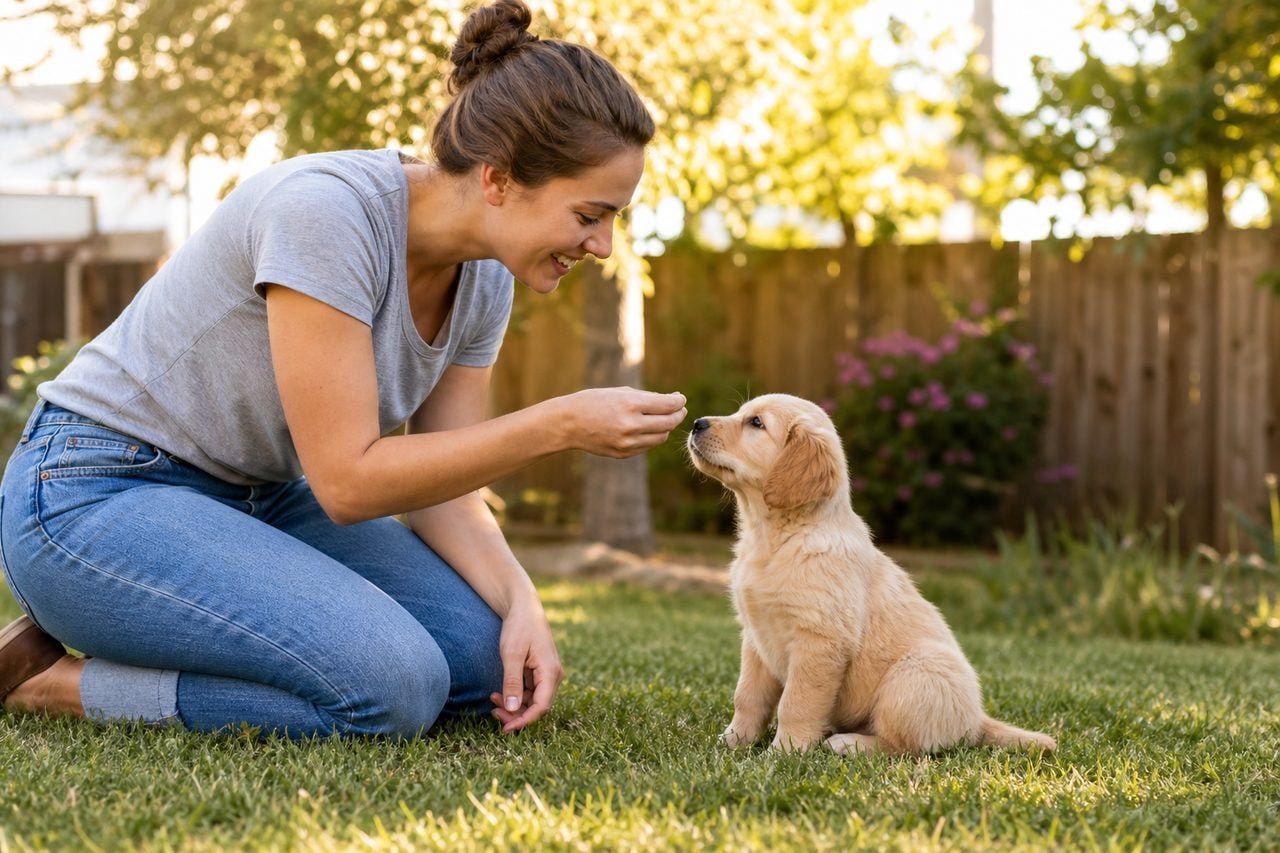
Bringing a new puppy home in York means trading the quiet of those first few nights for a fast education in patience — usually somewhere between a chewed shoe and a 5 a.m. potty trip across a frozen yard. The White Rose City and the farm country around it offer a puppy plenty to absorb: the brick streets near Central Market, the rumble of trucks heading to the Harley-Davidson plant, the open fields of Dover and Dillsburg, and the river breezes drifting in from Wrightsville. Every one of those settings is a training opportunity, and starting early is what turns a wild eight-week-old into a steady adult dog.
Puppy training in York County is less about formal drills and more about building good habits before the bad ones take root. South-central Pennsylvania throws real challenges at a young dog — cold, snowy winters that make outdoor potty training a test of will, humid summers that wear puppies out fast, and a mix of dense neighborhoods and rural acreage that each demand a different approach to leash work and recall. A puppy raised in a row home near York College faces different distractions than one growing up on a Spring Grove farm, and good training accounts for that.
This guide walks York-area owners through the foundations of raising a confident, well-mannered puppy: house-training that survives a Pennsylvania winter, crate routines, early manners, leash basics, and knowing when to bring in a professional. Whether you are in Red Lion, Hanover, Dallastown, or out toward the Adams County line, the principles are the same — consistency, fair expectations, and a lot of repetition during the weeks when your puppy’s brain is wired to learn. York County’s geography adds its own wrinkles: a downtown row-home owner near Penn State York manages potty breaks and noise differently than a family on acreage near Lewisberry, and good training meets your dog where it actually lives. The payoff is a dog that handles the White Rose City’s full rhythm — Central Market crowds, snowy back roads, and quiet river towns alike — with the same steady confidence.
When To Start Puppy Training In York
The honest answer is the day your puppy comes home. Many York families pick up a puppy at eight or nine weeks, and that early window — roughly eight to sixteen weeks — is when the brain is most open to new experiences. You do not need to wait for a formal class to begin shaping behavior at home.
- Name and attention: Reward your puppy every time it looks at you when you say its name. This becomes the foundation of every cue later.
- House rules from day one: Decide whether the couch is allowed before the puppy decides for you. Changing the rule later is far harder.
- Short and frequent: Two-minute sessions, several times a day, beat one long drill. Puppy attention spans are tiny.
- Winter timing: York’s cold snaps arrive early. If you bring a puppy home in late fall, plan indoor enrichment and quick, frequent outdoor trips before the snow piles up.
Starting young does not mean rushing. A York puppy that learns to sit, come, and settle calmly in its first month has a head start that pays off through adolescence — the harder months that follow.
House-Training Through A Pennsylvania Winter
House-training is where York’s climate makes life interesting. A puppy that learns to potty outdoors in mild September weather may balk at stepping into January snow, and accidents climb when owners stop taking the puppy out as often. The fix is structure that holds up regardless of the forecast.
- Schedule: Take the puppy out after waking, after eating, after play, and before bed. Young puppies often need a trip every one to two hours during the day.
- Shovel a potty spot: Clear a small, consistent patch in the yard so a snow-shy puppy has bare ground to use. A predictable spot speeds up the whole process.
- Reward outside, not inside: Praise and treat the moment the puppy finishes outdoors, so the reward connects to the right place.
- Watch for signs: Sniffing, circling, or heading to the door means go now, even at 2 a.m.
For apartment dwellers near downtown York without a private yard, an indoor pad station during the worst weather, paired with consistent outdoor trips, can bridge the gap. Whatever the setup, supervision and a steady routine are what end accidents — not punishment after the fact.
Crate Training And A Calm Home
A crate is not a cage when introduced well — it becomes a den your puppy chooses on its own. For York families juggling work near downtown or commutes toward Harrisburg’s West Shore, the crate is also the safest place for a puppy during the hours nobody is home.
- Make it positive: Feed meals in the crate and toss treats inside so the puppy walks in willingly. Never use it as punishment.
- Build duration slowly: Start with seconds, then minutes, then short departures. Rushing creates anxiety that is hard to undo.
- Right size: Just big enough to stand, turn, and lie down. Too much room invites a puppy to potty in one corner and sleep in another.
- Night placement: Many owners keep the crate in the bedroom at first so the puppy settles and you hear the early-morning potty signal.
A crate-trained puppy weathers York’s seasonal disruptions — holiday guests, snow days, summer thunderstorms rolling over the Susquehanna — with far less stress. The crate gives the dog a stable home base no matter what the household throws at it.
Basic Cues Every York Puppy Should Learn
Before any advanced work, a handful of core cues make daily life safer and calmer. These are the building blocks that every York obedience program assumes you already have, and you can teach them at the kitchen table.
- Sit: The default polite behavior — useful at doorways, curbs, and before meals.
- Come: The most important cue for safety. Practice indoors first, then in a fenced yard, long before trusting it near roads or the Heritage Rail Trail.
- Leave it: Critical in a region full of dropped food, wildlife, and the occasional dead leaf that looks delicious.
- Settle: Teaching a puppy to lie calmly on a mat pays off everywhere from the vet’s office to a brewery patio.
Keep sessions upbeat and end on a win. York’s mix of farm fields and busy streets means your puppy will eventually need to respond around real distractions — livestock, traffic, other dogs — so build each cue solidly indoors first, then add difficulty one small step at a time as your puppy’s confidence grows.
Leash Skills For City Streets And Country Roads
York’s geography demands flexible leash skills. A puppy walking the sidewalks near Central Market faces foot traffic and tight quarters, while one strolling a Dillsburg back road meets passing tractors and open ditches. Both situations reward the same foundation: a puppy that walks without dragging you.
- Reward position: Treat the puppy for staying near your side rather than only correcting when it pulls.
- Stop when it pulls: Become a tree the instant the leash goes tight. The walk only resumes when slack returns.
- Short lines in town: A six-foot leash, not a retractable, keeps a downtown puppy close and safe near traffic.
- Long lines in open space: A long training line on the rail trail or in a county park lets a puppy explore while you keep control.
Practice on quiet streets first — a residential block in Dallastown or Red Lion before a busy downtown corner. Winter ice and summer-hot pavement both call for care: check the ground temperature with your hand and keep walks short during the worst extremes so leash training stays a positive experience.
Puppy Training By York County Area
York County is big and varied, and where you live shapes the daily realities of raising a puppy. A little local awareness helps you train for the environment your dog actually lives in.
- York City & Central York: Dense streets, parked cars, and foot traffic. Prioritize loose-leash walking and calm behavior around strangers and other dogs.
- Hanover & the West: The snack-food country around Spring Grove blends town and farm; expect to train around delivery trucks and rural distractions alike.
- Red Lion, Dallastown & the South: Quiet boroughs stretching toward the Mason-Dixon line offer safe sidewalks for early leash practice.
- Dover, Dillsburg & the North: More acreage near the West Shore means recall and long-line work matter early.
- The Susquehanna River Towns: Wrightsville and nearby spots add water, boats, and wildlife to the mix — great for socializing a confident puppy.
- Adams County Fringe: Toward Littlestown and East Berlin, open farm country rewards solid recall and livestock manners.
No matter the area, the core skills stay constant — you simply adjust which distractions you practice around most.
When To Hire A Professional Trainer
Plenty of York owners handle the basics at home, but some situations call for a professional’s eye. Bringing in help early is far cheaper than fixing entrenched problems later, and a good trainer tailors a plan to your dog and your neighborhood.
- Persistent biting or mouthing: Normal in puppies, but if it escalates or breaks skin, get guidance before it becomes a habit.
- Fear or shutdown: A puppy that cowers, hides, or refuses to engage benefits from a careful, professional socialization plan.
- House-training failures: If accidents persist despite a solid routine, a trainer (and a vet check) can rule out underlying issues.
- Group classes: Even confident puppies gain from supervised exposure to other dogs in a structured York-area class.
When choosing a trainer, look for someone who uses reward-based methods, explains their approach clearly, and welcomes your questions. Ask how they handle a fearful puppy and whether you can observe a class first. The right fit understands south-central Pennsylvania’s seasons and settings — and treats your puppy’s confidence as the goal, not just obedience.
Reviewed Puppy Training Trainers in York
These reviewed York-area trainers from our directory handle puppy training. Each links to a full profile with specialties, certified credentials, reviews, and contact info:
- Modern Manners Dog Training — 5.0★ (28 reviews)
- Cold Creek Dog Training – Hagerstown, MD — 5.0★ (26 reviews)
- Raising the Woof Company & Coaching — 5.0★ (8 reviews)
- Bark 2 Beak Animal Training — 5.0★ (7 reviews)
- Shady Canine Academy — 5.0★ (4 reviews)
- Growing love dog training llc — 5.0★ (1 reviews)
- Knucklehead K9 Services LLC — 4.9★ (309 reviews)
- Gray House Dog Training — 4.9★ (17 reviews)
- Central Bark York — 4.8★ (142 reviews)
- Papillonia Dog Training Academy — 4.3★ (13 reviews)
See all York puppy training trainers →
Frequently Asked Questions
What age should I start training my puppy in York?
Start the day your puppy comes home, often around eight or nine weeks. The window from roughly eight to sixteen weeks is when puppies learn fastest, so begin with name recognition, gentle handling, and short manners sessions right away — you do not need to wait for a formal class.
How do I house-train a puppy during a cold York winter?
Keep a strict outdoor schedule — after waking, eating, play, and before bed — and shovel a small, consistent potty spot so a snow-shy puppy has bare ground to use. Reward immediately when the puppy finishes outside. For downtown apartments without a yard, an indoor pad station can bridge the worst weather alongside frequent outdoor trips.
How long does puppy training take?
Basic house-training and core cues like sit and come often take several weeks of consistent daily practice, but reliable behavior around real distractions develops over many months, through adolescence. Short, frequent sessions and patience matter far more than any single class or quick fix.
Is crate training necessary?
It is not strictly required, but most York owners find a crate invaluable. Introduced gently with meals and treats, it becomes a safe den that helps with house-training, gives the puppy a calm retreat during snow days or summer storms, and keeps it secure when nobody is home.
How much does puppy training cost in the York area?
Costs vary widely by format. Group puppy classes generally fall in a lower range per multi-week course, while private in-home sessions and board-and-train programs cost more. Always confirm current pricing directly with the trainer, since rates differ by experience, format, and what each package includes.
Can I train my puppy myself or do I need a class?
Many owners successfully teach the basics at home with consistency and reward-based methods. A class adds structured socialization and an expert eye, which helps if you hit persistent issues like biting, fear, or house-training failures. Combining home practice with at least one group class is a strong approach for most York puppies.
Related: read our complete puppy training guide or the full York dog training overview.
Ready to find the right puppy training pro in York?