Board & Train in York, PA
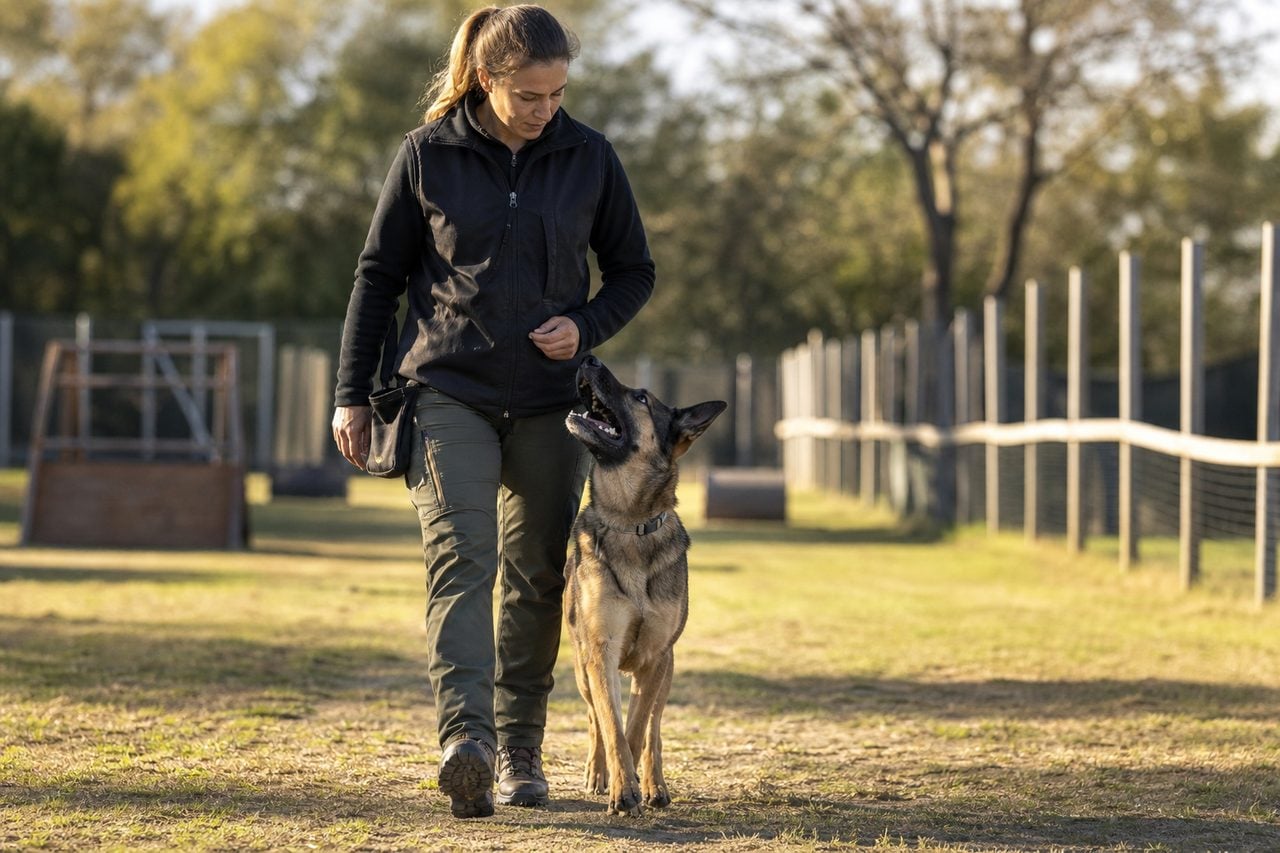
Board-and-train is a residential training option where your dog lives with a professional trainer for a set stretch of time — often two to four weeks — while learning manners, obedience, and reliable responses to cues. For York families juggling work, school runs, and the kind of busy weeks that come with life in the White Rose City, handing the daily repetition to a pro can feel like a relief. The trainer builds the foundation; you step in at the end to learn how to keep it going at home.
It is worth being clear about what board-and-train is and is not. It is an immersive, day-after-day program where consistency is baked into the dog’s routine. It is not a magic reset button, and it is not the same as a day-long boot camp where your dog comes home each evening. A residential stay means your dog sleeps, eats, trains, and decompresses in the trainer’s care, which suits some dogs and some goals far better than others. A reactive adolescent Lab from Dover may thrive on the structure; an anxious rescue who has only just settled into your Dallastown rowhome might do better with in-home sessions first.
Across York County — from the city neighborhoods near Central Market out to Hanover and Spring Grove in the west, Red Lion and Dallastown to the south, Dillsburg and Dover to the north, and the Susquehanna river towns near Wrightsville to the east — owners weigh board-and-train when they want a faster, more concentrated result than weekly classes deliver. It tends to come up after a few frustrating months of trying to fit training into an already-full schedule, when the same problems keep resurfacing because daily practice never quite happens. This guide walks through how the model actually works, what to look for in a program, the questions every York owner should ask before handing over their dog, who makes a good candidate and who does not, and how to make the gains stick once your dog is back home with you. Throughout, the emphasis is on doing right by the dog: humane, reward-based methods, realistic expectations, and a clear handoff so the training does not quietly evaporate the week after pickup.
What Board-and-Train Actually Means
In a board-and-train program your dog boards at a trainer’s facility or home and receives daily, structured training over a continuous stretch — commonly two to four weeks, sometimes longer for complex goals. The defining feature is the residential stay: the dog is not coming and going each day, so the trainer controls the full environment, routine, and reinforcement schedule. That control is the whole point. Habits form through repetition and consistency, and a trainer who has the dog around the clock can deliver both in a way a once-a-week class cannot.
Programs vary widely in their day-to-day. A reputable one blends short, frequent training sessions with rest, enrichment, socialization where appropriate, and real-world practice. Your dog might work on loose-leash walking, recall, place command, and impulse control, then practice those skills in different settings — a quiet yard, a busier street, a parking lot. The goal is a dog who responds reliably even when distracted, not one who only performs in a sterile training room. For York dogs, that often means proofing skills against the squirrels along the Heritage Rail Trail or the foot traffic downtown.
What board-and-train is not: it is not boarding with a side of training, and it is not a place to outsource a problem and forget about it. The dog learns, but you also have to learn. The best programs treat the residential stay as phase one and your handoff training as phase two — equally important.
Board-and-Train vs. Day Programs and Weekly Classes
The biggest decision for most York owners is format. Board-and-train is residential and immersive. A day program or boot camp is intensive but your dog comes home each night. Weekly group classes are the slowest but cheapest and keep you in the driver’s seat the whole way through. Each has a place.
Choose board-and-train when you want concentrated progress in a short window, when your home environment makes consistent practice genuinely hard, or when a specific goal — solid recall, calm leash walking, reliable place command — would benefit from full-time focus. The trade-off is that your dog is away from you, and the skills are built in someone else’s environment first, so the handoff matters enormously.
Choose a day boot camp when you want intensity but also want your dog home each evening, or when you want to stay closer to the daily process. Choose weekly classes when budget is tight, when your dog’s issues are mild, or when the social element of a class is itself a goal. Many York families layer these: a board-and-train to establish a foundation, then weekly classes or refresher sessions to maintain it. There is no single right answer — it depends on the dog, the goal, and your honest assessment of how much hands-on work you can sustain at home in Hanover, Red Lion, or wherever you live.
How to Evaluate a York-Area Program
Because your dog will live in someone else’s care, vetting matters more than for any other type of training. Ask to tour the facility or home where dogs stay. Look at where they sleep, where they are exercised, and how clean and secure the space is. A trainer who welcomes a visit and answers questions openly is a good sign; one who is cagey about access is a red flag.
Ask directly about methods. You want a trainer who can explain their approach in plain language and who leans on reward-based, humane techniques. Ask what happens when a dog gets something wrong, what tools are used and why, and how they handle stress or fear. Ask how many dogs are in their care at once and who supervises overnight. Ask about daily structure — how much actual training versus rest and enrichment.
Ask about the handoff, too. A program without strong owner education is incomplete. How many transfer sessions are included? Do they offer follow-up support or a refresher if skills slip? Get the scope in writing: what skills are targeted, the length of stay, what is included, and what happens if goals are not met. Be wary of anyone promising guaranteed outcomes or a completely fixed dog — living animals do not come with guarantees, and honest trainers say so. Prices vary by program length and inclusions, so ask for a clear range and what it covers rather than assuming.
Is Your Dog a Good Candidate?
Board-and-train suits some dogs beautifully and others poorly. Strong candidates are generally healthy, reasonably stable dogs whose owners want faster progress on obedience and manners than weekly classes deliver — the busy professional in Central York with a bright, under-exercised adolescent, or the family in Spring Grove whose new dog needs a solid foundation before the kids can handle him safely.
Dogs who may not be ideal candidates include those with severe separation anxiety, who may find the residential stay itself distressing, and dogs whose issues are deeply tied to the home environment, since skills built elsewhere have to transfer back. Very fearful dogs or those with a bite history need careful, assessment-first handling — some programs are equipped for this and others are not, so be honest about your dog’s history and ask whether the program is the right fit.
Age matters less than temperament. Puppies can benefit from foundation programs, though early socialization is something you cannot fully outsource — the critical window for exposure to the world happens fast and you will want to be part of it. Senior dogs can learn too, with adjustments for their pace and physical comfort. The honest test is whether the residential format serves this specific dog’s needs better than the alternatives. A good trainer will tell you if it does not, and will point you toward in-home or class-based work instead. That candor is exactly what you want.
The Handoff: Where Results Are Won or Lost
The single biggest factor in whether board-and-train pays off is not the residential stay — it is the handoff. Your dog comes home having learned skills with a professional, in the trainer’s environment, on the trainer’s timing and body language. None of that automatically transfers to you. If you do not learn how to give the cues, reinforce the behaviors, and hold the standard, the gains fade within weeks. This is the most common reason owners feel disappointed, and it is entirely preventable.
A strong program builds in transfer or go-home sessions where the trainer coaches you through everything: how to give each cue, how to reward, how to respond when your dog tests boundaries, and how to gradually generalize the skills to your own home and York neighborhood. Expect homework. Expect to practice short, daily sessions and to be consistent across the whole family — a dog who hears five different versions of the same command will pick none of them.
Plan for a realistic transition. The first days home are an adjustment; your dog is back in a familiar but newly-structured environment and may test the limits. Hold the line gently and consistently. Practice in low-distraction settings first — the backyard, a quiet street — before working up to busier spots like the trails at John Rudy County Park or the sidewalks near Central Market. If the program offers follow-up support or a refresher, use it. The training is a partnership; the residential stay is only the first half.
Practicing Around York and York County
Skills that hold up in a trainer’s yard still have to work in the real world, and York County offers a rich set of places to proof them — once your dog is ready and the basics are solid. Start somewhere quiet and build up gradually; flooding a freshly-trained dog with distractions undoes confidence fast.
The Heritage Rail Trail County Park is a natural progression spot, with long flat stretches for loose-leash walking and recall practice on a long line, plus enough passing cyclists and other dogs to test focus once your dog is steady. John Rudy County Park and Nixon County Park give you open space and varied terrain for practicing place, stays, and recall away from heavy crowds. Lake Redman and Lake Williams in the William Kain area offer scenic, calmer walking routes. Out toward Hanover, Codorus State Park has wide-open space for longer sessions.
In town, the area around Central Market and the city sidewalks are excellent for proofing manners against real distractions — people, smells, noise — but only attempt this once your dog is reliable in calmer settings. Remember York winters: snowy, icy stretches limit outdoor practice for weeks at a time, so build indoor reinforcement habits too. Keep sessions short, end on a win, and always follow local leash rules. Real-world generalization is what turns a board-and-train graduate into a genuinely well-mannered companion.
Setting Realistic Expectations and Costs
Board-and-train is typically one of the more expensive training formats because it bundles boarding, daily professional training, and owner education over a continuous stretch. Costs vary widely with program length, the trainer’s experience, what is included, and your dog’s goals, so ask each program for a clear price range and a written breakdown of what it covers rather than comparing a single number. Generally, longer residential stays and more complex goals cost more, and reputable programs that include strong handoff and follow-up support tend to price accordingly.
On expectations: be skeptical of any program promising a guaranteed, permanently fixed dog. Training is ongoing maintenance, not a one-time procedure. A good board-and-train gives your dog a strong foundation and gives you the tools to maintain it, but the dog who comes home still needs consistent practice, fair leadership, and continued reinforcement for life. Behaviors that are not maintained will erode.
Think of board-and-train as a head start, not a finish line. For the right dog and the right owner — someone who will do the handoff work and keep practicing — it can compress months of progress into weeks. For an owner hoping to drop a dog off and collect a finished product, the disappointment is almost guaranteed. Match the format to your goals and your willingness to stay involved. Get everything in writing, ask hard questions, prioritize humane methods, and choose a trainer who is honest about what training can and cannot do. That honesty, more than any single technique, is the best predictor of a good outcome for you and your dog here in York.
Reviewed Board & Train Trainers in York
These reviewed York-area trainers from our directory handle board & train. Each links to a full profile with specialties, certified credentials, reviews, and contact info:
- Ray’s Canine Services — 5.0★ (32 reviews)
- Cold Creek Dog Training – Hagerstown, MD — 5.0★ (26 reviews)
- Cannon Canine Training, LLC — 5.0★ (18 reviews)
- Top Tier K9 – York PA — 5.0★ (4 reviews)
- Ray’s Canine Services, LLC — 5.0★ (1 reviews)
- Knucklehead K9 Services LLC — 4.9★ (309 reviews)
- Stateline Canine — 4.8★ (215 reviews)
See all York board & train trainers →
Frequently Asked Questions
How long does a board-and-train program usually last?
Most programs run somewhere between two and four weeks, though some are shorter and complex goals can call for longer stays. The right length depends on your dog and what you want to accomplish — basic manners take less time than deeply ingrained behavior change. Ask each York-area trainer how they set the timeline and what milestones they expect along the way, and treat any one-size-fits-all promise with caution.
Will my dog forget me while away at a residential program?
No. A couple of weeks away does not erase the bond with your family. Dogs are adaptable, and a good trainer manages the stay to keep your dog comfortable. The more relevant concern is the handoff: your dog learns skills in the trainer’s environment, so you need to learn how to maintain them once your dog is home, or the training will fade regardless of how strong the bond is.
Is board-and-train better than weekly group classes?
Neither is universally better — they serve different needs. Board-and-train delivers concentrated progress quickly and suits busy households or specific goals, but costs more and depends heavily on the handoff. Weekly classes are cheaper, keep you involved throughout, and build the social element, but progress is slower. Many York owners combine them: a residential program to build a foundation, then classes or refreshers to maintain it.
Can board-and-train fix aggression or severe anxiety?
Serious behavioral issues like aggression or severe anxiety need careful, assessment-first handling, and not every board-and-train program is equipped for them. Some trainers specialize in these cases; others do not. Be fully honest about your dog’s history when you inquire, and be wary of any guarantee — responsible trainers manage and improve these behaviors over time rather than promising to cure them. For aggression specifically, look for a program built around a thorough assessment first.
What should I ask before choosing a program?
Ask to tour where dogs stay, ask about training methods and what happens when a dog gets something wrong, ask how many dogs are in care at once and who supervises overnight, and ask how the handoff and follow-up support work. Get the scope, length, inclusions, and price range in writing. A trainer who answers openly and welcomes a visit is a far safer bet than one who is vague or guarantees a perfect outcome.
What happens after my dog comes home to York?
The work continues. Expect transfer sessions where the trainer coaches you on cues and reinforcement, plus daily homework to keep skills sharp. Start practicing in low-distraction settings — your backyard or a quiet street — then gradually proof skills at busier spots like the Heritage Rail Trail or near Central Market. Keep the whole family consistent, hold the standard gently, and use any follow-up support the program offers if skills start to slip.
Related: read our complete board & train guide or the full York dog training overview.
Ready to find the right board & train pro in York?