
Dog Boot Camp in York, PA
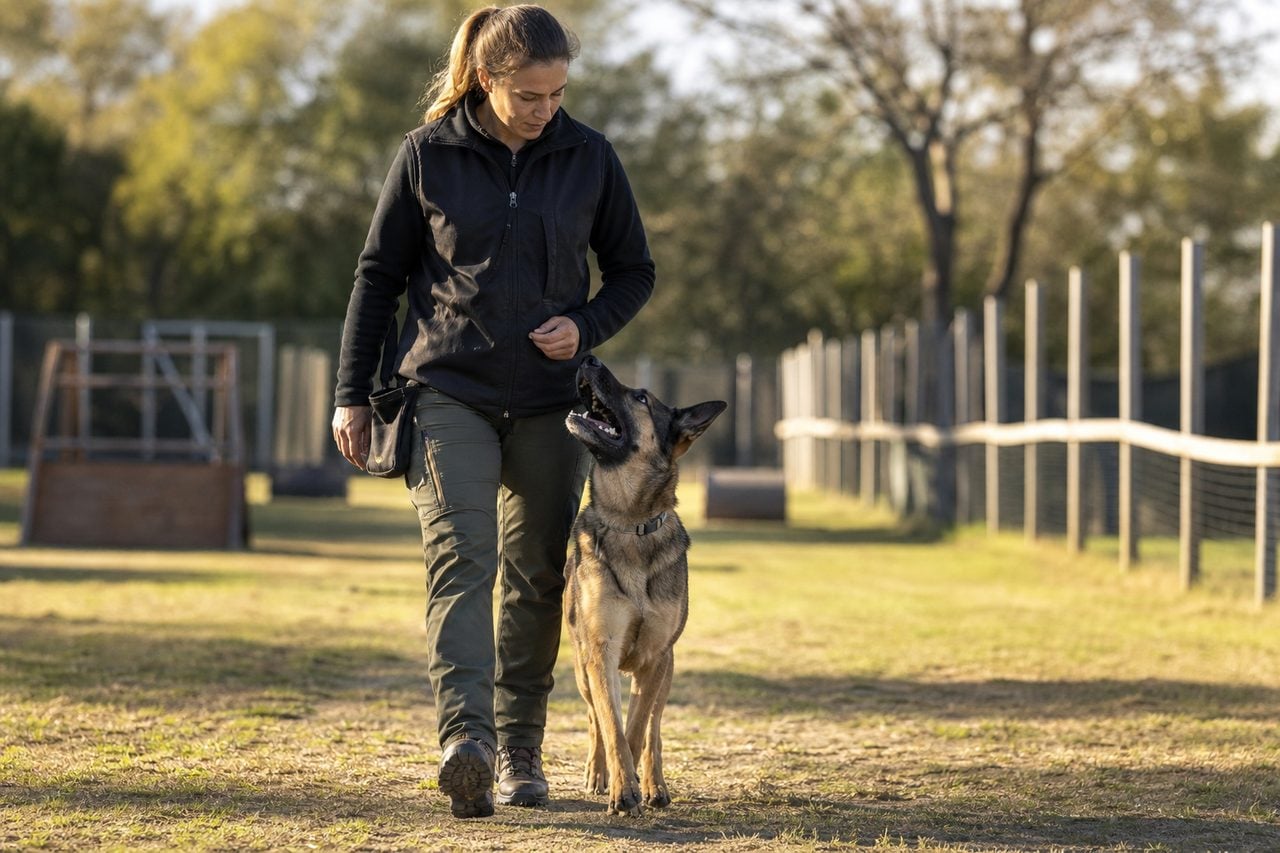
Dog boot camp is an intensive, structured training program built around concentrated daily work — the canine equivalent of an immersive day course rather than a slow weekly class. Unlike a residential board-and-train where your dog lives with the trainer, a true boot camp is typically a day program: your dog attends for full or half days of focused training and skill-building, then comes home with you each evening. That nightly return home is the defining difference, and it shapes who the format suits and how the results take hold.
- What a Dog Boot Camp Involves
- Boot Camp vs. Board-and-Train: The Key Difference
- Choosing a Quality Boot Camp in the York Area
- Which Dogs Thrive in a Boot Camp Format
- Making the Daily Intensity Stick at Home
- Real-World Practice Spots Across York County
- Costs, Expectations, and Long-Term Maintenance
- Reviewed trainers
- FAQ
For York families, the appeal is intensity without the separation. You get the fast progress that comes from many repetitions packed into a short window, while still keeping your dog home each night and staying close to the daily process. A bright, under-exercised adolescent from Central York, a pulling-on-leash adult in Hanover, or a new family dog in Red Lion who needs manners fast can all benefit from the concentrated focus a boot camp delivers — provided the owner stays engaged and carries the work home.
This guide explains how dog boot camps work, how they differ from residential board-and-train programs and from slower weekly classes, what a good York-area program looks like and how to vet one, which dogs thrive in the format and which do not, and how to make the daily intensity translate into lasting behavior. Wherever you live around York County — the city core near Central Market, the snack-food country around Hanover and Spring Grove, the southern boroughs of Red Lion and Dallastown, or the northern stretch toward Dover and Dillsburg — the same principles apply. The throughline is the same as with any honest training: humane, reward-based methods, realistic expectations, and your own active involvement. A boot camp can compress weeks of progress into days, but only if you treat your dog’s evenings and weekends at home as part of the program rather than a break from it. Done right, it is one of the more efficient ways to build manners and obedience while keeping your dog by your side every night here in the White Rose City.
What a Dog Boot Camp Involves
A dog boot camp is an intensive day program. Your dog attends for a concentrated block — often full days over one to several weeks — and works through many short training sessions packed into each day. The high frequency of repetition is the engine of the format: a dog who practices a skill a dozen times a day across several days learns faster than one who sees it once a week. Crucially, your dog comes home each evening, so you remain part of the daily rhythm.
A typical boot camp day blends focused training with rest and enrichment. Your dog might work on loose-leash walking, recall, sit and down stays, place command, and impulse control, then practice those skills in varied settings to build reliability around distractions. Good programs do not drill a tired dog into the ground; they alternate work with decompression so learning sticks and stress stays low.
Because the format is intensive but not residential, communication with you matters every day. The best programs send home notes or end-of-day check-ins so you know what your dog practiced and how to reinforce it that night. That daily loop — train hard during the day, reinforce gently at home each evening — is what makes a boot camp work. It is intensity plus continuity, which is a different recipe from either a residential stay or a slow weekly class.
Boot Camp vs. Board-and-Train: The Key Difference
The terms get used loosely, but the practical distinction is clear and important. A dog boot camp is an intensive day program — your dog trains hard during the day and comes home each night. A board-and-train is residential — your dog lives at the trainer’s facility for the duration, sleeping, eating, and training there around the clock. Both are intensive; the difference is where your dog spends the night and how involved you are day to day.
That difference drives the choice. Boot camp keeps you in the loop every evening, lets you reinforce skills at home immediately, and avoids the separation some dogs and owners find hard. It suits owners who want intensity but also want to stay close to the process, and dogs who do better sleeping in their own home. Board-and-train hands the trainer full environmental control around the clock, which can accelerate certain goals, but puts more weight on the handoff at the end because your dog learned everything away from you.
For many York households, boot camp is the more natural fit precisely because the reinforcement loop is daily rather than back-loaded. You are not waiting two weeks to learn how to maintain the training — you are doing it every night. That said, the right choice depends on your dog’s temperament, your schedule, and your goals. If your home environment makes consistent evening practice genuinely impossible, residential might serve better; if you can commit to nightly reinforcement, boot camp lets you build the habit alongside your dog from day one.
Choosing a Quality Boot Camp in the York Area
Vetting a day program is more straightforward than a residential one since your dog comes home nightly, but the fundamentals still matter. Ask to see the training space and how it is set up. Ask about the trainer’s methods in plain language — you want reward-based, humane techniques and a clear, calm answer to what happens when a dog gets something wrong. Steer clear of anyone who relies on intimidation or who cannot explain their approach.
Ask about the daily structure and the dog-to-trainer ratio. How much of the day is actual training versus rest and enrichment? How many dogs are in a session, and is the work individualized to your dog’s goals? A boot camp that treats every dog identically rarely serves any of them well. Ask what skills the program targets and how progress is measured across the days.
Communication is the differentiator in a good day program. Because the reinforcement happens at home each night, you need to know what your dog worked on. Ask whether you get daily updates, notes, or end-of-day coaching, and whether the program includes sessions that teach you the cues and handling. Get the scope, length, and price range in writing, and confirm what is included. Be skeptical of guarantees — no honest trainer promises a permanently finished dog. Prices vary by program length and intensity, so ask for a clear range rather than assuming, and weigh it against how much hands-on coaching and follow-up you receive.
Which Dogs Thrive in a Boot Camp Format
Boot camp suits dogs and owners who benefit from intensity while staying connected daily. Strong candidates are reasonably healthy, stable dogs whose owners want faster progress on manners and obedience than weekly classes deliver, and who can commit to reinforcing skills at home each evening. The energetic adolescent who pulls on every walk, the smart dog who is bored into mischief, the new family member who needs a solid foundation fast — these are classic boot camp dogs.
The format particularly fits owners who want to stay involved. Because your dog comes home nightly, you practice alongside the program in real time, which builds your handling skills as your dog’s skills grow. Families in Dover, Dallastown, Spring Grove, or anywhere around York who can dedicate consistent evening practice tend to get the most from a boot camp.
Some dogs are less suited. A dog with significant fear or a bite history needs careful, assessment-first handling that a general boot camp may not provide — ask whether the program is equipped before enrolling. Dogs who find busy group environments overwhelming may do better with quieter, individualized work. And puppies, while they can benefit from foundation programs, need early socialization that you should be part of rather than outsourcing entirely. As always, age matters less than temperament. A good trainer will tell you honestly if a boot camp is the wrong fit and point you toward a format that serves your dog better — that candor is a hallmark worth looking for.
Making the Daily Intensity Stick at Home
The advantage of boot camp is that reinforcement happens nightly, but that advantage only pays off if you actually do the evening work. The biggest mistake owners make is treating the day program as the whole job and the home time as a break. The opposite is true: the home reinforcement is what cements what your dog learned during the day. Skip it and the daytime gains erode quickly.
Build a short, consistent nightly routine. Practice the cues your dog worked on that day — a few minutes of recall, leash work, place, or stays — in a calm setting before bed. Keep sessions brief and upbeat; end on a success. Make sure the whole family uses the same cues and the same standards, because a dog who hears different commands from different people learns none of them cleanly.
Use the program’s daily communication. If the trainer sends notes about what your dog practiced and where it struggled, work on exactly that at home. Ask questions when something is unclear. As your dog gets reliable in quiet settings, gradually add distractions — practice in the backyard, then a quiet street, then busier spots. The point is generalization: a dog who only obeys in the training room is not trained. With a boot camp, you have the rare chance to build that generalization in your own home and neighborhood, in real time, every single evening. Take it.
Real-World Practice Spots Across York County
Once your dog is steady on the basics, York County gives you plenty of places to proof the boot camp work in the real world. The rule is the same as always: start quiet and build up. A dog fresh off intensive training needs to succeed in calm settings before facing heavy distraction.
The Heritage Rail Trail County Park is ideal for progressive practice — long, flat stretches for loose-leash walking and long-line recall, with enough passing traffic to test focus when your dog is ready. John Rudy County Park and Nixon County Park offer open, varied space for stays, recall, and place command away from crowds. Lake Redman and Lake Williams give calmer, scenic routes for steady walking practice. Toward Hanover, Codorus State Park has wide-open room for longer sessions.
In town, the sidewalks around Central Market are a strong final test for manners against real-world distraction — people, noise, smells, other dogs — but only once your dog is reliable in quieter places. Keep York winters in mind: snowy, icy weeks limit outdoor practice, so keep up indoor reinforcement when the weather closes in. Always follow local leash rules, keep sessions short, and end on a win. The boot camp builds the skills; these everyday York settings are where you prove they hold up. Practicing across varied real-world spots is what turns a boot camp graduate into a genuinely reliable companion at home and out in the community.
Costs, Expectations, and Long-Term Maintenance
Dog boot camps generally cost less than residential board-and-train since they do not include overnight boarding, but more than weekly group classes given the daily intensity and individualized attention. Prices vary with program length, the trainer’s experience, session frequency, and how much owner coaching is included, so ask each York-area program for a clear price range and a written breakdown rather than comparing a single figure. More hands-on coaching and follow-up support generally justify a higher price.
Set expectations honestly. A boot camp can produce impressive progress in a short time, but it does not deliver a permanently finished dog — no format does. Be wary of any program guaranteeing a perfectly fixed dog. Training is lifelong maintenance: the skills your dog builds in an intensive program need ongoing reinforcement, fair leadership, and continued practice to hold. Behaviors that go unmaintained will fade, no matter how strong the start.
The good news with boot camp is that the daily home reinforcement builds your maintenance habit from day one, so you finish the program already in the rhythm of keeping it up. After the program ends, keep practicing short daily sessions, keep proofing skills in new settings around York, and consider periodic refresher sessions or a group class to keep your dog sharp and social. Think of the boot camp as an efficient, intensive head start that you keep building on — not a finish line. For an engaged owner willing to do the nightly work, it is one of the most effective ways to build manners and obedience while keeping your dog home every evening. Match the format to your goals, choose a humane trainer, get the details in writing, and stay involved — that combination is the surest path to a well-mannered dog here in York.
Reviewed Dog Boot Camp Trainers in York
These reviewed York-area trainers from our directory handle dog boot camp. Each links to a full profile with specialties, certified credentials, reviews, and contact info:
- Ray’s Canine Services — 5.0★ (32 reviews)
- Cold Creek Dog Training – Hagerstown, MD — 5.0★ (26 reviews)
- Cannon Canine Training, LLC — 5.0★ (18 reviews)
- Top Tier K9 – York PA — 5.0★ (4 reviews)
- Ray’s Canine Services, LLC — 5.0★ (1 reviews)
- Knucklehead K9 Services LLC — 4.9★ (309 reviews)
- Stateline Canine — 4.8★ (215 reviews)
See all York dog boot camp trainers →
Frequently Asked Questions
How is a dog boot camp different from board-and-train?
A boot camp is an intensive day program — your dog trains hard during the day and comes home each evening. A board-and-train is residential, with your dog living at the trainer’s facility for the whole program. Both are intensive, but boot camp keeps you involved every night and lets you reinforce skills at home immediately, while board-and-train gives the trainer round-the-clock control and puts more weight on the handoff at the end.
How long does a boot camp program run?
Boot camps vary, commonly running full days over one to several weeks depending on the goals and the program. Basic manners need less time than deeper behavior work. Ask each York-area program how they structure the schedule and measure progress, and be cautious of any one-size-fits-all promise — the right length depends on your dog and what you want to achieve.
Will my dog be exhausted or stressed by daily intensive training?
A well-run boot camp alternates short training sessions with rest and enrichment rather than drilling a tired dog all day, so a healthy dog should handle it well and may even sleep better at home each night. If a program seems to push dogs relentlessly without decompression, that is a red flag. Ask how they balance work with rest, and watch your own dog for signs of fatigue or stress in the first days.
Do I still have to do training work if I enroll in a boot camp?
Yes, and the home work is essential. Because your dog comes home each evening, the nightly reinforcement is what cements the daytime gains — skip it and progress fades fast. Expect short daily practice sessions, consistency from the whole family, and coaching from the trainer on the cues and handling. The boot camp builds the skills; your evening practice makes them stick.
Is a boot camp suitable for an aggressive or very fearful dog?
Not necessarily. Dogs with significant fear or a bite history need careful, assessment-first handling that a general boot camp may not be equipped to provide. Some trainers specialize in these cases; many day programs do not. Be honest about your dog’s history when you inquire and ask whether the program can safely handle it. For aggression specifically, look for a program structured around a thorough assessment first rather than a standard group boot camp.
How much does a dog boot camp cost in the York area?
Costs vary with program length, intensity, the trainer’s experience, and how much owner coaching is included, so ask each program for a clear price range and a written breakdown of what is covered. Boot camps generally cost less than residential board-and-train, which includes overnight boarding, but more than weekly group classes given the daily intensity. Weigh the price against the amount of hands-on coaching and follow-up support you receive.
Related: read our complete dog boot camp guide or the full York dog training overview.
Ready to find the right dog boot camp pro in York?