
Puppy Socialization in Chambersburg, PA
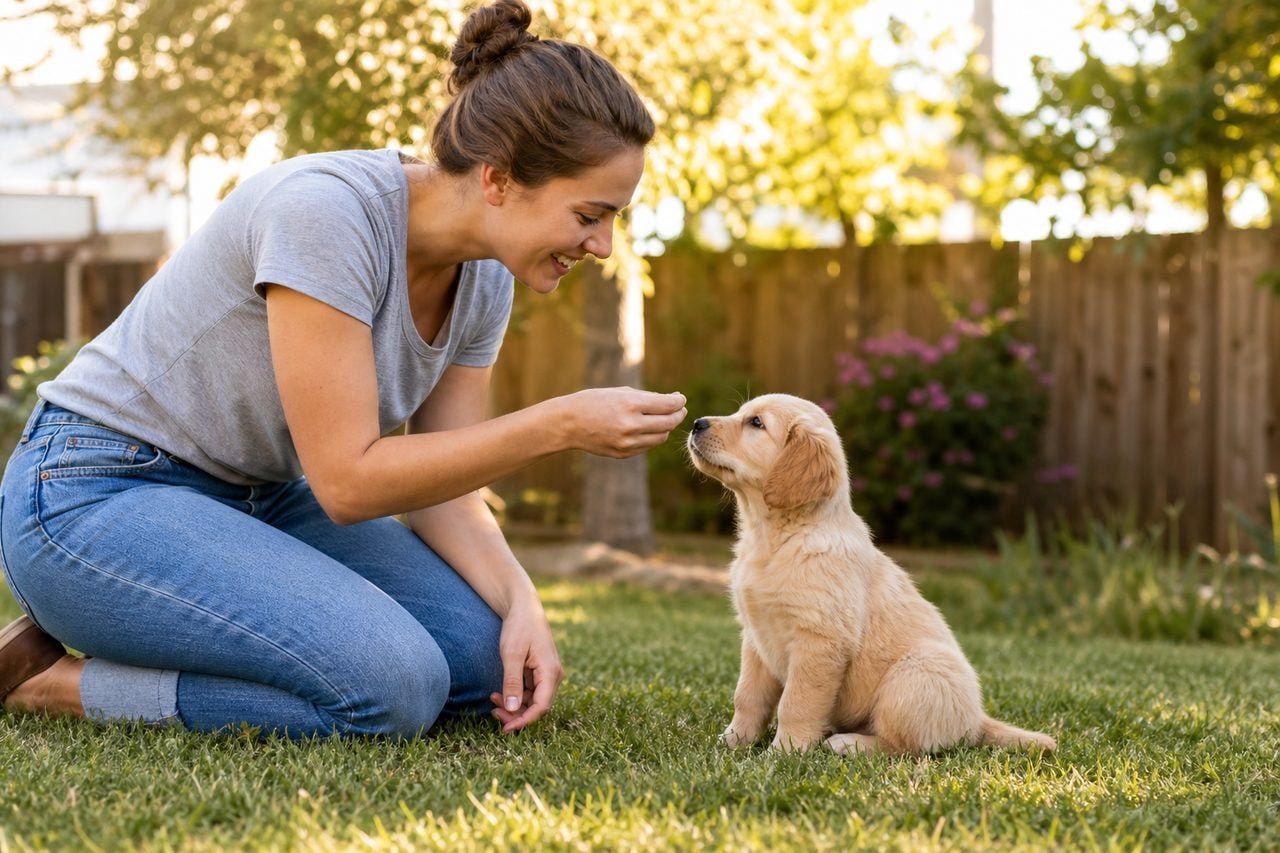
Puppy socialization is the quiet work that decides what kind of adult dog you will live with, and in the Chambersburg area it means preparing your puppy for a genuinely mixed world. Franklin County stretches from the busy downtown square and the I-81 corridor to the open farmland around Greencastle and Antrim Township, up to the university streets of Shippensburg, west toward Mercersburg and St. Thomas, and out to the wooded ridges of South Mountain and Michaux State Forest. A puppy that grows up comfortable with all of it — sirens and silos, strangers and streams, a passing tractor and a downtown delivery truck — becomes a confident companion. One that misses these early experiences often turns fearful or reactive as it matures, and that is a much harder problem to fix than to prevent.
The reason timing matters so much is biological. A puppy’s brain is primed to accept new things during a short window that tapers off around sixteen weeks, with the most sensitive stretch falling between eight and twelve weeks. During this period, positive exposure teaches your puppy that the world is safe and interesting. After the window narrows, unfamiliar things are more likely to trigger caution or fear, and undoing that impression takes far more time and patience. This is why socialization is not the same as obedience training — it is emotional groundwork, it is time-sensitive, and it cannot simply be scheduled for later once life settles down.
This guide is built specifically for Chambersburg and the surrounding Cumberland Valley. It covers what to expose your puppy to, how to do it safely before full vaccination, how to read your puppy’s body language so exposures stay positive, and how to keep socialization going through our snowy-but-mild winters and busy summer festival season. Whether you live in a Guilford Township neighborhood or on a farm lane near Mercersburg, the aim is a puppy that meets Franklin County life with a wagging tail instead of a worried one.
What Socialization Actually Means
Socialization is often misunderstood as simply letting a puppy play with other dogs. In truth it is far broader: it is the deliberate, positive introduction of your puppy to the full range of experiences it will meet in adult life. Play is one slice; the rest is just as important.
- People of all kinds: children, older adults, people in uniforms, hats, and hi-vis vests common around Chambersburg’s farms and worksites.
- Everyday sounds: I-81 traffic, thunderstorms rolling off South Mountain, tractors, and downtown bustle.
- Surfaces and settings: sidewalks, gravel, grass, stairs, car rides, and the vet’s waiting room.
- Handling: having paws, ears, and mouth touched so grooming and vet visits stay stress-free.
The goal is not to overwhelm but to build a bank of good associations. Each new thing should be paired with something pleasant — a treat, praise, or play. A puppy that experiences dozens of small positive novelties before sixteen weeks develops a resilient, adaptable temperament that serves it for life across the Cumberland Valley’s varied environments.
The Critical Window and Why Timing Rules
The prime socialization period runs roughly from three to sixteen weeks, with the most sensitive stretch between eight and twelve. During this window a puppy’s nervous system is unusually open to forming positive impressions. Miss it, and the same experiences that would have been neutral can instead spark lasting fear.
- Front-load the effort: aim for the widest variety of gentle exposures during the eight-to-sixteen-week stretch, since it will never be this easy again.
- Quality over quantity: one calm, positive meeting beats several rushed or frightening ones.
- Watch for fear periods: puppies pass through brief phases where they spook easily; ease off intensity and keep things low-key when you notice one.
This urgency creates a real dilemma, because your puppy is not fully vaccinated during this same window. The solution is careful, controlled socialization rather than avoidance — a balance the next section addresses. The one thing to avoid is doing nothing; an under-socialized puppy is a far more common and harder-to-fix problem in the Chambersburg area than a mild illness caught from cautious early outings.
Safe Socialization Before Full Vaccination
Because the socialization window and the vaccination schedule overlap, you must socialize while managing disease risk. This is entirely doable with a few sensible ground rules that Chambersburg owners can follow year-round.
- Use controlled environments: your home, a friend’s clean living room, or a puppy class that verifies age-appropriate vaccinations.
- Carry your puppy through higher-traffic areas like the downtown square so it absorbs sights and sounds without paws on shared ground.
- Invite health-verified dogs to visit rather than heading to the dog park or busy trailheads early.
- Steer clear of standing water and heavily used dog spots until your veterinarian gives the all-clear.
Meeting friendly, vaccinated adult dogs is one of the best things you can do — calm grown dogs teach puppies canine manners better than a chaotic litter of peers. Ask your Chambersburg vet when it is safe to visit shared spaces like Caledonia or Mont Alto State Park. Until then, bring the world to your puppy in small, controlled doses so the window is not wasted.
A Chambersburg Exposure Checklist
A written checklist keeps socialization from becoming random. Work through a variety of categories over the weeks, marking off experiences as your puppy handles them calmly. Tailor it to Franklin County life.
- Sounds: interstate traffic, farm machinery, thunder, fireworks recordings played softly, vacuum cleaners.
- People: kids, seniors, people in hats and work gear, someone using a cane or walker, delivery drivers.
- Places: car rides, the vet lobby, a friend’s porch, an outdoor cafe patio in town, a quiet corner of a parking lot.
- Animals: calm vaccinated dogs, and — from a safe distance behind fencing — the horses, cattle, and chickens common in rural Franklin County.
- Surfaces: grass, gravel, metal grates, wet pavement, snow, and stairs.
Keep each session short and end on a good note. If your puppy seems overwhelmed, increase distance or lower intensity rather than pushing through. The point is a steady stream of manageable wins, not a single overwhelming field trip. A puppy that calmly checks off this list is well on its way to being a steady adult dog anywhere in the Cumberland Valley.
Reading Your Puppy's Body Language
Socialization only works when it stays positive, and that means learning to read whether your puppy is enjoying an experience or dreading it. Forcing a frightened puppy forward can create the exact fear you are trying to prevent.
- Relaxed signs: loose wiggly body, soft eyes, willingness to take treats, curious approach.
- Stress signs: tucked tail, flattened ears, lip licking, yawning, freezing, trying to retreat, or refusing food.
- Over-arousal: frantic jumping, mouthing, or an inability to settle — also a cue to reduce intensity.
When you spot stress, create space. Move farther from whatever worries your puppy — a passing truck on a Chambersburg street, a boisterous child — until it relaxes, then reward the calm. Never drag a puppy toward something it fears or flood it with an overwhelming situation hoping it will ‘get over it.’ That approach backfires. Respecting your puppy’s signals builds trust, and a puppy that trusts you to keep it safe will grow bolder over time, ready to explore more of Franklin County at its own pace.
Keeping Socialization Going Through the Seasons
Socialization is not a box you check once; it continues well past sixteen weeks, and Chambersburg’s seasons shape how you do it. Franklin County winters are milder than northern Pennsylvania but still bring snow, ice, and short days that tempt owners to hibernate.
- Winter: introduce snow and ice-melted sidewalks early; keep outings short but frequent, and use indoor visits with vaccinated dogs to fill gaps.
- Spring and summer: take advantage of longer days for creek walks along the Conococheague and gentle trail time at Caledonia once your vet clears it.
- Fall: expose your puppy to rustling leaves, hunters’ vests, and the busier feel of harvest season out in farm country.
Adolescence — roughly six to eighteen months — is a second critical stretch when previously confident dogs can regress. Keep exposing your growing dog to new people, places, and dogs so early gains stick. A little ongoing effort through every Cumberland Valley season pays off in an adult dog that stays easygoing whether it is a snowy morning downtown or a summer festival on the square.
Avoiding Common Socialization Mistakes
Even well-meaning owners stumble in predictable ways. Knowing the pitfalls ahead of time helps you sidestep them and make the most of your puppy’s short window.
- Doing nothing out of fear: waiting for full vaccination before any exposure wastes the most important weeks; socialize safely instead.
- Overwhelming the puppy: a crowded festival or a swarm of excited kids can frighten rather than build confidence — start small.
- Only meeting other puppies: peers teach chaos; calm adult dogs teach manners.
- Skipping handling practice: a puppy that never has its paws or ears touched dreads grooming and vet care later.
- Forcing fearful encounters: pushing a scared puppy forward cements the fear.
Another common error is stopping too soon — treating four months as the finish line rather than a milestone. Keep the momentum through adolescence. If your Chambersburg puppy shows persistent fear or reactivity despite good effort, consult your veterinarian or a qualified trainer early; problems caught young are far easier to resolve than those left to harden into adult habits.
Reviewed Puppy Socialization Trainers in Chambersburg
These reviewed Chambersburg-area trainers from our directory handle puppy socialization. Each links to a full profile with specialties, certified credentials, reviews, and contact info:
- MRK9INC.
- Good Dog Paws — 4.7★ (87 reviews)
- All 4 Paws Dog Training
See all Chambersburg puppy socialization trainers →
Frequently Asked Questions
What is the best age to socialize a puppy?
The prime window runs from about three to sixteen weeks, with the most sensitive stretch between eight and twelve weeks. Front-load your effort during this time, since a puppy’s brain is uniquely open to positive new experiences. Socialization should continue through adolescence, but the early weeks carry the most weight for Chambersburg puppies.
How do I socialize a puppy safely before vaccinations are complete?
Use controlled settings like your home or a vaccination-verified puppy class, carry your puppy through busier areas such as the downtown square, and invite calm health-verified adult dogs to visit. Avoid standing water and heavily used dog areas until your Chambersburg veterinarian clears full outings to spots like Caledonia State Park.
Is socialization just about meeting other dogs?
No. Socialization means positively exposing your puppy to the full range of adult-life experiences: people of all kinds, sounds like I-81 traffic and farm machinery, various surfaces, car rides, and gentle handling. Calm adult dogs matter more than puppy playmates, since grown dogs teach manners rather than chaos.
What are signs my puppy is stressed during socialization?
Watch for a tucked tail, flattened ears, lip licking, yawning, freezing, trying to retreat, or refusing treats. When you see these, create distance from whatever worries your puppy and reward the calm. Never force a frightened puppy forward, as that can create lasting fear rather than confidence.
Can I socialize my puppy in winter?
Yes, and you should. Franklin County winters are milder than northern Pennsylvania but still snowy, so introduce snow and ice-melted sidewalks early, keep outings short but frequent, and fill gaps with indoor visits from vaccinated dogs. Short days are no reason to skip the critical window.
What happens if my puppy misses the socialization window?
Missing the window does not mean all hope is lost, but it makes progress slower and harder. Under-socialized dogs are more prone to fear and reactivity as adults. If your puppy shows persistent fear despite good effort, consult your veterinarian or a qualified trainer early, since young problems are far easier to resolve.
Related: read our complete puppy socialization guide or the full Chambersburg dog training overview.
Ready to find the right puppy socialization pro in Chambersburg?