
Board & Train in Johnstown, PA
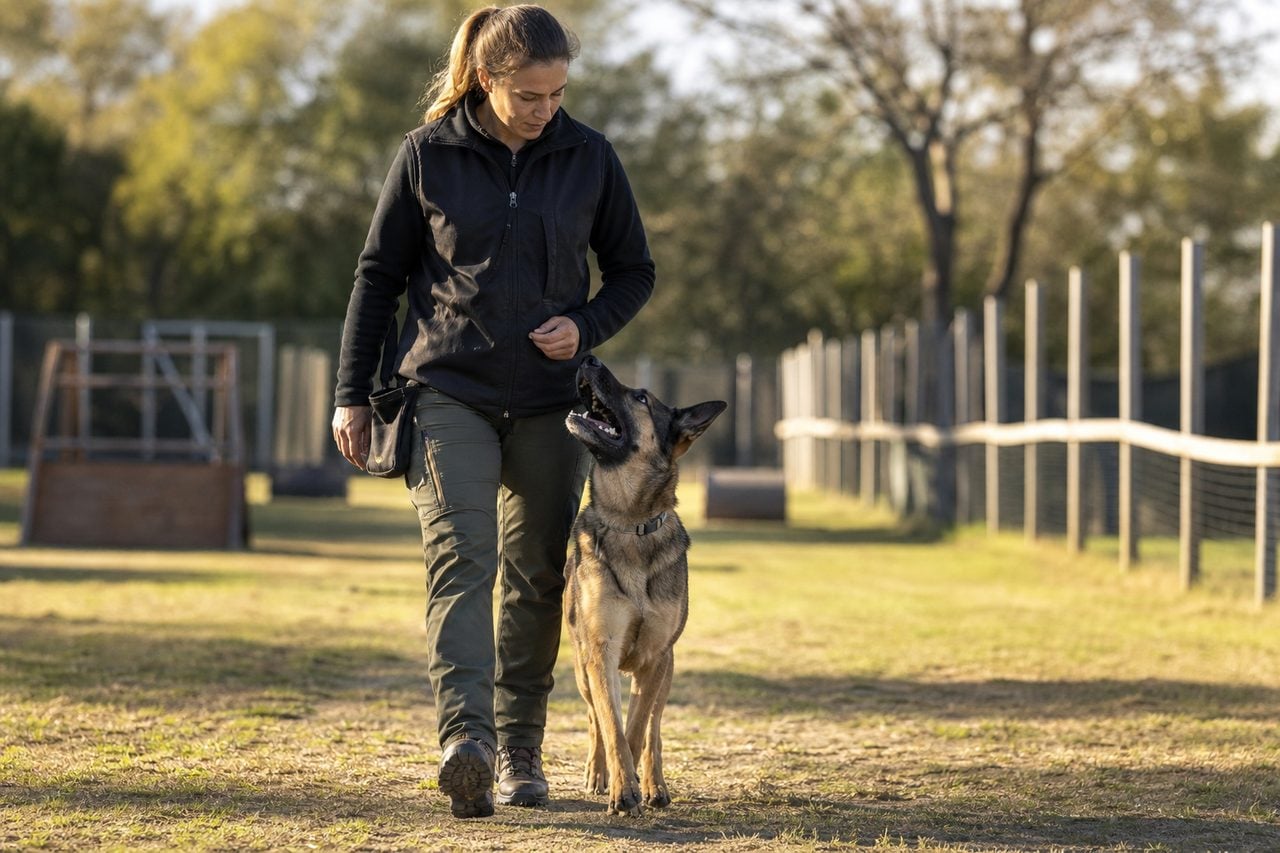
Board-and-train is a residential program: your dog lives with a trainer for a set stretch — often two to four weeks — while a professional works daily on obedience, manners, or specific behavior goals, then transfers those skills back to you through handoff lessons. For a Johnstown household juggling shift work at the hospital, a commute over Laurel Mountain, or a full week around Richland and Geistown, the appeal is obvious: the intensive training happens without you carving out a session every evening. Done well, it can compress weeks of scattered practice into a focused block.
Honesty first, though, because this is a small market. Johnstown and Cambria County are served by a modest number of trainers, and true residential board-and-train — where the dog boards overnight under professional supervision — is not something every local trainer offers. Some do run day-based or short residential options, but for the deepest selection of dedicated residential programs, and for board-certified behavior support if your case is complicated, the nearest larger markets are Pittsburgh (roughly an hour and fifteen minutes west) and Altoona (about forty minutes northeast). We would rather point you there than pretend a Johnstown-only program exists when it may not.
This guide explains how board-and-train actually works, what a fair program looks like, how it differs from a day-only boot camp, and which questions protect your dog and your money. From downtown by the rivers up to Westmont and out to the coal-patch boroughs of Nanty Glo, South Fork and Cresson, the goal is the same: a clear, unhurried decision rather than a rushed booking. We will walk through the residential model in plain terms, flag where a day program serves you better, and lay out the vetting questions that separate a sound provider from slick marketing — then leave the choice, and the follow-through, with you. We are the GetDogSchool Editorial Team, and we do not run or sell training — we help you weigh it.
What Board-And-Train Actually Means
The defining feature of board-and-train is residency: your dog boards with the trainer, usually overnight for the full program length, rather than coming home each evening. That distinguishes it sharply from a day-program boot camp, where the dog trains during the day and sleeps at home. Residency matters because it lets the trainer control the dog’s whole environment — feeding, rest, exercise, and repeated short training reps spread through the day — which can accelerate results for house-training, crate work, leash manners, and foundational obedience.
A typical structure runs two to four weeks. The trainer builds skills in a low-distraction setting first, then gradually adds real-world challenges: other dogs, novel places, distractions like the foot traffic you would meet along the Path of the Flood Trail. The most important phase comes at the end. A dog that performs perfectly for a professional but ignores its owner has learned nothing durable, so reputable programs schedule transfer sessions where you learn the exact cues, timing, and rewards the trainer used. In Johnstown’s small market, confirm before booking whether a given provider offers genuine overnight residency or only day training, because the two are marketed with overlapping language.
Board-And-Train Versus Day Boot Camp
These two formats get blurred together, so it helps to separate them cleanly. Board-and-train is residential: the dog stays overnight for the program’s duration. A dog boot camp, as we use the term, is typically a day program — intensive training during daytime hours, dog home each night. Both aim for concentrated progress; the difference is where the dog sleeps and who controls the overnight routine.
Which fits you depends on your goals and your dog. If the issues are tied to the home environment — door-dashing, counter-surfing, settling in your own living room — keeping the dog at home through a day program can mean skills are built in the exact place you need them. If you need round-the-clock structure, or your household simply cannot supervise a training regimen for a few weeks, residency may serve better. Cost usually differs too: overnight boarding adds care hours, so residential programs generally price higher than day options. In and around Johnstown, availability is the practical constraint — ask each provider plainly which of the two they run, because a truly residential option may require looking toward Altoona or Pittsburgh.
When A Residential Program Makes Sense
Board-and-train is not automatically the right first step. It tends to earn its cost in a few specific situations. First, when a dog needs a concentrated foundation fast — a newly adopted adult with no obedience, or a young dog whose pulling and jumping have outrun weekly classes. Second, when the owner’s schedule genuinely blocks consistent daily practice; a Conemaugh Valley household with rotating shifts and a long commute may get more from a focused block than from sessions that keep getting skipped.
It is a weaker fit in other cases. Puppies in early socialization windows usually do better with owner-guided classes, because you want the puppy forming positive associations with your family and your neighborhood, not a trainer’s facility. Problems rooted in the owner-dog relationship — inconsistent rules, mixed signals — are not solved by removing the dog for three weeks; they resurface the day it comes home unless the humans change too. And serious aggression or severe anxiety deserves an assessment-first approach and often a veterinary behavior consult before any residential booking. If a program promises to fix deep behavior problems purely by boarding, treat that as a red flag rather than a selling point.
The Handoff: Why Transfer Sessions Decide Everything
The single biggest predictor of whether board-and-train sticks is the quality of the handoff. Skills live in context, and a dog trained by a professional in a facility has learned to respond to that person, in that place, with that timing. Without deliberate transfer, much of the progress fades within weeks of coming home — not because the training was fake, but because the dog never generalized it to you and your house near Geistown or your walks around Stackhouse Park.
A serious program treats the handoff as core, not a courtesy. Expect at least one, ideally several, coaching sessions where you handle the dog under the trainer’s supervision and learn the precise cues, hand signals, reward markers, and correction timing used during the stay. Good trainers also send you home with written protocols and offer follow-up support — a call, a check-in visit, or a refresher — over the following weeks. When you compare Johnstown-area options against programs in Pittsburgh or Altoona, weigh the handoff as heavily as the training itself. A cheaper program with strong owner coaching often outperforms a pricier one that returns a polished dog and a thin instruction sheet.
Questions To Ask Before You Book
Before you hand over your dog, get clear answers in writing. Start with methods: what specific techniques and tools does the trainer use, and how do they respond when a dog struggles? You want a straight description, not vague reassurance. Ask about credentials and continuing education, and ask for references from past board-and-train clients you can actually contact.
Then cover the logistics that protect your dog. Where does the dog sleep and how many dogs board at once? What is the daily schedule of training, rest, and exercise? What is the staff-to-dog ratio, and who supervises overnight? What happens if your dog gets sick or injured — which vet do they use, and how are you contacted? Ask whether you can visit, drop in, or receive photo and video updates during the stay; resistance to any owner contact is worth questioning. Finally, get the full cost, what it includes, the transfer-session plan, and any follow-up support spelled out on paper. In a small market like Johnstown, a trainer who answers these openly is worth more than one with the flashiest marketing, and these same questions travel well if you end up comparing programs in the larger nearby markets.
Neighborhoods And Getting There
Cambria County spreads across river valleys and ridge towns, and travel time shapes which residential option is realistic for you. From Downtown Johnstown & the Rivers, at the Stonycreek and Little Conemaugh confluence, both Altoona and Pittsburgh are drives worth planning around drop-off and pickup days rather than daily commutes — another reason residency, not a day program, often suits families outside walking distance of a trainer.
From Westmont & the Hilltop above the Inclined Plane, and from Richland, Geistown & the Eastern Suburbs, you sit near the Route 219 corridor that speeds trips toward Altoona. Ebensburg & the Allegheny Ridge is already partway to Altoona along the high ground, which can shorten that option. The Coal-Patch Boroughs — Nanty Glo, South Fork, Cresson and their neighbors — are scattered through the valleys, so confirm exact drive times before committing. Windber & the Southern Highlands, edging into the Laurel Highlands, sits closest to the Somerset direction. Wherever you start, treat a residential program’s location as part of the decision: you will make the trip at least twice, and you will want convenient access for the handoff sessions that make the whole thing work.
A Realistic Plan For Johnstown Owners
Put it together into a sensible sequence. Begin by naming the problem precisely. “My dog pulls and won’t come when called” points toward foundational obedience, where a residential block can genuinely help. “My dog lunges and snaps at strangers” is a behavior case that needs assessment first, not a boarding booking — and possibly a veterinary behaviorist, whose nearest options are in Pittsburgh.
Next, survey what Johnstown and Cambria County actually offer right now, and ask each provider directly whether they run true overnight residency or a day program. If local residential options are thin, or your dog’s needs are specialized, widen the search to Altoona or Pittsburgh rather than forcing a poor local fit. Interview at least two providers using the questions above, and be skeptical of anyone guaranteeing a permanent fix — behavior change depends on follow-through at home, which no trainer controls. Finally, plan for the handoff and the weeks after: block time to practice the transferred skills, and expect to keep reinforcing them around your own streets and trails. Board-and-train buys a strong head start; you keep it by doing the work once your dog is back home. Our directory listings are a starting point for research, not an endorsement of any single program.
Board & Train in Johnstown: Local Options & Nearest Specialists
A few Johnstown-area trainers can help with milder board & train needs:
- Optimum K9 Services — 4.5★ (8 reviews)
- Katdare K9 Coaching
Nearest board & train specialists — Pittsburgh
For complex cases, the closest metro with dedicated board & train trainers is Pittsburgh (an easy drive for an assessment or a board-and-train stay). Top-reviewed options:
- Sit Means Sit Dog Training Pittsburgh North — 5.0★ (130 reviews)
- H-D Interactions Dog Training Co. — 5.0★ (72 reviews)
- Paw & Order Dog Training Westmoreland — 5.0★ (66 reviews)
- Paw & Order Dog Training Washington PA — 5.0★ (64 reviews)
- Suburban K9 Dog Training — 5.0★ (53 reviews)
- Paw & Order Dog Training Harmony — 5.0★ (38 reviews)
- McWreath Dog Training – Washington, PA — 5.0★ (36 reviews)
- Control Is Key Dog Training — 5.0★ (36 reviews)
See all Pittsburgh board & train trainers →
Frequently Asked Questions
How long does a board-and-train program usually last?
Most residential board-and-train programs run two to four weeks, though the exact length depends on your goals and your dog. Foundational obedience and manners often fit a shorter block, while more involved training may need longer. Ask each provider how they set the timeline, and be cautious of anyone promising a complete behavior overhaul in just a few days — durable change takes reps and, critically, transfer sessions with you at the end.
Is board-and-train available right in Johnstown?
Johnstown and Cambria County are a small market, so true overnight residential board-and-train is not offered by every local trainer — some run day programs instead. Ask each provider directly whether the dog boards overnight for the full program or trains during the day and sleeps at home. For the deepest selection of dedicated residential programs, many owners look to Pittsburgh (about an hour and fifteen minutes west) or Altoona (roughly forty minutes northeast).
What is the difference between board-and-train and a dog boot camp?
The core difference is where the dog sleeps. Board-and-train is residential — the dog boards overnight with the trainer for the program’s duration. A dog boot camp, as we use the term, is typically a day program, with intensive daytime training and the dog home each night. Both aim for concentrated progress; residency simply gives the trainer control of the overnight routine, while a day program keeps skill-building in your home environment.
Will the training carry over once my dog comes home?
Only if the program includes proper transfer sessions. Skills learned with a professional in a facility do not automatically follow the dog to your house near Westmont or Geistown. Reputable programs schedule coaching where you learn the exact cues, timing, and rewards used, plus written protocols and follow-up support. When comparing options, weigh the handoff as heavily as the training — it is the biggest predictor of whether results last.
Can board-and-train fix aggression or severe anxiety?
Not as a standalone booking, and you should be wary of any program that guarantees it. Serious aggression or severe anxiety deserves an assessment-first approach and often a veterinary check or veterinary behaviorist consult before any residential program — the nearest veterinary behaviorists are in Pittsburgh. Removing the dog for a few weeks does not address underlying causes on its own, and no ethical trainer promises a cure.
How do I vet a board-and-train provider?
Ask for specifics in writing: the exact methods and tools used, credentials, and references from past clients you can contact. Then cover logistics — where the dog sleeps, how many dogs board at once, the daily schedule, staff-to-dog ratio, overnight supervision, and the plan if your dog gets sick. Confirm whether you can visit or get updates, and get the full cost, transfer-session plan, and follow-up support spelled out. Openness on these points matters more than polished marketing.
Related: read our complete board & train guide or the full Johnstown dog training overview.
Ready to find the right board & train pro in Johnstown?