
Puppy Socialization in Pottsville, PA
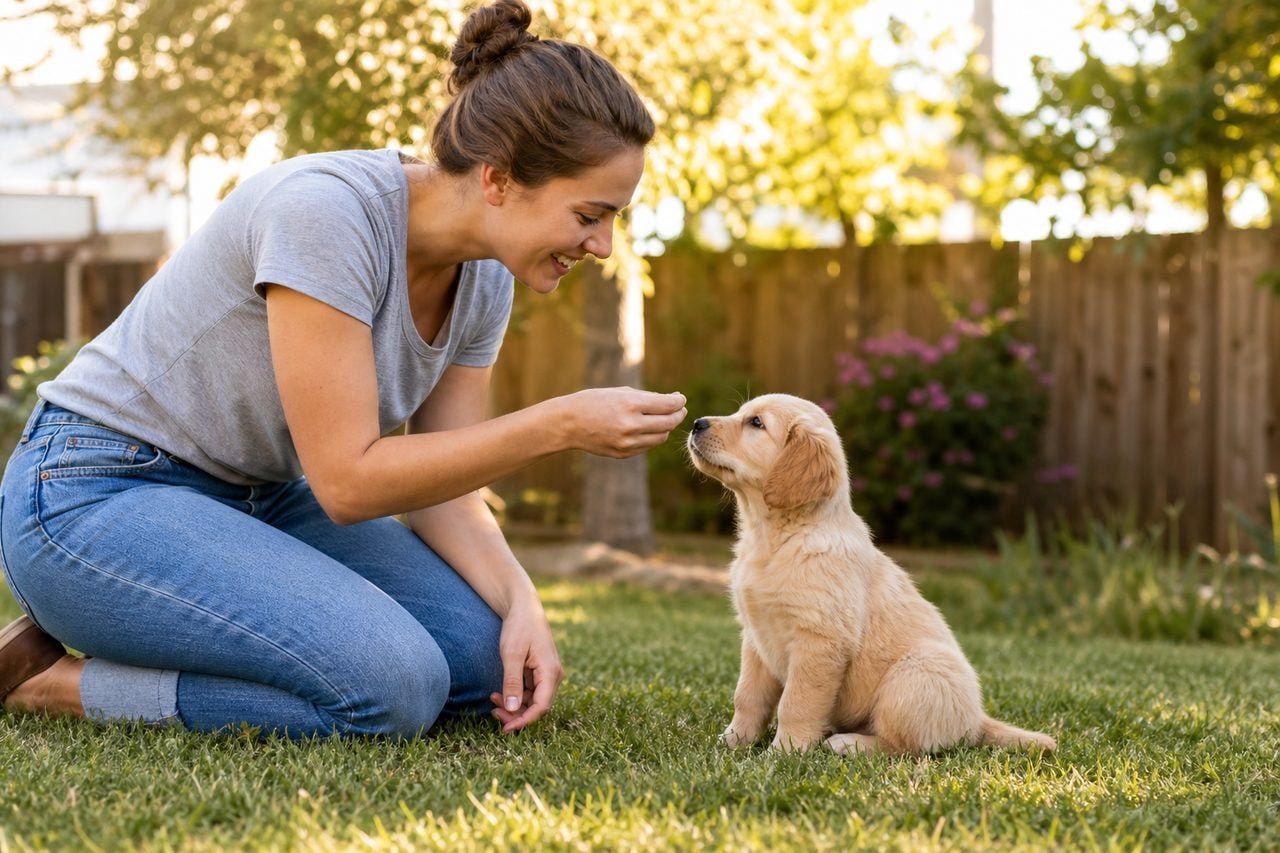
Socialization is the single most important thing you can do for a young puppy, and it has a deadline. The window when a puppy’s brain most readily accepts new experiences as normal closes around sixteen weeks, and what happens during that time largely determines whether you’ll have a confident adult dog or a fearful one. For owners in Pottsville and the surrounding Schuylkill County boroughs, the challenge is doing this safely before a puppy is fully vaccinated, and doing it in a region that’s more small-town quiet than big-city bustle.
Done right, socialization isn’t about cramming in as many encounters as possible. It’s about a steady stream of positive, controlled exposures that teach your puppy the world is a manageable place. This guide covers the critical period, how to expose a puppy safely, how to read fear before it takes hold, and specific settings around the Coal Region worth using. Miss this window and you may spend years managing anxieties; use it well and you get a dog that takes life in stride.
Understanding The Critical Socialization Window
Between roughly three and sixteen weeks, a puppy is biologically primed to form its baseline understanding of what’s safe. Experiences during this period are absorbed quickly and stick for life. A puppy that meets a variety of people, surfaces, sounds, and gentle dogs in these weeks tends to shrug off novelty as an adult. One that misses this window often reacts to ordinary things, a passing stroller, a man in a hat, a garbage truck, with fear that can be very hard to reverse later.
This creates a real tension for owners. Puppies usually aren’t fully vaccinated until around sixteen weeks, right as the window is closing. For decades some people kept puppies indoors until then, only to end up with under-socialized, anxious dogs that struggled for the rest of their lives. The modern consensus among behavior and veterinary professionals is that the risk of lasting behavioral problems from isolation generally outweighs the disease risk, provided you socialize smartly rather than recklessly.
The practical answer is controlled exposure. You avoid high-risk spots where many unknown dogs eliminate, like busy public dog areas, while still exposing your puppy to the wider world in safer ways. Carrying a puppy through a hardware store, letting it watch traffic from your arms, or hosting a calm vaccinated adult dog at home all deliver the socialization benefit without the exposure risk. The point is to keep the experiences coming during the window that matters most.
It’s worth understanding that this isn’t a hard cliff at exactly sixteen weeks; sensitivity tapers off gradually rather than switching off overnight. But the effort-to-reward ratio shifts dramatically. What a puppy accepts effortlessly at ten weeks may take dozens of careful repetitions to teach at ten months. That’s why front-loading socialization into the early weeks is so valuable, even though it lands at the busiest and most exhausting time of raising a puppy.
What Socialization Actually Means
Many people hear “socialization” and think only of playing with other dogs. That’s a small part of it. True socialization is broad positive exposure to everything your dog will encounter in life: people of different ages and appearances, surfaces underfoot, household noises, vehicles, weather, and handling. Dog-to-dog contact matters, but a puppy that loves other dogs yet panics at the vacuum or a stranger’s beard is still poorly socialized in the ways that count.
Think in categories and aim for gentle variety in each. People: children, older folks, people with hats, umbrellas, canes, and beards, people in uniforms or high-visibility jackets. Surfaces: grass, gravel, metal grates, wood decks, wet pavement, slick tile. Sounds: doorbells, kitchen clatter, traffic, thunder played softly. Handling: paws, ears, mouth, tail, plus the sensation of a collar, harness, and leash. Each positive rep in each category widens the range of things your dog treats as ordinary and unremarkable.
The word “positive” is doing heavy lifting here. A bad first experience can be worse than no experience at all. If a puppy is frightened by an encounter, it can learn a lasting fear of that thing, and one frightening incident sometimes outweighs many good ones. So every exposure should be paired with good things, treats, praise, calm reassurance, and kept at a distance and intensity the puppy is comfortable with. You’re building a bank of pleasant associations, not just logging encounters for a checklist.
Aim for calm, positive, and varied rather than frequent and intense. A puppy that has ten relaxed, happy experiences learns more than one that endures thirty overwhelming ones. Some owners get so focused on hitting a number of “exposures” that they push a nervous puppy past its comfort zone and undo their own work. The quality of each encounter, and the puppy’s emotional state during it, matters far more than the raw count.
Safe Exposure Before Full Vaccination
The trick during the pre-vaccination weeks is to socialize without exposing your puppy to disease from unknown dogs and contaminated ground. Fortunately, plenty of valuable socialization happens without ground-level contact with strays. Carry your puppy. A young puppy held in your arms can watch the world go by at Garfield Square in downtown Pottsville, take in the sights and sounds of a busy parking lot, or observe traffic on a main road, all without paws touching risky pavement. From your arms, the puppy experiences a huge amount while staying safe.
Your car is a socialization tool too. Short, positive rides prevent the carsickness and travel anxiety that plague many dogs, and they let the puppy experience new environments from a safe bubble. Pair rides with treats and keep early trips brief and pleasant, not just runs to the vet, or the car itself becomes a source of dread. A few minutes around town, ending with something good, teaches the puppy that the car leads to nice places.
Home is a controlled environment you can use freely. Invite friends over so the puppy meets new people of different ages and looks on familiar turf. Ask a friend with a calm, fully vaccinated, dog-friendly adult to visit for supervised play; this is far safer than a public gathering of unknown dogs of unknown health. Play recordings of thunderstorms, fireworks, and traffic at low volume during meals to build tolerance to sounds before the puppy ever meets them for real.
Set up different surfaces in the yard to walk across, a piece of plywood, a plastic lid, some gravel, so the puppy learns that odd footing is nothing to fear. Check with your veterinarian about which local spots and activities are reasonable for your particular puppy’s vaccination stage. None of this requires waiting for the final shots, and all of it counts toward a well-adjusted adult. The key is being creative about delivering exposure while sidestepping genuine disease risk.
Reading And Preventing Fear
The most important skill in socialization is reading your puppy’s body language, because pushing a scared puppy makes things worse, not better. Signs of stress include a tucked tail, flattened ears, lip licking, yawning when not tired, freezing in place, trying to move away, a lowered body, or refusing treats it would normally take eagerly. A puppy showing these isn’t being stubborn; it’s over threshold and, in that moment, learning to be afraid rather than learning that things are fine.
When you see stress, increase distance from whatever is worrying the puppy. Let it observe from far enough away that it can relax and take a treat, then very gradually close the gap over multiple sessions only as the puppy stays comfortable. This distance-and-treats approach is the backbone of building confidence. Never drag a puppy toward something it fears or force interactions to “prove” the thing is harmless; force teaches the opposite lesson.
If a stranger wants to pet a nervous puppy, it’s completely fine to say no; a bad encounter isn’t worth the social awkwardness of declining. The same goes for pushy adult dogs, well-meaning children who want to grab and hug, or any situation your puppy is clearly uneasy about. Part of your job during these weeks is to be your puppy’s advocate and gatekeeper, controlling which experiences it has so the balance stays overwhelmingly positive.
Let the puppy set the pace and always give it a choice. A confident puppy will investigate on its own when allowed, and rewarding that voluntary curiosity builds boldness. The goal across every outing is for the puppy to leave feeling that the new thing turned out fine. Quality beats quantity every time. If your puppy consistently struggles despite gentle handling, hangs back, trembles, or shuts down, that’s worth flagging to a trainer or your vet early, while the window is still open and problems are easiest to address.
Coal Region Settings Worth Using
Schuylkill County isn’t a dense city, but that’s actually an advantage for careful socialization; you can find controlled, low-chaos settings easily rather than fighting overwhelming crowds. Downtown Pottsville around Garfield Square offers foot traffic, benches, and everyday street sounds you can take in with the puppy carried or, once vaccinated, walked on leash. The mix of people and noise there is a gentle step up from a quiet home without being a sensory overload.
Once your puppy is cleared for ground contact, the county’s parks open up. Sweet Arrow Lake near Pine Grove, Locust Lake State Park, and Tuscarora State Park all provide varied surfaces, water sounds, wildlife smells, and calm outdoor foot traffic. The quiet trails at Sweet Arrow Lake give a natural walking environment for a puppy building confidence away from vehicles. Vary where you go so the puppy learns to generalize; a dog that only ever walks one route can find any new place unsettling, so rotate your spots deliberately.
Everyday errands double as socialization. Pet-friendly stores let a puppy experience automatic doors, shopping carts, tile floors, echoing spaces, and strangers in a controlled way. Parking lots near shopping areas expose a puppy to cars, foot traffic, and the beeps and rumbles of daily life from a safe distance. Even sitting on a bench and letting the puppy watch the world go by, rewarding calm observation, is genuinely useful socialization that many owners overlook.
Because the region is spread out across boroughs like Schuylkill Haven, Saint Clair, Orwigsburg, Frackville, and Tamaqua, a short drive gives you access to many different environments, which is exactly the variety good socialization needs. Take advantage of that. A morning trip that includes a new town, a different surface underfoot, a few unfamiliar people, and a novel sound or two, all kept relaxed and positive, packs a lot of developmental value into one outing. Just watch the puppy’s energy and stop before it gets tired or overwhelmed.
Socializing To Everyday Sounds And Life
Sound sensitivity is one of the most common and preventable fear problems, and the Coal Region has its share of loud events. Distant industrial noise, coal trucks on the highways, hunting season gunfire echoing off Sharp and Broad Mountains, and summer fireworks can all frighten an unprepared dog badly enough to affect its quality of life. The time to build tolerance is during the socialization window, long before the dog ever meets these sounds at full intensity in an uncontrolled setting.
Use sound recordings played at low volume during pleasant activities like meals and play, then very gradually raise the volume over days and weeks as the puppy stays relaxed. This pairs the sound with good feelings so the puppy files it under “normal” rather than “threat.” Never blast a loud noise to “get the puppy used to it”; that flooding approach usually creates the exact fear you’re trying to avoid. The progression should always be slow enough that the puppy barely reacts.
Don’t neglect the small, everyday sounds either. The vacuum, the doorbell, the washing machine, a rolling trash can, the smoke alarm chirp, all of these are worth introducing calmly and early. Household appliances frighten many adult dogs simply because no one thought to introduce them gently as puppies, and a dog that bolts from the kitchen every time the vacuum runs is dealing with an easily preventable problem.
The broader principle holds throughout: whatever your dog will live with, introduce it early, positively, and at a pace it can handle. That includes weather like thunderstorms and heavy rain, which roll over the mountains here regularly, as well as ordinary life events like nail trims, being brushed, and wearing a harness. A few minutes of gentle exposure paired with treats now saves a lifetime of stress and management later. Think ahead to the situations your adult dog will realistically face, and start preparing the puppy for them while preparation is still easy.
Keeping It Going After Sixteen Weeks
Hitting sixteen weeks doesn’t mean socialization is finished; it means the easiest window has passed. Dogs can absolutely continue learning and adjusting throughout life, it just takes more repetitions and patience after the critical period. Don’t treat the deadline as a reason to stop, treat it as a reason to have front-loaded the effort, and then keep going at a steadier pace as the dog matures.
There’s also a common second fear phase in adolescence, often somewhere between six months and well over a year, when a previously confident dog may suddenly act spooked by things it used to accept without a second thought. This is normal and usually temporary. Handle it the same calm way, with distance and positive associations, and avoid forcing the dog through scary moments. Overreacting, or on the flip side coddling and reinforcing the panic, can make an adolescent fear phase stick around longer than it needs to.
Keep exposing your growing dog to new places, people, and situations regularly. A dog socialized well as a puppy but then kept in a narrow routine can slowly lose some of that confidence, a bit like a language you stop practicing. Ongoing outings, whether to different county parks, new walking routes through nearby boroughs, or pet-friendly errands, maintain the resilience you built early and keep the dog comfortable in a changing world.
If gaps appear, an under-socialized rescue, a fear that developed despite your efforts, or an adolescent regression that isn’t resolving on its own, this is where a qualified trainer earns their keep. Local trainers across Schuylkill County handle exactly these cases, often traveling a wide radius or offering in-home work for dogs too anxious to travel comfortably. A directory of area trainers makes it easy to find someone who specializes in confidence-building and fear work. The earlier you address a socialization gap the better the outcome, but with patience and the right help, it’s rarely truly too late to help a dog feel safer in its world.
Reviewed Puppy Socialization Trainers in Pottsville
These reviewed Pottsville-area trainers from our directory handle puppy socialization. Each links to a full profile with specialties, certified credentials, reviews, and contact info:
- Lead Your K9 — 4.7★ (33 reviews)
- Mountain Adventures K9 Academy — 4.6★ (22 reviews)
- Canine Learning Center
See all Pottsville puppy socialization trainers →
Frequently Asked Questions
When is the critical socialization window for puppies?
It runs from roughly three weeks to about sixteen weeks of age, with the most sensitive part in the middle. During this time a puppy’s brain most readily accepts new experiences as normal. Exposure after this window still helps, but it requires more time and repetition. Prioritizing socialization in these weeks pays off for the dog’s whole life.
Can I socialize my puppy before it's fully vaccinated?
Yes, and you should, using safe methods. Carry the puppy in public, take positive car rides, invite people to your home, and arrange playdates with known healthy vaccinated dogs. Avoid busy public dog areas and ground where many unknown dogs eliminate until your vet clears the puppy. The behavioral risk of isolation generally outweighs the disease risk when you socialize carefully.
How do I know if my puppy is scared?
Watch for a tucked tail, flattened ears, lip licking, yawning when not tired, freezing, trying to retreat, or refusing treats it usually takes. These mean the puppy is over threshold. Increase distance from whatever is worrying it, let it relax, and only approach again gradually. Forcing a scared puppy forward tends to create lasting fear rather than confidence.
Is socialization just about meeting other dogs?
No, dog-to-dog play is only one piece. True socialization is positive exposure to people of all kinds, surfaces, sounds, vehicles, handling, and everyday life. A puppy comfortable with other dogs but terrified of strangers or the vacuum is still under-socialized. Aim for gentle variety across every category the dog will encounter as an adult.
Where can I socialize my puppy around Pottsville?
Start with controlled settings like downtown areas around Garfield Square while carrying the puppy, then progress to county parks such as Sweet Arrow Lake, Locust Lake State Park, and Tuscarora State Park once vaccinated. Pet-friendly stores and parking lots offer everyday sights and sounds. Because the region is spread out, short drives to different boroughs give useful variety.
My dog is over sixteen weeks. Is it too late?
The easiest window has passed, but dogs keep learning throughout life. It simply takes more patience and repetition to build new positive associations after the critical period. Adolescent fear phases are also normal and usually pass with calm handling. If a dog struggles with fear, a qualified trainer can make real progress at almost any age.
Related: read our complete puppy socialization guide or the full Pottsville dog training overview.
Ready to find the right puppy socialization pro in Pottsville?