
Dog Boot Camp in Pottsville, PA
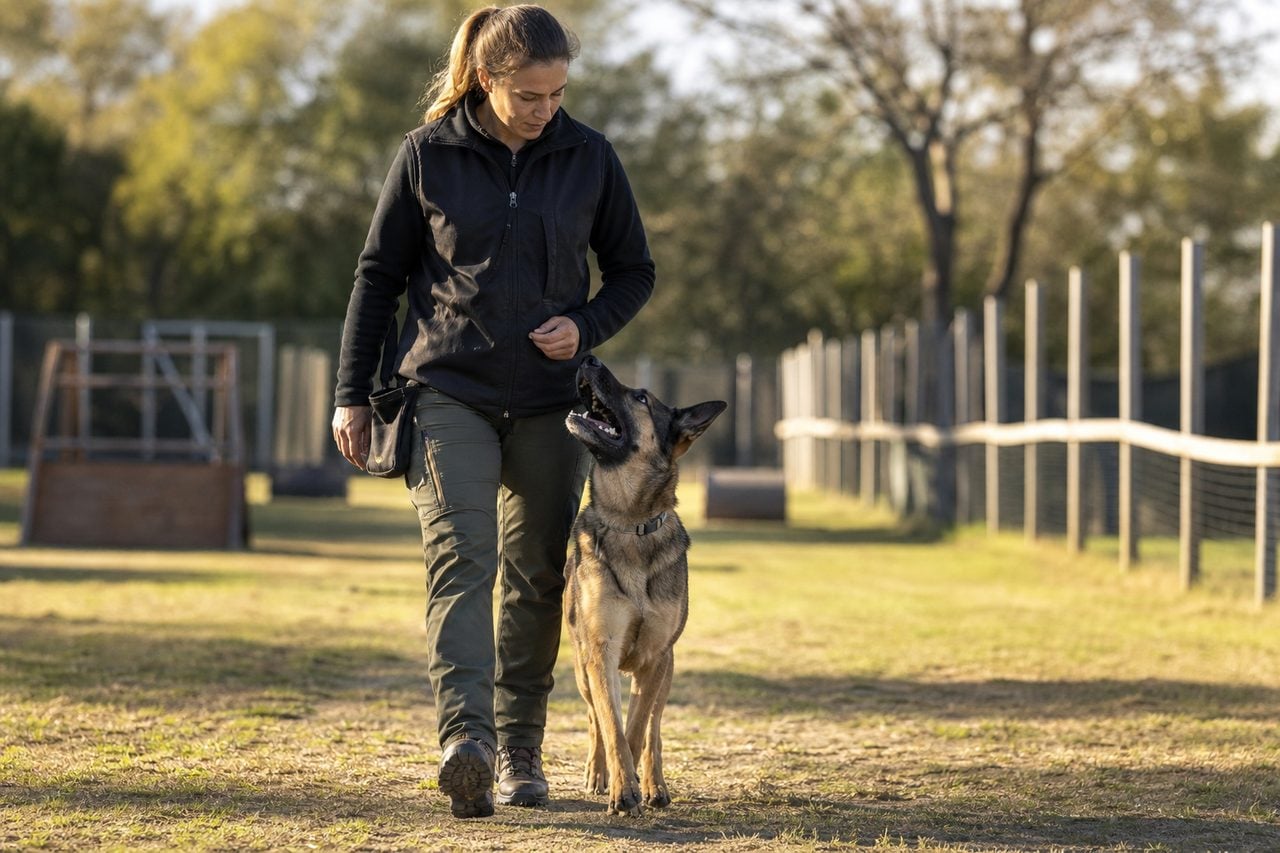
“Dog boot camp” is one of those phrases that gets thrown around a lot in Pottsville and across Schuylkill County, and it can mean very different things depending on who’s saying it. To some trainers it means a two-week board-and-train where your dog lives at their facility. To others it’s a structured day program where your dog comes in each morning and goes home each night. And to a few, it’s just marketing language for regular obedience lessons. Before you hand over your dog and a meaningful chunk of money, it’s worth understanding what these intensive programs actually do, what they realistically can and can’t fix, and which format fits your dog and your life in the Coal Region.
This guide walks through how boot-camp-style training really works, the honest limits of the model, and how to decide between a live-in board program and a day-camp setup when you live somewhere as spread out as Schuylkill County.
What "Dog Boot Camp" Actually Means
The term borrows from military basic training, and the analogy is loose at best. A dog boot camp is simply an intensive, accelerated training program where a professional works with your dog for multiple sessions a day over a compressed period, usually somewhere between one and four weeks. The idea is that daily, consistent repetition from an experienced handler produces faster results than one weekly lesson stretched over months.
In practice, most boot camps focus on foundational obedience: reliable recall, loose-leash walking, sit and down stays with duration and distraction, place or “go to your bed” commands, and impulse control around doors, food, and other dogs. Better programs also address specific problem behaviors like jumping, counter-surfing, leash reactivity, or door-dashing, provided the trainer has assessed the dog first and confirmed the issue is a training problem rather than a medical or deep behavioral one.
The appeal is speed and consistency. One weekly lesson gives a dog a single dose of practice and then six days for the household to accidentally reinforce old habits. An intensive program flips that ratio: the dog practices the right behavior many times a day, every day, under the guidance of someone who reads canine body language fluently and adjusts on the fly. For behaviors that respond well to clear, high-frequency repetition, that compression genuinely accelerates learning, which is the whole reason the format exists.
What a boot camp is not is a personality transplant. A shy dog will still be somewhat shy, and a high-energy young Lab pulled from a farm outside Pine Grove will still be high-energy. What good training does is give the dog a clear set of learned behaviors and give you the handling skills to maintain them. That second part is the piece people forget, and it’s the single biggest predictor of whether the results stick after your dog comes home.
Board-and-Train vs. Day Camp
The two dominant formats are board-and-train, where your dog stays overnight at the trainer’s facility for the duration, and day camp, where you drop off in the morning and pick up in the evening. Both can work. They suit different dogs, different owners, and different budgets.
Board-and-train is the more immersive option. Your dog is in a controlled training environment around the clock, which lets the trainer shape not just formal commands but daily routines, crate habits, and how the dog handles being around other dogs and people. It’s often the better choice for serious behavioral issues, for owners who travel, or for households too chaotic to maintain consistency during the training window. The trade-off is cost, the emotional difficulty of being away from your dog, and the fact that the dog learns to behave in the trainer’s home, not yours.
Day camp keeps your dog sleeping in its own bed and lets you stay involved daily, which makes the transfer of skills back to your household smoother. Because Schuylkill County is so spread out, though, day camp only makes sense if the facility is a reasonable drive. A daily round trip from Shenandoah or Mahanoy City to a trainer near Pottsville or Schuylkill Haven adds up fast in both time and gas. For rural families in the outer townships, board-and-train sometimes wins purely on logistics.
There’s a middle path worth knowing about, too. Some trainers offer a hybrid where the dog does a stretch of intensive daytime work and boards only part of the week, or where a short board-and-train is followed by a run of day sessions to smooth the handoff back to the owner. If neither pure format fits your dog or your schedule, ask whether a blended option is available. The best trainers care more about matching the structure to your situation than about selling one fixed package, and a good conversation about your specific dog, your commute, and your goals often surfaces an option you hadn’t considered.
Setting Realistic Expectations
The most common source of disappointment with boot camps is a mismatch between what was promised and what’s actually possible in the time booked. A two-week program can produce a dog with solid obedience in the training environment. It cannot guarantee that a dog with years of ingrained leash reactivity will be calm around every dog it meets on a walk through Garfield Square forever, with no maintenance from you.
Behavior is not a light switch. It’s a set of habits reinforced by the environment, and the environment your dog returns to is your home. If the trainer teaches a rock-solid “place” command and you never ask for it again, it will fade. If the trainer stops the jumping and everyone in the family goes right back to greeting the dog with excited petting, the jumping comes back. This isn’t a knock on training; it’s how learning works for all animals, including people.
A realistic outcome looks like this: your dog comes home knowing a clear vocabulary of commands and having practiced them under distraction, and you receive hands-on coaching so you can prompt and reinforce those behaviors. From there, the first few months at home are where the real work of consolidation happens. Trainers who are honest about this, and who build follow-up sessions or a go-home lesson into the package, tend to produce lasting results. Ones who promise a “fully trained” dog with no further effort are overselling.
It also helps to define success in concrete terms before the program starts. “I want him to stop being crazy” is not a goal a trainer can deliver against; “I want him to walk on a loose leash, come when called in the yard, and settle on his bed while we eat dinner” is. Specific goals let you and the trainer agree on what the program is actually for, and they let you honestly evaluate at the end whether you got what you paid for. Vague expectations are the enemy of a satisfying outcome, no matter how good the trainer is.
Is Your Dog a Good Candidate?
Not every dog is well suited to an intensive program, and a good trainer will tell you so during the initial assessment. Age matters: very young puppies, generally under about four or five months, often do better with owner-led foundational training and socialization than with an intensive away-from-home program, simply because their developmental needs are different. Adolescent and adult dogs with established habits tend to be the sweet spot for boot camps.
Temperament matters more. A dog with serious aggression, a bite history, or severe anxiety needs careful evaluation, not a one-size-fits-all package. Some of these dogs benefit enormously from intensive work with a qualified professional; others need a slower, specialized approach, and possibly a veterinary behavior consult. Be wary of any program that accepts a dog with a bite history over the phone without meeting the dog first.
Health is the quiet factor people overlook. Behavior problems sometimes have a medical root: pain, thyroid issues, or vision and hearing decline can all drive reactivity or “stubbornness.” A responsible trainer will ask about your dog’s health and recommend a vet check when something seems off. A dog that suddenly starts snapping or refusing commands it used to know may be telling you it hurts, not that it needs discipline, and no amount of boot camp will fix a physical problem. If your dog will be boarding, confirm vaccination requirements and how the facility handles a dog that gets sick or injured while in their care.
Energy level and drive round out the picture. High-drive working breeds often thrive in an intensive program because the daily structure and mental work satisfy needs a pet-home routine leaves unmet. Very soft, timid, or shut-down dogs can find an unfamiliar facility stressful, and for them a gentler, home-based approach may produce better results. None of this is a hard rule, which is exactly why the in-person assessment matters: a good trainer looks at your individual dog and tells you honestly whether the format suits it, rather than fitting every dog into the same box.
What to Look for in a Pottsville-Area Program
Because “boot camp” isn’t a regulated term, the quality range is enormous, and it’s on you to vet the trainer. Start with methods. Ask directly how they train, what happens when a dog gets something right, and what happens when a dog gets something wrong. You want a clear, calm answer grounded in the dog’s wellbeing, not vague talk about “dominance” or evasiveness about their tools.
Ask to see the facility if it’s a board program. You’re entrusting them with a living animal for weeks; you should see where your dog sleeps, how clean it is, how the dogs are housed, and whether the space feels safe and well managed. A trainer confident in their operation will welcome the visit. Reluctance is a red flag.
Ask what’s included beyond the training itself: How many go-home lessons do you get? Is there follow-up support by phone or in person? What’s the policy if a behavior resurfaces after the program ends? The transfer back to you is where programs succeed or fail, so a package that includes real owner coaching is worth more than one that’s a few days longer but drops you the moment you pick up your dog. Finally, ask for references from local clients and actually contact them.
Life After Boot Camp
The day you bring your dog home is the beginning of the important part, not the end. Plan for a calm, structured first week. Keep the routine predictable, practice the commands your dog learned in short daily sessions, and resist the urge to immediately test everything at once by taking the dog to a crowded, chaotic environment. Build back up to distractions gradually, adding one new challenge at a time so your dog can succeed rather than getting overwhelmed and defaulting to old habits.
Consistency across the whole household is what makes it stick. If one person enforces the rules and another sneaks table scraps or lets the dog on the couch, the dog learns that the rules are negotiable, and negotiable rules erode fast. Get everyone in the family on the same page about commands, cues, and boundaries before the dog comes home so the message is uniform. Write the commands down if you have to; a shared cheat sheet on the fridge is a surprisingly effective tool for keeping four different people using the exact same words.
Keep up light maintenance for the long haul. A few minutes of practice folded into daily life, on walks along the Schuylkill River, before meals, at the door, keeps the behaviors fresh without feeling like a chore. If you hit a wall or a new problem crops up months later, don’t wait for it to become entrenched; a single tune-up session with a trainer is far cheaper and easier than starting over. Think of boot camp as a strong foundation you maintain, not a finished building you can walk away from. The owners who stay happy with their results a year later are, almost without exception, the ones who kept the habits alive rather than the ones who paid the most.
Cost, Value, and How to Compare Programs
Intensive programs sit at the higher end of the training price range, and understanding why helps you judge whether a given program is worth it. When your dog boards for two or three weeks and a professional works with it multiple times a day, you’re paying for a large block of that trainer’s time plus the room, board, and around-the-clock care of housing a live-in dog. That’s a fundamentally more expensive product than a weekly class, so sticker shock is normal; the real question is what you get for the money.
Resist the urge to compare programs on price and length alone. Two board-and-trains quoted at similar numbers can deliver very different value once you look at what’s actually included. The single most important line item is the follow-up: how many go-home lessons come with the program, whether there’s support after your dog leaves, and what happens if a behavior resurfaces later. A slightly pricier program that includes real owner coaching and a support window is usually a better deal than a cheaper one that hands your dog back with no guidance, because the transfer of skills to your home is exactly where these programs succeed or fail.
Be equally wary of the bottom of the market. A rock-bottom price on an intensive program can signal an inexperienced trainer, cut corners on the dog’s daily care, or a facility you’d never want to see in person. Think in terms of cost per result, not cost per day. Given how spread out Schuylkill County is, factor in the practical cost too: a board program near Pottsville that you drive to twice, at drop-off and pickup, may be far more manageable than a daily day-camp commute from Frackville or Mahanoy City. Match the program to your dog’s needs and your logistics, ask exactly what’s included before you pay, and let genuine value, not the lowest or highest number, guide the decision.
Reviewed Dog Boot Camp Trainers in Pottsville
These reviewed Pottsville-area trainers from our directory handle dog boot camp. Each links to a full profile with specialties, certified credentials, reviews, and contact info:
- Lead Your K9 — 4.7★ (33 reviews)
- Mountain Adventures K9 Academy — 4.6★ (22 reviews)
- Char-Will Kennels — 4.5★ (218 reviews)
See all Pottsville dog boot camp trainers →
Frequently Asked Questions
How long does a typical dog boot camp last?
Most intensive programs run somewhere between one and four weeks, with two to three weeks being common for board-and-train. The right length depends on your goals and your dog: basic obedience polish can happen in a shorter window, while working through established behavior problems usually needs more time. Be skeptical of any program promising to fix serious, long-standing issues in just a few days. Length matters less than the quality of the daily work and, crucially, how much follow-up coaching you get once the dog is home.
Will my dog forget me or feel abandoned during a board-and-train?
No. Dogs form strong, durable bonds with their families, and a couple of weeks away does not erase that. Most dogs settle into the training routine quickly and are thrilled to see their people at pickup. That said, if being apart is hard for you, a day-camp format lets your dog sleep at home while still getting intensive daytime work. Ask the trainer whether they send updates or photos during a board program; many do, and it makes the separation easier on owners.
Is day camp or board-and-train better for a dog in Schuylkill County?
It depends on the issue and on geography. Day camp keeps your dog home at night and keeps you involved daily, which helps skills transfer to your household, but it only works if the facility is a reasonable drive. From the outer boroughs and rural townships, a daily round trip can be impractical. Board-and-train is often the better fit for serious behavior work, for owners who travel, or for families too far out for a daily commute. Match the format to your dog’s needs and your realistic logistics, not just to price.
Can boot camp fix aggression or a bite history?
Sometimes, but this is exactly the situation that demands a careful, in-person assessment first, never a package booked sight unseen over the phone. Aggression has many causes, including pain and fear, and it requires a qualified professional and often a veterinary behavior consult. Some dogs improve dramatically with intensive work; others need a slower, specialized plan. Be honest with any trainer about your dog’s full history, and be wary of anyone who guarantees a fix for serious aggression.
Why do some dogs regress after boot camp?
Almost always because the training didn’t get maintained at home. A dog learns to behave in the environment where it’s rewarded for behaving. When it returns to a household that doesn’t reinforce the new habits, or where family members apply the rules inconsistently, the old behaviors creep back. This is why go-home lessons and owner coaching matter so much. The program trains the dog; you keep it trained. Short daily practice and consistency across everyone in the home is what makes results last.
What questions should I ask before enrolling my dog?
Ask how they train and what happens when the dog gets things right and wrong, and expect a calm, clear answer. Ask to tour the facility if it’s a board program so you can see where your dog will stay. Ask exactly what’s included: number of go-home lessons, follow-up support, and the policy if a behavior returns. Ask about vaccination and health requirements, and how they handle a dog that gets sick in their care. Finally, request references from local clients and actually call them before you commit.
Related: read our complete dog boot camp guide or the full Pottsville dog training overview.
Ready to find the right dog boot camp pro in Pottsville?