
Puppy Training in Detroit, MI
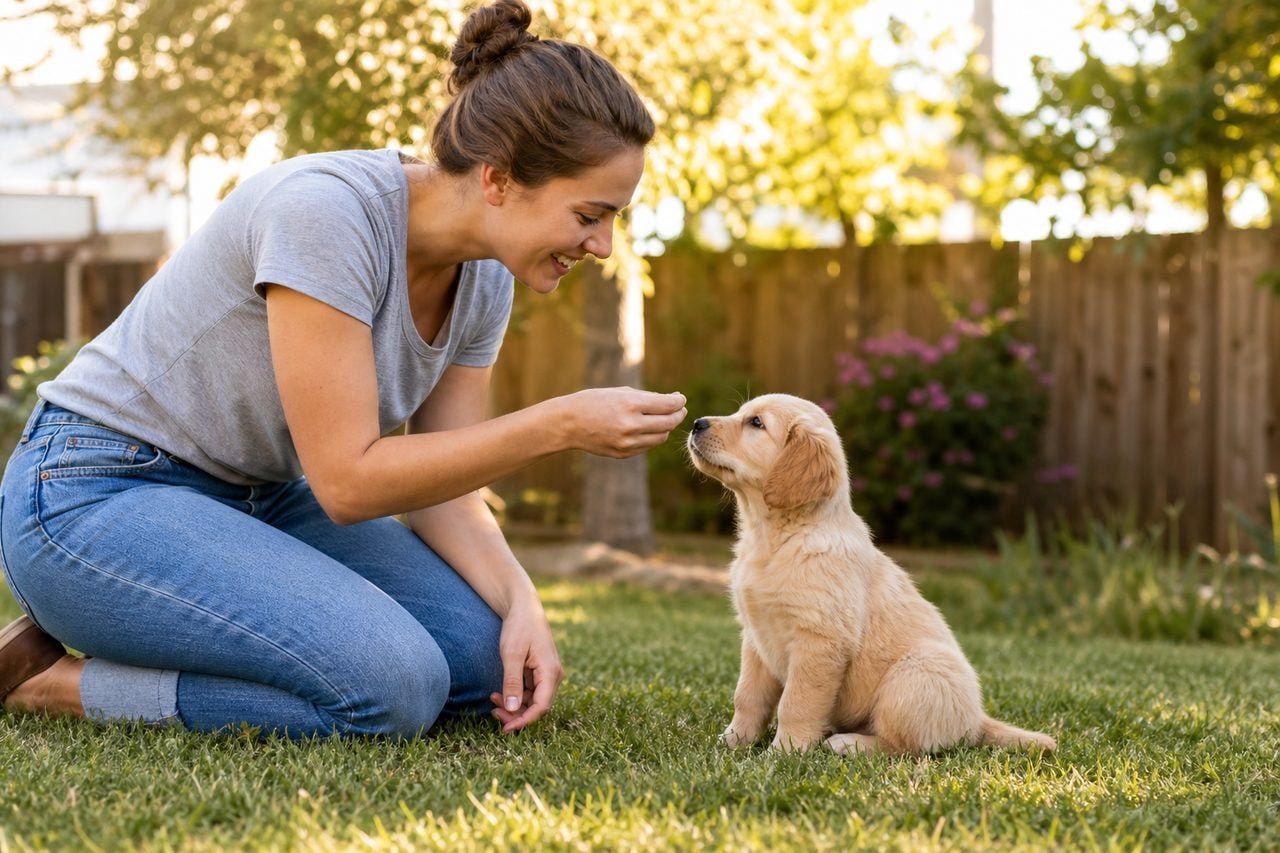
Bringing a puppy home in metro Detroit is exciting, a little chaotic, and full of small decisions that add up to the dog you’ll live with for the next decade or more. The good news is that early training is less about strict discipline and more about clear communication, consistency, and good timing. Whether you’re in a downtown Detroit apartment, a Royal Oak bungalow, or a house with a big yard out in Rochester Hills, the fundamentals are the same.
This guide walks through what actually matters in the first several months: house-training, crate work, bite inhibition, foundation cues, and how to build a calm, confident dog who can handle everything from the Detroit River waterfront to a busy vet lobby. It’s written for the way people really live here, with our long winters, hot summers, and a metro full of places to practice.
Starting Training the Day Your Puppy Comes Home
Training begins the moment your puppy walks through the door, whether you intend it to or not. Every interaction teaches something. If your puppy jumps up and gets attention, jumping gets reinforced. If whining at the crate earns a treat, whining gets stronger. So the first job isn’t teaching tricks, it’s being intentional about what you reward from day one.
Keep the first week low-key. A new puppy has just left its litter and everything is unfamiliar: new smells, new people, the hum of your furnace, the sound of the Lodge or I-696 in the distance. Give it a quiet corner, a consistent feeding schedule, and short, positive sessions rather than a marathon of commands. Overwhelmed puppies don’t learn well, and pushing too hard early can create anxiety that’s harder to undo later.
Set your routine early because puppies thrive on predictability. Meals, potty breaks, naps, and play at roughly the same times each day help everything else fall into place. A tired, well-fed, recently-pottied puppy is a puppy that can actually focus on learning. That structure also makes house-training dramatically faster, which is usually the first thing new owners want solved.
House-Training That Works Through Michigan Winters
House-training is mostly a game of prevention and timing. Take your puppy out first thing in the morning, after meals, after naps, after play, and before bed. Young puppies simply can’t hold it long, so frequent trips outside prevent accidents before they become habits. When your puppy goes in the right spot, reward immediately and warmly, right there outside, not back in the kitchen five minutes later.
Detroit winters complicate this. A puppy that would happily trot out in September may balk at a snow-covered yard in January. Shovel a small clear patch so your puppy has a defined potty area, and consider a coat for short-coated breeds. Keep outdoor trips brisk in bitter cold, but do go out, because giving up and encouraging indoor pads often extends the whole process by weeks.
Accidents are information, not failure. If they happen, it usually means the puppy had too much freedom or missed a scheduled trip. Clean thoroughly with an enzymatic cleaner so no scent remains to draw them back. Never punish after the fact; a puppy can’t connect a scolding to something it did minutes ago, and fear of you doesn’t build a reliable house-trained dog.
Crate Training and Building Alone-Time Skills
A crate, used well, is one of the kindest tools you have. Dogs are den animals, and a properly introduced crate becomes a safe retreat rather than a punishment. It also protects your puppy from chewing hazards when you can’t supervise and gives it a clear place to settle. The key is making the crate a good place, never a scary one.
Start by feeding meals in the crate with the door open, tossing treats inside, and letting your puppy come and go. Gradually close the door for a few seconds, then longer, always at a pace where the puppy stays relaxed. Build up to short absences so your puppy learns that being alone is normal and temporary. This matters everywhere, but especially in metro Detroit where many owners commute into the city or across the tri-county area for work.
Alone-time skills prevent separation anxiety, which is far easier to avoid than to treat. Practice leaving even when you’re home: step out for a minute, come back calmly, no big goodbyes or dramatic reunions. A puppy that learns early that departures aren’t a crisis grows into a dog you can leave without guilt or destroyed furniture.
Bite Inhibition and Managing the Land-Shark Phase
Puppies bite. A lot. Those needle teeth and the relentless nipping are completely normal and part of how puppies explore and play. The goal in the early months isn’t to eliminate mouthing overnight but to teach bite inhibition, meaning your puppy learns to control the force of its jaws before it ever grows into a full-sized dog.
When your puppy bites too hard during play, a sharp yelp and a brief pause in the fun teaches that rough biting ends the good times. Redirect to an appropriate chew toy so your puppy learns what it can bite. Keep a rotation of textures on hand, because a bored puppy with nothing to chew will find your shoes, baseboards, or the corner of your couch instead.
Teething intensifies chewing around three to six months. Frozen washcloths and puppy-safe chews help soothe sore gums. Manage the environment rather than expecting perfect self-control: puppy-proof rooms, use gates, and supervise. This phase passes, and the dogs who come out of it best are the ones whose owners stayed patient and consistent instead of resorting to punishment that damages trust.
Foundation Cues Every Detroit Puppy Should Learn
A handful of core cues will carry your puppy through daily life. Sit, down, come, stay, leave it, and loose-leash walking form the backbone. You don’t need fancy equipment, just small soft treats, short sessions, and a reward-based approach that makes your puppy want to work with you. Two or three five-minute sessions a day beat one long, frustrating one.
Teach in low-distraction settings first, like your living room, then gradually add difficulty. A recall that works in the kitchen means nothing until you’ve practiced it in the backyard, then a quiet park, then a busier one. Places like Hines Park or the trails at Maybury State Park give you graduated levels of distraction as your puppy matures, though wait until vaccinations are complete before heavy public exposure.
“Leave it” deserves special attention here. Between chicken bones on Detroit sidewalks, road salt and antifreeze in winter, and goose droppings along the riverfront, a solid “leave it” is a genuine safety cue. Build it with a treat in your closed fist, rewarding your puppy for backing off, then generalize to items on the floor and eventually things out on walks.
When to Bring in a Professional Trainer
Plenty of puppy training can be done at home, but a good trainer accelerates progress and helps you avoid habits that are hard to reverse. Metro Detroit has a deep, varied training scene, from group puppy classes to private in-home coaching to specialists in behavior. Group classes are especially valuable early because they combine skill-building with controlled exposure to other puppies and people.
Look for trainers who use reward-based, force-free methods and who are transparent about their approach. Ask what happens when a dog gets something right and what happens when it gets something wrong; you want someone who builds behavior through reinforcement rather than intimidation. A trainer who welcomes your questions and explains their reasoning is usually a good sign.
Consider getting help sooner rather than later if you see early signs of fear, resource guarding, or intense reactivity to other dogs or people. These are far more manageable in a young puppy than in an adult dog who has practiced the behavior for a year. Investing in guidance during these formative months tends to pay off for the entire life of the dog.
Reviewed Puppy Training Trainers in Detroit
These reviewed Detroit-area trainers from our directory handle puppy training. Each links to a full profile with specialties, certified credentials, reviews, and contact info:
- Premier Pack Dog Training and Behavior Solutions — 5.0★ (160 reviews)
- Serenity Dog Training — 5.0★ (101 reviews)
- Paws Plus You, LLC — 5.0★ (54 reviews)
- K9 AdvantEDGE Dog Training — 5.0★ (40 reviews)
- Connected Canine Academy — 5.0★ (16 reviews)
- Iron Clad K9 Training — 5.0★ (13 reviews)
- New Tricks: Puppy and Dog Training LLC — 5.0★ (12 reviews)
- Tip Top K9 Sterling Heights Dog Training — 5.0★ (7 reviews)
- Puppy and Dog Training by Sue — 5.0★ (1 reviews)
- Sit Means Sit Dog Training Detroit — 4.9★ (688 reviews)
See all Detroit puppy training trainers →
Frequently Asked Questions
What age should I start training my puppy in Detroit?
Start the day you bring your puppy home, usually around eight weeks. Early training is gentle and reward-based: house-training routines, crate introduction, name recognition, and basic handling. Formal group classes often begin once your puppy has started its vaccination series, but the everyday learning starts immediately. The first several months are a critical window, so making good use of them sets the tone for everything that follows.
How long does it take to house-train a puppy?
Most puppies are reliably house-trained somewhere between four and six months of age, though it varies by individual, breed, and consistency. Small breeds sometimes take longer because of smaller bladders. The biggest factor is your routine: frequent outdoor trips, supervision, and immediate rewards for going outside. Detroit winters can slow things down, so clearing a snow-free potty spot and staying consistent through the cold months helps keep progress on track.
Is it normal for my puppy to bite so much?
Yes. Puppy biting and mouthing are completely normal and peak during teething, roughly three to six months. Puppies explore the world with their mouths and learn bite control through feedback. Redirect biting to appropriate chew toys, pause play when bites are too hard, and provide plenty of soothing chews during teething. It fades with age and consistency. If biting seems driven by fear or aggression rather than play, that’s worth discussing with a trainer.
Should I do group classes or private training for my puppy?
Both have value. Group puppy classes offer socialization and skill-building in a controlled setting, which is great for confidence and manners around other dogs and people. Private training is better if you have specific issues, an anxious puppy, or a busy schedule that makes fixed class times hard. Many metro Detroit owners do both: a group class for socialization plus occasional private sessions to troubleshoot problems at home.
Where can I safely take my puppy to practice before vaccinations are complete?
Before your puppy’s vaccine series is finished, avoid high-traffic dog areas like busy public parks and pet-store floors where unknown dogs frequent. You can still socialize safely: carry your puppy through varied environments, invite vaccinated, healthy dogs to your home, and let your puppy experience surfaces, sounds, and people in controlled ways. Once your vet clears you, places like Hines Park and Maybury State Park make good graduated practice spots.
What's the most important thing to teach a new puppy first?
If you focus on anything first, make it a positive association with you and a solid house-training and crate routine, because those prevent the frustrations that derail new owners. Alongside that, a reliable recall and a strong “leave it” are the highest-value safety cues. “Leave it” is especially useful in Detroit given road salt, antifreeze, and dropped food on city streets. Everything else builds more easily once your puppy trusts you and understands the daily structure.
Related: read our complete puppy training guide or the full Detroit dog training overview.
Ready to find the right puppy training pro in Detroit?