
Board & Train in Detroit, MI
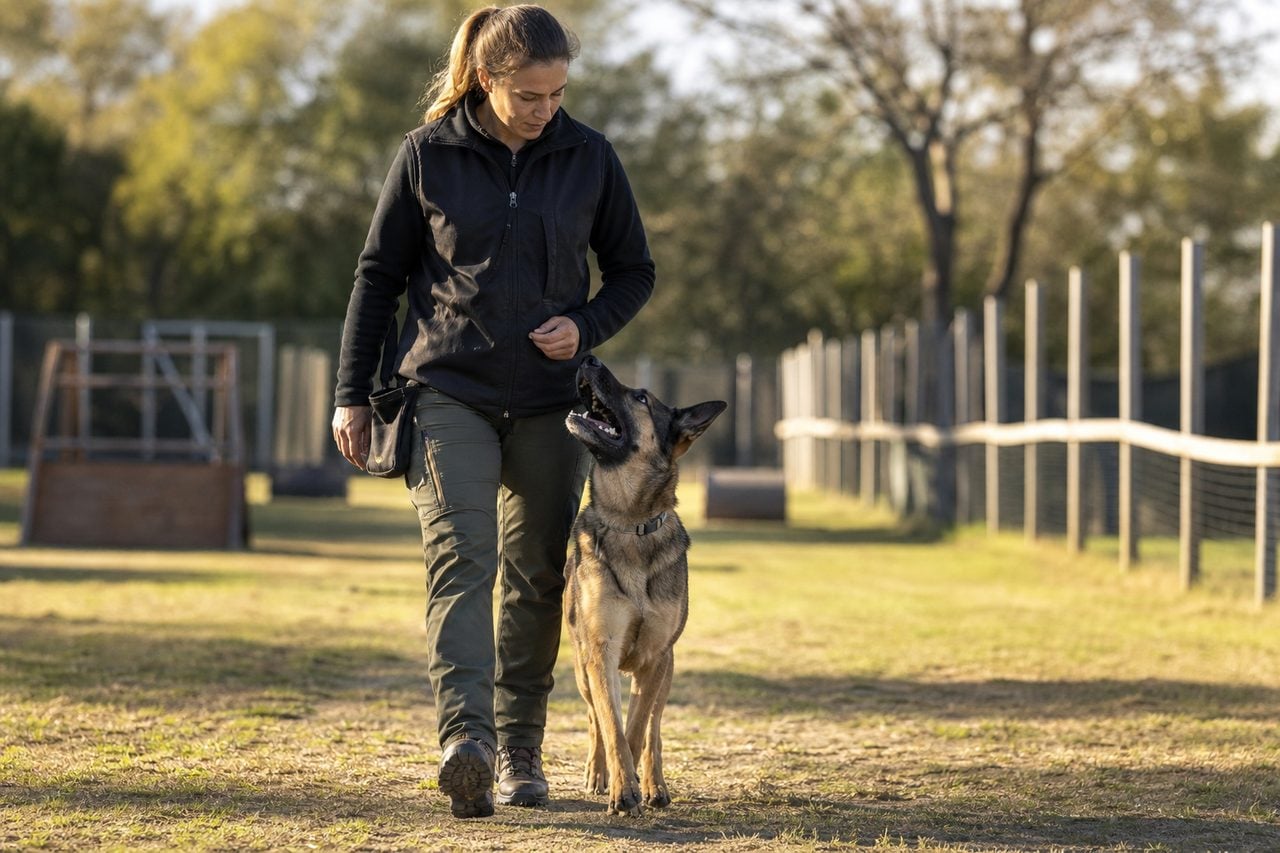
Board and train programs, sometimes called immersion training, send your dog to live with a professional trainer for a set period, often one to several weeks, while they work on obedience or specific behaviors. For busy metro Detroit owners, the appeal is obvious: your dog comes home with skills already installed, without you having to run daily sessions from scratch. But board and train is also one of the most misunderstood and variable services in the industry.
Done well, by a skilled, humane trainer, board and train can jump-start a dog’s education. Done poorly, it can damage a dog through harsh methods behind closed doors where you can’t see what’s happening. This guide explains how board and train works, who it suits, the critical questions to ask, and how to make sure the results actually last once your dog is back home.
How Board and Train Programs Work
In a board and train program, your dog stays at a trainer’s facility or home for a defined period while the trainer works with it daily. Instead of you attending weekly classes, the professional handles the intensive early teaching, building cues and behaviors through repeated, structured sessions. Program length varies widely, from a week or two for a tune-up to several weeks for more comprehensive work.
Programs differ in focus. Some concentrate on foundation obedience like recall, loose-leash walking, place, and stay. Others target specific issues such as jumping, door manners, or leash reactivity. Some advertise off-leash reliability. The daily structure typically mixes short training sessions, rest, socialization or exposure, and enrichment, since a dog can only absorb so much focused work in a day.
Crucially, a good program treats the handoff back to you as part of the service, not an afterthought. Because your dog learns to respond to the trainer, transfer sessions where you learn to give the cues and maintain the behaviors are essential. Without that, the training tends to fade once your dog is back in its normal environment with its normal family.
Is Board and Train Right for Your Dog?
Board and train can be a good fit for owners who are time-strapped, who feel out of their depth with a particular problem, or who want a faster start than weekly classes allow. If your schedule genuinely won’t support daily home training, having a professional build the foundation can be worth it, provided you commit to maintaining it afterward. It can also help with dogs whose issues have outpaced an owner’s current skills.
It’s not a magic fix, though, and it’s not right for every dog or situation. A very fearful or anxious dog may find being sent away to a strange environment stressful, which can undermine the training. And no program can guarantee a permanent transformation, because a dog’s behavior is shaped by its everyday life with you. If you don’t reinforce the new skills at home, they erode.
Be especially cautious with anyone promising to fix serious aggression or deep-seated fear in a couple of weeks through board and train. Complex behavior problems usually require ongoing management and owner involvement, not a hands-off drop-off. For those cases, a qualified behavior professional working directly with you and your dog is often a safer, more effective path than shipping the dog away.
The Critical Questions to Ask Before You Enroll
Because your dog will be out of your sight, vetting the trainer thoroughly is non-negotiable. Start with methods: ask exactly how they train and what happens when a dog doesn’t comply. You’re looking for reward-based, humane approaches. Be wary of vague answers, heavy reliance on aversive tools, or anyone who won’t clearly describe what a day looks like for your dog.
Ask to see the facility in person. Where do the dogs sleep, how much space and rest do they get, how are they exercised, and how many dogs are there per trainer? A clean, well-run operation will welcome a visit. Ask about daily updates too; reputable trainers often share photos or videos so you can see real sessions rather than just a polished before-and-after clip.
Dig into credentials, experience, and references. What certifications do they hold, how long have they done board and train specifically, and can you speak with recent clients? Clarify exactly what’s included: program length, what behaviors they’ll address, how many transfer or follow-up sessions come with it, and what their policy is if results don’t hold. Transparency on all of this is the clearest signal of a trustworthy program.
Understanding the Methods Used Behind Closed Doors
The single biggest risk of board and train is that training happens where you can’t observe it. Some fast, dramatic results are produced with harsh, aversive methods that suppress behavior through discomfort or fear rather than teaching the dog what to do. A dog may look obedient while actually being shut down or stressed, and problems suppressed this way can resurface, sometimes worse than before.
This is why methods matter more in board and train than almost any other service. Insist on knowing what tools and techniques will be used. Reward-based training builds reliable behavior through positive reinforcement and clear communication, and a good trainer can explain how they’d handle a stubborn or distracted dog without resorting to intimidation. If a trainer is evasive about methods, treat that as a serious warning.
Ask for video of actual training sessions, not just the finished result. Seeing how the trainer interacts with dogs tells you far more than a testimonial. A confident, humane professional will happily show their work. The goal is a dog that comes home happy, confident, and responsive, not one that’s quiet because it has learned to fear making a mistake.
Making the Training Stick When Your Dog Comes Home
The most common way board and train disappoints is that gains fade after the dog returns home. This isn’t usually the dog forgetting; it’s the environment and the humans changing. Your dog learned to respond to the trainer, in the trainer’s setting, under the trainer’s rules. Bringing those behaviors into your household requires deliberate follow-through from you.
Transfer sessions are where this happens. A good program includes time for you to learn the cues, the timing, and the expectations so you can pick up where the trainer left off. Take these seriously, ask questions, and practice under the trainer’s eye. Then keep practicing at home: the first few weeks back are when new habits either solidify or unravel, depending on your consistency.
Maintain the structure the trainer established and reinforce behaviors in real life around Detroit, on walks through your neighborhood, at the metroparks, on patios, wherever you go. Everyone in the household should use the same cues and rules. Think of board and train as a strong head start rather than a finished product; the dog you get long-term is the one you continue to train and live with every day.
What Board and Train Typically Costs
Board and train is generally one of the more expensive training options, because you’re paying for daily professional work plus the boarding, care, and feeding of your dog for the full stay. Think in tiers based on program length, intensity, and the trainer’s expertise rather than expecting a single figure. Longer, more comprehensive programs and highly experienced trainers sit at the higher end, while shorter tune-up stays cost less.
Because prices span a wide range, focus on what you actually get for the money. A program that includes thorough transfer sessions, follow-up support, and clear documentation of methods can be a far better value than a cheaper one that simply hands the dog back. Ask precisely what’s included so you can compare programs on equal terms rather than on headline price alone.
Weigh the cost against the alternatives and your own situation. For some owners, group or private classes deliver what they need at a lower price, while others value the intensive head start enough to justify board and train. Whatever you choose, prioritize a humane, transparent, well-credentialed trainer over the cheapest option; with something as important as your dog’s wellbeing and behavior, method and trustworthiness matter more than saving a little money.
Reviewed Board & Train Trainers in Detroit
These reviewed Detroit-area trainers from our directory handle board & train. Each links to a full profile with specialties, certified credentials, reviews, and contact info:
- From The Heart Dog Training — 5.0★ (82 reviews)
- Smart Dog Obedience — 5.0★ (54 reviews)
- My Sidekick Dog Training — 5.0★ (50 reviews)
- K9 AdvantEDGE Dog Training — 5.0★ (40 reviews)
- Connected Canine Academy — 5.0★ (16 reviews)
- Iron Clad K9 Training — 5.0★ (13 reviews)
- Tip Top K9 Sterling Heights Dog Training — 5.0★ (7 reviews)
- Sit Means Sit Dog Training Detroit — 4.9★ (688 reviews)
- Canine College — 4.8★ (1001 reviews)
- Tip Top K9 Troy — 4.8★ (54 reviews)
See all Detroit board & train trainers →
Frequently Asked Questions
How much does board and train cost in Detroit?
Board and train is typically one of the pricier training options because you’re paying for daily professional work plus boarding and care for the entire stay. Costs vary by program length, intensity, and the trainer’s experience, so think in tiers rather than a fixed number. Longer, more comprehensive programs cost more. When comparing, look at what’s included, especially transfer sessions and follow-up support, since those heavily affect whether the results last and thus the real value.
Does board and train actually work?
It can work well when the trainer uses humane, reward-based methods and includes proper transfer sessions so you can maintain the behaviors at home. The most common reason it disappoints is that owners don’t reinforce the training after the dog returns, so the gains fade. Board and train is best understood as an intensive head start, not a permanent fix. Your ongoing consistency at home ultimately determines whether the results hold long-term.
Is board and train safe for my dog?
It depends entirely on the trainer, which is why vetting matters so much when your dog is out of your sight. The main risk is harsh, aversive methods used behind closed doors. Protect your dog by insisting on knowing exactly what methods and tools are used, visiting the facility, asking for video of real sessions and daily updates, and checking credentials and references. A reputable trainer welcomes this scrutiny; evasiveness is a serious red flag.
Can board and train fix aggression?
Be very cautious with any program promising to fix serious aggression in a short board and train stay. Aggression usually stems from underlying fear or other emotional causes that require ongoing management and heavy owner involvement, not a hands-off drop-off. Suppressing aggressive behavior with harsh methods can make it worse or more unpredictable. For aggression, a qualified behavior professional working directly with you and your dog is generally a safer, more effective path.
How long do board and train programs last?
Programs range widely, from about one to two weeks for a focused tune-up to several weeks for more comprehensive obedience or behavior work. Longer isn’t automatically better; what matters is the quality of the training, the humaneness of the methods, and whether the program includes solid transfer sessions to hand the skills off to you. Ask what the trainer expects to accomplish in the time proposed and how they’ll measure progress.
What should I do after my dog finishes board and train?
Treat the first few weeks home as the make-or-break period. Complete the transfer sessions so you learn the cues, timing, and expectations, then practice consistently at home and in real settings around metro Detroit. Maintain the structure the trainer established and make sure everyone in the household uses the same cues and rules. The behaviors solidify or unravel based on your follow-through, so ongoing reinforcement is essential to keep the training working.
Related: read our complete board & train guide or the full Detroit dog training overview.
Ready to find the right board & train pro in Detroit?