
Puppy Training in Grand Rapids, MI
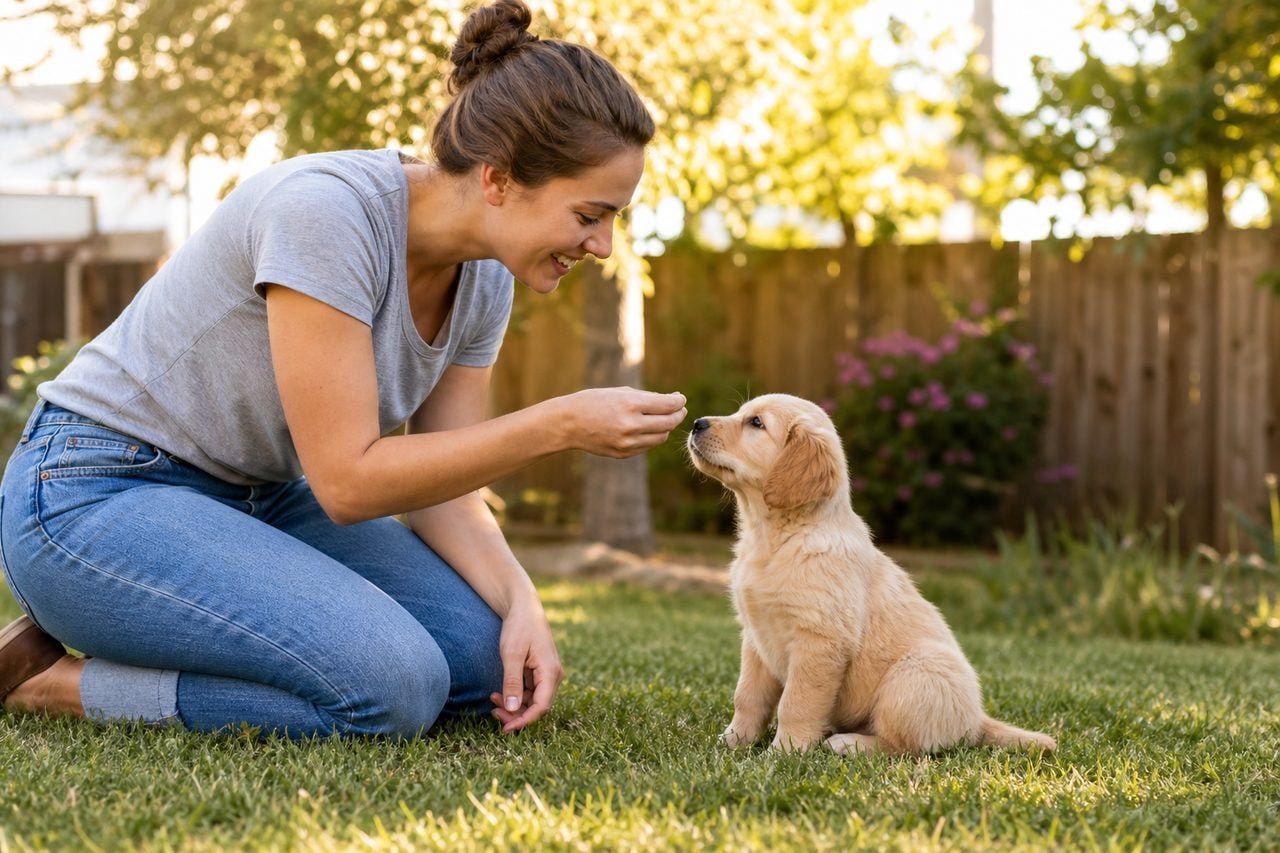
Bringing a new puppy home in Grand Rapids is exciting, but the first few months set the tone for the rest of your dog’s life. The habits your puppy builds now — where it goes to the bathroom, how it greets people, whether it comes when called — are far easier to shape early than to fix later. Good puppy training is less about obedience tricks and more about teaching a young dog how to live comfortably in a busy human world, from the trails at Provin Trails Park to a packed patio in the Beer City neighborhoods downtown.
This guide walks Grand Rapids owners through what puppy training actually involves, when to start, what to prioritize in each stage, and how to choose help if you want it. Grand Rapids has a deep, active training community across Kent and Ottawa counties, so whether you live in Ada, Wyoming, Kentwood, or out toward Rockford, you have real options close to home.
When To Start Training Your Puppy
The best time to start training your puppy is the day you bring it home. Many owners assume training begins at six months, but by then a puppy has already spent months forming habits — good or bad. Puppies are capable of learning simple cues like their name, sit, and coming when called as early as eight weeks old. The learning is slower and sessions must be short, but the window is wide open.
There is a critical developmental period roughly between three and sixteen weeks when puppies are unusually open to new experiences. What they meet calmly during this stretch tends to stay unremarkable to them for life; what they miss can become frightening later. This is why reputable trainers push owners to start early rather than wait for a puppy to be fully vaccinated before doing anything at all. The goal is to balance health caution with the reality that this window closes fast.
Practically, that means beginning gentle handling, name recognition, and house habits immediately, while introducing new sights and sounds in controlled, low-risk ways. A puppy in Hudsonville or Grandville can start learning to settle on a mat, respond to its name, and accept a collar and leash long before it is ready for a group class. If you adopted an older puppy — say five or six months — you have not missed your chance; you simply start where the dog is and build from there. Consistency matters more than the calendar. A few minutes of training several times a day beats one long weekly session, because puppies have short attention spans and learn best in frequent, positive repetitions.
House Training And Crate Basics
House training is usually the first real challenge new puppy owners face, and it is largely a matter of management and timing rather than correction. Puppies have small bladders and limited control, so success comes from getting your puppy outside before an accident happens, not from scolding after one. A useful rule of thumb is that a puppy can hold its bladder for roughly one hour per month of age, plus a bit — so a two-month-old puppy needs very frequent trips outside.
Take your puppy out first thing in the morning, after meals, after naps, after play, and right before bed. Pick a consistent spot in the yard and reward calmly the moment your puppy finishes. During Grand Rapids winters, when lake-effect snow and cold make outdoor trips less appealing for everyone, keep trips short and rewarding so your puppy does not learn to rush back inside before finishing. Consistency through the cold months prevents backsliding.
The crate is your most valuable house-training tool when introduced kindly. Dogs naturally avoid soiling where they sleep, so a properly sized crate — big enough to stand, turn, and lie down, but not so large the puppy can use one end as a bathroom — helps build bladder control. Introduce it gradually with treats and meals so the crate becomes a calm den, never a punishment. Feed inside it, toss treats in for the puppy to discover, and start with very short closed-door intervals while you are home. A puppy that learns to rest quietly in a crate is also easier to keep safe when you cannot supervise, which protects your furniture, your shoes, and your puppy from swallowing something dangerous.
Core Cues Every Grand Rapids Puppy Should Learn
Beyond house training, a handful of foundational cues make daily life smoother and safer. The priority list is short on purpose: name recognition, sit, down, come, leave it, and a reliable settle. These are the cues that prevent problems and keep your dog out of danger, and they are worth far more than a repertoire of party tricks.
Name recognition and a strong recall — coming when called — top the list because they can genuinely save your dog’s life. A puppy that turns and returns to you near a parking lot, a busy trailhead at Millennium Park, or the edge of the Grand River is a puppy you can trust with more freedom. Build recall as a game: call in a happy voice, reward generously every single time early on, and never call your puppy to you for something unpleasant. If coming to you sometimes means the fun ends, the recall weakens.
“Leave it” is the other high-value cue, especially in a region with plenty of wildlife, goose droppings along the riverfront, and dropped food on downtown sidewalks. Teaching your puppy to disengage from something on cue prevents both bad manners and genuine hazards like eating something toxic. Sit and down are useful defaults that give your puppy a polite thing to do instead of jumping or pulling. A settle — lying calmly on a mat — is the cue that lets you take your dog to a brewery patio, a friend’s house, or a family gathering without constant management. Teach each cue in a quiet room first, then slowly add distractions and new locations. Puppies do not generalize well, so a sit learned in your kitchen must be re-taught, briefly, at the park before you can expect it there.
Using Positive Reinforcement That Actually Sticks
Modern puppy training leans heavily on positive reinforcement — rewarding the behavior you want so the puppy chooses to repeat it. This approach is not just gentler; it produces a dog that offers good behavior willingly rather than one that only complies to avoid trouble. For a young puppy still forming its view of the world, building trust matters enormously, and harsh corrections during this stage can create fear or anxiety that undermines training for months.
The mechanics are simple but easy to get wrong. Timing is everything: the reward must come within a second or two of the behavior so the puppy connects the two. A marker — a clicker or a consistent word like “yes” — bridges that gap by telling the puppy the exact instant it did the right thing, even if the treat arrives a moment later. Keep treats small and soft so your puppy can eat quickly and stay in the game, and vary the value; save the best rewards for the hardest cues like recall.
Rewards do not have to be food forever. Early on, food is efficient because it is fast and motivating, but you gradually fold in praise, play, and access to things the puppy wants — going out the door, greeting a person, chasing a toy. Over time you also thin out the treats so your puppy is not dependent on seeing food first. The key is to fade rewards slowly and unpredictably rather than stopping abruptly. Puppies work hardest when a reward is likely but not guaranteed. Keep sessions short and end on a success. Five good minutes several times a day builds a confident learner; a frustrated twenty-minute drill teaches your puppy that training is stressful.
Preventing Common Puppy Problems Early
Most of the behaviors owners find frustrating in adult dogs — jumping, mouthing, chewing, barking for attention — are normal puppy behaviors that were accidentally rewarded or never redirected. Preventing them is far easier than fixing them, and prevention mostly means managing the environment and responding consistently.
Puppy biting and mouthing are completely normal, especially during teething, when a puppy’s gums are sore and chewing brings relief. The goal is not to stop mouthing entirely overnight but to redirect it onto appropriate outlets and teach bite inhibition. Keep a rotation of chew toys available, and when those needle teeth land on skin, calmly end the interaction for a moment rather than yelping dramatically or pulling away fast, which many puppies read as an invitation to play harder. Frozen chews can be a lifesaver during the teething weeks.
Jumping up is another behavior owners unintentionally reinforce, because a jumping puppy is adorable and gets attention. The fix is to make jumping boring and four-on-the-floor rewarding: turn away or stand still when your puppy jumps, and give calm attention the moment paws are down. Ask visitors to do the same, which is harder than it sounds when your puppy is small and cute. Chewing on furniture and shoes is best solved through management — put valuables away, supervise, and provide plenty of appropriate chews — because a bored, under-exercised puppy will find its own entertainment. A tired puppy that gets adequate physical and, just as importantly, mental exercise through sniffing, chewing, and short training games is a puppy far less likely to develop destructive habits.
Group Puppy Classes Versus Private Training In Grand Rapids
Many Grand Rapids owners do the early foundation work at home and then decide whether to add professional help. Both group classes and private training have a place, and the right choice depends on your puppy, your goals, and your schedule. Grand Rapids and the surrounding suburbs — Kentwood, Wyoming, Grandville, Rockford, Ada — support a genuinely deep training scene, so you can usually find a good fit close to home rather than driving far.
Group puppy classes offer something you cannot easily replicate at home: structured exposure to other puppies and people in a controlled setting. A well-run puppy class doubles as socialization, teaching your puppy to focus on you even with distractions nearby. Look for small class sizes, a curriculum built on reward-based methods, and an instructor who monitors puppy play so it stays balanced and no puppy gets overwhelmed or too rowdy. Classes are also cost-effective, generally sitting in a lower price tier than private work.
Private training makes sense when you want faster progress, have a specific issue to address, or have a puppy that gets overstimulated in a group. A trainer coming to your home in Byron Center or Lowell can tailor sessions to your exact living situation and coach you through real scenarios — the doorbell, the leash walk down your own street, the greeting routine. Private sessions sit in a higher price tier per hour but often need fewer total sessions for a targeted problem. Many owners combine the two: a group class for socialization and basics, plus a private session or two for anything specific. Whatever you choose, ask about methods before you commit, and favor trainers who explain how they reward and how they handle mistakes without intimidation.
Reviewed Puppy Training Trainers in Grand Rapids
These reviewed Grand Rapids-area trainers from our directory handle puppy training. Each links to a full profile with specialties, certified credentials, reviews, and contact info:
- Ganderwood LLC — 5.0★ (1 review)
- West Michigan K9 — 4.9★ (337 reviews)
- Dream Dogs Training — 4.9★ (14 reviews)
- A Pleasant Dog — 4.4★ (216 reviews)
- Animal Behavior Consultants of Michigan — 4.0★ (8 reviews)
- Kingseed Kennels & Dog Training — 5.0★ (140 reviews)
- K9 Academy International,LLC — 5.0★ (136 reviews)
- Full Spectrum Dog Training — 5.0★ (68 reviews)
- Petz Prefurred — 5.0★ (48 reviews)
- Red Sky Dog Training, LLC — 5.0★ (22 reviews)
See all Grand Rapids puppy training trainers →
Frequently Asked Questions
How early can I start training my puppy in Grand Rapids?
You can start the day you bring your puppy home, typically around eight weeks old. Puppies can learn their name, sit, and the beginning of recall very early — sessions just need to be short and positive. The critical socialization window closes around sixteen weeks, so early, careful exposure and gentle training matter more than waiting until your puppy is older.
How long does it take to house train a puppy?
Most puppies are reliably house trained somewhere between four and six months of age, though accidents can happen past that. Progress depends heavily on consistency: frequent trips outside, a properly sized crate, and calm rewards for going in the right spot. Grand Rapids winters can slow things down, so keep cold-weather potty trips short and rewarding to avoid backsliding.
Should I choose a group class or private training for my puppy?
Group classes are excellent for socialization and learning to focus around distractions, and they usually cost less. Private training is better for faster progress, specific problems, or a puppy that gets overwhelmed in groups. Many Grand Rapids owners do both — a group class for basics and socialization, plus a private session for anything specific to their home.
Is puppy biting normal, and how do I stop it?
Yes, mouthing and biting are completely normal, especially during teething. The goal is to redirect those teeth onto appropriate chews and teach bite inhibition rather than eliminate mouthing overnight. When teeth land on skin, calmly pause the interaction and offer a chew toy instead. Frozen chews help soothe sore gums during the teething weeks.
How much training does a puppy actually need each day?
Little and often works best. Several short sessions of about five minutes each, spread through the day, beat one long session because puppies have short attention spans. Beyond formal training, puppies need mental enrichment — sniffing, chewing, and simple problem-solving games — which tires them out and prevents many destructive behaviors.
Do I need treats forever to keep my puppy trained?
No. Treats are efficient early on because they are fast and motivating, but you gradually fade them and fold in praise, play, and real-life rewards like going out the door. The key is thinning treats out slowly and unpredictably rather than stopping abruptly, so your dog keeps working reliably without needing to see food first.
Related: read our complete puppy training guide or the full Grand Rapids dog training overview.
Ready to find the right puppy training pro in Grand Rapids?