
Puppy Training in Lansing, MI
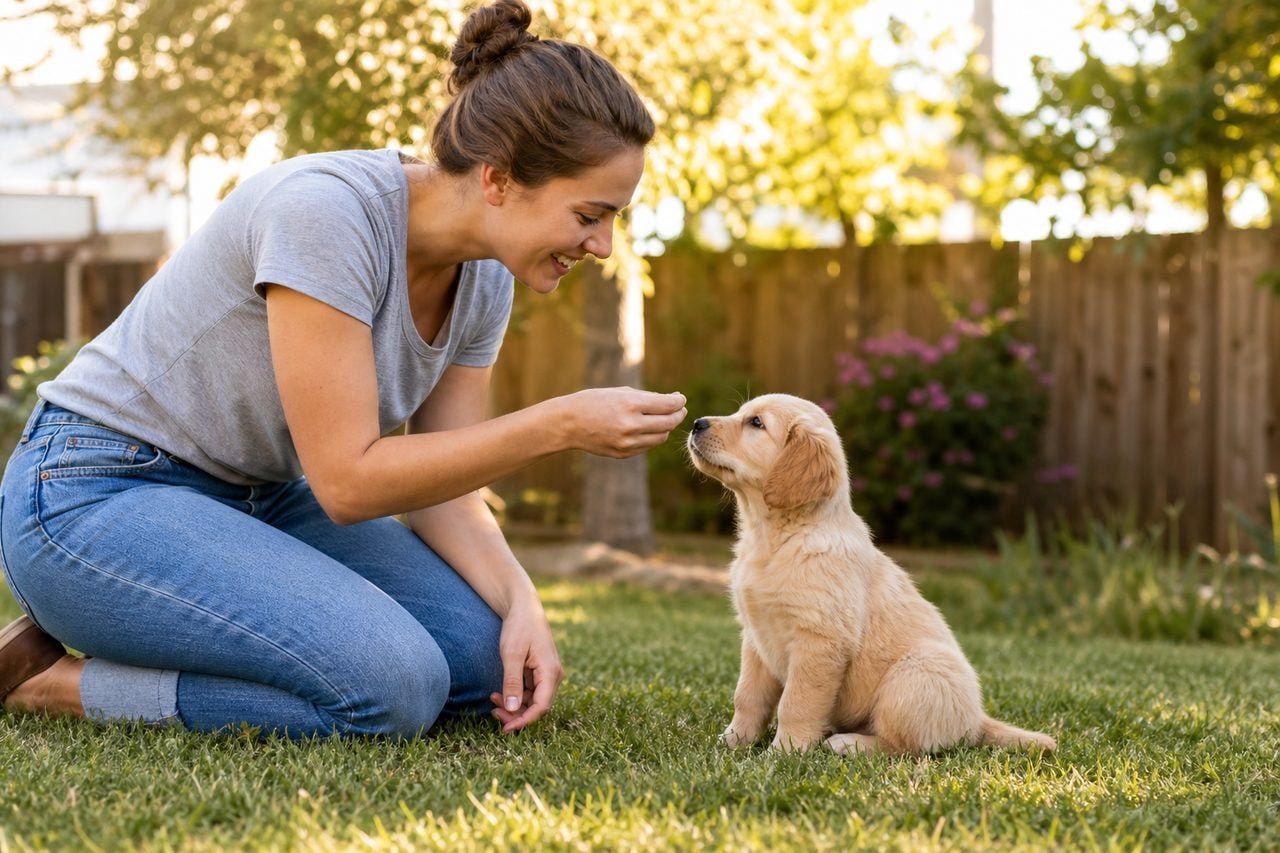
Bringing a new puppy home in the Lansing area is exciting, a little chaotic, and full of decisions that feel bigger than they are. Those first few months set the tone for the rest of your dog’s life, and the window for the easiest learning closes faster than most first-time owners expect. Whether you live near the Capitol downtown, in a busy East Lansing rental close to MSU, or on a quieter lot out toward DeWitt, the fundamentals of raising a well-adjusted puppy are the same, and Lansing has enough qualified trainers to help you get them right.
- Why the First Few Months Matter So Much
- What Puppy Training Actually Covers
- Choosing Between Group Classes and Private Lessons
- What to Look for in a Lansing Puppy Trainer
- Reinforcing Training at Home Across the Lansing Area
- Common Puppy Challenges and How Training Helps
- Building a Realistic Timeline and Budget
- Reviewed trainers
- FAQ
This guide walks through what puppy training actually involves, when to start, what to expect from a good local program, and how to keep making progress at home between sessions. The goal is not a robot dog that performs tricks, but a confident, settled companion who can handle the ordinary noise of a Michigan household, ride comfortably in the car to Hawk Island Park, and greet visitors without turning your front door into a wrestling match.
You do not need to figure this out alone. The Lansing metro has a healthy supply of puppy-focused trainers and group classes, and knowing what to look for makes the choice much simpler. Whether you plan to enroll in a formal class, hire a private trainer for a few in-home sessions, or start with a structured plan of your own and add professional help as questions come up, the sections below give you a clear framework for the whole first year.
Why the First Few Months Matter So Much
Puppies move through a critical socialization period that runs roughly from three weeks to sixteen weeks of age. During this stretch their brains are unusually open to new experiences, and the sights, sounds, surfaces, and people they meet in these weeks shape how they react to the world as adults. A puppy who calmly experiences skateboards, umbrellas, men in hats, vacuum cleaners, and car rides during this window is far less likely to grow into a fearful or reactive adult dog.
The catch is that this same window overlaps with the period before a puppy has finished its full vaccine series, which understandably makes many owners nervous about exposure. The modern consensus among trainers and many veterinarians is that careful, controlled socialization during this period matters enormously, and that the behavioral risks of under-socializing usually outweigh the disease risk when you use common sense. That means favoring clean, well-run puppy classes, friends’ healthy vaccinated dogs, and low-traffic surfaces over crowded dog parks and busy sidewalks.
Practically, this is why so many Lansing puppy programs push owners to enroll early rather than waiting until the dog is six months old and habits have already hardened. If your puppy is between eight and sixteen weeks, you are in the ideal window to start, and the sooner you build a routine the easier everything downstream becomes.
None of this means the window slams shut at sixteen weeks and older puppies are lost causes; dogs keep learning their entire lives, and a slightly older puppy can absolutely catch up with good work. What changes is the effort required. Experiences that a young puppy soaks up almost effortlessly may take a more deliberate, patient approach with an adolescent. So if you have already passed the peak socialization window, do not be discouraged, but do prioritize catching up on positive exposure right away. And if you are still inside it, treat these weeks as precious and use them well, because you will not get them back.
What Puppy Training Actually Covers
Good puppy training is broader than sit and stay. A well-designed early program usually blends several threads that all reinforce each other:
- Socialization: Structured, positive exposure to new people, dogs, sounds, and environments so the puppy learns the world is safe.
- House training: Building a reliable potty routine, reading your puppy’s signals, and using a consistent schedule and crate to prevent accidents.
- Crate and settle training: Teaching the puppy to rest calmly and alone, which prevents separation issues and gives everyone in the house a break.
- Bite inhibition: Redirecting the normal but painful nipping stage toward appropriate chew toys and teaching a soft mouth.
- Foundation cues: Name recognition, come when called, sit, down, loose-leash walking, and an early leave-it.
- Handling and grooming tolerance: Getting the puppy comfortable with having paws, ears, and mouth touched so vet and grooming visits go smoothly.
Notice how much of that list has nothing to do with obedience commands. The most valuable thing you can give a Lansing puppy in its first six months is not a perfect heel, but a calm, resilient temperament and solid house manners. Cues can be layered on at any age; a stable emotional foundation is far harder to install later.
Choosing Between Group Classes and Private Lessons
Most Lansing puppy owners land on one of two formats, and each has a clear best use. Group puppy classes are the classic choice for a reason: they combine training instruction with controlled socialization and supervised play, which is exactly what a young puppy needs. Sitting in a room with five other puppies and learning to focus on you despite the distraction is a skill in itself, and the off-leash play breaks that many classes include help puppies learn healthy dog-to-dog manners.
Private, in-home lessons make more sense when you have a specific problem to solve, when your schedule does not fit a fixed class night, or when your puppy is especially shy and would be overwhelmed in a group. A trainer visiting your home in Okemos or Holt can see exactly where the puppy sleeps, where accidents happen, and how your family interacts with the dog, then tailor the plan to your actual living situation.
Plenty of owners do both: a private session or two to sort out house training and crate routines, then a group class for the socialization piece. When you browse the trainers listed for the Lansing metro, look at whether they run puppy-specific classes, what age ranges they accept, and whether they cap class size so play stays safe.
What to Look for in a Lansing Puppy Trainer
Dog training is an unregulated field, which means the quality bar varies widely and it pays to ask questions before you commit. A few signals separate a strong puppy program from a mediocre one:
- Reward-based methods: Look for trainers who build behavior with food, praise, and play rather than leaning on leash corrections or harsh tools with young puppies. Modern, humane training is both kinder and more effective for building confidence.
- Clean, appropriate space: A tidy indoor training area matters more for puppies than for adult dogs because of the vaccine timing. Ask how they manage hygiene between classes.
- Small class sizes: Fewer puppies per instructor means more individual help and safer play.
- Owner coaching: The trainer should be teaching you as much as the dog. You are the one home every day, so your handling skills are what actually change the puppy’s behavior.
- Clear communication: Written homework, follow-up notes, and honest answers about what a program can and cannot deliver are good signs.
Do not be shy about asking a prospective trainer how they would handle a puppy that is nipping hard or having accidents. Their answer tells you a lot about their philosophy. Many Lansing programs will happily describe their approach before you enroll.
It is also fair to ask about continuing education and professional background. Because no license is required to call oneself a dog trainer, the people who invest in ongoing learning and hold recognized credentials tend to stay current with humane, evidence-based methods. That said, a warm, clear communicator who genuinely connects with both you and your puppy can be worth as much as a wall of certificates. Trust your own read of a class or trainer: are the puppies relaxed and engaged, are the owners getting real coaching, and does the trainer adjust to each dog rather than forcing every puppy through the same mold? A quick observation visit, when a program allows it, often tells you more than any brochure.
Reinforcing Training at Home Across the Lansing Area
A weekly class is only a small slice of your puppy’s week. The real progress happens in the dozens of short interactions you have at home, so plan to weave training into daily life rather than treating it as a separate chore. Short, frequent sessions of just a few minutes beat one long session, because puppies have short attention spans and learn best in small doses.
Once your puppy has the vaccine clearance and confidence for it, Lansing offers plenty of low-key places to practice skills in the real world. A quiet stretch of the Lansing River Trail is good for early loose-leash walking. The open space around Hawk Island Park or Lake Lansing gives you room to work on a recall at a distance without heavy crowds. Even a calm corner of a hardware store parking lot in Grand Ledge or DeWitt can be a training opportunity for practicing focus around mild distractions.
Build a predictable daily rhythm: potty breaks on a schedule, meals used partly as training rewards, a crate nap in the afternoon, and a short evening practice session. Consistency between everyone in the household matters too. If one person allows the puppy on the couch and another does not, the puppy simply learns the rules are negotiable. Agree on the house rules early and keep them uniform.
A good habit is to carry a few treats in your pocket during the day so you can reward good behavior the instant it happens, whether that is the puppy settling quietly on its bed or choosing to check in with you instead of chewing the table leg. Timing is everything with a young dog; a reward delivered within a second or two of the behavior teaches far more clearly than one given after the puppy has already moved on. Over time you will fade the food and rely more on praise and life rewards, but in the early weeks, generous, well-timed reinforcement is how you build the behaviors you want to see for years.
Common Puppy Challenges and How Training Helps
A few issues come up in nearly every Lansing puppy household, and none of them mean your dog is broken. They are normal developmental stages that respond well to consistent handling.
Nipping and mouthing is the number one complaint from families with kids. Puppies explore the world with their mouths, and the fix is redirection to appropriate chews plus teaching the puppy that teeth on skin ends the fun. A trainer can show your family a consistent response so the puppy is not getting mixed messages. Keep a basket of acceptable chew toys in every room so redirection is always within reach, and try to head off the worst nipping by making sure the puppy is well-rested, since an overtired puppy bites far more than a settled one.
House-training setbacks are usually about supervision and schedule, not stubbornness. If accidents are happening, the answer is almost always tighter management, more frequent trips outside, and thorough cleaning of past spots with an enzyme cleaner so the odor does not invite repeats. Michigan winters add their own wrinkle: some puppies balk at going out into deep snow or bitter cold, so shoveling a small potty area in the yard and rewarding generously the moment the puppy finishes outdoors keeps the routine on track through the worst of a Lansing January.
Nighttime and alone-time crying is common in the first weeks and typically improves as the puppy learns the crate is a safe, restful place. Building up alone time gradually prevents it from becoming a bigger separation problem later. Start with brief absences while you are still in the house before working up to leaving entirely, so the puppy learns that you always come back.
Overexcitement and jumping at greetings is best handled by rewarding four-on-the-floor and calm behavior rather than by punishing the jump. Started early, this saves you from a sixty-pound adult dog knocking over guests down the road. A good puppy program addresses all of these directly, and the earlier you build the habit of rewarding calm, the less you will fight it as an adult.
Building a Realistic Timeline and Budget
One of the most helpful things you can do as a new puppy owner is set realistic expectations about how this unfolds over the first year, because progress rarely follows a straight line. Puppies go through predictable stages, and knowing what is coming keeps you from panicking when a settled puppy suddenly seems to forget everything it learned.
The first month home is mostly about safety, bonding, house training, and gentle socialization rather than formal obedience. Between roughly three and six months, the socialization work continues and foundation cues start to stick, though teething can make this a mouthy stretch. Around six to twelve months, many puppies hit an adolescent phase where they test boundaries and appear to backslide on cues they seemed to know cold. This is completely normal and temporary, and the owners who ride it out with steady, patient consistency come out the other side with a solid adult dog. Owners who give up during adolescence are the ones who end up with lasting problems.
On the practical side, budgeting for training as part of the overall cost of a dog helps you plan well. A group puppy class series, a few private sessions, or a combination are all reasonable investments, and they are far cheaper than paying a behavior specialist later to unwind problems that early training would have prevented. Think of the first year of training as an insurance policy on the next decade of your dog’s life. Beyond formal classes, budget a little time each day rather than money: fifteen minutes of focused practice, split into short bursts, does more than an expensive program you do not follow up on. The Lansing metro’s supply of puppy trainers means you have room to find a format and a price point that fits your household, so there is rarely a good reason to skip early training entirely.
Finally, remember that a tired puppy is a good puppy, but a puppy can also be over-exercised. Young joints are still developing, so favor short walks, sniffing games, and mental enrichment like food puzzles over long-distance runs. A puppy who gets its needs met through appropriate physical and mental exercise is calmer, learns faster, and gets into far less trouble than one left bored and under-stimulated.
Reviewed Puppy Training Trainers in Lansing
These reviewed Lansing-area trainers from our directory handle puppy training. Each links to a full profile with specialties, certified credentials, reviews, and contact info:
- Canine Unifursity Dog Training — 5.0★ (89 reviews)
- Dog Gone Fun, LLC. — 4.9★ (270 reviews)
- AnnaBelle’s Canine Station — 4.8★ (419 reviews)
- Canines for Change — 4.8★ (20 reviews)
- Sit Means Sit Dog Training Lansing — 4.7★ (46 reviews)
- Nana-N-Paws — 4.5★ (310 reviews)
- K9Aholics Dog Training Michigan — 5.0★ (8 reviews)
- Amstel K9 — 5.0★ (5 reviews)
- Hidden Potential Farm and Kennels — 5.0★ (2 reviews)
- Royal Handling — 5.0★ (2 reviews)
See all Lansing puppy training trainers →
Frequently Asked Questions
How old should my puppy be to start training in Lansing?
You can and should start gentle training the day you bring your puppy home, often around eight weeks. The socialization window closes near sixteen weeks, so the earlier you begin structured work, the easier it is. Many Lansing puppy classes accept puppies as young as eight to ten weeks with proof of an initial vaccination.
Is it safe to socialize my puppy before all its shots are done?
Careful, controlled socialization during the critical window is widely encouraged, because under-socialization causes more behavior problems than most owners realize. The key is choosing clean, well-run puppy classes and healthy vaccinated playmates over crowded dog parks and busy public areas. Ask your veterinarian and your trainer about the right balance for your puppy.
Should I choose a group class or private puppy lessons?
Group classes are excellent for socialization and learning focus around distractions, while private in-home lessons are better for specific issues like house training or for shy puppies. Many Lansing owners combine both. The right choice depends on your puppy’s temperament, your schedule, and your goals.
How long does it take to house train a puppy?
Most puppies gain reliable house training over several weeks to a few months, depending on their age, your consistency, and how closely you supervise. A steady schedule, frequent outdoor trips, crate use, and thorough cleanup of accidents speed the process considerably. There is no fixed timeline, and setbacks are normal.
Where can I practice training my puppy around Lansing?
Once your puppy is cleared and confident, quiet stretches of the Lansing River Trail, the open areas near Hawk Island Park and Lake Lansing, and calm parking lots in towns like Grand Ledge or DeWitt all work well for practicing skills around mild distractions. Start in low-traffic settings and build up gradually.
How do I stop my puppy from biting my hands?
Puppy nipping is normal exploration, not aggression. Redirect to an appropriate chew toy, and teach the puppy that teeth on skin immediately ends play or attention. Consistency from everyone in the household is what makes it stick. A qualified trainer can coach your whole family on a uniform response.
Related: read our complete puppy training guide or the full Lansing dog training overview.
Ready to find the right puppy training pro in Lansing?