
Dog Boot Camp in Lansing, MI
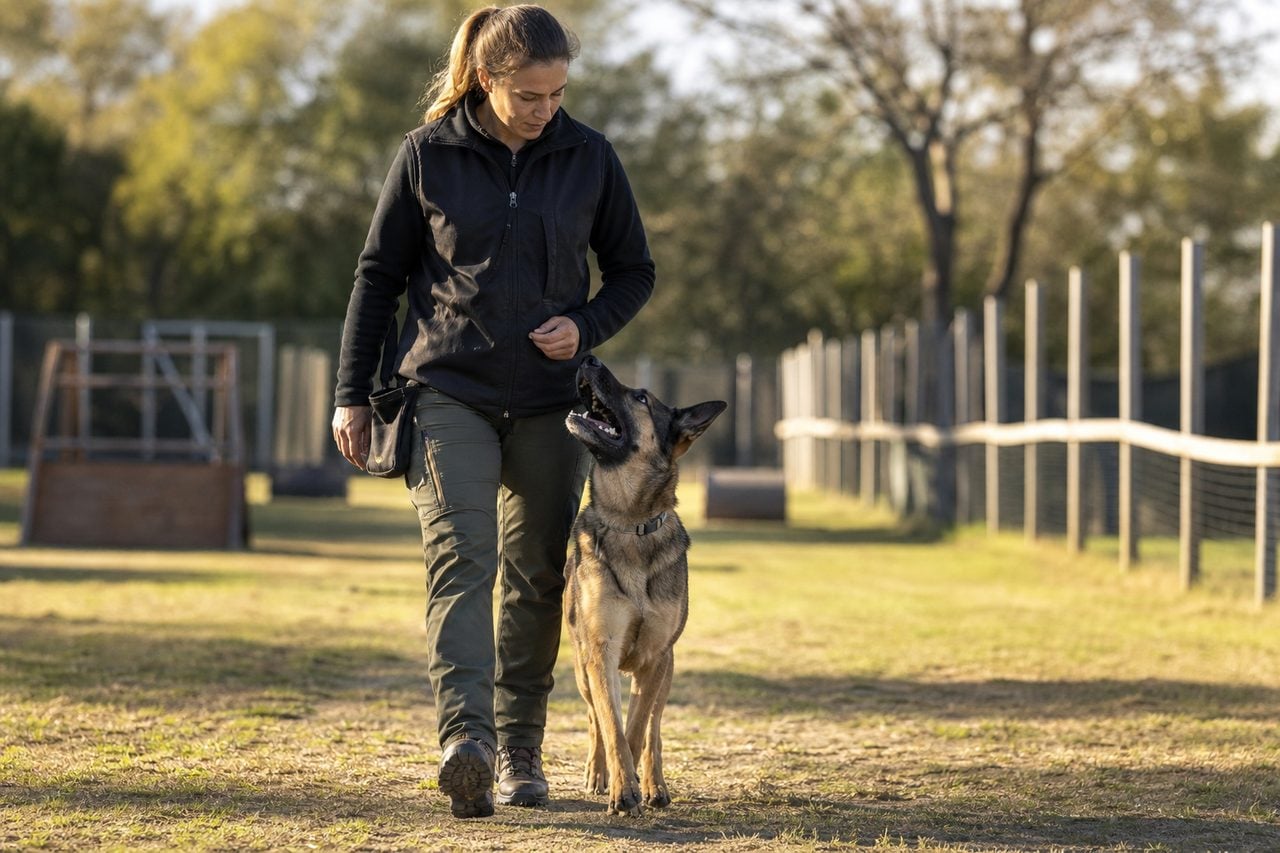
When a dog’s behavior feels like too much to unwind on your own, the phrase “dog boot camp” starts to sound appealing. The idea is straightforward: hand your dog over to a professional for an intensive stretch of training, and get back a more manageable companion. In the Lansing area, board-and-train programs, sometimes marketed as boot camps, promise fast progress on everything from leash pulling to house manners while your dog stays with the trainer for a set period.
These programs can genuinely help the right dog, but they are also the most misunderstood option in dog training. A boot camp is not a magic reset button, and the results depend heavily on what happens after your dog comes home. This guide explains what board-and-train really involves, which dogs and problems it suits, what questions to ask a Lansing-area program, and how to make sure the improvements actually last.
Boot-camp style programs are less common than group classes or private lessons around the Capital region, so supply is thinner and it is worth doing your homework before choosing one. The upside of that scarcity is that it forces a useful question: is an intensive residential program really the right fit for your dog and your household, or would a different format serve you better? By the end of this guide you should be able to answer that honestly.
What a Dog Boot Camp Actually Is
Dog boot camp is an informal name for a board-and-train program, where your dog lives with a trainer, either at a dedicated facility or in the trainer’s home, for a defined period while receiving daily structured training. Programs commonly run anywhere from a couple of weeks to a month or more, depending on the goals and the dog. Throughout the stay, the trainer works the dog through obedience, manners, and whatever specific behaviors you signed up to address.
The appeal is intensity and consistency. Instead of a busy family fitting in ten minutes of practice between work and dinner, a professional works the dog every day in a controlled environment with clear, uniform rules. For dogs who thrive on structure, that concentrated repetition can move faster than a once-a-week class.
The critical thing to understand is that a boot camp trains the dog, but it does not train you, at least not automatically. The dog learns to respond to the trainer in the trainer’s environment. Transferring those skills to your household in Lansing, with your family, your routines, and your distractions, is a separate step that requires handoff coaching. A reputable program builds that transfer into the package rather than treating it as an afterthought.
Which Dogs and Problems Suit Boot Camp
Board-and-train is not the right tool for every situation, and honest trainers will tell you so. It tends to fit best in a few specific scenarios:
- Busy households with limited practice time: Families who genuinely cannot commit to daily training may get a jump-start from an intensive program, provided they can maintain the results afterward.
- Foundational obedience gaps: Reliable recall, loose-leash walking, place training, and impulse control are all skills that respond well to concentrated daily repetition.
- Specific manners problems: Door dashing, counter surfing, and jumping can improve quickly with consistent handling around the clock.
On the other hand, boot camp is a poor first choice for serious fear, anxiety, or aggression. Those cases usually need a careful behavior modification plan and, critically, the owner’s hands-on involvement, because the dog’s relationship with its own family is part of the picture. A dog with true aggression sent away and returned without the owner learning new skills often relapses. For those issues, a private behavior consultation is usually a better starting point than an intensive stay.
Puppies are another gray area. Some very young dogs do better staying home during the socialization window rather than boarding away from their family. A good Lansing trainer will steer you toward the format that fits your dog rather than selling you the most expensive option.
It is also worth being honest with yourself about your own bandwidth, because that is often the deciding factor. Board-and-train exists in large part because life is busy. If you work long hours, travel frequently, or are juggling a household that simply cannot fit consistent daily training into the schedule, an intensive program that jump-starts the process can make sense in a way it would not for someone with plenty of time. The key caveat is that even the busiest owner still has to maintain the results afterward, so boot camp shifts the heavy lifting to the front end rather than eliminating it. If you genuinely cannot commit any daily follow-through, no format, boot camp included, will hold up over time.
The Make-or-Break Factor: The Handoff Home
If there is one thing to remember about dog boot camp, it is this: the transfer back to you determines whether the money was well spent. A dog can perform beautifully for a trainer and then seem to forget everything at home, not because it is stubborn, but because you and the trainer are different handlers with different timing, body language, and expectations.
The best board-and-train packages treat the handoff as a core part of the service. That should include one or more go-home sessions where the trainer coaches you directly on the cues, the timing, and the daily structure your dog has learned. Many also offer follow-up sessions in the weeks after your dog returns, so you can troubleshoot as real life reintroduces distractions.
Before enrolling, ask exactly how the transfer works. How many owner coaching sessions are included? Is there follow-up support after the dog comes home, and for how long? What written guidance will you receive? If a program’s answer is essentially “we hand the dog back and you take it from there,” the results are far more likely to fade. Around Lansing, the programs worth your money are the ones that invest in teaching you, not just your dog.
Think of it the way you would think of physical therapy. A therapist can guide excellent sessions, but the patient who does the prescribed exercises at home is the one who recovers, while the patient who skips them slides back no matter how good the sessions were. A board-and-train works the same way: the trainer builds the foundation, but you are the one who lives with the dog every day, so you have to learn the handling well enough to maintain it. The best trainers understand this and treat you as their real student. They will hand you clear routines, show you the timing and body language that cue each behavior, and check that you can actually get the responses yourself before the dog goes home. That coaching is not an upsell; it is the core of what makes the whole investment worthwhile.
Questions to Ask a Lansing Board-and-Train Program
Because your dog will be living away from you, boot camp demands more scrutiny than a weekly class. Before you commit, get clear answers on the following:
- Where and how are dogs housed? Ask to see the boarding area. Look for clean, safe, appropriately sized spaces and reasonable limits on how many dogs are on-site at once.
- What training methods are used? Understand what tools and techniques the trainer relies on, and make sure you are comfortable with them. Ask how they handle a dog that is struggling or stressed.
- How will you stay updated? Reputable programs share regular photos, videos, or written updates so you are not left in the dark for weeks.
- What exactly is included? Get the number of training sessions, the owner handoff coaching, and any follow-up support in writing.
- What outcomes are realistic? Be wary of anyone promising a total personality transformation. Honest trainers describe specific, achievable goals.
Visiting the facility in person, whether it is near Holt, Dimondale, or out toward Williamston, tells you more than any website. Trust your read of how the dogs on-site look and behave, and how openly the trainer answers hard questions.
Pay attention as well to how the trainer talks about your specific dog. A professional who asks detailed questions about your dog’s history, temperament, and the exact behaviors you want to change, and who is willing to say a residential program may not be the best fit, is showing the kind of judgment you want. Be wary of a one-size-fits-all pitch where every dog apparently needs the same package regardless of its issues. Good trainers customize, and they are honest when a case falls outside their strengths. It is also reasonable to ask for references from past clients whose dogs had problems similar to yours, and to ask what happens if your dog does not respond as hoped. The answers reveal whether you are dealing with a careful practitioner or a volume operation, which matters a great deal when your dog will be living in their care for weeks.
Maintaining the Results After Boot Camp
The weeks right after your dog comes home are the most important. This is when new habits either lock in or quietly erode. Plan to keep up the structure the trainer established rather than relaxing back into old routines the moment the dog is back on the couch.
Practical maintenance looks like short daily practice sessions, consistent rules across everyone in the household, and gradually reintroducing distractions rather than throwing your dog straight into the deep end. If your dog learned a solid place command and recall, keep asking for them in real situations: before meals, at the door, on walks along the Lansing River Trail. Skills that go unused fade, while skills you weave into daily life stay sharp.
Expect a brief adjustment period. Your dog may test the new rules at home the way any of us relaxes at home versus at work. Staying calm and consistent through that testing phase is what cements the training. If you hit a snag, use the follow-up support your program offers rather than letting a small regression grow. A boot camp is best understood as a strong head start, not a finished product, and your steady follow-through is what turns that head start into a lasting change.
It also helps to reintroduce the wider world gradually. A dog that has spent weeks training in a controlled facility has not necessarily proofed its new skills against the full chaos of daily life: the mail carrier, a squirrel darting across the yard, kids on scooters, or a busy Saturday at a Lansing-area park. Rather than expecting flawless performance everywhere on day one, rebuild difficulty in layers. Practice first in the calm of your living room, then the backyard, then a quiet street, then busier settings, raising the challenge only when the dog is succeeding at the current level. This staged approach mirrors how the skills were built and gives them the best chance to generalize. Owners who skip it and immediately test the dog in the hardest possible environment often conclude the boot camp “did not work,” when in reality the dog simply was not given a fair on-ramp back into real life.
Alternatives Worth Considering First
Before committing to an intensive, often costly board-and-train, it is worth asking whether a lighter-touch option might get you where you want to go. For many Lansing families, the honest answer is yes.
Private in-home lessons give you a trainer working directly with you and your dog in your own space, which sidesteps the transfer problem entirely because you are learning the handling from day one. This is often the better path for anxiety, reactivity, or family-specific issues.
Group obedience classes cost less and build real skills, especially the ability to focus around other dogs and people. For general manners and foundation cues, a solid group class often does the job.
Day training, where a trainer works your dog during the day and you stay involved without a full residential stay, splits the difference for some households and keeps the dog at home overnight.
None of this means boot camp is wrong for you. For the right dog, the right problem, and a program that coaches you properly on the handoff, it can be a genuine accelerator. The point is simply to match the tool to the job. Since intensive programs are less plentiful in the immediate Lansing area, weighing these alternatives first ensures you land on the format that actually fits your household and your dog.
Understanding the Cost and Value Question
Board-and-train is typically the most expensive training format, and it is fair to ask whether the price reflects real value for your situation. The cost covers a lot: weeks of boarding, daily one-on-one training time, the trainer’s expertise, and the facility overhead. When you divide the total by the hours of professional attention your dog receives, the per-hour figure often looks more reasonable than the sticker shock suggests. Still, price alone should never be the deciding factor in either direction.
The real value question is not “how much does it cost” but “what am I actually buying, and will it last.” A cheaper program that hands your dog back with no owner coaching may end up costing more in the long run if the results evaporate and you have to start over. A more expensive program that includes thorough handoff sessions and weeks of follow-up support can be the better deal even at a higher price, because you are paying for durable change rather than a temporary performance.
When comparing Lansing-area options, get an itemized picture of what each package includes and read the fine print on guarantees. Be especially skeptical of any program offering a blanket money-back guarantee on behavior, since living creatures do not come with warranties and reputable trainers know it. What you want instead is a clear, honest description of realistic outcomes, a defined support period after your dog comes home, and a trainer who is candid about what board-and-train can and cannot do for your particular dog. Value in this field comes from a good match between the program and your needs, not from the lowest or highest price on the list.
It also helps to think about the ongoing costs beyond the program itself. Maintaining a dog’s training takes a modest amount of daily effort and, for some households, an occasional refresher session or a follow-up class down the road. Factoring that into your plan from the start keeps the initial investment from going to waste. A boot camp graduate whose owner quietly lets the structure lapse over a few months will often drift back toward old habits, which is exactly the scenario the upfront cost was meant to avoid.
Reviewed Dog Boot Camp Trainers in Lansing
These reviewed Lansing-area trainers from our directory handle dog boot camp. Each links to a full profile with specialties, certified credentials, reviews, and contact info:
- Canine Unifursity Dog Training — 5.0★ (89 reviews)
- Hidden Potential Farm and Kennels — 5.0★ (2 reviews)
- Sit Means Sit Dog Training Lansing — 4.7★ (46 reviews)
- Sam’s Train, Play and Stay — 4.1★ (37 reviews)
See all Lansing dog boot camp trainers →
Frequently Asked Questions
What is the difference between a dog boot camp and board-and-train?
They are usually the same thing. Boot camp is an informal marketing term for a board-and-train program, where your dog lives with a trainer for a set period and receives daily intensive training. Different facilities use different names, so ask each program exactly what the stay includes.
Will my dog remember the training after boot camp?
Only if the skills are properly transferred to you and you keep practicing them. Dogs learn to respond to the trainer in the trainer’s environment, so the handoff coaching and your consistent follow-through at home are what make the results last. Programs that skip owner coaching tend to produce results that fade.
Is boot camp a good idea for an aggressive dog?
Usually not as a first step. Serious aggression, fear, and anxiety typically need a careful behavior modification plan with heavy owner involvement, because the dog’s relationship with its own family matters. A private behavior consultation is generally a better starting point than sending the dog away.
How long do board-and-train programs in the Lansing area last?
Lengths vary widely, commonly from a couple of weeks to a month or more, depending on the goals and the individual dog. Longer is not automatically better; what matters more is the quality of the training and how thoroughly the skills are handed off to you.
What should I look for when touring a boot camp facility?
Visit in person and look for clean, safe, appropriately sized housing, reasonable limits on the number of dogs on-site, and a trainer who answers hard questions openly. Ask about methods, how you will get updates during the stay, and exactly what owner coaching and follow-up support are included.
Are there cheaper alternatives to dog boot camp?
Yes. Private in-home lessons, group obedience classes, and day training are all typically less expensive and can be a better fit depending on your goals. In-home lessons in particular avoid the transfer problem because you learn the handling directly from the start.
Related: read our complete dog boot camp guide or the full Lansing dog training overview.
Ready to find the right dog boot camp pro in Lansing?