
Board & Train in Flint, MI
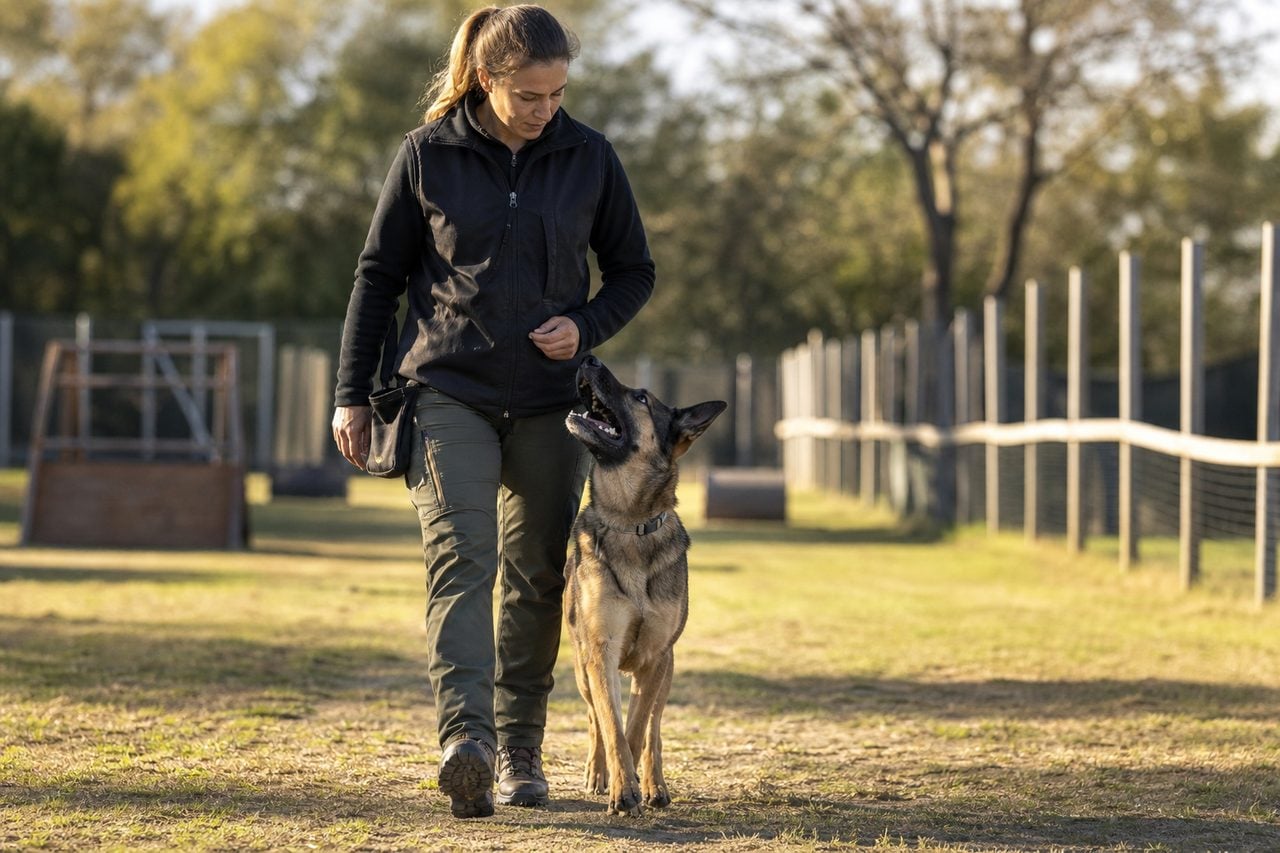
Board and train is one of the most misunderstood options in dog training, and also one of the most useful when it fits the situation. In a board and train program, your dog lives with a trainer or at a training facility for a set stretch of time — often two to six weeks — while receiving daily, structured instruction. For busy families across the Flint area, from the city neighborhoods to the quieter subdivisions of Grand Blanc and the lake country around Fenton, the appeal is obvious: someone else handles the intensive, repetitive early work, and you get a dog who already understands the basics when the program ends.
But board and train is not a magic reset button, and it is not right for every dog or every household. The quality of programs in Genesee County varies widely, the results depend heavily on how the family follows through afterward, and the fit between your goals and the trainer’s methods matters more than the length of the stay. This guide walks through how board and train actually works, what it can and cannot do, how to evaluate a program near Flint, and how to make sure the investment holds up once your dog comes home.
Our aim here is to help you ask better questions, not to sell you on any single trainer. The directory lists local options; this article gives you the framework to judge them.
What Board and Train Actually Is
Board and train — sometimes called immersion training or a training board — means your dog stays with a professional for a defined period and works on specific skills every day. The trainer sets the schedule, controls the environment, and runs the repetitions that build reliable behavior. Instead of one class a week with practice squeezed into a busy home life, the dog gets consistent daily sessions in a setting designed for learning.
Programs generally fall into a few categories. A basic obedience board and train focuses on foundation skills: sit, down, stay, recall, loose-leash walking, place, and general manners. A behavior-focused program targets specific problems such as reactivity, jumping, door-dashing, or resource guarding. Some facilities offer specialized tracks — off-leash reliability, e-collar conditioning, or preparation for more advanced work — though those deserve their own careful evaluation.
The length varies with the goal. A two-week stay might polish basic manners on a dog who already has some foundation. Serious behavior modification or off-leash reliability often needs four to six weeks or more, because durable behavior change takes time and repetition that can’t be rushed. Be skeptical of any program promising a fully transformed dog in a handful of days; behavior built too fast tends to collapse just as fast.
The single most important thing to understand: the trainer is not just training your dog, they are supposed to be training you. A dog who performs beautifully at the facility but falls apart at home hasn’t really been trained — the skills just never transferred. Good programs build in handoff time so you learn to give the cues, read your dog, and maintain what was taught.
When Board and Train Makes Sense — and When It Doesn't
Board and train fits some situations well. If your schedule genuinely doesn’t allow for daily training sessions — long commutes into downtown Flint or out toward the tri-cities, shift work, a house full of kids — the concentrated format can jump-start progress that would otherwise stall. It can also help when a behavior problem has escalated past what weekly classes address, or when you simply don’t have the experience to run the early repetitions correctly and want a professional to lay the foundation cleanly. Many owners have tried to train on their own, gotten inconsistent results, and reached a point where they’d rather hand the technical work to someone who does it every day. That’s a perfectly reasonable place to arrive at.
It’s often a strong choice for a specific, well-defined goal: a solid recall, reliable place command, or calm leash manners. Those are teachable skills with clear criteria, and a focused program can build them efficiently. Puppies and adolescent dogs in particular can benefit from a structured stretch during the critical window when habits are forming, provided the program is age-appropriate and doesn’t rely on harsh methods to speed things along.
There are also situations where board and train is the wrong tool. If the core issue is fear, anxiety, or a bond that needs strengthening, removing the dog from the family for weeks can be counterproductive — that dog needs to build trust with you, in the home, over time. Aggression cases require particular caution; sending an aggressive dog away and getting back a dog who behaves at the facility tells you little about how they’ll behave in your living room. And if you’re not prepared to do the follow-through work when the dog returns, no program will hold. The board and train buys a head start, not a finish line.
Cost is a real factor too. Immersion programs represent a significant investment because they include boarding, daily labor, and the trainer’s expertise over weeks. Families across Genesee County weigh that against private lessons or group classes, which spread cost and effort over a longer timeline but keep the dog home. Neither is universally better — it depends on your dog, your goals, and your capacity. It’s worth thinking about the true cost of not resolving a behavior too: a dog who can’t be walked without pulling, who bolts through doors, or who can’t be trusted with guests slowly shrinks a family’s life. Weighed against that, a well-chosen program can be money well spent — but only if you’ve matched it honestly to the problem.
How to Evaluate a Program Near Flint
Because your dog will live somewhere else and you won’t be watching the day-to-day work, vetting a board and train program matters more than almost any other training decision. Start with the training methods. Ask the trainer to explain their approach in plain language: how do they teach a new behavior, and how do they respond when a dog gets it wrong? You want specific answers, not slogans. Trainers who lean on reward-based, positive-reinforcement methods, or balanced approaches applied thoughtfully, should be able to describe exactly what they do and why. If the explanation is vague, evasive, or leans heavily on dominance language and forceful corrections as the primary tool, treat that as a warning sign — especially when you won’t be present to see how those corrections are applied.
Ask to see the facility. A reputable program in the Flint area will let you tour where your dog sleeps, eats, and trains. Look at the kennels or living quarters: are they clean, secure, climate-controlled, and appropriately sized? Michigan summers get hot and winters get cold, so climate control isn’t a luxury. Ask about the daily schedule — how many training sessions, how much rest, how much enrichment and exercise. A dog crated twenty-three hours a day between short drills is not in a healthy program. Ask, too, how many dogs are in the program at once and how much individual attention each receives; a facility taking on more dogs than it can properly handle spreads its attention thin.
Ask how they’ll keep you informed. Good facilities send regular updates — photos, short videos, progress notes — so you can see the work happening. That transparency is both reassuring and a sign of a program confident in what it’s doing. If a trainer is reluctant to show you their dogs working or resists updates during the stay, ask yourself why.
Clarify the follow-through. What does the handoff look like? How many go-home sessions are included? Is there ongoing support after your dog returns, and for how long? Some programs include follow-up lessons or a support window; others charge separately. Know before you commit. Finally, ask about their experience with dogs like yours — your breed, your dog’s age, and specifically the behavior you’re trying to address. A trainer with a strong track record on leash reactivity may be less experienced with, say, separation-related issues; matching their strengths to your actual problem is part of the job. Talking to past clients, where possible, tells you more than any marketing does.
The Handoff: Where Programs Succeed or Fail
The moment your dog comes home is where a board and train program is truly tested. Trainers see it constantly: a dog returns performing flawlessly, and within two weeks the family reports the old behaviors creeping back. This isn’t because the training didn’t work — it’s because the training didn’t transfer. Dogs are contextual learners. A behavior learned reliably in one environment, with one handler, using one set of cues, does not automatically carry over to a different environment with a different handler.
That’s why the handoff process is the most important part of the whole program, and why you should weight it heavily when choosing one. Expect at least one, ideally several, go-home sessions where the trainer coaches you directly. You need to learn the exact cues — the words, the hand signals, the timing — that your dog was taught. You need to practice giving them and correcting your own mistakes while the professional watches. And you need a written plan for the first weeks at home: what to practice, how often, and how to phase the new skills into real daily life.
The first few weeks back are a maintenance period, not a victory lap. Keep sessions short and frequent. Hold your dog to the standard they were taught — dogs test boundaries when they return to a familiar, permissive environment, and letting the rules slide immediately undoes weeks of work. If the program included a support window, use it. Call with questions. Send video. The trainers who care about outcomes want to hear from you, because your success is the real measure of their program.
Local Considerations Around Genesee County
The Flint metro spreads across a mix of urban, suburban, and genuinely rural settings, and that geography shapes what board and train can prepare your dog for. A dog trained entirely in a quiet kennel out in one of the northern townships — Mt Morris, Clio, or the farmland toward Montrose — may need extra work generalizing to the busier sidewalks and traffic of the city neighborhoods or the shopping corridors around Grand Blanc and Burton. When you talk with a program, ask whether and how they proof behaviors in varied, real-world environments, not just on their home turf.
Proximity matters for the handoff. Because go-home sessions and follow-up support are so important, a trainer closer to where you live — whether that’s Flushing and Swartz Creek to the west, Davison to the east, or the lake communities of Fenton and Linden to the south — makes ongoing coaching easier to schedule and more likely to actually happen. A program an hour away can still be worth it for the right fit, but factor the drive into whether you’ll realistically return for support.
Think about the environments your dog actually lives in. Families near Fenton’s lake country and spots like For-Mar Nature Preserve often want a dog reliable around water, wildlife, other dogs, and foot traffic on trails. If that’s your reality, tell the trainer up front so the program can build toward those distractions rather than a sterile indoor setting. The best outcomes come from matching the training environment to the life the dog will lead.
Alternatives Worth Considering First
Before committing to a multi-week immersion program, it’s worth honestly weighing the alternatives — not because board and train is bad, but because it’s a large investment and sometimes a lighter approach gets you where you need to go. Private in-home lessons keep your dog with you while a trainer coaches the whole family through the same skills a board and train would teach. Progress is slower, but the learning transfers to your home from day one, and you build the handler skills yourself rather than having to catch up at the end.
Group classes, widely available across the Flint area, are the most economical option and add a benefit board and train can’t easily replicate: controlled practice around other dogs and people. For manners, basic obedience, and mild social issues, a good group class often does the job. Day training — where you drop the dog off for training sessions but bring them home each night — splits the difference, offering professional daily work without the extended separation.
For many families the smart path is a combination: perhaps a board and train to establish a difficult foundation, followed by group classes to proof the skills and keep them sharp. Or private lessons first, escalating to immersion only if progress stalls. The point is to match the tool to the problem. A trainer worth hiring will tell you honestly if your goals could be met with a less intensive option — and that honesty is itself a good sign you’ve found someone worth working with.
Making Your Decision
Choosing a board and train comes down to a few honest questions. Are your goals specific and well-suited to concentrated training? Do you have the time and commitment to maintain the results afterward? Have you found a program whose methods you understand and agree with, whose facility you’ve seen, and whose handoff process is thorough? And does the trainer have real experience with dogs like yours and the behavior you’re addressing? If you can answer yes to those, board and train can be an efficient, effective path.
Take your time with the decision. Tour more than one facility if you can. Ask the uncomfortable questions about methods, results, and what happens if the program doesn’t fully work. Trust trainers who set realistic expectations over those who promise dramatic, fast, guaranteed transformations — durable behavior change simply doesn’t work that way. The directory below lists board and train options serving Flint and the surrounding communities; use the framework in this guide to compare them on the things that actually predict a good outcome.
Whatever you choose, remember that training is ultimately a relationship between you and your dog. A board and train can build a strong foundation, but you’re the one who lives with the result. The families who get the most from these programs are the ones who stay engaged — who learn the cues, do the follow-through, and treat the program as the start of the work rather than the end of it.
Reviewed Board & Train Trainers in Flint
These reviewed Flint-area trainers from our directory handle board & train. Each links to a full profile with specialties, certified credentials, reviews, and contact info:
- Canine Co-Pilots Dog Training LLC — 5.0★ (53 reviews)
- Einstein Dog Training — 4.8★ (178 reviews)
- Butternut Creek Kennels — 4.8★ (62 reviews)
- Stonehill Kennels — 4.7★ (195 reviews)
- Ugly Dog Boarding, Daycare & Training — 4.5★ (191 reviews)
See all Flint board & train trainers →
Frequently Asked Questions
How long does a board and train program usually last?
It depends on the goal. A basic manners refresh for a dog with some foundation might run two weeks, while off-leash reliability or serious behavior modification often needs four to six weeks or longer. Durable behavior change takes repetition over time, so be cautious of programs promising a fully transformed dog in just a few days — skills built too quickly tend not to last.
Will my dog forget me or bond with the trainer instead?
No. Dogs form strong, lasting attachments to their families, and a few weeks away doesn’t erase that bond. What can happen is that skills learned with the trainer don’t automatically carry over to you, which is exactly why the handoff process — where the trainer coaches you on the cues and techniques — matters so much. Choose a program that includes solid go-home sessions.
Is board and train worth it compared to regular classes?
It can be, but not always. Board and train shines when your schedule genuinely doesn’t allow daily practice, when a problem has escalated past weekly classes, or when you want a professional to build a clean foundation fast. For basic manners and mild issues, group classes or private lessons are more economical and keep your dog home. Match the tool to the problem rather than assuming the most intensive option is best.
What should I look for when touring a facility near Flint?
Ask to see where your dog will sleep, eat, and train, and check that the space is clean, secure, and climate-controlled — important given Michigan’s hot summers and cold winters. Ask about the daily schedule, including rest and enrichment, not just drills. Have the trainer explain their methods in plain terms, ask how they’ll send updates, and clarify exactly what the handoff and follow-up support include before you commit.
Why do some dogs regress after coming home?
Almost always because the training didn’t transfer, not because it didn’t work. Dogs are contextual learners, so a behavior reliable at the facility with the trainer may not hold at home with you unless it’s deliberately generalized. The fix is a thorough handoff and consistent follow-through: learn the exact cues, practice them, and hold your dog to the same standard during the first weeks back rather than letting the rules slide.
Is board and train a good option for an aggressive dog?
Aggression cases call for extra caution. A dog who behaves well at a facility tells you little about how they’ll act in your home, and behavior around aggression is complex and context-dependent. If you’re dealing with aggression, prioritize a professional experienced specifically with that issue, expect a heavy emphasis on owner coaching and management, and be wary of any program that guarantees results. In many cases, in-home work where the problem actually occurs is more appropriate.
Related: read our complete board & train guide or the full Flint dog training overview.
Ready to find the right board & train pro in Flint?