
Puppy Training in Kalamazoo, MI
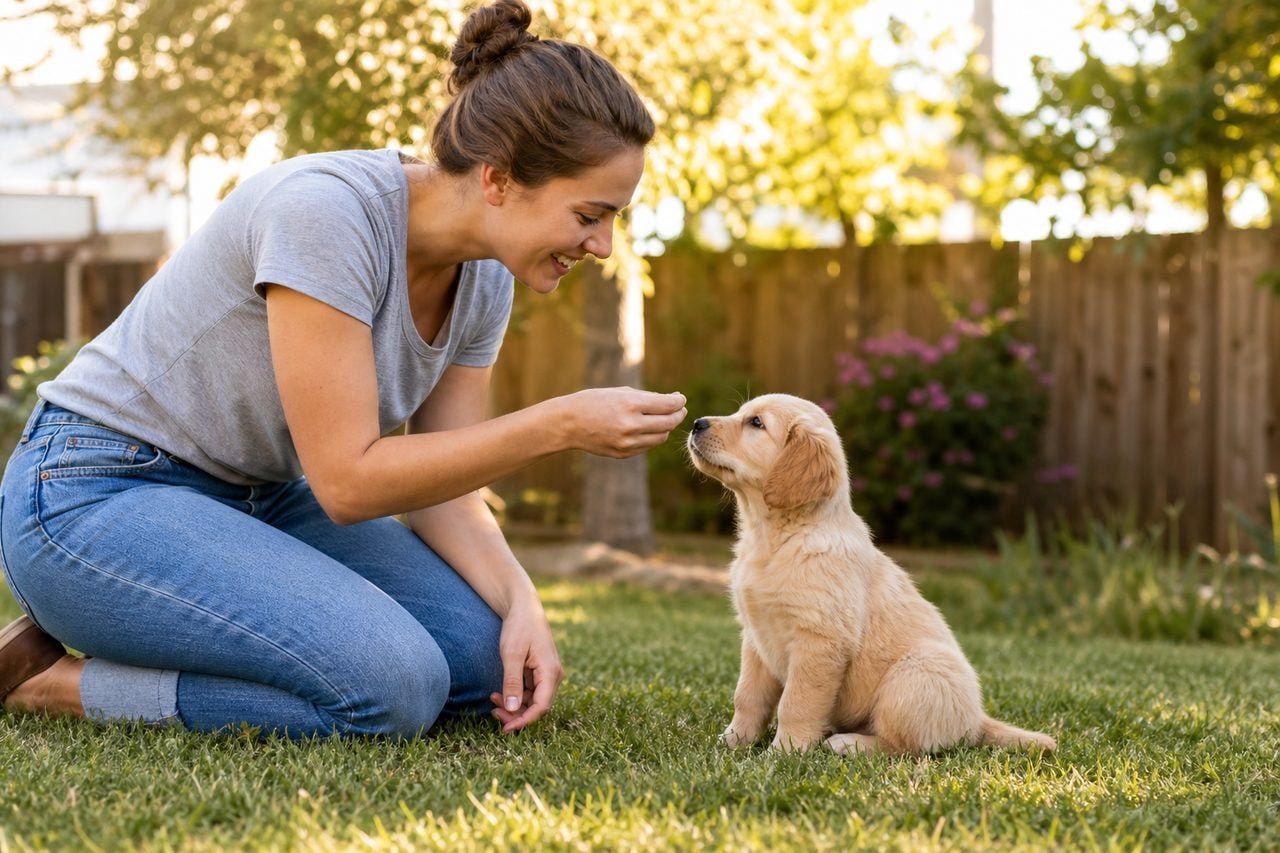
Bringing a puppy home in Kalamazoo is one of the most rewarding — and quietly overwhelming — things a family can do. Those first weeks set the tone for years to come, and the choices you make now about socialization, house habits, and gentle handling matter far more than any single command you teach later. Whether you live near the WMU campus, out toward Gull Lake, or in one of the smaller towns strung along US-131, the fundamentals of raising a confident, well-mannered dog are the same.
- Why the First Sixteen Weeks Matter Most
- Safe Socialization Before Vaccinations Are Complete
- House Training and Crate Training That Actually Works
- Foundation Skills Every Kalamazoo Puppy Should Learn
- Choosing Between Group Classes and Private Training
- Building on Success: From Puppy to Well-Mannered Adult
- Exercise, Enrichment, and Where to Practice Around Town
- Reviewed trainers
- FAQ
This guide walks through what good puppy training actually looks like in and around Kalamazoo County: when to start, what a realistic timeline feels like, how to socialize safely before vaccinations are complete, and how to choose a class or trainer that fits your dog and your schedule. The goal is not a robotic pet that performs tricks, but a resilient companion who can handle the noise of downtown Kalamazoo, the trails at Al Sabo Land Preserve, and the everyday chaos of a busy household.
You will find plenty of qualified help across the metro, from group puppy classes to in-home coaching. The advice below is vendor-neutral — use it to ask better questions and recognize good practice when you see it.
Why the First Sixteen Weeks Matter Most
Puppies move through a critical socialization window that runs roughly from three to sixteen weeks of age. During this period, their brains are unusually open to new experiences, and the sights, sounds, surfaces, and social encounters they meet now shape how they react to the world for the rest of their lives. A puppy who calmly meets friendly people, other vaccinated dogs, umbrellas, wheelchairs, vacuum cleaners, and car rides during this window tends to grow into an adaptable adult. A puppy who misses it often becomes fearful or reactive — problems that are far harder and slower to fix later.
This is the single most important reason not to wait. Many Kalamazoo families assume training starts once the puppy is six months old and “old enough to learn.” By then the most valuable window has largely closed. The good news is that early training at this age is gentle and play-based: it is about positive exposure and confidence, not drills.
Practical priorities for the first months at home include:
- Handling every part of the body — paws, ears, mouth, tail — so grooming and vet visits stay stress-free.
- Introducing new surfaces: grass, gravel, metal grates, wet pavement after a Kalamazoo River Valley Trail rain, hardwood floors.
- Positive exposure to household sounds, from the doorbell to a WMU football-Saturday crowd on TV.
- Short, happy car trips so the vehicle never becomes only “the place we go to the vet.”
Keep every experience short and paired with something good — a treat, praise, or play. If the puppy looks worried, you have moved too fast; back up and make it easier.
A useful way to think about this window is as a checklist you fill in a little each day rather than a single big outing. A puppy who meets one or two new things calmly every day for a couple of months builds a broad, positive database of experience. Quality matters more than quantity: three good encounters with a friendly, gentle adult dog beat one overwhelming afternoon at a crowded event that leaves the puppy frightened. Read your puppy’s body language — loose posture, a wagging tail, willingness to take treats — and treat those as your green light. Tucked tail, flattened ears, refusing food, or trying to retreat are signs to create more distance and slow down. The single most common mistake Kalamazoo families make is flooding a puppy with too much at once and mistaking a frozen, overwhelmed dog for a calm one.
Safe Socialization Before Vaccinations Are Complete
Here is the tension every new puppy owner faces: the socialization window closes around sixteen weeks, but the full vaccine series usually is not finished until then. Waiting for complete protection means missing the window; ignoring health risk means exposing a vulnerable puppy to disease. The answer is thoughtful, controlled socialization rather than none at all.
You can do a great deal safely without setting paws in high-traffic, unknown-dog areas. Around Kalamazoo, that means being selective about where you go:
- Invite calm, vaccinated adult dogs owned by friends in Portage or Comstock over for supervised play in a private yard.
- Carry your puppy through busy environments — a hardware store, the edge of a farmers market, a Richland sidewalk — so they see and hear the world without contacting the ground where unknown dogs have been.
- Host a puppy party: invite people of different ages, wearing hats and boots, to your home so your puppy meets variety in a safe space.
- Choose a reputable puppy class that requires proof of age-appropriate vaccination and sanitizes its floors between sessions.
Well-run puppy classes are one of the best investments you can make right now, precisely because they solve this problem: a clean, controlled environment with health requirements and other puppies at the same life stage. Avoid dog parks and the busiest stretches of shared trails until your veterinarian confirms full protection. Balancing exposure and safety is a judgment call — when in doubt, ask your vet about your specific puppy and neighborhood.
House Training and Crate Training That Actually Works
Reliable house training comes down to management and consistency, not punishment. Michigan weather makes this its own challenge — a Kalamazoo puppy learning to potty outside in a January snowstorm needs extra patience and a well-chosen spot near the door. The core method is simple: prevent accidents by supervising closely, take the puppy out on a frequent schedule, and reward heavily the instant they finish outdoors.
A young puppy generally needs to go out after waking, after eating, after play, and roughly every hour or two in between. Take them to the same nearby spot each time so the surface and scent cue the behavior. When they go, praise and treat right there, outside — not back in the house a minute later, when the puppy can no longer connect the reward to the act.
Crate training supports house training and gives your puppy a safe den. Done well, the crate becomes a place the dog chooses to rest, not a punishment. Keys to a positive crate:
- Feed meals and offer special chews inside so the crate predicts good things.
- Start with the door open and very short closed intervals, building duration gradually.
- Size it so the puppy can stand, turn, and lie down — but not so large they can potty in one corner and sleep in another.
- Never use it as a place to “send” the dog in anger; that poisons the association.
Accidents will happen. When they do, clean thoroughly with an enzymatic cleaner to remove the scent that draws a puppy back, and quietly tighten your supervision. Scolding after the fact teaches fear, not bladder control.
Foundation Skills Every Kalamazoo Puppy Should Learn
Once socialization and house habits are underway, a handful of foundation skills make daily life smoother and keep your dog safe around town. Focus on behaviors with real-world payoff rather than a long list of tricks. The essentials:
- Name recognition and attention — the dog looks at you when you say their name. This underlies everything else.
- Sit and down — useful defaults for greetings, vet exams, and settling at a café patio in downtown Kalamazoo.
- Recall (come) — the most important safety skill. Build it as a fun game with high-value rewards, never a command that predicts the end of freedom.
- Loose-leash walking — so a stroll on the Kalamazoo River Valley Trail is a pleasure, not a tug-of-war.
- Settle and place — the ability to relax on a mat while life happens around them.
- Leave it and drop it — critical for the dropped chicken bone at Galesburg’s summer festivals or a mystery item on a Gull Lake beach.
Keep training sessions short — five to ten minutes, a few times a day. Puppies have limited attention spans, and ending on a success keeps them eager. Use small, soft treats they can eat quickly so the pace stays brisk. Reward-based methods build a dog who wants to work with you; heavy corrections at this age tend to suppress behavior while damaging the trust you are trying to build.
As skills solidify at home, practice them in gradually harder settings: the backyard, then a quiet Vicksburg street, then a busier Portage parking lot. Dogs do not automatically generalize — a puppy who sits perfectly in the kitchen may act like they have never heard the word at the trailhead. Practicing in new places is how the behavior becomes truly reliable.
Choosing Between Group Classes and Private Training
Kalamazoo families have solid options for both group puppy classes and private, in-home instruction, and each suits different needs. Understanding the trade-offs helps you pick well.
Group puppy classes shine for socialization. Being around other puppies and unfamiliar people in a structured setting is exactly the controlled exposure the critical window calls for. Classes also give you a coach who can spot handling errors in real time and a community of owners going through the same stage. They work best for confident puppies and owners who can commit to a weekly session and homework in between.
Private training, whether in your home or one-on-one at a facility, offers customization. If your puppy is shy, if you are juggling children and a busy schedule out in Otsego or Plainwell, or if a specific issue like nipping or resource guarding has appeared, a private trainer can tailor the plan and address your actual living situation. In-home sessions also solve problems where they happen — house training and door-dashing are easier to fix in the real environment.
Many families do both: a private consult to sort out an urgent issue, plus a group class for ongoing socialization. When comparing options across the metro, look for:
- Reward-based, humane methods described in plain language.
- Clear vaccination and health requirements for group settings.
- Small class sizes so each puppy gets attention.
- A trainer who explains why, not just what, so you can carry the work home.
The directory below lists puppy-training providers across the Kalamazoo area so you can compare formats and locations. There is genuine choice here — take the time to find a fit for your dog’s temperament and your family’s routine.
Building on Success: From Puppy to Well-Mannered Adult
The work you do now is a foundation, not a finish line. Puppies who breeze through early classes still go through an adolescent phase — roughly six to eighteen months — when they seem to “forget” everything and test boundaries. This is normal brain development, not a training failure. The families who come through it best are the ones who keep practicing, keep enforcing calm defaults, and keep the relationship positive rather than escalating to frustration.
A few habits keep progress on track through the first year and beyond:
- Maintain a routine of short daily practice folded into real life — a sit before meals, a recall in the yard, loose-leash walking to the mailbox.
- Keep meeting new people, dogs, and places at a comfortable pace so socialization does not fade.
- Give your growing dog appropriate outlets — sniffing walks along the Kalamazoo River Valley Trail, chew items, puzzle feeders — so energy has somewhere to go besides your furniture.
- Revisit a class or a trainer during adolescence if things wobble; a tune-up now prevents entrenched habits later.
Every dog is an individual. Some breeds and personalities mature faster, others need more structure and exercise to settle. If you feel stuck, reaching out for professional help early is a sign of good ownership, not failure. The Kalamazoo area has enough qualified trainers that no one needs to struggle alone through a solvable problem. Start gentle, stay consistent, and let your puppy grow into the calm, confident companion they are capable of becoming.
Exercise, Enrichment, and Where to Practice Around Town
A well-trained puppy is also a well-exercised and mentally satisfied one. Much of what looks like “bad behavior” in young dogs — chewing, digging, frantic zoomies, mouthing — is simply unspent energy and boredom looking for an outlet. But puppies are also easy to over-exercise: their growth plates are still developing, so long forced runs and repetitive high-impact activity can harm growing joints. The goal is frequent, moderate, age-appropriate activity plus plenty of mental work, not exhausting endurance sessions.
Mental enrichment tires a puppy as effectively as physical exercise and is often more practical during a Michigan winter when outdoor time is limited. Good options include:
- Food puzzles and stuffed chew toys that make the puppy work for meals.
- Short training games — a few minutes of recall, name response, or a new trick.
- “Sniffaris” — slow walks where the puppy is allowed to stop and sniff, which is genuinely tiring and deeply satisfying for a dog.
- Scatter-feeding kibble in the grass of a fenced yard for a natural foraging session.
As your puppy matures and vaccinations are complete, the Kalamazoo area offers excellent places to practice skills in gradually harder settings. The Kalamazoo River Valley Trail is ideal for building loose-leash walking with real but manageable distractions, and the Al Sabo Land Preserve on the southwest side offers quieter natural surroundings for confidence-building once your dog is ready. Start every new location on the easy end — early mornings, quiet stretches — before progressing to busier times. Around the Gull Lake and Richland area, calm neighborhood streets make good middle-ground practice grounds between your backyard and a busy Portage shopping center. The principle is always the same: build reliability in easy places first, then raise the difficulty one step at a time so your puppy keeps succeeding.
Reviewed Puppy Training Trainers in Kalamazoo
These reviewed Kalamazoo-area trainers from our directory handle puppy training. Each links to a full profile with specialties, certified credentials, reviews, and contact info:
- TipTopTails Dog Training — 5.0★ (55 reviews)
- Cindy’s Puppy Training School — 5.0★ (53 reviews)
- J & K Pet Services LLC — 4.9★ (40 reviews)
- The Puppy Playground — 4.9★ (33 reviews)
- Big Furry Friends Dog Training Facility — 5.0★ (18 reviews)
- Bea Pawsitive — 5.0★ (11 reviews)
- Cloud 9 Canine – Kalamazoo Dog Training & Pet Care — 4.9★ (132 reviews)
- Michigander Kennels — 4.8★ (53 reviews)
- K9 Care Camp — 4.8★ (33 reviews)
- Gillette Kennels — 4.7★ (168 reviews)
See all Kalamazoo puppy training trainers →
Frequently Asked Questions
How early can I start training my puppy in Kalamazoo?
You can start the day your puppy comes home, often around eight weeks. Early training at this age is gentle and play-based — gentle handling, name recognition, positive exposure to new sights and sounds, and the beginnings of house training. The critical socialization window closes around sixteen weeks, so the sooner you begin thoughtful, positive exposure, the better the foundation. Formal commands come later; confidence and good associations come first.
Is it safe to socialize my puppy before all the vaccinations are done?
Yes, with sensible precautions. The socialization window closes before the vaccine series is typically complete, so controlled exposure matters. Focus on safe settings: private yards with known vaccinated dogs, carrying your puppy through busy areas, home puppy parties, and reputable classes that require proof of vaccination and sanitize their floors. Avoid dog parks and the busiest shared trails until your veterinarian confirms full protection, and ask your vet about your specific puppy and neighborhood.
How long does puppy training take?
There is no fixed endpoint. Basic house training often takes a few weeks to a couple of months of consistency, while reliable manners and recall develop over the first year. Expect an adolescent phase between roughly six and eighteen months when your dog tests boundaries — this is normal. Short daily practice folded into everyday life produces better results than occasional long sessions.
Should I choose a group puppy class or private training?
It depends on your goals. Group classes are excellent for socialization and give you a coach and a community. Private or in-home training offers customization for shy puppies, busy schedules, or a specific problem, and solves issues in the environment where they happen. Many Kalamazoo families do both — a private consult for an urgent issue plus a group class for ongoing socialization.
What training method should I look for?
Look for reward-based, humane methods that build the behaviors you want through positive reinforcement rather than fear or heavy corrections. A good trainer explains why a technique works so you can carry it home, uses small class sizes, and enforces health requirements in group settings. At the puppy stage especially, gentle methods protect the trust and confidence you are trying to develop.
My puppy was doing well but suddenly ignores commands. What happened?
This is almost always normal adolescence, which sets in around six months and can last through eighteen months. Your dog has not forgotten their training; their developing brain is testing limits and getting distracted more easily. Keep practicing calmly, maintain routines, provide plenty of exercise and enrichment, and consider a refresher class. Escalating to frustration or harsh punishment tends to make it worse — consistency and patience carry you through.
Related: read our complete puppy training guide or the full Kalamazoo dog training overview.
Ready to find the right puppy training pro in Kalamazoo?