
Board & Train in Kalamazoo, MI
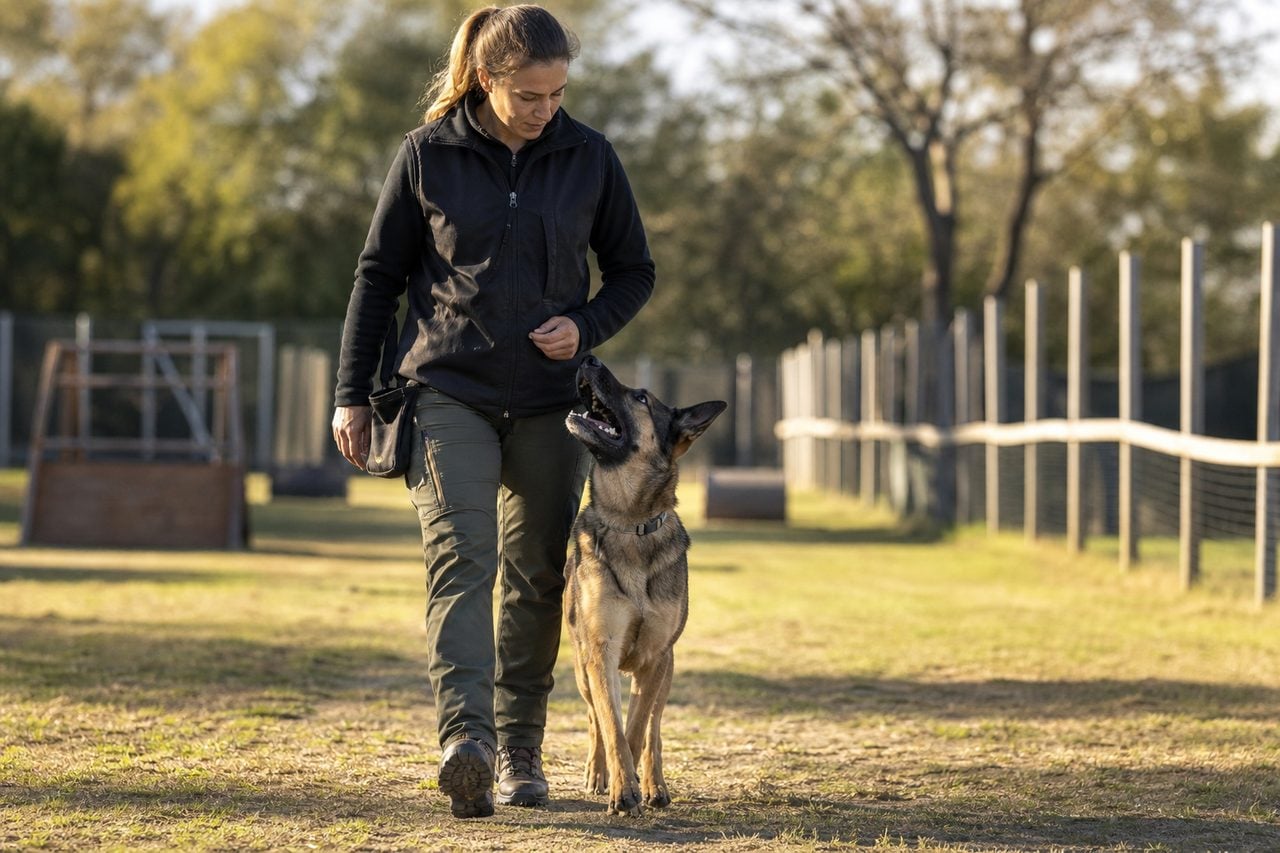
Board-and-train programs ask a lot of a family: you hand your dog to a professional for days or weeks, trusting that the time away will come back to you as a calmer, more responsive companion. For many Kalamazoo households — whether you live in the city near Western Michigan University, out toward Richland and Gull Lake, or on an acreage in the townships between Vicksburg and Paw Paw — that trade can be worth it. It concentrates training into a short window, puts a full-time handler on your dog’s toughest habits, and often accelerates progress that would take months of once-a-week classes.
- What board-and-train actually means
- When board-and-train is the right call — and when it isn't
- How a typical program is structured
- Choosing a board-and-train provider in the Kalamazoo area
- What board-and-train costs — and what you're paying for
- Preparing your dog — and yourself — for the stay
- Making the results last after your dog comes home
- Reviewed trainers
- FAQ
But board-and-train is also the format where the gap between a good program and a poor one matters most, because you are not in the room to see how your dog is being handled. This guide explains how board-and-train actually works, what it is genuinely good for, the questions that separate careful facilities from careless ones, and how to keep the results once your dog comes home. It is written to help you shop wisely across the Kalamazoo area, not to push any single trainer.
Use it as a checklist. The directory below lists local options; the judgment about which one fits your dog is yours to make, and this article is meant to sharpen that judgment.
What board-and-train actually means
Board-and-train is a program in which your dog lives at a trainer’s facility (or in the trainer’s home, in a smaller in-home model) for a set stretch of time — commonly two to four weeks, sometimes longer for complex cases. During that stay the trainer works your dog daily, building obedience, manners, and often addressing a specific problem behavior you flagged at intake. The premise is simple: a professional working with your dog every day, in a controlled environment, can move faster than a busy owner squeezing in practice between work and errands.
There are meaningfully different versions of this. A facility-based board-and-train houses dogs in kennels or runs and runs structured sessions throughout the day. An in-home or day-train hybrid keeps the dog in a more house-like setting, or has the dog stay days and return home nights. Some Kalamazoo-area trainers run compact two-week manners programs; others offer longer stays for reactivity, serious leash issues, or foundation work on a young dog. None of these is automatically better — the right one depends on your dog’s temperament and the problem you are solving.
What board-and-train is not is a way to outsource your relationship with your dog. The dog learns skills at the facility, but those skills only stick if you learn to cue and maintain them at home. The best programs treat the boarding stay as the first half of the job and your handoff training as the essential second half. If a program treats your involvement as optional, that is a warning sign, not a convenience.
When board-and-train is the right call — and when it isn't
Board-and-train tends to make the most sense in a handful of situations. If you have a time constraint — a new baby arriving, a move, a demanding work season — concentrating training into a residential window can get a dog to a workable baseline faster than you could manage alone. If your dog has a specific, stubborn issue like pulling so hard that walks near your Kalamazoo neighborhood have become impossible, or door-dashing, or ignoring a recall in open space, a focused program with a skilled handler can break the pattern more decisively than scattered practice.
It also suits owners who feel out of their depth. Plenty of capable, loving people simply don’t yet have the mechanical timing or confidence to train a strong or bright dog, and watching a professional set the foundation — then being coached to continue it — is a legitimate path. And for young dogs, a short foundation program can install house manners, crate comfort, and basic obedience during a formative window.
There are cases where board-and-train is the wrong tool, or at least not the first one. If your dog’s issue is rooted in fear or anxiety, sending them away from you — the one source of security they have — can backfire unless the program is explicitly built around behavior modification with a gentle, systematic approach. If the problem is really an owner-handling habit (the dog behaves fine for others but not for you), then private lessons that train you may deliver more than a residential stay. And if you cannot commit to the follow-through at home, no program will hold; the results will erode within weeks. Be honest with yourself on that last point before you spend the money.
A good local trainer will tell you when board-and-train isn’t the right fit for your situation. That candor — turning away business that won’t serve you — is one of the better signs you’ve found someone worth hiring.
How a typical program is structured
While specifics vary, most well-run board-and-train programs share a shape. It starts with an intake and evaluation: the trainer assesses your dog’s temperament, current skills, and the target behaviors, and sets realistic goals. Vague promises at this stage (“we’ll fix everything”) are less reassuring than a trainer who names two or three concrete outcomes and explains how they’ll get there.
During the stay, expect multiple short sessions per day rather than one marathon block — dogs learn better in frequent, focused reps with rest between. Good facilities layer in real-world exposure: practicing obedience with distractions, in different locations, around other dogs or people, so the skills generalize beyond the training yard. A dog that only performs in the quiet of the kennel hasn’t learned much you can use on a busy sidewalk downtown or at a trailhead near Al Sabo Land Preserve.
You should also expect communication during the stay — photos, short videos, or written updates showing progress. This isn’t just reassurance; it lets you see the methods being used and how your dog is responding. A program that goes silent for two weeks and then hands back a “finished” dog gives you no window into what happened.
The stay should end with a transfer or go-home session — often several — where the trainer teaches you the cues, timing, and handling that make the dog respond for you. This is the part owners most often undervalue and the part that most determines whether the investment holds. Ask, before you enroll, exactly how much go-home coaching is included and whether follow-up sessions are available.
Choosing a board-and-train provider in the Kalamazoo area
Because your dog will be in someone else’s hands day and night, vetting matters more here than in any other training format. Start by asking to see the facility. A trainer confident in their setup will welcome a tour — you want to see clean, secure kennels, safe fencing, adequate space, and dogs that look relaxed rather than shut down. Reluctance to let you see where your dog will live is a serious red flag.
Ask how they train, in plain terms, and listen for a clear, consistent answer. You want a trainer who can explain their methods, tell you what happens when your dog gets something right and what happens when it gets something wrong, and describe how they’d handle your dog specifically. Be wary of anyone who won’t give a straight answer, promises guaranteed results, or dismisses your questions. Ask about their experience and continuing education — how long they’ve worked with dogs like yours, what problems they specialize in, and whether they pursue ongoing professional development.
Practical logistics matter too. Ask about daily routine (how much training, exercise, rest, and enrichment each dog gets), staffing and supervision (who’s on site overnight), vaccination and health requirements, and what happens if your dog gets sick or injured during the stay. Clarify the go-home support and whether there’s any follow-up if a behavior resurfaces after your dog returns.
Location is a real consideration in this region. Some Kalamazoo families choose a trainer close to home in the city or near Portage; others are happy to drive a dog out to a rural facility toward Schoolcraft, Vicksburg, or Otsego where there’s more land for real-world proofing. Neither is inherently better — but factor in the drive for the go-home sessions and any follow-up visits, since those repeat trips are part of making the program work.
Finally, trust your read of the person. You are leaving a family member with them. If a trainer is patient with your questions, honest about what they can and can’t do, and clearly cares about the dogs in their care, that counts for a great deal.
What board-and-train costs — and what you're paying for
Board-and-train is typically the most expensive training format, and for understandable reasons: you’re paying for full-time professional labor, room and board, and the concentrated results those buy. Pricing in any market varies widely with program length, the trainer’s experience, the facility, and the complexity of your dog’s needs, so this guide won’t quote figures — get current quotes directly from the providers listed below and compare like with like.
What’s more useful than a single number is understanding what should be included so you can compare fairly. When you gather quotes, confirm: the length of stay and number of training sessions; boarding, food, and daily care; the go-home transfer sessions; and any follow-up support or refresher visits. Two programs with very different prices may actually be offering very different things — a two-week manners course is not the same product as a month-long behavior program with lifetime follow-up, and comparing them on price alone is misleading.
Think about value rather than sticker price. A cheaper program that leaves you without the coaching to maintain the results can cost more in the end than a thorough one, because the training fades and you’re back where you started. Ask what happens if progress doesn’t hold: does the trainer offer follow-up, and on what terms? A provider who stands behind their work — not with a hollow “guarantee,” but with genuine post-program support — is offering something worth paying for.
Also weigh the alternative honestly. For some dogs and some owners, a series of private lessons or a group class will reach the same goal for less money, if you have the time and consistency to do the daily work. Board-and-train buys speed and expert handling; whether that’s worth the premium depends on your specific situation.
Preparing your dog — and yourself — for the stay
A little preparation before the boarding stay makes the whole program go more smoothly. Start with the practical logistics: confirm your dog is current on the vaccinations the facility requires, gather any medications with clear instructions, and note feeding routines, allergies, and quirks the trainer should know. The more accurate a picture you give at intake, the better the trainer can tailor the work — this is not the moment to downplay a behavior problem out of embarrassment. Trainers have seen it all, and honesty about your dog’s real issues gets you a better result.
Think through the goals you want before you drop your dog off, and write them down. It’s easy to say “I want a better-behaved dog,” but a good program works from specifics: stop pulling on walks, come reliably in the backyard, settle calmly when guests arrive, stop bolting for the door. Bringing two or three concrete priorities lets you and the trainer agree on what success looks like, and gives you a clear yardstick when your dog comes home.
Prepare emotionally, too. It’s normal to feel uneasy leaving your dog, especially the first time, and reputable trainers understand that — it’s one reason regular updates during the stay matter so much. Choose a facility you genuinely trust so that the separation feels like a considered decision rather than an anxious gamble. If a tour, a straight conversation about methods, and clear communication have earned your confidence, the stay is far easier to sit with.
Finally, prepare your home and household for the dog’s return. The training only holds if the environment supports it, so think ahead about the rules everyone will enforce, the routine you’ll keep, and any management changes — a baby gate, a consistent crate spot, a set walking schedule. Walking your dog into a household that’s ready to reinforce the new skills is a large part of why some families keep their results and others watch them slip. The stay is the trainer’s job; the homecoming is yours, and it starts before your dog is even back.
Making the results last after your dog comes home
The single biggest predictor of whether board-and-train pays off isn’t the program — it’s what you do in the weeks after your dog comes home. A dog returns from a good program with real skills, but those skills live in a context the dog associates with the trainer. Your job is to rebuild them in your own world: your living room, your yard, your walking route, your family’s rhythms.
Start by using the cues exactly as the trainer taught them — same words, same signals, same expectations. Dogs are literal; a command that worked at the facility can fall apart at home simply because you’re saying it differently or accepting a sloppier response. Practice in short, frequent sessions, the same way the trainer did, and gradually add the distractions of real life: guests at the door, squirrels in the yard, other dogs on a walk near your neighborhood.
Be consistent across the household. If one person enforces the rules and another lets them slide, the dog learns that the rules are negotiable, and the training unravels. Everyone who handles the dog should know the cues and use them the same way. This is where families most often undo good work — not through neglect, but through well-meaning inconsistency.
Keep up the exercise and enrichment. Many behavior problems are, at root, a bored or under-stimulated dog with energy to burn. The trainer kept your dog busy; you’ll need to as well. Kalamazoo gives you plenty of options — quiet weekday walks on the Kal-Haven Trail, sniffy exploratory outings, and open space in the townships once your recall is solid enough to trust. Structured activity does as much for behavior as any command.
Finally, use the follow-up. If your program includes refresher sessions or check-ins, take them, especially if a behavior starts creeping back. Catching a small regression early is far easier than re-training after a habit has re-entrenched. A good trainer expects some questions after go-home; reaching out isn’t a failure, it’s part of the process.
Board & Train in Kalamazoo: Local Options & Nearest Specialists
A few Kalamazoo-area trainers can help with milder board & train needs:
- Michigander Kennels — 4.8★ (53 reviews)
- Gillette Kennels — 4.7★ (168 reviews)
Nearest board & train specialists — Grand Rapids
For complex cases, some families travel to the larger pool of specialists in the Grand Rapids area for an assessment or a board-and-train stay. Top-reviewed options:
- Kingseed Kennels & Dog Training — 5.0★ (140 reviews)
- Red Sky Dog Training, LLC — 5.0★ (22 reviews)
- Ganderwood LLC — 5.0★ (1 review)
- West Michigan K9 — 4.9★ (337 reviews)
- Lakeshore K9 Training — 4.9★ (70 reviews)
- Pine Hill Kennel & Dog Training — 4.9★ (51 reviews)
- Kona’s K9 Retreat — 4.9★ (38 reviews)
- House of Paws Dog Training — 4.6★ (9 reviews)
See all Grand Rapids board & train trainers →
Frequently Asked Questions
How long does a board-and-train program usually last?
Most programs run somewhere between two and four weeks, though it varies with your dog’s needs and the goals you set. A basic manners or foundation program may be on the shorter end; work on stubborn issues like reactivity or a serious leash problem often takes longer. During intake, ask the trainer to explain why they’re recommending a particular length for your dog specifically, rather than accepting a one-size-fits-all timeframe.
Will my dog forget me or bond only with the trainer?
No. A few weeks at a training facility won’t erase your relationship with your dog, and reputable trainers work to keep dogs balanced and social rather than dependent on one handler. The more relevant concern is the opposite — that skills learned with the trainer don’t automatically transfer to you. That’s exactly why the go-home coaching sessions matter, and why you should choose a program that teaches you to handle the dog, not just returns a trained dog.
Is board-and-train better than group classes or private lessons?
It’s different, not universally better. Board-and-train buys speed and full-time professional handling, which helps when you’re short on time or the problem is stubborn. Group classes and private lessons cost less and build your own handling skills, but require consistent weekly effort from you. If your dog’s issue is fear-based, or the real problem is how the dog responds to you specifically, private lessons may serve better. A good local trainer will tell you honestly which format fits your situation.
How do I know a Kalamazoo-area facility is safe and reputable?
Ask to tour the facility before booking — you want clean, secure kennels, safe fencing, and relaxed-looking dogs, and any reluctance to show you around is a red flag. Ask how they train in plain language and expect a clear, consistent answer. Confirm supervision (who’s on site overnight), vaccination requirements, their plan if your dog gets sick or injured, and what go-home support is included. Trust your read of the person; you’re leaving a family member in their care.
What happens if the training doesn't hold after my dog comes home?
Most regressions come from inconsistent follow-through at home rather than a failure of the program — skills fade when cues aren’t maintained or household members enforce rules differently. Use the exact cues the trainer taught, keep everyone consistent, and practice in short frequent sessions. If a behavior still creeps back, reach out to the trainer; many programs include follow-up or refresher sessions. Catching a small regression early is far easier than re-training an entrenched habit.
Is my dog a good candidate for board-and-train?
Good candidates include dogs with a specific stubborn issue, owners under a real time constraint, and young dogs needing a foundation. It’s less suitable when the problem is fear or anxiety — sending an anxious dog away can backfire unless the program is built around gentle behavior modification — or when the issue is really an owner-handling habit that private lessons would address better. Discuss your dog’s temperament honestly at intake; a trustworthy trainer will tell you if it isn’t the right fit.
Related: read our complete board & train guide or the full Kalamazoo dog training overview.
Ready to find the right board & train pro in Kalamazoo?