
Puppy Socialization in Saginaw, MI
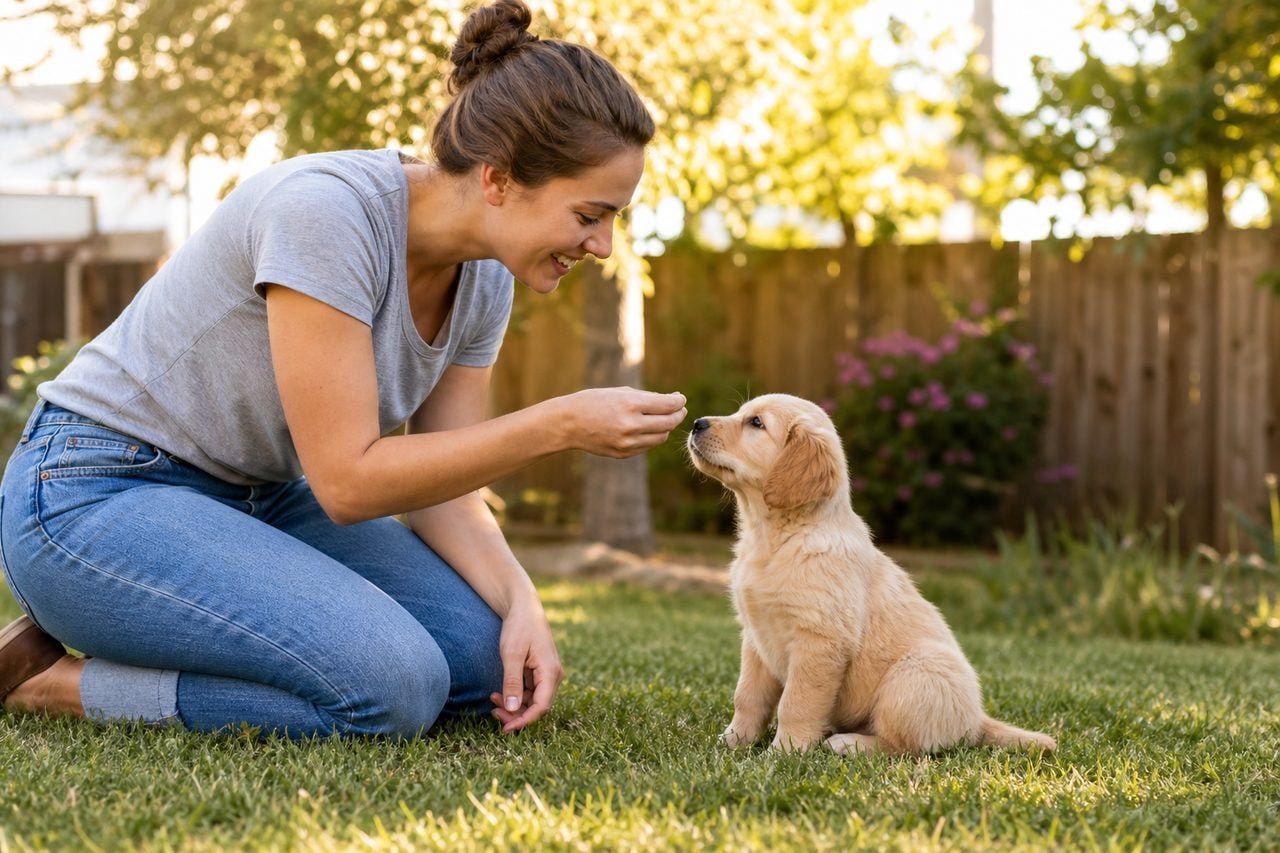
The window for shaping a confident, easygoing dog is shorter than most new owners expect. Between roughly three and sixteen weeks of age, a puppy’s brain is unusually open to new experiences, and the sights, sounds, surfaces, and social encounters it meets during that period lay the groundwork for how it will handle the world as an adult. For families across the Saginaw, Bay City, and Midland Tri-Cities, that means the first few weeks after bringing a puppy home matter far more than any single obedience class ever will.
Puppy socialization is not the same as puppy training. Training teaches specific behaviors; socialization teaches a puppy that the world is a safe, predictable place worth engaging with calmly. Done well, it prevents the fear, reactivity, and anxiety that send so many adolescent dogs back to trainers a year later. This guide explains what good socialization looks like in the Saginaw Valley, how to do it safely before your puppy is fully vaccinated, and how a qualified local trainer or class fits into the picture.
The Tri-Cities offer a genuinely useful range of environments for this work, from the quiet residential streets along the Saginaw River to the busier stretches of downtown Midland and the tourist bustle of Frankenmuth. Used thoughtfully, that variety is an advantage.
Why the First Sixteen Weeks Set the Course
A puppy’s early socialization period is a developmental stage, not a training milestone you can postpone. During these weeks, novel experiences are catalogued as normal with relatively little effort. After the window begins to close, the same experiences are more likely to be met with caution or fear, and undoing that caution takes far more time and skill than preventing it would have.
This is why waiting until a puppy has finished its full vaccination series before introducing it to the world is a mistake many well-meaning owners make. By sixteen weeks, the most valuable part of the socialization window has already passed. The widely cited position of veterinary behavior professionals is that the behavioral risks of under-socialization generally outweigh the controlled infectious-disease risks of thoughtful early exposure, provided you take sensible precautions.
What does that mean in practice for a family in Saginaw or Bay City? It means you begin socializing the day the puppy comes home, using controlled settings rather than high-traffic public ground where the vaccination status of other dogs is unknown. Carry your puppy through a hardware store or the edge of a farmers market so it experiences carts, crowds, and echoing ceilings without touching contaminated pavement. Invite calm, vaccinated adult dogs from friends and family to your yard. Sit on a bench near the Saginaw Valley Rail Trail and let your puppy watch cyclists, joggers, and strollers pass from a safe distance.
The goal throughout is exposure at a distance and intensity the puppy can handle without becoming overwhelmed. A puppy that is frightened by an experience is not being socialized to it; it is being sensitized against it. Reading your puppy’s body language, and knowing when to create more space, is the single most important skill during this period.
What Balanced Socialization Actually Covers
Good socialization is broader than meeting other dogs, which is the part most owners fixate on. A well-rounded plan deliberately introduces a puppy to several distinct categories of experience, each in small, positive doses.
People of all kinds. Men with deep voices and hats, children who move quickly and unpredictably, people using wheelchairs or canes, delivery workers in uniforms. Puppies that only meet calm adult women, for example, often become wary of everyone else.
Other dogs, chosen carefully. Quality matters far more than quantity. A handful of calm, well-mannered adult dogs and appropriately matched puppies teach good social skills. A chaotic free-for-all can teach a puppy to be overwhelmed or overly aroused around other dogs.
Surfaces and environments. Grass, gravel, metal grates, wobbly surfaces, wood chips, tile, and the sand along Bay City State Park’s shoreline all feel different underfoot. A puppy that has walked on many surfaces rarely balks at new ones later.
Sounds. Traffic, thunder, vacuum cleaners, kitchen noises, fireworks in the distance. Recorded sound programs played quietly at home, paired with treats or meals, can gently build tolerance to noises that are hard to arrange on demand.
Handling. Regularly touch your puppy’s paws, ears, mouth, and tail, and pair it with something pleasant. This makes future nail trims, vet exams, and grooming appointments dramatically easier.
A structured puppy class or a private plan from a local trainer helps because it ensures none of these categories get quietly skipped. Owners tend to over-index on the experiences their puppy already enjoys and avoid the ones it finds mildly uncomfortable, which is precisely backward.
Using the Tri-Cities as Your Training Ground
One advantage of raising a puppy in the Saginaw Valley is the sheer variety of environments within a short drive, each offering a different level of intensity. The skill is matching the setting to your puppy’s current confidence.
Start quiet. The residential neighborhoods along the Saginaw River, or a calm corner of a park in Freeland near the Tri-City center, give a young puppy space to observe without being crowded. As confidence grows, step up gradually. The Saginaw Valley Rail Trail is well suited to intermediate work: predictable foot and bicycle traffic, open sightlines, and easy options to create distance when needed.
The Chippewa Nature Center near Midland offers natural surfaces, wildlife scents, and open space that build a puppy’s comfort with the outdoors, though you should keep to leashed, appropriate areas and respect posted rules. For the busier end of the spectrum, downtown Midland and downtown Bay City provide sidewalks, storefronts, and moderate crowds. Frankenmuth, with its heavy tourist foot traffic, is genuinely challenging and is best reserved for a puppy that has already built solid confidence in calmer settings.
A useful rule is that a socialization outing should end while your puppy is still doing well, not after it has become tired or overstimulated. Short, frequent, positive sessions beat long, ambitious ones. Two ten-minute outings in a calm setting will usually accomplish more than one exhausting trip into a crowd your puppy is not yet ready for.
Weather in mid-Michigan also shapes the plan. Long winters mean much of the socialization window for a fall or winter puppy will happen indoors, which makes controlled indoor exposures, carefully chosen indoor-friendly businesses, and a good puppy class more important during the colder months.
How a Local Class or Trainer Adds Value
Plenty of socialization can and should happen on your own, but a structured puppy program adds three things that are hard to replicate solo: a controlled environment with health-screened puppies, an experienced eye on your puppy’s body language, and a curriculum that keeps you from skipping the uncomfortable categories.
A well-run puppy class is not primarily an obedience class. It typically includes short, supervised play sessions matched by size and temperament, gentle exposure to novel objects and surfaces, handling exercises, and coaching for owners on reading canine body language. The trainer’s job is as much to educate you as to work with your puppy, because the vast majority of socialization happens in the many hours between classes.
When you evaluate options in the Saginaw, Bay City, or Midland area, look for a few concrete markers of quality. The class should require proof of age-appropriate vaccination and keep group sizes small enough to supervise. Play should be actively managed, with the trainer interrupting when one puppy is overwhelming another rather than letting them sort it out. The methods should be reward-based; there is no place for fear or force in shaping a young puppy’s view of the world. And the trainer should be comfortable explaining their approach in plain terms.
The directory listings on this page can help you compare nearby options. Because credentials and philosophies vary, it is worth a short conversation with any trainer before enrolling, asking how they structure play, how they handle a nervous puppy, and what they expect you to work on at home between sessions.
Common Mistakes and How to Avoid Them
Even attentive owners fall into a few predictable traps during the socialization window. Knowing them in advance is half the battle.
Flooding instead of exposing. Dropping a puppy into an overwhelming situation, a crowded Frankenmuth sidewalk on a summer Saturday, for instance, in the belief that it needs to “get used to it” often backfires. The puppy learns the world is frightening. Build up to intensity gradually.
Forcing greetings. Allowing every stranger to loom over and grab your puppy, or insisting it approach a dog it is wary of, teaches it that its discomfort will be ignored. Let your puppy approach on its own terms and give it the choice to retreat.
Over-focusing on dog-to-dog play. A puppy does not need to greet every dog it sees. In fact, a dog that expects to play with every dog on the trail becomes frustrated and reactive when it can’t. Calm neutrality around other dogs is a more useful adult skill than exuberant greeting.
Skipping handling and grooming prep. The consequences of this show up months later at the vet or groomer. A few minutes of paw and ear handling now saves a great deal of stress later.
Assuming the window stays open. The most costly mistake is simply waiting. Every quiet week of no new experiences during the prime window is a week you cannot get back. If your puppy is home, the clock is running.
If at any point you see persistent fear, a puppy that shrinks from mild everyday things, freezes, or reacts intensely and cannot recover, treat it as a reason to consult a qualified trainer or your veterinarian promptly rather than to push harder. Early fear is far easier to address than entrenched fear.
Reading Your Puppy's Body Language
Everything in socialization depends on one skill above all others: your ability to tell, moment to moment, whether your puppy is comfortable or overwhelmed. A puppy cannot tell you in words that an experience is too much, but its body communicates constantly, and learning to read those signals is what separates helpful exposure from harmful flooding.
A relaxed, engaged puppy moves with loose, wiggly body language, takes treats readily, explores with curiosity, and recovers quickly from small surprises. It chooses to move toward interesting things and settles again afterward. That is the state in which learning happens, and it is the state you want to keep your puppy in throughout a socialization outing.
The signs that a puppy is moving past its comfort zone are often subtle at first, and missing them is how well-meaning owners accidentally sensitize a puppy against something. Watch for a puppy that suddenly refuses treats it would normally take, that yawns or licks its lips when nothing food-related is happening, that turns its head or body away, tucks its tail, lowers its posture, or tries to move behind you. Trembling, freezing, or a reluctance to move forward are stronger signals still. A puppy showing these is telling you it needs more distance from whatever is worrying it.
The right response is never to force the issue. Calmly increase the distance, let your puppy observe from a place where it feels safe, and let it re-engage on its own terms. If it settles and grows curious again, you can gently continue; if it stays worried, that outing has done its job and it is time to end on a calm note. Over hundreds of these small, correct decisions across the socialization window, you build a puppy that trusts you to keep it safe, and that trust is itself one of the most valuable things socialization produces. A good puppy class will actively coach you on this skill, because it is far easier to learn with an experienced eye pointing out the signals in real time.
Building a Simple Week-by-Week Plan
A socialization plan does not need to be elaborate. A simple checklist, worked through steadily, beats an ambitious plan that never gets executed. The idea is to touch each category, people, dogs, surfaces, sounds, handling, and environments, a little at a time across the weeks your puppy is home during the window.
In the earliest weeks, keep almost everything close to home and low-key: calm visitors, gentle handling paired with treats, a walk on three or four different surfaces in your yard and neighborhood, and quiet observation of the world from a safe vantage point such as a bench along a residential stretch of the Saginaw River. Introduce recorded household and outdoor sounds at low volume during meals.
As vaccinations progress and confidence grows, widen the circle. Add short outings to quieter public spaces, the calmer sections of the Saginaw Valley Rail Trail or a low-traffic corner near the Chippewa Nature Center, and controlled introductions to a few known, vaccinated dogs. Begin carrying your puppy through indoor businesses that welcome dogs so it banks positive experiences with novel places without contact with unknown pavement.
Toward the end of the window, once your puppy has a foundation of calm confidence, you can begin working in busier settings: downtown Midland or Bay City sidewalks, and eventually, if your puppy is ready, the bustle of Frankenmuth. Throughout, keep sessions short, watch your puppy’s body language, and end on a good note.
A local puppy class slots neatly into this framework by covering the dog-to-dog and novel-object categories in a controlled way, while you handle the environmental and people exposures around the Tri-Cities on your own schedule. The two reinforce each other, and together they give a Saginaw Valley puppy the best possible start.
Reviewed Puppy Socialization Trainers in Saginaw
These reviewed Saginaw-area trainers from our directory handle puppy socialization. Each links to a full profile with specialties, certified credentials, reviews, and contact info:
- Paws & Beyond — 5.0★ (81 reviews)
- Kaybee’s K9 Training & Spa — 4.7★ (75 reviews)
- SHILOH K9 OBEDIENCE TRAINING & BOARDING CENTER, LLC — 3.8★ (166 reviews)
- Pawsonal Training — 5.0★ (102 reviews)
- Unleashed Dog Training — 5.0★ (58 reviews)
- Sit Stay Play Michigan — 5.0★ (46 reviews)
- K9 Optimal Training Solutions — 5.0★ (42 reviews)
- Tri Cities Dog Training Club of Saginaw Bay (TCDTC) — 5.0★ (16 reviews)
- Apache Acres — 5.0★ (10 reviews)
- Classic K9 — 5.0★ (1 review)
See all Saginaw puppy socialization trainers →
Frequently Asked Questions
When should I start socializing my puppy?
As soon as your puppy comes home, which is usually around eight weeks. The most valuable part of the socialization window closes near sixteen weeks of age, so waiting until the full vaccination series is complete generally means missing the best opportunity. The safe approach is to begin immediately using controlled settings, calm and vaccinated dogs you know, and carried or distance exposures, rather than high-traffic public ground where you can’t verify other dogs’ health.
Is it safe to socialize my puppy before all its shots are done?
Yes, with sensible precautions. Veterinary behavior guidance generally holds that the behavioral risks of under-socialization outweigh the controlled infectious-disease risk of thoughtful early exposure. Favor clean, controlled environments, carry your puppy in busy or unknown areas, invite known vaccinated dogs to your yard, and avoid places where many unknown dogs eliminate. Confirm the specifics with your own veterinarian, since your puppy’s situation may warrant particular caution.
How is puppy socialization different from obedience training?
Obedience training teaches specific behaviors like sit, stay, and recall. Socialization teaches your puppy that the world, its people, sounds, surfaces, and other animals, is safe and predictable. Both matter, but socialization is time-sensitive because of the developmental window, while obedience can be built at almost any age. A good puppy class often blends light obedience with structured socialization, but the socialization component is the one you cannot postpone.
Where in the Tri-Cities can I socialize my puppy?
Match the setting to your puppy’s confidence. Start in quiet residential areas along the Saginaw River or calm parks near Freeland. Step up to the Saginaw Valley Rail Trail and the Chippewa Nature Center for predictable, moderate activity. Reserve busier places like downtown Midland, downtown Bay City, and especially tourist-heavy Frankenmuth for a puppy that has already built solid confidence. Keep outings short and positive, and always give your puppy room to retreat.
What should I look for in a puppy socialization class?
Look for small class sizes, a requirement for age-appropriate vaccination, and actively supervised play matched by size and temperament rather than a free-for-all. Methods should be reward-based, with no fear or force. A quality class also coaches you on reading canine body language and gives you homework, since most socialization happens between sessions. It is worth a short conversation with any trainer before enrolling to understand their approach.
What if my puppy seems fearful during socialization?
Occasional caution is normal, but persistent fear, a puppy that freezes, shrinks from ordinary things, or reacts intensely and can’t recover, is a signal to slow down and get help rather than push harder. Create more distance from whatever worries your puppy, keep experiences well within its comfort level, and consult a qualified reward-based trainer or your veterinarian promptly. Early fear is much easier to resolve than fear that has had months to become entrenched.
Related: read our complete puppy socialization guide or the full Saginaw dog training overview.
Ready to find the right puppy socialization pro in Saginaw?