
Board & Train in Saginaw, MI
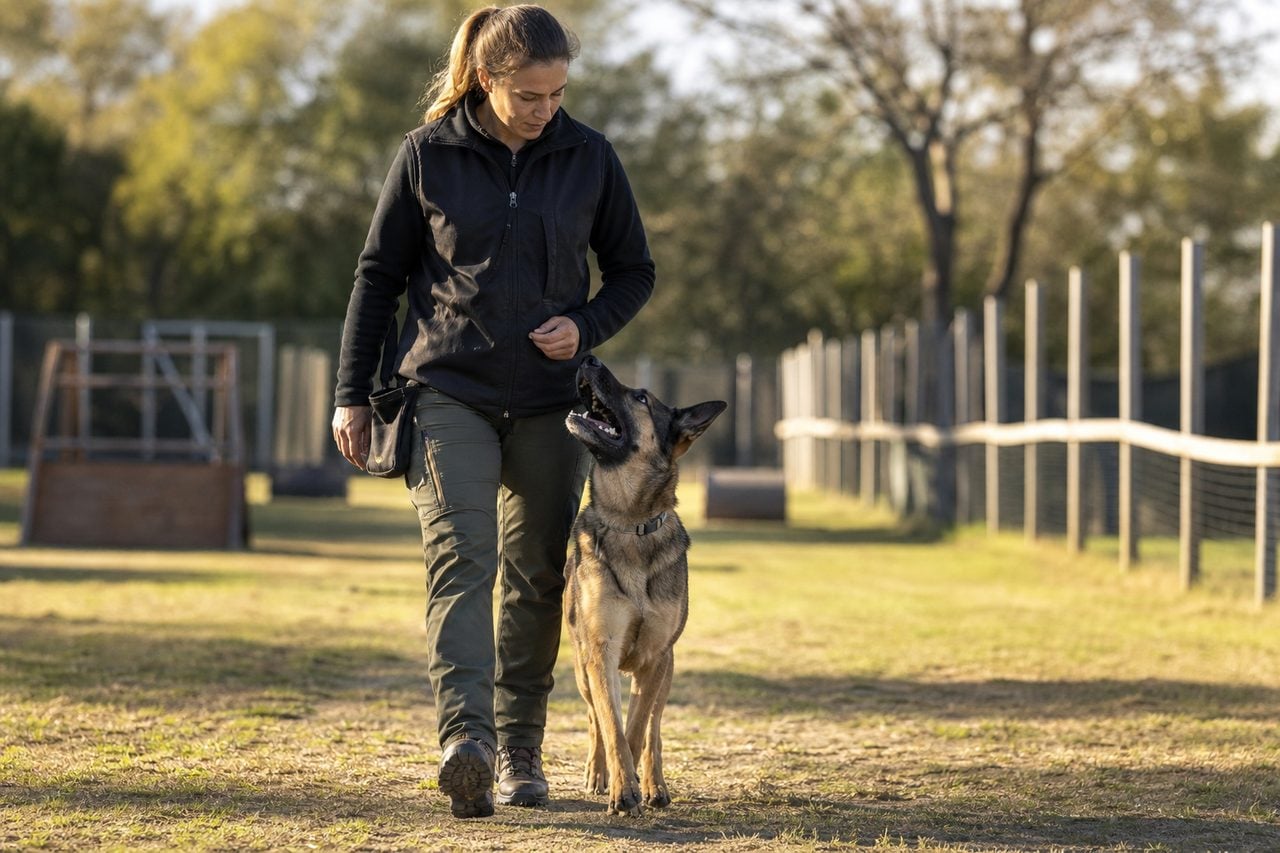
Board and train is one of the most misunderstood options in dog training, and for many Tri-Cities families it is also one of the most useful. In a board-and-train program, your dog lives with a professional trainer or at a training facility for a set number of weeks, working through structured lessons every day while you go about your normal routine in Saginaw, Bay City, or Midland. Instead of squeezing practice into the margins of a busy week, the dog gets consistent, full-time instruction from someone who does this for a living.
- What Board and Train Actually Means
- When Board and Train Makes Sense for a Tri-Cities Household
- How to Vet a Board-and-Train Program Near Saginaw
- The Transition Home Is Where Programs Succeed or Fail
- What Board and Train Realistically Costs, and What Affects It
- Alternatives Worth Considering Before You Commit
- Reviewed trainers
- FAQ
That intensity is the appeal, and it is also the reason board and train deserves a careful look before you commit. Handing your dog to someone else for two, three, or four weeks is a real decision, and the quality of programs across the Saginaw region varies widely. Some are excellent, patient, and transparent. Others rush results with harsh methods and hand back a dog who behaves for the trainer but not for you.
This guide walks through how board and train actually works, when it makes sense for a Tri-Cities household, what to ask before you enroll, and how to make the results last long after your dog comes home to the farm country near Hemlock or a neighborhood along the Saginaw River.
What Board and Train Actually Means
Board and train is a residential training model. Your dog stays with a trainer, either in the trainer’s own home or at a dedicated boarding-and-training facility, for a defined stretch of time, typically anywhere from two to six weeks. During that stay the dog works through a curriculum every day, building skills through repetition and consistency that would take a busy owner months to replicate at home.
The daily structure is what sets board and train apart from ordinary boarding. A good program runs multiple short sessions a day, mixing obedience, impulse control, leash work, and real-world exposure. The dog might practice a solid stay in the morning, work on loose-leash walking around a quiet street in Freeland at midday, and reinforce recall in the afternoon. Between sessions the dog rests, plays, and decompresses, because a tired, over-drilled dog does not learn well.
It helps to understand what board and train is not. It is not a kennel where your dog is simply housed and fed. It is not a magic reset button that permanently erases a behavior problem with no further effort from you. And it is not a substitute for your own involvement. The trainer builds the foundation; you are the one who has to maintain it once the dog is back home in Saginaw or along the Bay Shore. Programs that promise a finished, problem-free dog with zero follow-up are overselling.
Across the Tri-Cities you will find a mix of formats. Some trainers keep only one or two dogs at a time in a home setting, which suits dogs who do better with quiet and individual attention. Others run larger facilities with structured group time, which can be valuable for dogs who need to learn to focus around distractions. Neither is automatically better; the right fit depends on your dog’s temperament and the specific issues you want addressed.
When Board and Train Makes Sense for a Tri-Cities Household
Board and train is not the right first step for every dog, but there are situations where it earns its cost. The clearest case is the household that simply does not have the time or consistency to run a training program at home. If both adults work full time in Midland or commute into Saginaw, and the evenings are a scramble of dinner, kids, and chores, honest self-assessment matters. A dog who gets ten inconsistent minutes of practice three nights a week will progress slowly, if at all. A concentrated residential program can compress that timeline dramatically.
It also makes sense when you are facing a specific, well-defined goal on a deadline. Maybe you are about to move, expecting a baby, or hosting a large gathering in Frankenmuth and you need reliable manners in place quickly. A focused board-and-train stay aimed at a concrete outcome, such as a dependable place command or calm greeting behavior, can deliver more in three weeks than a year of catch-as-catch-can effort.
Certain behavior challenges lend themselves to residential work as well. Dogs who are highly reactive on leash, who bolt out doors, or who have deeply ingrained habits often benefit from an environment where every single repetition is handled correctly by someone who knows what they are doing. In a home where mistakes are frequent, unwanted behavior gets accidentally rehearsed and reinforced. A skilled trainer breaks that cycle.
That said, be honest about the cases where board and train is the wrong tool. Puppies in the middle of critical socialization windows usually do better staying with their families and attending group classes, because the bond and the daily exposure matter more than intensive drilling. Serious aggression or severe fear cases should be evaluated carefully, and sometimes referred to a veterinary behaviorist, before any residential program is considered. And if the real issue is that the household has not decided what rules the dog should follow, no amount of boarding will fix that until the humans align.
How to Vet a Board-and-Train Program Near Saginaw
Because your dog will be living somewhere else and out of your sight for weeks, vetting the program thoroughly is not optional. The single most important thing you can do is visit in person before you enroll. Tour the facility or the trainer’s home. Look at where the dogs sleep, where they exercise, and how clean and secure everything is. A trainer who is proud of their operation will welcome the visit. One who is evasive about letting you see the space is telling you something important.
Ask directly about training methods. You want a trainer who can explain, in plain language, how they teach behaviors and how they respond to mistakes. Be cautious of anyone who relies heavily on intimidation, who cannot describe what they do without vague talk of dominance, or who dismisses your questions. Reputable trainers are transparent about their approach and comfortable discussing the tools they use and why.
Communication during the stay is another differentiator. The best programs send regular updates, photos, or short videos so you can see your dog working and progressing. This is not just reassurance; it lets you spot whether the training matches what was promised. If a trainer goes silent for two weeks and then hands your dog back at the end, you have no way to know how the process actually went.
Finally, insist on a clear plan for the transition home. This is where many programs fall short. Ask what the handoff looks like, how many follow-up or transfer sessions are included, and whether the trainer will come to your home in Bay City or the Hemlock area to see how the dog behaves in the real environment. A program that includes owner coaching and follow-up is worth considerably more than one that simply returns a trained dog and wishes you luck.
- Visit the facility in person and inspect where dogs sleep and exercise.
- Ask the trainer to explain their methods and how they handle mistakes.
- Confirm you will receive regular updates during the stay.
- Get the transition-home plan in writing, including follow-up sessions.
- Ask what happens if the program does not achieve the agreed goals.
The Transition Home Is Where Programs Succeed or Fail
Here is the part of board and train that gets the least attention and matters the most. Your dog will come home understanding commands and behaving well for the trainer, in the trainer’s environment, on the trainer’s terms. None of that automatically transfers to you, your house, and your routine unless the handoff is done deliberately. A dog trained in a calm facility outside Chesaning still has to learn that the same rules apply in a busy living room with kids, guests, and the doorbell going off.
The mechanism that makes results stick is called the transfer, and it depends on you learning the dog’s new skills as thoroughly as the dog learned them. This is why owner involvement in the final phase is non-negotiable. A good program will teach you the exact commands, the timing, the hand signals, and the way to reward and correct so that you become consistent with what the dog already knows. Without that, the dog quickly figures out that the old rules apply at home and the new ones only applied at the trainer’s, and the behavior unravels within weeks.
Plan for a deliberate reintegration period once your dog is back in Saginaw. Keep the routine tight and predictable at first. Practice the new skills in short, frequent sessions in your own home and yard before you test them in high-distraction places like a park along the river or a busy sidewalk in downtown Midland. Reintroduce freedoms gradually as the dog proves reliable rather than dropping straight back into the old free-for-all.
Set realistic expectations for the first couple of weeks home. There is often a small dip as the dog adjusts to a new handler and environment. This is normal and not a sign the training failed. Your consistency during this window determines whether the investment pays off. Families who treat the homecoming as the final training phase, rather than the finish line, get lasting results. Families who assume the work is done tend to be disappointed.
What Board and Train Realistically Costs, and What Affects It
Board and train is generally the most expensive form of dog training, and it is worth understanding why before you compare quotes. You are not just paying for lessons. You are paying for weeks of full-time boarding, daily one-on-one attention from a skilled professional, food, cleaning, exercise, and the trainer’s time managing your dog around the clock. That bundle of services is why residential programs cost substantially more than a weekly group class or a handful of private sessions.
Several factors drive the price up or down. The length of the program is the biggest one; a two-week stay costs far less than a six-week stay. The complexity of the goals matters too, since resolving serious reactivity takes more skilled hours than teaching basic manners. The format plays a role as well, with small home-based programs and large facilities pricing differently. And the amount of included follow-up coaching, which as noted is where the value often lives, varies widely between programs.
Rather than shopping purely on price, weigh the total value. A cheaper program with no follow-up and vague methods can end up costing more in the long run if the results do not hold and you have to start over. A more expensive program that includes thorough owner coaching, in-home transfer sessions, and a real support plan may be the better deal even at a higher sticker price. Ask each program exactly what is and is not included so you are comparing like for like.
Because the directory below lists trainers serving the Saginaw, Bay City, and Midland area, the practical move is to contact two or three, describe your dog and your goals honestly, and ask each for a written outline of their program, timeline, and what happens after your dog comes home. The differences in those answers will tell you more than any single number.
Alternatives Worth Considering Before You Commit
Board and train is powerful, but it is not the only path, and for some Tri-Cities households a different approach fits better. Before you commit to weeks away from your dog, it is worth honestly weighing the alternatives, because the right choice depends on your dog, your schedule, and the specific problem you are trying to solve.
Private in-home lessons are the closest alternative and often the better fit when the real challenge is teaching the humans. A trainer comes to your home in Saginaw or Freeland, works with you and the dog together, and coaches you through the exact situations where problems occur. This costs less than residential training, keeps your dog with you, and builds your handling skills directly. The tradeoff is that progress depends heavily on you doing the homework between sessions.
Group classes are the value option and are especially good for puppies and for dogs who need to learn to focus around distractions. Working alongside other dogs and handlers in a controlled setting teaches real-world attention that a solo program cannot fully replicate. Classes build your skills too, and the social exposure is genuinely useful during a young dog’s development. The limitation is that a group setting gives less individual attention, so deeply ingrained or severe issues may need more.
Day training is a middle path worth knowing about. In this model the trainer works with your dog during the day, sometimes at your home and sometimes at a facility, but the dog comes home each night. You get much of the intensity of a residential program without the full separation, and you stay involved through regular handoff sessions. For families who want concentrated work but are uneasy about weeks apart, day training splits the difference.
The honest conclusion is that board and train shines when you lack time and need concentrated results, while private lessons and classes shine when building your own skills and keeping the dog at home matter most. There is no universally best answer, only the best fit for your household. Talking to a few local trainers about which model suits your situation is the smartest first step.
Reviewed Board & Train Trainers in Saginaw
These reviewed Saginaw-area trainers from our directory handle board & train. Each links to a full profile with specialties, certified credentials, reviews, and contact info:
- Pawsonal Training — 5.0★ (102 reviews)
- Paws & Beyond — 5.0★ (81 reviews)
- K9 Optimal Training Solutions — 5.0★ (42 reviews)
- Gnawty Dog Academy — 4.9★ (25 reviews)
- Dog Haven Ranch — 4.6★ (35 reviews)
- Windy Acres Kennels — 4.5★ (124 reviews)
- SHILOH K9 OBEDIENCE TRAINING & BOARDING CENTER, LLC — 3.8★ (166 reviews)
See all Saginaw board & train trainers →
Frequently Asked Questions
How long does a board-and-train program usually last?
Most residential programs run somewhere between two and six weeks, with two to three weeks being common for manners and basic obedience goals and longer stays reserved for more complex behavior work. The right length depends on your dog’s starting point and what you want to achieve. A trainer should be able to give you a realistic timeline after evaluating your dog rather than quoting a one-size-fits-all package. Be skeptical of programs that promise to resolve serious issues in an unusually short window, since deeply ingrained behavior takes time to change reliably.
Will my dog forget me or bond more with the trainer?
No. Dogs form lasting attachments to their families and do not forget you over a few weeks away, any more than a child forgets their parents at summer camp. Your dog may bond with the trainer during the stay, which is a good thing because it means the dog is comfortable and learning. What matters is the transition home. A quality program teaches you the dog’s new skills so you become the reliable handler, and within a short reintegration period the dog is fully re-anchored to you and your household in Saginaw or wherever home is.
Why is board and train more expensive than other training?
You are paying for far more than lessons. A residential program includes weeks of full-time boarding, daily one-on-one training from a professional, food, exercise, cleaning, and round-the-clock care and management. That bundle costs considerably more than a weekly group class or a few private sessions. Price differences between programs usually come down to length of stay, complexity of the goals, the training format, and how much follow-up coaching is included. Rather than shopping on sticker price alone, compare exactly what each program includes, especially the after-care.
What happens if the training does not stick once my dog comes home?
This almost always traces back to the transition, not the dog. Skills learned at a facility outside Chesaning or in a trainer’s home do not automatically transfer to your house unless the handoff is done deliberately and you learn the commands, timing, and consistency the dog was taught. The best defense is to choose a program with real owner coaching and follow-up sessions built in, then treat the first couple of weeks home as the final training phase. If you keep the routine tight and practice the new skills consistently, the results hold.
Is board and train a good idea for a puppy?
Usually not as a first step. Puppies are in critical socialization and bonding windows where daily exposure with their own family and attendance at group puppy classes tends to matter more than intensive residential drilling. Keeping a young puppy home during that period builds the relationship and the real-world experience that shape a stable adult dog. There are exceptions for specific situations, but for most puppies in the Tri-Cities a good group class plus consistent home practice is the stronger investment. Residential training tends to fit better once a dog is older.
How do I choose between the trainers listed for the Saginaw area?
Contact two or three, describe your dog and your goals honestly, and ask each for a written outline of their program, timeline, methods, and what happens after your dog comes home. Then, whenever possible, visit in person to see where the dogs stay and how the operation is run. Pay close attention to how transparent each trainer is about their methods and how much follow-up coaching they include. The differences in those answers, and in how comfortable you feel on the visit, will tell you far more than any single price quote.
Related: read our complete board & train guide or the full Saginaw dog training overview.
Ready to find the right board & train pro in Saginaw?