
Puppy Training in Muskegon, MI
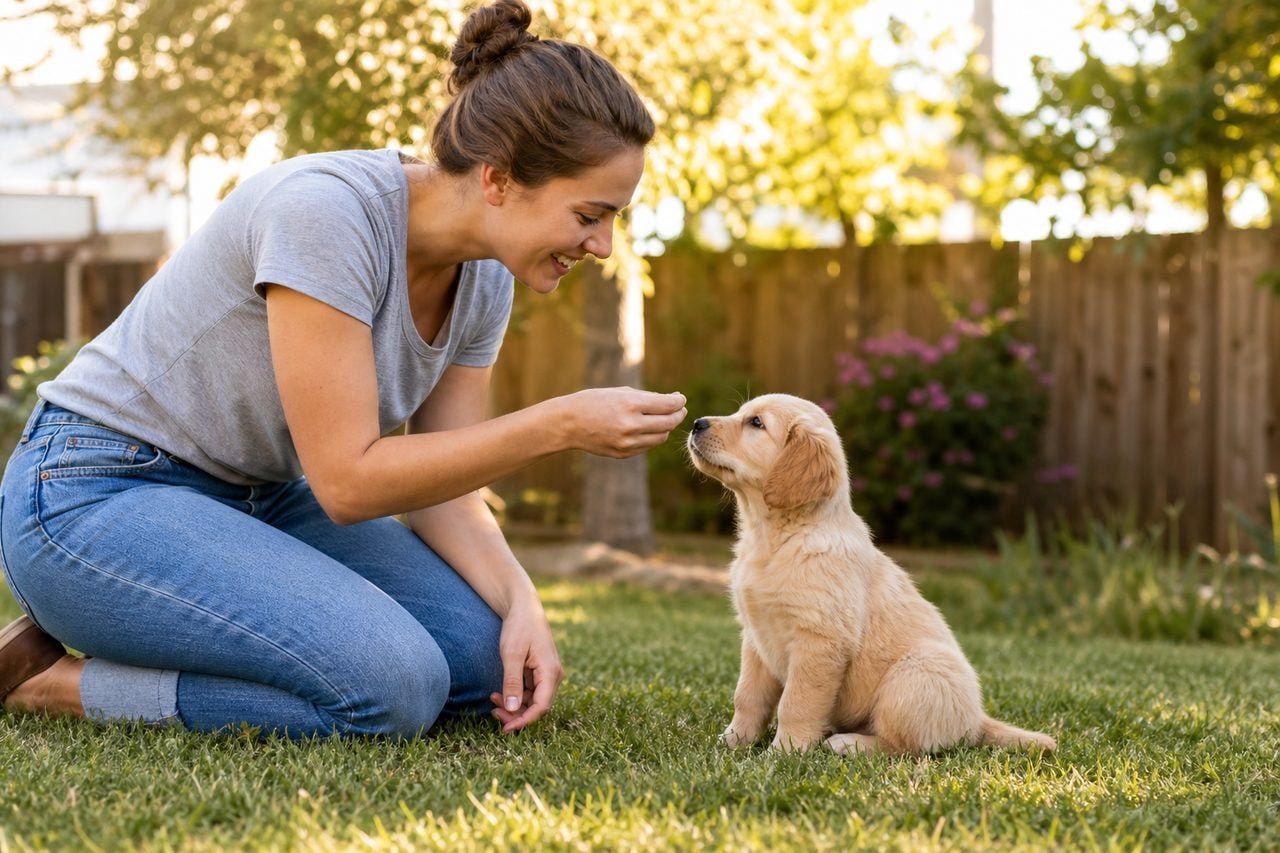
Bringing a puppy home along the Muskegon lakeshore is one of the most rewarding things a family can do, and the first few months set the tone for everything that follows. The habits your dog builds between roughly eight weeks and six months old shape how it greets neighbors on a walk down Lakeshore Drive, how it behaves at the beach, and how calmly it settles at home when the house is busy. Good puppy training is not about tricks; it is about raising a stable, confident adult dog that fits comfortably into daily life in Muskegon, Norton Shores, and the surrounding harbor towns.
This guide walks through what puppy training actually involves, when to start, what to prioritize, and how to choose help in a region that stretches from Whitehall and Montague in the north down to Grand Haven, Spring Lake, and Ferrysburg on the harbor. Whether you are working with a trainer or handling the early weeks yourself, the goal is the same: a puppy that learns the world is a safe, predictable place, and that looks to you for direction when it is unsure.
Muskegon families have a real advantage here. The area is full of the exact environments a young dog needs to experience early, from quiet inland neighborhoods around Twin Lake and Fruitport to the busier waterfronts and recreation areas. Used thoughtfully, that variety becomes one of the best training tools you have. The sections below cover the developmental science, the core skills, socialization, everyday manners, common problems, and how to find the right help locally.
Why the First Few Months Matter So Much
Puppies move through a critical socialization window that runs roughly from three weeks to about sixteen weeks of age. During this period, a young dog forms its lasting impressions of what is normal and safe. Positive, low-stress exposure to people, other dogs, sounds, surfaces, and situations during these weeks pays off for the rest of the dog’s life. Miss the window, and the same experiences later on tend to produce fear or overexcitement instead of calm curiosity.
This is why serious puppy work should begin the moment your dog is home, not after it turns six months old. Waiting until a puppy is old enough for a formal obedience class often means the most important developmental weeks have already passed. The early goal is not perfect sits and downs; it is a puppy that recovers quickly from surprises and stays connected to you when something unexpected happens.
It also helps to understand that puppies go through predictable stages. In the earliest weeks they are soaking up impressions almost indiscriminately, which is why gentle, positive exposure matters so much then. Later, many puppies pass through one or more fear periods, brief stretches where they become more cautious or startle at things they were previously fine with. During those phases, avoid flooding the puppy with intense experiences and instead keep things low-key and reassuring; the phase passes, and forcing it can leave a lasting mark.
Around Muskegon, all of this means gradually introducing your puppy to the ordinary sounds of lakeshore life: waves and wind off Lake Michigan, the hum of summer traffic through Norton Shores, bicycles and strollers on the Lakeshore Trail, and the general bustle of a beach town in season. Each new thing should be paired with something good, kept short, and never forced.
- Let the puppy watch new things from a comfortable distance before getting closer.
- Reward calm, curious behavior rather than luring the dog into overwhelming situations.
- Keep sessions brief. A few good minutes beat a long, stressful outing.
- Respect fear periods by dialing intensity down rather than pushing through them.
Building the Core Skills: Housetraining, Crate, and Name
Before any advanced obedience, three foundations make daily life livable: reliable housetraining, comfort in a crate or confinement area, and a puppy that responds to its own name. These are the skills that determine whether the first months feel manageable or exhausting, and they are worth prioritizing above cute tricks.
Housetraining works best on a predictable schedule. Take the puppy out after waking, after eating, after play, and roughly every hour or two in between when it is young. Go to the same spot, wait, and reward immediately when the puppy finishes so it clearly connects the reward with going outside. Supervise closely indoors and use confinement when you cannot watch, because a mistake you prevent is one the puppy never gets to practice. When accidents do happen, clean thoroughly and simply tighten your supervision rather than punishing after the fact, which only teaches the puppy to hide.
Michigan weather makes housetraining its own challenge. Between winter cold coming off the lake and heavy spring rain, some puppies become reluctant to go outside, then hold it until they come back in. Having a sheltered, consistent potty area near the door helps a great deal during the harder months, and going out with the puppy so you can reward promptly keeps progress on track even when the weather is miserable.
Crate training gives your puppy a safe den and gives you a way to prevent mistakes when you cannot supervise. Introduce the crate gradually with food and chews so it becomes a good place, never a punishment, and build up alone time in small increments. A puppy that rests calmly in a crate is also far easier to travel with, whether you are heading to the vet in Muskegon or visiting family for the weekend, and crate comfort lays the groundwork for preventing separation issues later.
Name recognition is the first building block of every other cue. Say the name once, and reward the instant the puppy looks at you. A puppy that reliably turns toward you when it hears its name is a puppy you can redirect, call away from trouble, and eventually build a solid recall on. Practice it in easy settings first, then add mild distractions as the response becomes automatic.
Socialization the Muskegon Lakeshore Way
Socialization is the single highest-value thing you can do with a young puppy, and the lakeshore gives you an unusually rich menu of experiences within a short drive. The key is quality over quantity: calm, positive, controlled exposure beats chaotic overload every time. The aim is a puppy that has seen a lot of the world and learned that new things are no big deal, not a puppy that has been dragged through as many events as possible.
Start close to home in quieter settings. A parking lot in Norton Shores or a calm street in North Muskegon lets your puppy watch cars, people, and dogs from a safe distance. As confidence grows, add variety: the different surfaces of a downtown Muskegon sidewalk, gravel, grass, sand, and metal grates all teach a puppy that new footing is nothing to fear. Novel surfaces are easy to overlook, yet they build real resilience.
The region’s outdoor spaces are excellent for gentle, real-world practice once your veterinarian says your puppy is ready. Consider working up to short, quiet visits to the edges of P.J. Hoffmaster State Park, Muskegon State Park, or a low-traffic stretch of the Lakeshore Trail. Early mornings or off-season visits keep crowds down so your puppy is not overwhelmed, and the natural sights, smells, and sounds provide enrichment that a backyard cannot match.
- Beaches and shorelines: introduce sand and water calmly, never tossing a nervous puppy into waves; let it investigate the edge at its own pace.
- Harbor towns: a slow stroll through Grand Haven or Spring Lake exposes a puppy to boats, foot traffic, and outdoor dining.
- People variety: let the puppy meet people of different ages and appearances, including people in hats, on bikes, and with mobility aids.
- Other dogs: prioritize calm, healthy, vaccinated adult dogs over free-for-all puppy piles, which can teach rude or fearful habits.
- Handling: get the puppy used to having its paws, ears, and mouth touched so vet visits and grooming go smoothly.
Always let the puppy choose to approach. If it retreats, add distance and slow down. Forced socialization creates the exact fear you are trying to prevent, so read your puppy’s body language and end on a good note before it gets overwhelmed.
Teaching Focus, Manners, and the First Cues
Once the foundations are in place, you can layer in the obedience skills most families actually use every day. The most useful early cues are not fancy: sit, down, a hand target, loose-leash walking, and a reliable recall. Taught with rewards and short repetitions, these give you real control without conflict, and they build a puppy that chooses to work with you.
Modern puppy training leans heavily on positive reinforcement, where the puppy earns a reward for the behavior you want. This approach builds a dog that offers good behavior willingly rather than one that merely avoids correction. It also protects the trusting relationship you are trying to build during these formative weeks, which pays dividends when you later need cooperation in a distracting or stressful moment.
Loose-leash walking deserves special attention on the lakeshore, where you will want a dog that can handle a walk on a busy summer sidewalk or a crowded beach access path. Reward the puppy for staying near you and keeping slack in the leash. Stop moving when the leash tightens so the puppy learns that pulling never gets it where it wants to go, and change direction often to keep the puppy paying attention to you rather than pulling ahead toward every distraction.
Recall, the ability to come when called, is the skill most worth investing in. Practice it as a fun game indoors first, then in a fenced yard, then in gradually more distracting spots. Always make coming to you rewarding, never call the puppy to something it dislikes, and avoid poisoning the cue by using it when you cannot enforce it. A dog with a strong recall is far safer near open water, wooded trails, and the roads that thread through Fruitport, Twin Lake, and the rural stretches toward Nunica and Coopersville.
Keep every session short and upbeat. Two or three five-minute sessions a day will teach a puppy far more than one long, frustrating drill, and ending while the puppy is still eager keeps it looking forward to the next round. Mental work tires a puppy out as effectively as physical exercise, which is a useful tool on days when the weather keeps you indoors.
Handling Puppy Problems Before They Become Habits
Certain puppy behaviors alarm new owners but are completely normal parts of development. The goal is to guide them, not punish them, so they fade instead of hardening into adult problems. A calm, consistent response almost always works better than a dramatic one.
Nipping and mouthing are how puppies explore and play. Redirect those sharp teeth onto appropriate chews, and end play calmly when the puppy gets too rough so it learns that biting ends the fun. Yelling or rough handling usually makes mouthing worse and can add fear to the mix. Providing plenty of chew outlets is especially helpful during teething, which peaks in the first several months and can make a puppy desperate to gnaw on something.
Chewing on furniture and shoes comes from the same drive. Manage the environment so tempting items are out of reach, supervise closely, and make sure the puppy has better options. A tired puppy that has had enough physical and mental activity chews far less out of boredom, so meeting the puppy’s needs is often the real fix.
Jumping up is another common one, particularly with the friendly, high-energy dogs many lakeshore families love. Reward four-on-the-floor and calm greetings, and avoid giving attention when the puppy jumps, since even pushing it away can read as attention. Consistency across everyone in the household is what makes this stick; if one person allows jumping, the puppy keeps trying it with everyone.
- Prevent rehearsal: manage the environment so the puppy cannot practice the unwanted behavior.
- Redirect: give the puppy an acceptable outlet for the underlying drive.
- Reward the alternative: pay generously for the behavior you do want.
- Meet needs: many puppy problems shrink dramatically with enough sleep, exercise, and enrichment.
- Stay consistent: make sure everyone in the home responds the same way.
If a behavior seems truly out of the ordinary, such as intense fear or early signs of aggression, treat it as a signal to get professional guidance sooner rather than later. Early intervention is almost always easier than remediation, and a good trainer can help you tell normal puppy antics apart from something that needs a closer look.
Choosing a Puppy Trainer or Class in the Area
The Muskegon lakeshore has a solid selection of puppy training options, from group classes to private, in-home sessions. The right fit depends on your puppy, your schedule, and your goals. Group puppy classes offer valuable socialization and let your dog practice around distractions, while private training gives tailored attention for specific concerns and works well for families with busy or unusual schedules. Many families combine the two, using a class for socialization and a private session or two for a particular sticking point.
When you evaluate a trainer, focus on methods and communication rather than promises. Ask what approach they use, how they handle mistakes, and whether they emphasize reward-based methods. A good puppy professional will happily explain their reasoning and will encourage you to be part of the training, since you are the one living with the dog every day. The trainer’s real job is to teach you as much as the puppy.
- Ask about class size and how they keep young puppies from being overwhelmed.
- Look for clear vaccination and health requirements, which protect all the puppies present.
- Prefer trainers who coach you, not just the dog, so skills carry over at home.
- Make sure the location and schedule are realistic for you across the seasons.
- Trust your read on whether the environment feels calm, clean, and positive.
Puppy owners across Muskegon, Norton Shores, Whitehall, Montague, Grand Haven, and the inland communities will find options within a reasonable drive. Use the trainer listings in this directory to compare who serves your part of the lakeshore, then reach out to a few and ask questions before committing. The best trainer is one whose methods you trust and whose style you can maintain long after the classes end. Getting this right early sets your puppy up to be the calm, confident companion you pictured when you brought it home.
Reviewed Puppy Training Trainers in Muskegon
These reviewed Muskegon-area trainers from our directory handle puppy training. Each links to a full profile with specialties, certified credentials, reviews, and contact info:
- Lakeshore K9 Training — 4.9★ (70 reviews)
- Dog Star Ranch — 4.7★ (249 reviews)
- Dog Blessed LLC
- Working Dog Training Company — 5.0★ (31 reviews)
- Pawsitive Training By Dunewood — 5.0★ (1 review)
- Solid Gold Dog Training — 4.9★ (33 reviews)
- Must Love Dogs — 4.8★ (181 reviews)
- Black Creek Dog Training Center — 4.6★ (20 reviews)
See all Muskegon puppy training trainers →
Frequently Asked Questions
When should I start training my puppy?
Right away. The critical socialization window runs from about three to sixteen weeks of age, so meaningful training and gentle exposure should begin the day your puppy comes home. You do not need to wait for a formal obedience class to start housetraining, crate work, name recognition, and calm socialization. Early, positive experiences during these weeks have a lasting effect on how confident and adaptable your dog becomes as an adult, and the window does not reopen later.
Is it safe to socialize my puppy before it is fully vaccinated?
You can and should socialize carefully during this period, but do it thoughtfully. Focus on controlled experiences with healthy, vaccinated dogs and clean environments rather than places where many unknown dogs gather. Carrying a young puppy to watch the world, hosting calm visitors, and exposing it to sounds and surfaces at home are all low-risk ways to socialize. Talk with your veterinarian about local timing, and balance disease caution against the real, lasting cost of missing the socialization window.
How long does puppy training take?
Puppy training is gradual rather than a one-time event. Basic housetraining often takes several weeks to a few months of consistency, and core manners develop over the puppy’s first year. Short, frequent sessions of a few minutes each, repeated daily, produce far better results than occasional long sessions. Think of the first year as ongoing guidance rather than a course you finish, and expect steady progress with the occasional setback, including brief fear periods that pass with patience.
Should I choose group classes or private puppy training?
Both have value and many families use a mix. Group classes are excellent for socialization and for practicing around distractions with other puppies present, while private or in-home training offers focused attention for specific concerns and flexible scheduling. If your main goal is socialization and general manners, a well-run group class is a great start. If you are dealing with a particular problem or have an unusual schedule, private sessions may fit better, and you can always combine the two.
How do I stop my puppy from biting and nipping?
Puppy nipping is normal exploratory and play behavior, not aggression. Redirect the puppy onto appropriate chew toys, and calmly end play when the mouthing gets too rough so the puppy learns that biting ends the fun. Make sure the puppy has plenty of chew outlets, especially during teething, and ensure it is getting enough rest and activity, since overtired puppies tend to get mouthy. Avoid rough handling or yelling, which usually makes the behavior worse and can add fear.
What is the best way to socialize a puppy around Muskegon?
Use the variety the lakeshore offers, but keep it calm and controlled. Start in quiet settings such as a low-traffic street in Norton Shores or North Muskegon, then gradually add new surfaces, sounds, and gentle outings as your puppy grows more confident. Off-season or early-morning visits to less crowded areas near the beaches and trails let a puppy experience the outdoors without being overwhelmed. Always let the puppy approach new things at its own pace and reward calm curiosity.
Related: read our complete puppy training guide or the full Muskegon dog training overview.
Ready to find the right puppy training pro in Muskegon?