
Puppy Socialization in Muskegon, MI
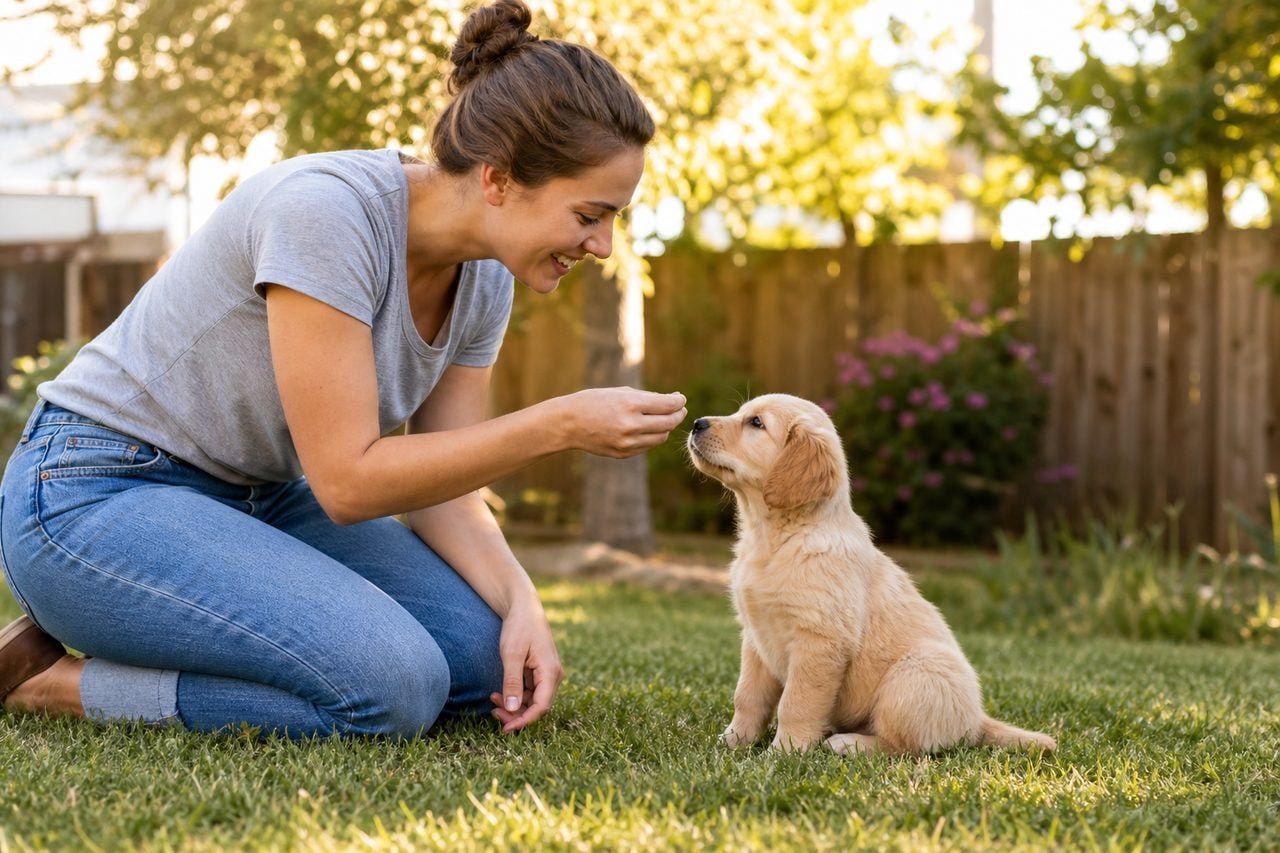
The first few months of a puppy’s life shape how it will handle the rest of them. Along the Muskegon lakeshore, that window overlaps with a landscape full of opportunity and stimulation — crowded summer beaches, quiet winter neighborhoods, boardwalks, farmers markets, and the constant coming and going of seasonal visitors. A puppy raised well here learns early that new people, new dogs, and new surfaces are simply part of ordinary life, not something to fear.
- What Puppy Socialization Actually Means
- The Critical Window: Timing Along the Lakeshore
- Using Muskegon's Environments to Build Confidence
- People, Dogs, and Everyday Handling
- Common Mistakes and How to Avoid Them
- Working With a Local Trainer or Puppy Class
- Building a Realistic Socialization Routine
- Reviewed trainers
- FAQ
Puppy socialization is the deliberate, gradual process of introducing a young dog to the sights, sounds, textures, and social situations it will meet as an adult, all while those experiences stay positive and manageable. Done thoughtfully, it lowers the odds of fearfulness and reactivity later on. Done carelessly — or skipped entirely — it leaves gaps that are far harder to fill once a dog matures.
This guide walks Muskegon-area families through what socialization really means, when the critical window opens and closes, how to use the lakeshore’s unique environments to your advantage, and how a local trainer or structured puppy class fits into the picture. It is written for owners in Muskegon, Norton Shores, Whitehall, Grand Haven, Spring Lake, and the smaller inland communities in between.
What Puppy Socialization Actually Means
Socialization is often misunderstood as simply “letting the puppy meet lots of dogs.” That is only a fraction of it. True socialization is the structured exposure of a young dog to the full range of experiences it will encounter throughout life — people of different ages and appearances, other animals, household noises, traffic, various walking surfaces, being handled, and being briefly left alone — all delivered at an intensity the puppy can absorb without becoming frightened.
The goal is not to overwhelm a puppy with as much as possible. It is the opposite: to build a bank of calm, positive associations, one small experience at a time. A puppy that meets three new people who are gentle and unhurried gains more than one that is passed around a loud party of twenty. Quality and emotional tone matter far more than sheer volume.
Three ideas sit at the center of good socialization:
- Positive association. Each new thing should be paired with something the puppy enjoys — a treat, praise, or play — so novelty becomes a predictor of good things rather than a threat.
- Choice and pace. A puppy that can retreat and observe from a distance learns confidence. One that is forced forward often learns avoidance instead.
- Consistency. A single beach outing does not socialize a dog to crowds. Repeated, gentle exposure across weeks builds durable comfort.
It also helps to separate socialization from obedience. Teaching a puppy to sit is training; teaching it that a stranger in a rain jacket is nothing to worry about is socialization. Both matter, and good puppy classes usually blend them, but they are not the same skill.
The Critical Window: Timing Along the Lakeshore
Puppies pass through a sensitive developmental period, generally spanning from around three weeks to roughly sixteen weeks of age, during which their brains are unusually receptive to forming lasting impressions of the world. Experiences — good or bad — land more deeply during this window than at almost any other point in life. After it closes, dogs can still learn, but new things are more likely to be met with caution rather than open curiosity.
For most families, the puppy comes home somewhere around eight weeks, which leaves a precious but short runway before that window narrows. That timing creates a real tension every Muskegon owner should understand: the socialization window overlaps with the period before a puppy has completed its full vaccine series. This leads some owners to keep the puppy home entirely until it is fully vaccinated — and by then, much of the window has quietly passed.
The widely accepted middle path is to socialize carefully rather than not at all. That means favoring controlled environments over uncontrolled ones. Carrying a young puppy through a quiet stretch of downtown Grand Haven, letting it watch the world from your arms or a stroller, or hosting a small gathering of healthy, vaccinated adult dogs at home offers rich exposure without the disease risk of a busy dog park or a communal beach in July.
The lakeshore’s seasons shape the strategy. A puppy that comes home in late spring can build up to summer’s crowds gradually. A winter puppy faces the opposite challenge — quiet, empty streets and few strangers — which means owners have to work harder to manufacture novelty indoors and through planned outings. A local trainer familiar with the area’s rhythm can help you tailor a plan to the season your puppy arrives in.
Using Muskegon's Environments to Build Confidence
Few regions offer as varied a training playground as the Muskegon lakeshore. The trick is to match each environment to your puppy’s current confidence level and to start on the calm end of the spectrum.
Quiet neighborhood streets first. Before any beach or market, a puppy benefits from simply walking residential blocks in Norton Shores, Roosevelt Park, or Spring Lake — sniffing lawns, hearing distant traffic, meeting the occasional neighbor. These low-stakes outings build the foundation everything else rests on.
The beaches, chosen carefully. Lake Michigan beaches and the sandy stretches near Pere Marquette Park are extraordinary for exposure: crashing waves, wind, gulls, driftwood, and unfamiliar footing all in one place. But a crowded beach on a hot Saturday can overwhelm a young puppy. Aim for early mornings, shoulder-season weekdays, or quieter spots where you can keep a comfortable distance from the busiest areas. Let the puppy investigate sand and water at its own pace — never force a puppy into the lake.
P.J. Hoffmaster State Park and wooded trails. The trails and dunes at P.J. Hoffmaster State Park offer a different sensory menu: forest sounds, uneven terrain, other leashed dogs passing at a distance. Trails naturally provide the space to create polite, controlled encounters rather than nose-to-nose greetings.
Town centers and markets. The sidewalks of downtown Muskegon, Whitehall, Montague, or Grand Haven expose a puppy to strollers, bicycles, outdoor diners, and the general bustle of foot traffic. Farmers markets add food smells and dense crowds — excellent once your puppy is ready, best observed from the edges at first.
Surfaces and structures. Boardwalks, metal grates, wooden piers, gravel lots, and grassy parks all feel different underfoot. Deliberately walking a puppy across varied surfaces builds physical confidence that transfers to countless future situations.
Throughout all of it, watch your puppy, not your checklist. A wagging, curious dog that voluntarily explores is being socialized. A tucked tail, pinned ears, or frozen posture means you have moved too fast — back off, add distance, and try again another day.
People, Dogs, and Everyday Handling
The three pillars of social exposure — people, other dogs, and being handled — each deserve deliberate attention, because each addresses a different set of adult behaviors.
People of all kinds. A puppy should meet men and women, children and seniors, people wearing hats, sunglasses, hoods, and high-visibility work gear, people carrying umbrellas or pushing strollers. Dogs generalize poorly; a puppy comfortable only with your immediate family may still be wary of a delivery driver in a uniform. Ask new people to let the puppy approach them rather than looming over it, and to offer a treat if the puppy is willing.
Other dogs — quality over quantity. The single most valuable social experience for a puppy is calm interaction with healthy, well-socialized adult dogs who have good manners. A stable adult teaches a puppy appropriate play and bite inhibition in ways no human can. This is one of the strongest arguments for a structured puppy class over a chaotic dog park, where an overwhelming or frightening encounter can undo weeks of careful work in minutes.
Handling and grooming. Regularly touch your puppy’s paws, ears, mouth, and tail; simulate nail trims; and practice gentle restraint. A puppy that learns early that handling predicts good things becomes a dog that tolerates the veterinarian, the groomer, and the occasional tick check after a Hoffmaster hike — a genuine concern in this region. These small daily rituals pay dividends for a lifetime.
Sounds and household life. Vacuum cleaners, doorbells, thunderstorms rolling in off the lake, fireworks over Muskegon Lake in summer, and the general clatter of a household should all become background noise. Introduce louder sounds at low volume and distance, paired with something pleasant, and build up gradually.
Common Mistakes and How to Avoid Them
Even well-meaning owners stumble in predictable ways. Knowing the traps in advance makes them easier to sidestep.
- Waiting until the puppy is “fully protected.” Delaying all outings until the vaccine series is complete often means missing the socialization window entirely. Controlled, lower-risk exposure is the widely recommended compromise — discuss the specifics with your veterinarian.
- Flooding instead of exposing. Dropping an anxious puppy into the middle of a packed summer beach or a loud festival is not brave socialization; it is overwhelming, and it can create the very fears you hoped to prevent. Start small and build.
- Forcing interactions. Pushing a hesitant puppy toward a strange dog or an eager stranger teaches it that its own signals of discomfort are ignored. Always allow retreat.
- Assuming the dog park equals socialization. Off-leash parks can be valuable for some dogs later, but for a young puppy the risk of a bad experience — or exposure to illness — often outweighs the benefit.
- Stopping too soon. Socialization is not “done” at sixteen weeks. Adolescence, roughly six to eighteen months, often brings a resurgence of caution. Continued gentle exposure through the first year keeps early gains from eroding.
- Ignoring the puppy’s emotional state. Treats and toys do not help if the puppy is too frightened to eat or play. A puppy that refuses food it normally loves is telling you it is over threshold.
If you notice persistent fear, avoidance, or unusually intense reactions that do not improve with gentle, patient exposure, that is a signal to bring in professional guidance sooner rather than later. Early intervention is far easier than remediation.
Working With a Local Trainer or Puppy Class
Many families do a great deal of socialization on their own, and that is exactly as it should be — the daily walks, the varied surfaces, the calm introductions are all things an owner does best. But a structured puppy class or a session or two with a qualified local trainer adds things that are hard to replicate alone.
A well-run puppy class provides a controlled setting for supervised play with other puppies of similar age and size, so early social lessons happen safely. It gives you an experienced set of eyes to read your puppy’s body language and to catch the difference between healthy caution and emerging fear. And it offers a coach who can tailor a plan to your specific dog, your household, and the season along the lakeshore.
The Muskegon area has a reasonable range of trainers and group classes serving Muskegon, Norton Shores, Whitehall, Grand Haven, and the surrounding communities, so most families can find options without traveling far. When evaluating a class or trainer, consider:
- Methods. Look for reward-based, positive-reinforcement approaches. For a young puppy in particular, the priority is building good associations, not correcting behavior.
- Class size and structure. Smaller groups allow for better supervision and more individual attention.
- Health requirements. Reputable puppy classes require proof of age-appropriate vaccinations from all participants, which lowers risk for everyone.
- Fit with your goals. Some classes lean heavily on obedience, others on socialization and confidence. Be clear about what you want.
You can use the directory listings on this page to compare local providers serving the Muskegon lakeshore, then reach out directly to ask about their approach, schedule, and openings. A short conversation usually tells you a great deal about whether a trainer is the right match for your puppy.
Building a Realistic Socialization Routine
The most effective socialization plans are modest, repeatable, and woven into everyday life rather than treated as a special project. A puppy does not need an elaborate program — it needs steady, varied, positive exposure spread across its early months.
A practical rhythm for a Muskegon-area puppy might look like this: a short walk each day through a quiet neighborhood, rotating routes so the scenery changes; one slightly more novel outing every few days — a quiet stretch of downtown, a calm section of beach in the early morning, a wooded trail; daily handling practice at home; and regular, low-key introductions to visitors who come to the door. Layer in household sounds and the occasional planned meeting with a calm, vaccinated adult dog, and you have covered most of the essentials.
Keep sessions short. A young puppy tires quickly, mentally as much as physically, and a brief positive experience beats a long overwhelming one every time. End on a good note — while the puppy is still enjoying itself — rather than pushing until it is stressed.
Track your puppy’s comfort, not a rigid schedule. If it sails through a farmers market at the edge of the crowd, wonderful; next time you can venture a little closer. If a thunderstorm rattles it, spend a few days building calm associations with recorded storm sounds at low volume before trying again. The lakeshore will still be there — the crowds, the waves, the trails, the seasons — and a puppy socialized patiently through its first year grows into a dog that can genuinely enjoy all of it alongside you.
Above all, remember that socialization is an investment with an unusually high return. The weeks you spend now, spread across the beaches of Norton Shores, the sidewalks of Grand Haven, and the trails of P.J. Hoffmaster State Park, shape a companion that is confident, adaptable, and easy to live with for a decade or more.
Reviewed Puppy Socialization Trainers in Muskegon
These reviewed Muskegon-area trainers from our directory handle puppy socialization. Each links to a full profile with specialties, certified credentials, reviews, and contact info:
- Lakeshore K9 Training — 4.9★ (70 reviews)
- Dog Star Ranch — 4.7★ (249 reviews)
- Dog Blessed LLC
- Working Dog Training Company — 5.0★ (31 reviews)
- Pawsitive Training By Dunewood — 5.0★ (1 review)
- Solid Gold Dog Training — 4.9★ (33 reviews)
- Must Love Dogs — 4.8★ (181 reviews)
- Black Creek Dog Training Center — 4.6★ (20 reviews)
See all Muskegon puppy socialization trainers →
Frequently Asked Questions
When should I start socializing my puppy?
As early as it is safely possible — the sensitive socialization window generally runs from about three to sixteen weeks of age, and most puppies come home around eight weeks. Because this overlaps with the period before the vaccine series is complete, focus on controlled, lower-risk exposure at first: carrying your puppy through quiet areas, hosting healthy vaccinated adult dogs at home, and walking calm neighborhood streets. Talk to your veterinarian about balancing socialization with disease prevention for your specific puppy.
Is it safe to take my puppy to Lake Michigan beaches before it's fully vaccinated?
Busy, communal beaches carry some disease risk before the vaccine series is complete, and crowds can overwhelm a young puppy. If you do go, choose quiet times such as early mornings or shoulder-season weekdays, keep your distance from other dogs and the busiest areas, and let your puppy explore sand and water at its own pace. Never force a puppy into the water. When in doubt, ask your veterinarian what is appropriate for your puppy’s age and vaccination status.
How is socialization different from obedience training?
Obedience teaches specific behaviors — sit, stay, come, walking on a loose leash. Socialization builds a puppy’s emotional comfort with the world: people, other dogs, sounds, surfaces, and handling. A dog can be perfectly obedient and still fearful, or well-socialized but untrained. Both matter, and good puppy classes usually blend them, but socialization is especially time-sensitive because of the developmental window, so it deserves priority in the early weeks.
Is a dog park a good way to socialize my puppy?
Generally not for a young puppy. Off-leash dog parks are uncontrolled, and a single frightening or overly rough encounter can create lasting fear that undoes weeks of careful work. There is also a disease-exposure concern before vaccinations are complete. Calm, supervised play with known healthy, well-mannered adult dogs — or a structured puppy class — is far safer and more productive during the early months.
What if my puppy seems scared during socialization?
Fear is a signal to slow down, not push through. Add distance from whatever is worrying the puppy, let it observe from a comfortable spot, and pair the experience with treats or praise if the puppy is relaxed enough to accept them. A puppy that refuses food it normally loves is over its comfort threshold. If fear or avoidance persists despite patient, gentle exposure, consult a qualified local trainer early — addressing it sooner is much easier than later.
Do I need a professional trainer, or can I socialize my puppy myself?
Much of socialization is best done by you, through daily walks, varied outings, and calm introductions. A structured puppy class or a session with a qualified trainer adds safe supervised puppy play, an experienced read on your puppy’s body language, and a plan tailored to your dog and the lakeshore’s seasons. Many Muskegon-area families do both. You can compare local trainers and classes in the directory listings on this page and contact them directly about their methods and schedule.
Related: read our complete puppy socialization guide or the full Muskegon dog training overview.
Ready to find the right puppy socialization pro in Muskegon?