
Puppy Training in Traverse City, MI
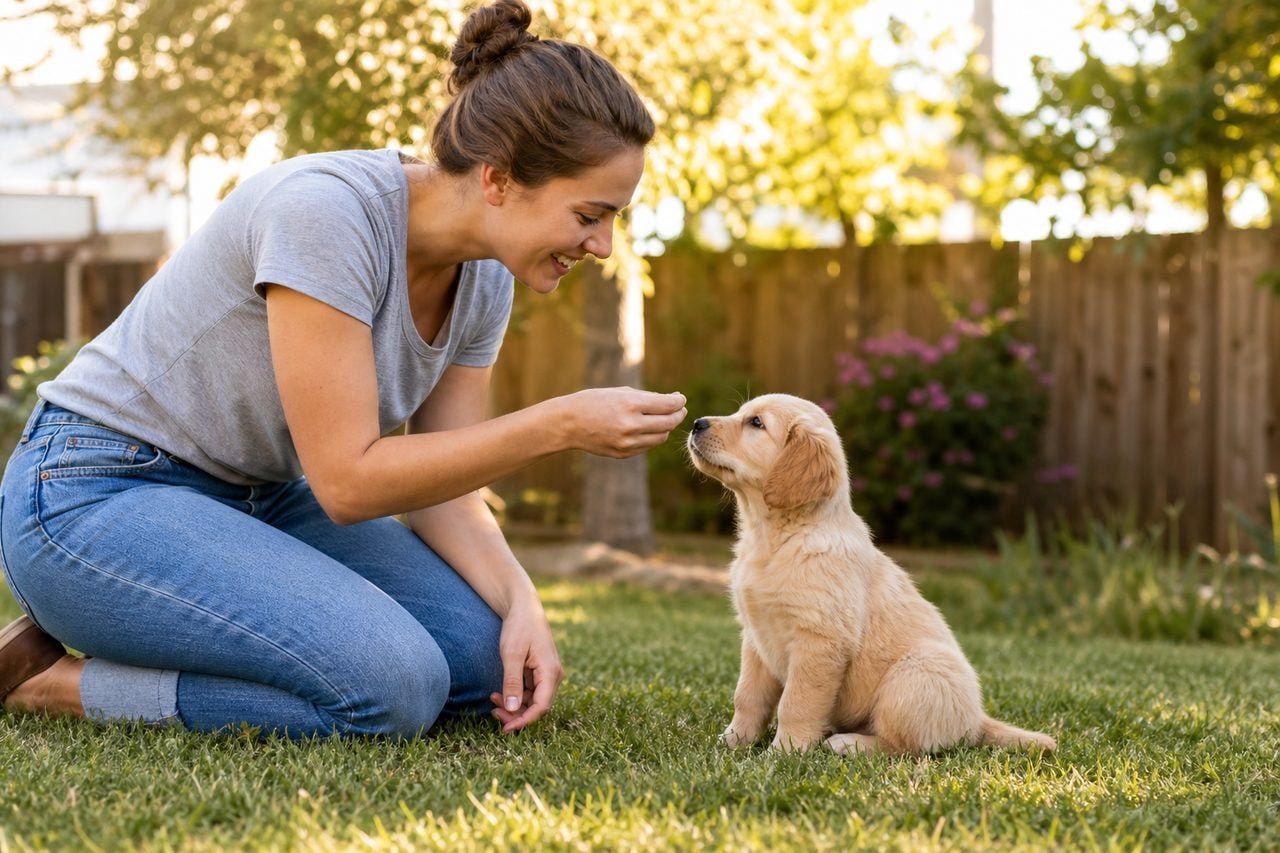
Bringing a puppy home in the Traverse City area means starting your dog’s education against one of the most beautiful — and most distracting — backdrops in Michigan. Between the crowds along Front Street, the open water of Grand Traverse Bay, the orchards and vineyards of the Leelanau Peninsula, and the summer surge of visitors and their dogs, a Grand Traverse puppy has to learn how to be calm and responsive in a world that changes dramatically from January to July. Good early training is what turns that chaos into confidence.
- Why Early Puppy Training Matters in Northern Michigan
- When to Start and What a Realistic Timeline Looks Like
- Choosing the Right Puppy Class Format
- Core Skills Every Traverse City Puppy Should Learn
- Socializing Through the Seasons: A Local Advantage
- Common Puppy Challenges and How to Handle Them
- Finding the Right Puppy Trainer in the Traverse City Area
- Reviewed trainers
- FAQ
This guide walks through what puppy training actually involves in northern Michigan, when to start, how to choose between the class formats available locally, and how to build the habits that matter most in the critical first few months. The focus is practical and vendor-neutral: what to work on, what to expect, and what to look for so you can pick the right program for your household and your puppy.
Every puppy and every family is different, so treat the timelines and suggestions here as a well-tested framework rather than a rigid schedule. The goal is a dog who can settle at a bayfront patio, walk politely on the TART Trail, and come when called even when a squirrel bolts across the yard.
Why Early Puppy Training Matters in Northern Michigan
Puppies move through a socialization window that runs roughly from three weeks to sixteen weeks of age. During this period their brains are unusually open to new experiences, and the sights, sounds, surfaces, and social encounters they meet now shape how they react to the world for the rest of their lives. A puppy who calmly experiences a variety of people, dogs, and environments before sixteen weeks is far more likely to grow into a stable, adaptable adult. A puppy who is under-exposed during this window is more likely to develop fear or reactivity later.
The Traverse City region adds a specific twist to this. The area is intensely seasonal. A puppy raised through a quiet snowbound winter in Kalkaska or the inland forests may reach spring never having seen a stroller, a bicycle, a crowd, or another dog outside the household. Then Memorial Day arrives, the tourists pour in, the beaches at West End and the sidewalks downtown fill up, and that same puppy is suddenly overwhelmed. Planning socialization deliberately — rather than waiting for it to happen — is the single most valuable thing you can do in the first few months.
Early training is not just about obedience commands. In these first weeks the priorities are:
- Positive social exposure to many types of people, gentle handling, and calm dogs
- Habituation to everyday sounds and surfaces — traffic, vacuums, gravel, docks, metal grates, and stairs
- Bite inhibition and impulse control, so the mouthy puppy phase resolves without becoming a problem
- House-training and crate comfort, which set the tone for a settled home
- A foundation of name recognition and coming when called
Because the socialization window closes before most puppies have finished their full vaccine series, talk with your veterinarian about safe exposure — carrying your puppy through downtown, hosting healthy vaccinated dogs at home, and choosing clean, low-traffic environments rather than skipping socialization entirely.
When to Start and What a Realistic Timeline Looks Like
The best time to begin structured puppy training is the day your puppy comes home, which for most Grand Traverse families is around eight weeks of age. You do not need to wait for a formal class to start; the habits you build in week one matter enormously. That said, many local puppy classes accept dogs as young as eight to ten weeks with proof of an initial vaccination, precisely because trainers understand how short the socialization window is.
Here is a realistic month-by-month picture of what to prioritize:
- Weeks 8 to 12: House-training, crate comfort, name response, gentle handling, and above all safe socialization. Introduce your puppy to new people and surfaces at a pace the puppy enjoys. Begin short, upbeat sessions of one to three minutes several times a day.
- Weeks 12 to 16: Continue heavy socialization while adding foundation cues — sit, a hand target, the start of a recall, and settling on a mat. This is also when polite leash habits should begin, before the puppy is big enough to pull hard.
- Months 4 to 6: Proof the basics in slightly more distracting places. A quiet corner of a park, a friend’s yard, or the edge of a trail. Expect a regression in reliability as adolescence begins — this is normal.
- Months 6 to 12: Adolescence in full. Many owners feel their previously perfect puppy has forgotten everything. Consistency, patience, and continued practice carry you through; this is not the time to stop training.
One practical note about the local calendar: if your puppy hits the eight-to-sixteen-week window during a Traverse City winter, be intentional about indoor and controlled exposures. If the window falls during the busy summer season, you have abundant real-world practice available but must manage it so your puppy is never flooded or frightened by the crowds.
Choosing the Right Puppy Class Format
Traverse City and the surrounding communities offer a healthy range of puppy training formats. Each has strengths, and the right choice depends on your puppy’s temperament, your schedule, and how far you are willing to drive from places like Elk Rapids, Interlochen, or Suttons Bay into town.
Group puppy classes are the classic starting point. A well-run puppy class combines supervised, carefully matched play with short skill-building segments. The play is not just fun — it teaches bite inhibition and dog-to-dog social skills in a controlled setting, which is hard to replicate on your own. Look for small class sizes, puppies grouped by size and play style, and an instructor who interrupts rough play before it escalates.
Private in-home lessons suit families with busy schedules, a shy or overwhelmed puppy, or specific issues like house-training setbacks. A trainer coming to your home in Acme or on the Leelanau Peninsula can tailor advice to your actual environment — your stairs, your yard, your family’s routine. Private work moves faster on household-specific problems but does less for dog-to-dog socialization, so many owners combine it with group play.
Day training or drop-off programs have a trainer work with your puppy directly, then coach you on maintaining the skills. This can be efficient for owners who want a strong foundation laid quickly, but the handoff sessions where you learn to keep the training going are essential — a puppy trained without you learning the mechanics will slip back.
When comparing programs, useful questions include:
- What methods do you use, and how do you handle mistakes? (Look for reward-based, force-free approaches.)
- How large are the classes, and how are puppies grouped for play?
- What vaccinations do you require before the first session?
- What happens if my puppy is fearful or overwhelmed?
- Do you provide written homework or follow-up between sessions?
There is no single correct format. A confident, social puppy may thrive in a group class alone; a sensitive puppy may need private sessions first, then graduate to group play once basic confidence is built.
Core Skills Every Traverse City Puppy Should Learn
Whatever format you choose, a handful of foundational skills carry the most weight in daily life. These are the skills worth practicing every day, in short sessions, until they become second nature.
House-training and crate comfort. A predictable schedule is everything. Take your puppy out after waking, after eating, after play, and roughly every hour or two in between. Reward outdoors immediately, and supervise closely indoors so accidents rarely happen. A crate used positively — never as punishment — gives your puppy a safe den and dramatically speeds house-training. During a snowy northern Michigan winter, an easily accessible, cleared potty spot near the door makes the process far smoother.
Name response and recall. Your puppy’s name should predict good things. Say the name, and the instant your puppy looks at you, mark it and reward. Build recall as a joyful game — never call your puppy to end fun or to do something unpleasant. A reliable recall is a genuine safety issue near Grand Traverse Bay, on trails, and around the seasonal traffic that fills the region each summer.
Polite leash walking. Start indoors and in your yard before the world gets exciting. Reward your puppy for staying near you and for a loose leash. The TART Trails and quieter neighborhood streets are excellent practice grounds once your puppy is ready, but begin somewhere calm.
Settling and impulse control. Teach your puppy to relax on a mat while life happens around them. This is the skill that lets you eventually enjoy a coffee at a downtown patio or sit at an Old Mission winery’s dog-friendly area with a calm dog at your feet.
Handling and cooperative care. Regularly touch your puppy’s paws, ears, and mouth, pairing it with treats, so grooming and vet visits are stress-free. This pays off for years.
- Keep sessions short and upbeat — end while your puppy still wants more.
- Practice in many locations so skills generalize beyond the living room.
- Reward generously in the early stages; fade treats gradually as habits form.
Socializing Through the Seasons: A Local Advantage
The Traverse City region is, in many ways, an ideal place to raise a well-socialized dog — if you use the environment deliberately. The variety here is remarkable: water, woods, quiet villages, a lively downtown, farm country, and dramatic seasonal shifts. A puppy who experiences that range calmly grows into a genuinely adaptable adult.
A season-by-season approach helps you cover the bases:
- Winter: Introduce snow, ice, salted sidewalks, boots, bulky coats, and the muffled quiet of a snowbound neighborhood. Indoor exposures matter now — visitors, household appliances, car rides, and puppy classes keep socialization going when the outdoors is limited. Be mindful of paw care with road salt.
- Spring: The thaw brings mud, cyclists returning to the trails, and the first wave of activity. Great time to practice on quieter stretches of the TART Trail before summer crowds arrive.
- Summer: The region transforms. Downtown, the beaches, and the wineries fill with people and dogs. This is rich socialization territory, but pace it carefully — a puppy should observe crowds from a comfortable distance before being asked to walk through them. Watch for heat; puppies overheat quickly, and midday sun on pavement or a boat dock can be dangerous.
- Fall: Cooler, calmer, and beautiful for long training walks as the color comes in. A good stretch to consolidate everything learned and to enjoy your growing dog.
Throughout, aim for quality over quantity. One relaxed, positive encounter with a calm adult dog is worth more than a frantic hour at a busy dog park. Let your puppy set the pace, watch for signs of stress — lip licking, yawning, trying to retreat — and back off when you see them. Confidence is built through positive experiences, not by forcing a nervous puppy to “tough it out.”
Common Puppy Challenges and How to Handle Them
Even with the best start, certain challenges are nearly universal. Knowing they are normal — and having a plan — keeps small issues from becoming big ones.
Nipping and mouthing. Puppies explore with their mouths, and needle-sharp teeth are part of the package. Redirect to appropriate chew toys, reward gentle mouth behavior, and end play calmly if teeth get too enthusiastic. Never encourage rough hand play. This phase passes, usually well before six months, as adult teeth come in and bite inhibition develops.
House-training accidents. Almost always a supervision or schedule problem, not stubbornness. Tighten the routine, reward heavily outdoors, clean accidents with an enzymatic cleaner, and never punish after the fact — it only teaches the puppy to hide.
Crate crying. Build positive associations by feeding meals in the crate and offering a stuffed chew inside. Start with very short durations and build slowly. A crate near your bed at night often helps a young puppy settle.
Jumping up. Puppies jump to greet. Reward four-on-the-floor and calm greetings, and ask visitors to ignore the puppy until all paws are down. Consistency from everyone in the household is what makes this stick.
Adolescent backsliding. Somewhere between six and twelve months, many owners feel their trained puppy has become a stranger. This is developmental, not defiance. Keep practicing, keep rewarding, and lean on management — leashes, gates, and supervision — while the adolescent brain matures.
If a challenge feels beyond the normal range — genuine fear, aggression, or a pattern that is getting worse rather than better — that is the moment to bring in professional help early rather than waiting. A qualified trainer can steer you back on track quickly, and early intervention is almost always easier than remediation later.
Finding the Right Puppy Trainer in the Traverse City Area
The Grand Traverse region has a reasonable spread of puppy training options, from group classes in and around Traverse City to trainers who travel out to communities like Kingsley, Elk Rapids, and the Leelanau Peninsula. Because a puppy’s socialization window is so short, it is worth lining up a program before or shortly after your puppy comes home rather than waiting until problems appear.
As you evaluate trainers, prioritize a few things:
- Reward-based, force-free methods. Modern, humane training relies on rewarding the behavior you want. Steer away from anyone who leans on fear, pain, or intimidation, especially with a young puppy in its formative window.
- Clear communication and homework. The best trainers teach you as much as your puppy, since you are the one living with the dog every day.
- Comfort with your specific situation. A trainer who listens to your household, your goals, and your puppy’s temperament will serve you better than a one-size-fits-all program.
- Practical logistics. Consider drive time, class schedules, and whether in-home or facility-based training fits your life better, especially if you live well outside the city.
Use the trainer listings in this directory to compare the puppy programs serving Traverse City and the surrounding counties, then reach out to a couple that fit your needs. A short conversation about methods, class structure, and vaccination requirements will quickly tell you whether a program is the right match. Starting early, staying consistent, and using this region’s remarkable variety of environments to your advantage will set your puppy up for a calm, confident life in northern Michigan.
Reviewed Puppy Training Trainers in Traverse City
These reviewed Traverse City-area trainers from our directory handle puppy training. Each links to a full profile with specialties, certified credentials, reviews, and contact info:
- Sit Means Sit Dog Training — 5.0★ (1 review)
- Barks and Rec. Animal Training and Behavior — 4.8★ (60 reviews)
- Companion Canines — 4.8★ (25 reviews)
- Great Lakes K9 Solutions, LLC
See all Traverse City puppy training trainers →
Frequently Asked Questions
At what age should I start training my puppy in Traverse City?
Start the day your puppy comes home, usually around eight weeks. House-training, crate comfort, gentle handling, and safe socialization all begin immediately. Many local puppy classes accept dogs as young as eight to ten weeks with proof of an initial vaccination, because the critical socialization window closes around sixteen weeks and there is no time to waste.
Is it safe to socialize my puppy before all vaccinations are complete?
The socialization window closes before most puppies finish their full vaccine series, so completely isolating your puppy carries its own risks. The safe approach is controlled exposure: carrying your puppy through downtown, inviting healthy vaccinated dogs to your home, and choosing clean, low-traffic settings rather than busy dog parks. Talk with your veterinarian about the right balance for your puppy.
Should I choose group puppy classes or private lessons?
Both have value. Group classes offer supervised puppy play that builds crucial dog-to-dog social skills and bite inhibition. Private in-home lessons are better for busy schedules, shy puppies, or specific household issues like house-training. Many families combine the two: private sessions to build confidence and address specifics, plus group play for socialization.
How do I socialize a puppy through a northern Michigan winter?
Lean on indoor and controlled exposures. Introduce visitors, household sounds, car rides, snow, boots, and bulky winter clothing, and keep attending puppy classes. The goal is to prevent a puppy raised through a quiet winter from being overwhelmed when the busy Traverse City summer season arrives with its crowds, trail traffic, and other dogs.
How long does puppy training take?
The foundation is built over the first several months, but training is an ongoing process. Expect noticeable progress on house-training and basic cues within weeks, a natural regression during adolescence between six and twelve months, and continued reinforcement into the first year. Short, consistent daily practice matters more than the length of any single class.
My puppy nips constantly — is something wrong?
No, mouthing and nipping are completely normal puppy behavior and part of how puppies explore and learn bite inhibition. Redirect to chew toys, reward gentle mouths, and calmly end play if teeth get too sharp. The phase typically resolves well before six months. If nipping is paired with genuine fear or aggression, consult a professional trainer early.
Related: read our complete puppy training guide or the full Traverse City dog training overview.
Ready to find the right puppy training pro in Traverse City?