
Puppy Socialization in Traverse City, MI
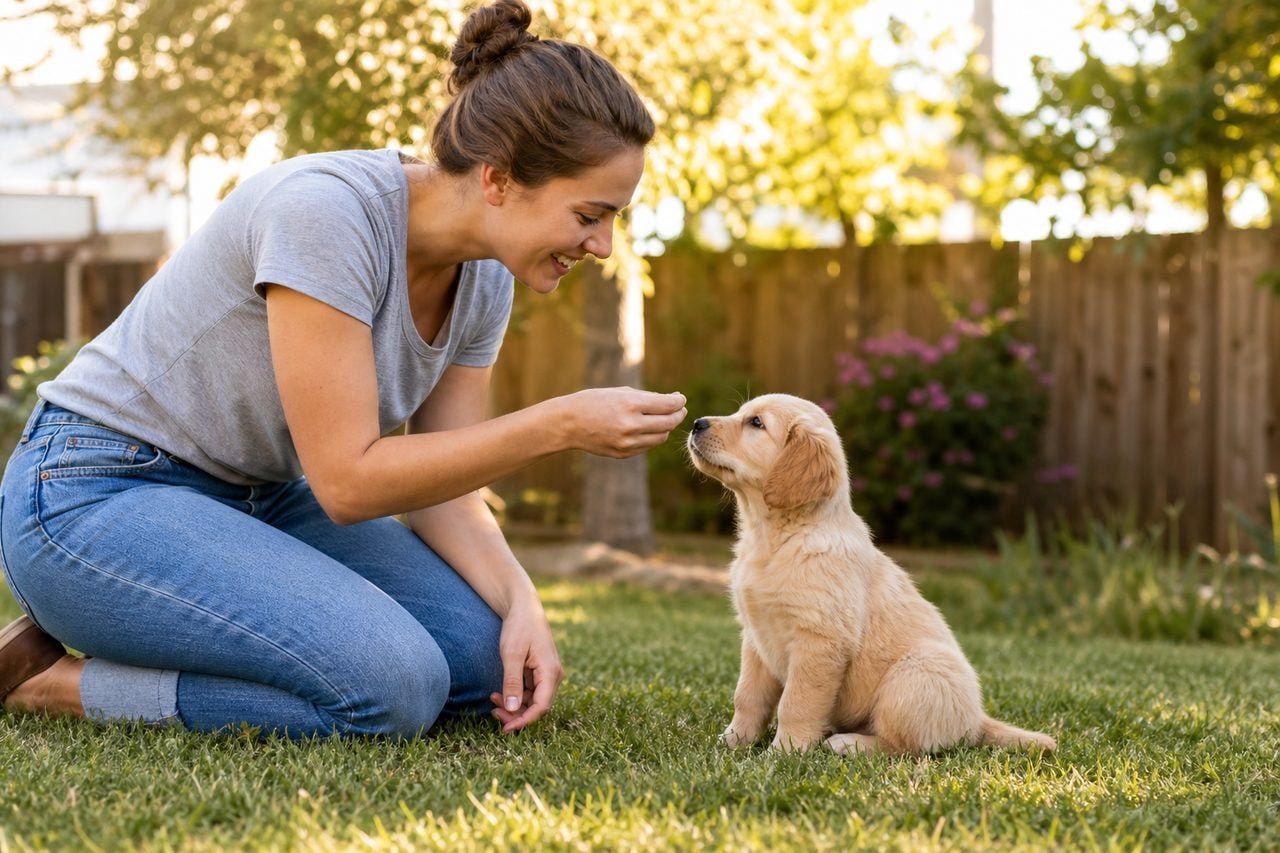
Bringing a puppy home in the Traverse City area means you have arrived at one of the most important — and most time-sensitive — jobs in your dog’s whole life. The first few months shape how a dog reads the world for years to come, and northern Michigan gives you an unusually rich classroom to work with: quiet bayfront mornings, busy summer sidewalks along Front Street, gravel two-tracks through the Leelanau Peninsula, and the seasonal swing from lake-effect snow to festival crowds. Used well, that variety builds a confident, adaptable dog. Left to chance, the same environment can overwhelm a puppy who was never taught how to cope.
- Why the Puppy Socialization Window Matters
- What Good Socialization Looks Like Around Grand Traverse Bay
- Puppy Classes vs. Private Training: What Fits Your Puppy
- Socializing Through Every Northern Michigan Season
- Socialization Opportunities Across the Traverse City Metro
- Building Your At-Home Socialization Plan
- When to Bring in a Professional
- Reviewed trainers
- FAQ
Socialization is not simply “letting the puppy meet everyone.” It is a structured, gradual process of exposing a young dog to new people, animals, surfaces, sounds, and situations while keeping every experience calm and positive. Done thoughtfully, it prevents the fear and reactivity that so often show up later as barking, lunging, or shutting down. This guide walks through why the early window matters, what good socialization looks like around Grand Traverse Bay, and how to find and work with a local trainer who can help you get it right.
You will find real dog professionals listed alongside this article. Use it as your framework, then let the directory point you toward classes and one-on-one help near you.
Why the Puppy Socialization Window Matters
Puppies move through a sensitive developmental period, roughly from three to sixteen weeks of age, when their brains are primed to accept new experiences as normal. During this window a puppy who meets friendly strangers, walks on different surfaces, hears everyday noises, and greets calm adult dogs tends to file all of it under “safe.” The same experiences introduced for the first time at six or eight months old are far more likely to be met with suspicion or fear, because the brain has shifted toward caution.
That timing creates a real tension for new owners. The socialization window closes before a puppy has finished its full vaccination series, which leaves families understandably worried about disease risk in public spaces. The answer is not to keep a puppy locked at home until it is fully vaccinated — that trades a manageable health risk for a near-certain behavior problem. Instead, socialize smartly: choose clean, low-traffic environments, carry a young puppy through higher-risk areas, host controlled visits with healthy vaccinated dogs, and lean on well-run puppy classes that require proof of vaccination from every participant.
It helps to understand what you are actually building. Good early socialization does not aim to create a dog that loves every stranger and every dog. It aims to create a dog that feels neutral and safe in a wide range of situations — able to see a jogger on the TART Trail, a kayak on Grand Traverse Bay, or a crowd at the farmers market without alarm. Neutrality, not exuberant friendliness, is the real goal, and it is far easier to teach in the first sixteen weeks than to repair later.
Because the window is short, there is genuine urgency here. Every calm, positive exposure your puppy banks now is one you will not have to fight to build later. That is the single best reason to start a socialization plan the week your puppy comes home rather than waiting for a class to begin.
What Good Socialization Looks Like Around Grand Traverse Bay
Effective socialization is measured in quality, not quantity. A puppy who has ten calm, curious experiences will end up more resilient than one dragged through fifty overwhelming ones. The guiding principle is simple: your puppy should notice something new, have a chance to investigate at its own pace, and come away relaxed. If a puppy freezes, tucks its tail, tries to retreat, or refuses food, the experience was too much — and you back off, add distance, and try again more gently another day.
Northern Michigan gives you a deep menu of exposures to work through. Think in categories rather than a checklist of places:
- People: adults and children, people in hats and hi-vis jackets, someone using a cane or a bike, delivery workers, and the seasonal surge of summer visitors downtown.
- Surfaces: beach sand along the bay, wet grass, gravel, metal grates, wooden docks, and the slick floors of a pet-friendly shop.
- Sounds: boat motors, snowplows, the rumble of festival crowds, thunderstorms rolling off Lake Michigan, and everyday household noise.
- Animals: calm, healthy adult dogs; livestock and horses seen from a safe distance out on the Leelanau Peninsula; wildlife and birds.
- Handling: gentle touching of paws, ears, mouth, and tail so grooming and vet visits stay stress-free.
Keep sessions short — a few minutes at a time for a young puppy — and always pair novelty with something good, whether that is a treat, praise, or simply the freedom to explore. Bring high-value food with you and reward your puppy for calm curiosity. Over a few weeks in and around Traverse City, these small, deliberate exposures add up to a dog that takes the world in stride.
Just as important is knowing when to stop. A tired puppy cannot learn, and pushing past that point can create the very fears you are trying to prevent. End every outing while your puppy is still enjoying it.
Puppy Classes vs. Private Training: What Fits Your Puppy
Most Traverse City families do best with a blend of group puppy class and structured exposure at home. A well-run puppy class does two things that are hard to replicate on your own: it provides carefully managed play with other vaccinated puppies of similar age and size, and it coaches you through the mechanics of rewarding good behavior. The controlled play is valuable because puppies learn bite inhibition and canine body language from each other, but only when a skilled instructor is supervising and stepping in before play tips into overwhelm.
Look for a class that caps enrollment, groups puppies sensibly, requires proof of age-appropriate vaccination, and uses reward-based methods. A good instructor spends as much time reading the puppies as teaching the people — pausing play, giving shy puppies breaks, and preventing a bold puppy from steamrolling a timid one. Free-for-all play with no structure can do more harm than good, so it is worth asking how play sessions are managed before you enroll.
Private training earns its place when your puppy needs something a group setting cannot offer: a very shy or fearful puppy who is overwhelmed by a room full of others, a household juggling young kids and a puppy at once, or a specific issue like nipping or house-training that you want addressed on your own turf. Many local trainers offer in-home sessions, which is especially useful across a spread-out metro where the drive from Suttons Bay or Kalkaska into town is a real consideration.
You do not have to choose one or the other. A common and effective path is to start home socialization the day your puppy arrives, add a group puppy class once your veterinarian clears it, and book a private session or two if a specific challenge comes up. The listings on this page include trainers who offer both formats, so you can match the setting to your puppy’s temperament and your family’s schedule.
Socializing Through Every Northern Michigan Season
Traverse City is a true four-season place, and each season changes what socialization looks like. Building a puppy that copes with all of them is one of the quiet advantages of raising a dog here — but it takes some planning, because a puppy who arrives in one season can easily miss the experiences another season provides.
Summer brings the biggest crowds and the widest range of exposures. Downtown sidewalks fill with visitors, the beaches and marinas along Grand Traverse Bay come alive, and festivals draw dense, noisy gatherings. This is a golden time for socialization, but also a time to protect your puppy from being overwhelmed. Work the edges of busy areas rather than the center of the crowd, keep sessions short, and never let strangers crowd or grab a nervous puppy. You control the introductions.
Fall and its quieter trails offer calmer, more controlled outings — ideal for building focus and practicing loose-leash walking on the TART Trails or a Leelanau back road. Winter is where many northern Michigan puppies fall behind, simply because owners stay indoors. A puppy raised entirely through a lake-effect winter can reach spring never having seen a summer crowd, and vice versa. Counter this deliberately: keep up short outings in the snow, visit pet-friendly indoor shops for surface and people exposure, and set up controlled visits with vaccinated adult dogs indoors.
Spring reintroduces mud, thunderstorms, and the return of outdoor crowds. Sound sensitivity in particular is worth working on early, since storms rolling in off Lake Michigan can rattle an unprepared dog. Pair distant thunder with calm and treats rather than coddling a fearful reaction, and consult a trainer if you see genuine panic developing. The takeaway across all four seasons: whatever season your puppy comes home in, make a point of intentionally exposing it to the experiences the other seasons will bring.
Socialization Opportunities Across the Traverse City Metro
The Grand Traverse region is spread across several distinct communities, and each offers its own kind of socialization practice. You do not need to visit all of them, but thinking geographically helps you fill in gaps in your puppy’s experience.
In Traverse City and the Bayfront, you have the fullest range of urban exposures: sidewalks, storefronts, foot traffic, and the sights and sounds of the waterfront. This is the place to practice calm behavior around people and everyday town bustle, in measured doses.
Out toward Acme, Williamsburg, and the East Bay, the setting shifts toward open parks, resort areas, and quieter shoreline — good for practicing focus with fewer distractions before you graduate to a busier environment. The Leelanau Peninsula, with its farm country, orchards, and small villages like Suttons Bay and Cedar, is ideal for exposing a puppy to rural sights: livestock and horses seen from a safe distance, gravel roads, and calm small-town foot traffic.
To the south, Interlochen, Kingsley, and the surrounding communities mix wooded settings with small-town life, while Elk Rapids, Kewadin, and the north offer village sidewalks and shoreline that make for gentle, manageable outings. Further inland, Kalkaska and the inland forests give you quiet trails and natural surfaces — a strong environment for a puppy who needs low-key confidence building before facing crowds.
The practical point is to match the environment to your puppy’s current level. Start where it is quiet, build success, and gradually work up to busier settings like downtown in summer. A trainer familiar with the area can help you sequence these outings so each one sets your puppy up to succeed rather than throwing it in the deep end.
Building Your At-Home Socialization Plan
Classes and outings matter, but the foundation is what you do every day at home. A simple written plan keeps you on track through the short socialization window and makes sure nothing important gets missed. You do not need anything elaborate — a running list of categories with a note each time your puppy has a calm, positive experience in one is enough to reveal the gaps.
Center your plan on a few habits. First, carry high-value treats and reward calm curiosity whenever your puppy notices something new. Second, keep every session short and end on a good note. Third, watch your puppy’s body language closely: loose, wiggly, and curious means keep going; stiff, tucked, or trying to flee means add distance and slow down. Fourth, control the intensity — you decide how close, how loud, and how long, and you never let a stranger or another dog override your puppy’s comfort.
Home handling deserves its own attention. Practice gently touching paws, ears, and mouth, and reward your puppy for tolerating it, so that nail trims, grooming, and veterinary care stay low-stress for life. Introduce the crate as a calm, positive den rather than a punishment, and pair alone-time in small doses with something enjoyable so your puppy learns that being by itself is normal and safe. These early habits quietly prevent some of the most common problems owners face later.
Setbacks are normal. A puppy who was confident one week may go through a more cautious phase a few weeks later — this is a known developmental stage, not a failure of your training. When it happens, do not push. Add distance, keep experiences easy and positive, and the confidence usually returns. If a fear seems to be deepening rather than passing, that is a signal to bring in professional help sooner rather than later.
When to Bring in a Professional
Many families raise a well-socialized puppy with a good class and a consistent home plan. But some situations call for professional guidance early, and recognizing them quickly can save months of difficulty. Reach out to a qualified trainer or, when appropriate, a veterinary behavior professional if you see persistent fear that does not fade with gentle exposure, growling or snapping at people or dogs, extreme startle responses to normal sounds, or a puppy that consistently shuts down and refuses food in new situations.
Early intervention is powerful precisely because you are still inside the developmental window. A trainer can assess what is happening, rule in or out a genuine fear problem, and give you a tailored plan before a small wobble hardens into an ingrained pattern. Waiting to “see if the puppy grows out of it” is the most common mistake — some puppies do, but fear-based behavior tends to get more entrenched with time, not less.
When you evaluate a trainer, look for reward-based, force-free methods, clear communication, and a willingness to explain their approach. Be cautious of anyone who promises guaranteed results or relies on fear, pain, or intimidation to get compliance; those methods can worsen fear in a young dog. A good professional will meet your puppy where it is, involve your whole family, and give you skills you can carry forward on your own.
Use the directory on this page to find puppy classes and trainers serving Traverse City and the surrounding communities. Reach out to a couple, ask how they run their classes and what methods they use, and choose the one whose approach fits your puppy and your family. The effort you put in now, during these few short months, pays off across your dog’s entire life.
Reviewed Puppy Socialization Trainers in Traverse City
These reviewed Traverse City-area trainers from our directory handle puppy socialization. Each links to a full profile with specialties, certified credentials, reviews, and contact info:
- Sit Means Sit Dog Training — 5.0★ (1 review)
- Barks and Rec. Animal Training and Behavior — 4.8★ (60 reviews)
- Companion Canines — 4.8★ (25 reviews)
- Great Lakes K9 Solutions, LLC
See all Traverse City puppy socialization trainers →
Frequently Asked Questions
When should I start socializing my puppy?
Start the week your puppy comes home. The most important developmental window runs from roughly three to sixteen weeks of age, and it closes before a puppy is fully vaccinated. Rather than waiting, socialize smartly in clean, low-traffic settings, host controlled visits with healthy vaccinated dogs, and enroll in a puppy class that requires proof of vaccination from every participant. Every calm, positive experience during this window builds lasting confidence.
Is it safe to socialize my puppy before all its vaccinations are done?
Yes, with sensible precautions. Keeping a puppy isolated until it is fully vaccinated trades a manageable health risk for a near-certain behavior problem. Choose clean environments, avoid high-traffic dog areas and standing water, carry a young puppy through riskier spots, and arrange playdates with dogs you know are healthy and vaccinated. Talk with your veterinarian about which local settings are appropriate for your puppy’s stage.
What is the difference between a puppy class and private training?
A group puppy class offers supervised play with other puppies and coaches you through reward-based handling, which is excellent for social skills and everyday manners. Private training is better when a puppy is very shy or fearful, when you need help with a specific issue like nipping or house-training, or when an in-home session fits your schedule better across a spread-out area. Many families use both.
How do I socialize a puppy through a northern Michigan winter?
Be deliberate about it. Winter is when many local puppies fall behind because owners stay indoors, so a puppy raised through a lake-effect winter can reach spring having never seen a summer crowd. Keep up short outings in the snow, visit pet-friendly indoor shops for people and surface exposure, and set up controlled indoor visits with vaccinated adult dogs. Whatever season your puppy arrives in, intentionally expose it to what the other seasons will bring.
How much socialization is too much?
Quality matters far more than quantity, and it is possible to overwhelm a puppy. Keep sessions short, watch body language closely, and end while your puppy is still enjoying itself. Signs you have gone too far include a tucked tail, freezing, trying to retreat, or refusing food. When you see those, add distance and slow down. A handful of calm, positive experiences beats dozens of overwhelming ones.
When should I get professional help for my puppy?
Reach out to a qualified trainer if you see persistent fear that does not fade with gentle exposure, growling or snapping, extreme reactions to normal sounds, or a puppy that consistently shuts down in new situations. Early intervention is powerful because you are still inside the developmental window. Waiting to see if a puppy grows out of it is risky, since fear-based behavior tends to become more entrenched over time, not less.
Related: read our complete puppy socialization guide or the full Traverse City dog training overview.
Ready to find the right puppy socialization pro in Traverse City?