
Board & Train in Traverse City, MI
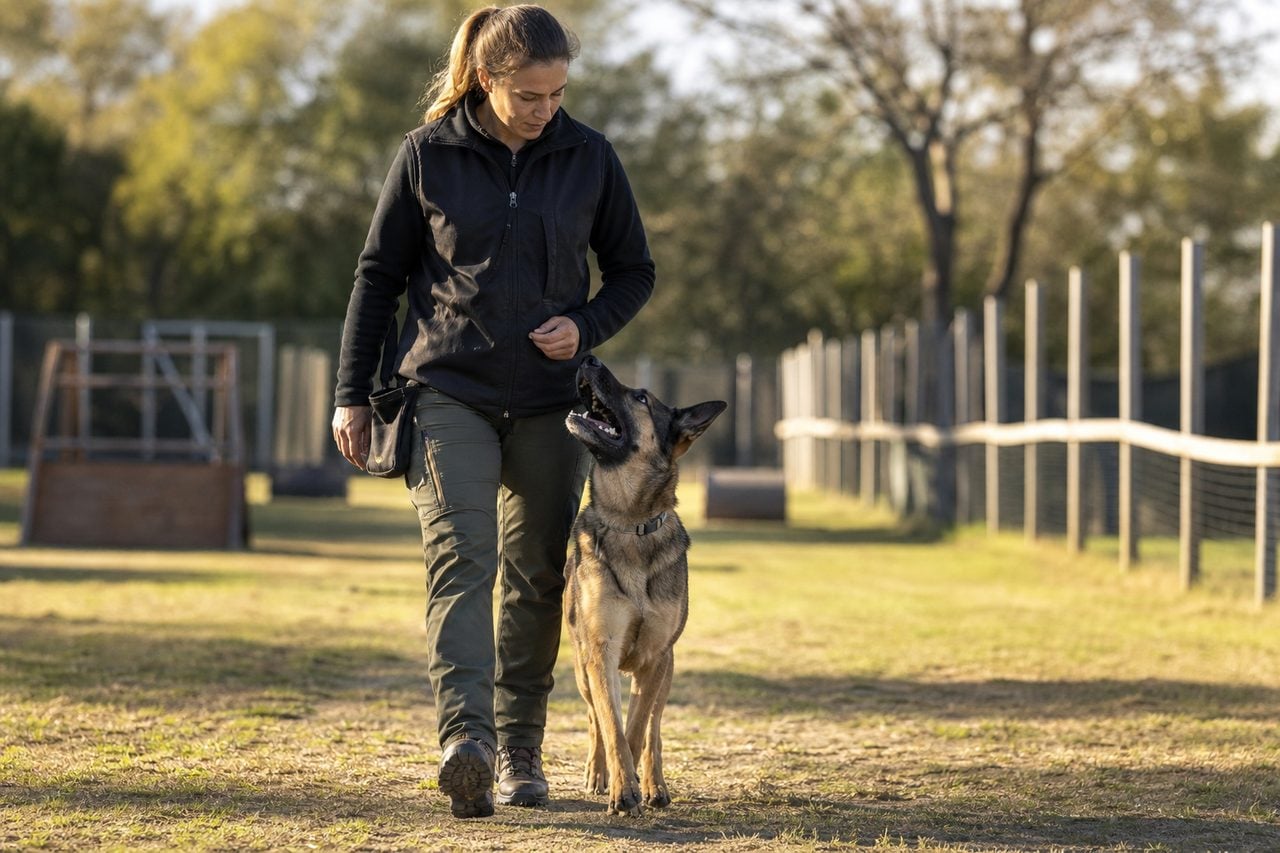
Board-and-train is one of the most misunderstood options in the dog-training world, and in a place like Traverse City it comes with a few local wrinkles worth thinking through before you commit. The idea is simple on paper: your dog lives with a professional trainer for a set stretch of time, usually two to six weeks, and comes home with a foundation of skills already in place. The reality is more nuanced, and the quality of the experience depends heavily on the program, the trainer’s methods, and how well the handoff back to you is handled.
Northern Michigan is a demanding environment for a dog. Families here are on the water at Grand Traverse Bay, hiking the dunes and forest trails near Sleeping Bear, and juggling a rhythm that swings from quiet winters to a summer flood of visitors, boats, and off-season chaos. A dog that pulls, bolts, or ignores a recall is a genuine problem when your backyard borders open woods or a busy bayfront. Board-and-train appeals to people who want a concentrated jump-start rather than months of slow weekly classes.
This guide walks through how board-and-train actually works, what it does and doesn’t fix, how to vet a program in the Traverse City region, and how to make sure the training sticks once your dog is back home. Because specialized programs are somewhat thinner in a smaller northern metro, we also cover when it makes sense to look toward the wider region.
What Board-and-Train Actually Is
Board-and-train — sometimes called a training board, immersion program, or stay-and-train — is a residential program where your dog lives with a trainer or at a training facility for a defined period. Instead of you attending weekly classes and doing the daily practice yourself, a professional handles the bulk of the initial teaching. Your dog gets multiple short training sessions a day, folded into a structured routine of rest, exercise, and controlled exposure to real-world situations.
The core appeal is intensity and consistency. Most owners, however well-intentioned, train in scattered bursts around work, kids, and errands. A good board-and-train replaces that inconsistency with a professional who knows exactly how to shape behavior, read subtle body language, and adjust in the moment. Over two to four weeks, a dog can build reliable responses to foundational cues far faster than a typical once-a-week class schedule allows.
Programs vary widely in what they promise. Some focus on basic obedience and manners — sit, down, place, loose-leash walking, coming when called, and settling calmly at home. Others specialize in puppy foundations, reactivity and leash aggression, or advanced off-leash reliability. It is important to understand that board-and-train is a starting point, not a finished product. A dog is not a machine you drop off broken and pick up fixed. The dog learns skills, but those skills only last if you continue the work.
The single most important thing to understand is that board-and-train trains the dog, but the transfer of those skills to you is what determines long-term success. The best programs devote real attention to the go-home process — teaching you the cues, the timing, and the follow-through so the dog responds to you the way it learned to respond to the trainer. A program that hands your dog back without meaningful owner coaching is only doing half the job.
Why Traverse City Families Consider It
The northern-Michigan lifestyle puts specific pressures on dogs and their people. Around Traverse City and the Bayfront, downtown foot traffic, waterfront parks, and a dense mix of dogs and visitors mean a poorly-socialized or reactive dog quickly becomes hard to manage in public. Families in Acme, Williamsburg, and along the East Bay often have larger properties near water, where a dog with no recall is a safety risk the moment the door opens.
Out on the Leelanau Peninsula, homes back onto orchards, vineyards, and open country, and wildlife is everywhere. A dog that chases deer, bolts after scent, or won’t return when called can end up miles into the woods or on a road. In Interlochen, Kingsley, and the rural south, and up through Elk Rapids and Kewadin to the north, the same pattern holds: space is abundant, distractions are constant, and a dog needs a genuinely reliable foundation to enjoy that freedom safely.
Then there is the seasonal swing. Kalkaska and the inland forests are quiet much of the year and then busy with hunters, snowmobilers, and outdoor traffic in season. Summer brings an enormous influx of people, boats, and short-term visitors to the whole region. A dog that is calm and manageable in the sleepy shoulder seasons can fall apart in the sensory overload of a Traverse City July. Board-and-train appeals to owners who want their dog ready before the busy season rather than scrambling through it.
Common reasons families here reach for a residential program include a new puppy during a hectic work stretch, a rescue dog with unknown history and rough manners, a dog whose leash pulling or jumping has become unmanageable, or an owner who simply does not have the daily bandwidth to build a foundation from scratch and wants a professional head start. Board-and-train is not a substitute for a relationship with your dog — it is a tool to accelerate the early, hardest part of building one.
What a Good Program Includes
Quality varies enormously in this category, so knowing what a well-run program looks like helps you separate the professionals from the operations that simply warehouse dogs. A strong board-and-train shares several features regardless of the trainer’s specific philosophy.
A clear intake and assessment. Before your dog ever boards, a good trainer wants to understand the dog’s history, temperament, health, and the specific behaviors you want addressed. They should ask about your home, your family, other pets, and your realistic goals. A program that takes any dog for any length of time without a proper assessment is a red flag.
Structured daily routine. Dogs thrive on predictable rhythm. A good facility runs multiple short training sessions per day interspersed with rest, enrichment, potty breaks, and appropriate exercise. Training that runs a dog into exhaustion or, at the other extreme, leaves it in a kennel most of the day with token sessions, will not produce durable results.
Real-world exposure. Skills learned only in a quiet training room rarely hold up in downtown Traverse City or on a busy trailhead. Good programs deliberately practice in progressively more distracting environments — parking lots, parks, around other dogs and people — so the dog generalizes what it learns.
Regular communication. You should expect updates — photos, videos, or written notes — throughout the stay. Video is especially valuable because it lets you see the exact cues and timing you will need to replicate at home. A trainer who goes dark for weeks is not one to trust with your dog.
A serious go-home and follow-up plan. This is where the best programs distinguish themselves. Look for one or more in-person transfer sessions where you learn to handle your dog, plus written guidance and some window of follow-up support. Many reputable programs include a few follow-up lessons or a support period after the dog comes home, because they know the first few weeks back are where families either lock in the progress or lose it.
Transparent, force-considered methods. Ask directly what happens when the dog gets it right and what happens when it gets it wrong. You want a trainer who can explain their approach in plain language, welcomes your questions, and lets you observe. Be wary of anyone who refuses to let you see the training space or is vague about their methods.
Vetting a Board-and-Train in the Traverse City Region
Because your dog will be living in someone else’s care, often for weeks, the vetting bar for board-and-train should be higher than for any other training service. You are trusting a facility with your dog’s safety and well-being, not just its education.
Visit in person before you book. Reputable trainers welcome a tour. Look at where the dogs sleep, how clean the space is, how the resident dogs behave, and whether the environment feels calm or chaotic. Trust your read of the place. If a program will not let you see where your dog will stay, walk away.
Ask about staff-to-dog ratios and overnight care. How many dogs board at once, and how many people are handling them? Is anyone on-site overnight, or checking in after hours? In a region where facilities may be smaller family operations rather than large commercial centers, a lower ratio can actually be a strength — but you want to know the specifics.
Confirm health and safety protocols. Vaccination requirements, protocols for illness or injury, a relationship with a local veterinarian, and secure fencing and containment all matter. Ask what happens if your dog gets sick or hurt during the stay.
Ask for references and look at real results. Talk to past clients, ideally ones with dogs similar to yours. Ask what the dog was like before and after, and — crucially — whether the training held up months later. Ask to see video of dogs the trainer has worked with.
Match the specialty to your need. A trainer excellent at puppy foundations may not be the right choice for serious reactivity or aggression, and vice versa. Be honest about your dog’s issues and confirm the program has genuine experience with them.
Specialized residential programs are somewhat thinner on the ground in a smaller northern metro than they are in larger markets. If you have a complex case — significant aggression, severe anxiety, or a need for a very particular methodology — you may find the right fit requires looking beyond the immediate Traverse City area. Some families travel to the wider region, including as far as Grand Rapids, to access a program that genuinely matches their dog’s needs. That said, plenty of solid general-obedience and manners board-and-train work can be handled locally, and starting your search close to home is always worthwhile.
The Handoff: Making the Training Stick
The most common way board-and-train disappoints is not because the dog failed to learn — it is because the skills never transferred cleanly to the owner and daily life. A dog that responds beautifully for a professional in a structured facility can slide right back to old habits at home if the humans do not hold up their end. Understanding this in advance is the single best thing you can do to protect your investment.
Dogs are highly context-sensitive. They learn not just the cue but the whole picture around it — the person, the place, the routine, the consequences. When your dog comes home, the context changes completely: different handler, different environment, different rules being enforced (or not). This is why the go-home process matters so much and why you should treat those transfer sessions as the most important part of the whole program.
Plan to be an active participant, not a spectator. In the handoff sessions, you should practice giving the cues yourself, get corrected on your timing and body language, and keep working until the dog responds to you reliably. Take notes or video so you can review the exact mechanics later. Ask what to do when the dog tests you — because it will — and how to respond consistently.
The first few weeks home are decisive. Keep the structure the trainer established: consistent cues, consistent rules, regular short practice sessions folded into daily life rather than long formal drills. Practice in the places you actually live your life — the yard, the driveway, a quiet stretch of a local park, then gradually busier settings like the bayfront or a trail parking lot. Generalizing the training to real Traverse City environments is your job, and it is the part that turns a temporary result into a lasting one.
Expect some regression and do not panic when it happens. A dog settling back into home life often tests boundaries in the first week or two. If you hold the line calmly and consistently, most dogs re-stabilize quickly. This is exactly where a program with real follow-up support earns its keep — a quick check-in with the trainer can head off a small slip before it becomes a re-entrenched habit.
Cost, Timing, and Whether It's Right for You
Board-and-train is generally the most expensive way to train a dog, because you are paying for room, board, and a professional’s concentrated daily time over a multi-week period. Pricing varies by program length, the trainer’s experience, the complexity of the behaviors involved, and what is included in the go-home and follow-up package. Rather than shopping on price alone, weigh what is included: a slightly higher-priced program with strong owner coaching and follow-up support is often the better value than a cheaper one that hands the dog back with no transfer plan.
Timing matters too, especially in a seasonal region. If you want your dog ready for a busy Traverse City summer — boats, visitors, crowded parks, and constant activity — book well ahead, because good local programs fill up and the run-up to summer is peak demand. Bringing a dog through a residential program in the quieter shoulder seasons can also be easier, giving you calmer conditions to practice the handoff before the chaos arrives.
Board-and-train tends to be a strong fit when you want a fast, structured foundation and are honest that your own daily schedule will not allow consistent from-scratch training; when a puppy or rescue needs a solid start during a hectic life stretch; or when a specific stubborn issue has resisted your own efforts. It is less ideal if your main goal is building your own handling skills and relationship from the ground up — in that case, private lessons or group classes where you do the work under guidance may serve you better and cost less.
Be realistic about what any program can deliver. No responsible trainer guarantees a behavior will never resurface, and no residential stay replaces the ongoing relationship and consistency your dog needs from you. Board-and-train is a powerful accelerator, not a cure. Used well — with a vetted program, an engaged handoff, and consistent follow-through at home — it can give a Traverse City dog and its family a genuinely strong start on a life spent enjoying the water, the woods, and the northern-Michigan seasons together.
As you compare options, use the directory listings below to find programs serving Traverse City and the surrounding communities, from the Leelanau Peninsula to Kalkaska and the inland forests. Reach out to a few, ask the questions above, and visit in person before you decide.
Board & Train in Traverse City: Local Options & Nearest Specialists
A few Traverse City-area trainers can help with milder board & train needs:
- Sit Means Sit Dog Training — 5.0★ (1 review)
- Great Lakes K9 Solutions, LLC
Nearest board & train specialists — Grand Rapids
For complex cases, some families travel to the larger pool of specialists in the Grand Rapids area for an assessment or a board-and-train stay. Top-reviewed options:
- Kingseed Kennels & Dog Training — 5.0★ (140 reviews)
- Red Sky Dog Training, LLC — 5.0★ (22 reviews)
- Ganderwood LLC — 5.0★ (1 review)
- West Michigan K9 — 4.9★ (337 reviews)
- Pine Hill Kennel & Dog Training — 4.9★ (51 reviews)
- Kona’s K9 Retreat — 4.9★ (38 reviews)
- House of Paws Dog Training — 4.6★ (9 reviews)
See all Grand Rapids board & train trainers →
Frequently Asked Questions
How long does a board-and-train program usually last?
Most programs run somewhere between two and six weeks, with three to four weeks being common for general obedience and manners. Shorter stays suit focused goals like puppy foundations or a single problem behavior, while longer stays are used for more complex issues such as reactivity or building advanced off-leash reliability. The right length depends on your dog’s temperament, the behaviors involved, and how the program structures its training. Ask the trainer to explain why they recommend a particular duration for your specific dog rather than a one-size-fits-all package.
Will my dog forget me or bond only with the trainer?
No. Dogs form lasting attachments to their families and do not forget you over a few weeks away. What can happen is that your dog learns to respond crisply to the trainer’s cues and timing, and needs a proper handoff to respond the same way to you. That is exactly why the go-home transfer sessions matter so much. Once you learn the cues and practice consistently, your dog reconnects with your daily life quickly. Choosing a program with strong owner coaching and follow-up support makes this transition smooth.
Is board-and-train worth it compared with regular classes?
It depends on your goals and your schedule. Board-and-train delivers a fast, intensive foundation and suits owners whose daily lives make consistent from-scratch training unrealistic. Group classes and private lessons cost less and build your own handling skills more directly, but require you to do the steady daily work. Many families use a hybrid: a board-and-train to establish the foundation, then ongoing lessons or classes to maintain and extend it. There is no universally right answer — the best choice is the one that matches your dog’s needs and how much daily time you can realistically commit.
What should I look for when visiting a facility in the Traverse City area?
Visit in person before booking. Look at where the dogs sleep and whether the space is clean, secure, and calm rather than chaotic. Ask how many dogs board at once, the staff-to-dog ratio, and whether anyone is on-site or checking in overnight. Confirm vaccination requirements, illness and injury protocols, and a relationship with a local veterinarian. Ask to see video of past dogs and to speak with references whose dogs had similar issues. If a program will not let you tour the space or is vague about its methods, treat that as a reason to keep looking.
Do I need to travel outside Traverse City to find a good program?
Not necessarily. Solid general-obedience and manners board-and-train work can often be handled locally, and starting your search close to home in Traverse City, the Leelanau Peninsula, or the surrounding communities is always worthwhile. That said, specialized residential programs are somewhat thinner in a smaller northern metro. If you have a complex case such as significant aggression, severe anxiety, or a need for a very specific methodology, you may find the right fit requires looking to the wider region — some families travel as far as Grand Rapids for a program that genuinely matches their dog. Weigh the drive against the importance of the right expertise.
What happens if the training doesn't hold up after my dog comes home?
Some regression in the first week or two home is normal as your dog settles back into family life and tests boundaries in the new context. The key is holding the structure the trainer established — consistent cues, consistent rules, and short daily practice in the environments you actually use. Most dogs re-stabilize quickly when the humans stay consistent. This is where a program with real follow-up support pays off: a quick check-in can correct a small slip before it becomes a habit. If a program offers no transfer coaching or follow-up at all, that is a sign to be cautious before enrolling.
Related: read our complete board & train guide or the full Traverse City dog training overview.
Ready to find the right board & train pro in Traverse City?