
Dog Training Prices in Traverse City, MI
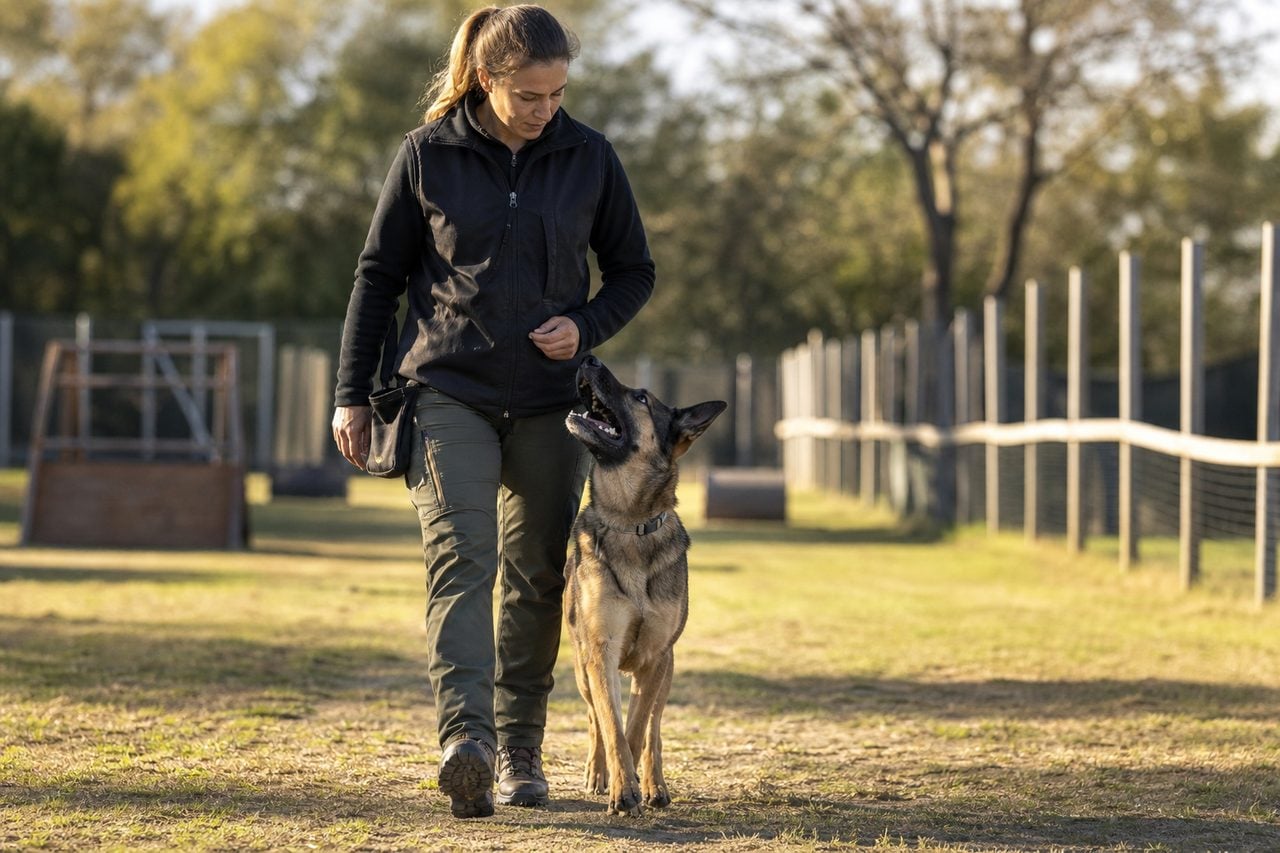
Understanding what dog training costs helps you plan a budget, compare options fairly, and recognize good value when you see it. Prices vary widely because dog training is not a single product. A weekly group obedience class, a series of private in-home lessons, and an intensive board-and-train program are very different services, and they are priced accordingly.
- How Dog Training Is Typically Priced
- What Drives the Price Up or Down
- Comparing Value Across Formats
- Questions to Ask Before You Pay
- Budgeting and Getting the Most for Your Money
- Free and Lower-Cost Ways to Support Your Training
- Understanding Packages, Payment, and What You Are Committing To
- Reviewed trainers
- FAQ
In the Traverse City area, cost is shaped by local realities too. The northern Michigan metro is geographically spread out across Grand Traverse, Leelanau, Antrim, and Kalkaska counties, so travel distance can factor into private and in-home pricing, and the seasonal rhythm of a resort town can affect availability. This guide explains the common pricing structures, the factors that move the numbers up or down, and how to judge whether a program is worth what it costs.
Rather than quoting specific dollar figures, which change over time and differ from trainer to trainer, this guide focuses on the ranges, structures, and value factors you should understand. For current pricing, contact the trainers listed on this page directly. Armed with the framework below, you will be able to have a productive conversation and compare quotes on an apples-to-apples basis.
How Dog Training Is Typically Priced
Most trainers structure their pricing around the format of the service. Knowing the common models makes any quote easier to interpret.
Group classes are usually sold as a multi-week course with a single flat price covering the whole series, commonly four to eight weekly sessions. Because the trainer’s time is shared among several dogs, group classes are the most economical way to get professional instruction, and they are where most owners begin.
Private lessons are priced per session or, more often, sold in packages of several sessions at a per-session rate that usually drops as the package grows. Private work costs more per hour than a group class because you are buying the trainer’s undivided attention and a plan tailored to your dog.
In-home training follows a similar per-session or package structure to private lessons, and may add a travel component depending on where you live relative to the trainer. Given how spread out the Traverse City metro is, a home out on the Leelanau Peninsula or toward Kalkaska may carry a different travel consideration than one in town.
Board-and-train programs, where the dog stays with the trainer for a period, are typically the highest-priced option because the fee bundles training, boarding, feeding, and full-day care over a set number of days or weeks. These are usually quoted as a single program price.
Day training or day school, where you drop the dog off for training sessions and pick up later, sits between group and board-and-train in both intensity and cost.
When comparing quotes, always confirm exactly what is included, since a slightly higher price that covers more sessions, materials, or follow-up support can be the better value.
What Drives the Price Up or Down
Two trainers can charge quite different amounts for what sounds like the same service, and there are usually good reasons. Understanding the drivers helps you interpret a quote instead of just reacting to the number.
- Format and group size. As covered above, shared instruction costs less per owner than one-on-one attention. A smaller group with more individual attention may cost more than a large one, and that can be money well spent.
- Session length and program depth. A one-hour session and a ninety-minute session are not the same product, and a six-session package covers more ground than a three-session one. Compare total instruction time, not just the headline price.
- The trainer’s experience and specialization. A trainer with deep experience or specialized behavior expertise typically commands higher rates, which can be entirely justified for a complex problem that a generalist might not resolve.
- Travel and location. For in-home and private work, distance matters in a spread-out metro. A trainer driving out to Elk Rapids, Interlochen, or the inland forests around Kalkaska may factor travel time into the rate.
- What is included. Some programs bundle written plans, take-home materials, phone or email support between sessions, or a follow-up visit. Others charge for these separately. These extras affect both the price and the value.
- Seasonality and demand. In a resort town, availability can tighten during peak seasons, and popular programs may fill quickly. This affects scheduling more than headline price, but it is worth planning around.
None of these factors makes a higher or lower price automatically right or wrong. The goal is to understand what you are paying for so you can judge value rather than just cost.
Comparing Value Across Formats
The cheapest option is not always the best value, and the most expensive is not always the most effective. The right choice depends on matching the format to your dog and your goals.
Group classes deliver the most training per dollar for a well-adjusted dog whose main need is general obedience and socialization. If your dog gets along with others and your issues are everyday manners, a group course is usually the smartest first investment. The built-in socialization and distraction practice are hard to buy any other way.
Private and in-home lessons cost more but can be more efficient for a specific problem. If your dog has one stubborn issue, a couple of focused private sessions may solve it faster than a full group course would, which can make the higher per-session rate a genuine bargain in practice. They are also the right call when a group setting will not work for your dog or your schedule.
Board-and-train carries the highest price and can accelerate certain results, but its value hinges entirely on the transfer of skills back to your home and your handling. A big investment loses its worth if the results do not carry over, so the quality of the handoff and follow-up coaching is central to whether it pays off.
A useful way to think about it is cost per result rather than cost per session. A slightly pricier program that actually solves your problem and sticks is cheaper in the long run than a bargain option that leaves you back where you started. Match the format to the job, and value tends to follow.
Questions to Ask Before You Pay
A short conversation before you commit prevents surprises and helps you compare fairly. When you contact the trainers on this page, consider asking:
- What exactly is included in the price? Number of sessions, session length, materials, and any between-session support.
- How is the program structured? Number of weeks or visits, what each session covers, and what your dog should be able to do by the end.
- What is your training approach? You want clear, humane, reward-based methods explained in plain language.
- Is there a travel charge for my location? Especially relevant for in-home work if you are outside central Traverse City.
- What happens if we need more time? Ask about the cost of additional sessions and whether packages can be extended.
- Do you offer any assessment first? A trainer who evaluates your dog before quoting a plan is a good sign.
- What is your policy on missed sessions or refunds? Understand the terms before you pay, particularly for prepaid packages.
Be cautious of two things. First, be wary of guarantees, since no ethical trainer can promise a specific behavioral outcome because results depend heavily on your follow-through and the individual dog. Second, be skeptical of a price that seems far below everything else, as it may reflect very large classes, minimal individual attention, or a much shorter program than it first appears. Clarity, not just a low number, is the sign of a trustworthy quote.
Budgeting and Getting the Most for Your Money
Once you understand the pricing landscape, a few strategies help you get strong results without overspending.
Start with the right format for your goal. Many owners overspend by defaulting to private lessons when a group class would have served just as well, or by under-investing in a bargain option that does not fit the problem. Matching format to need is the single biggest lever on value.
Do the homework between sessions. The results you get depend enormously on the practice you put in. A group course you actually practice for beats an expensive private package you neglect. Your daily effort is effectively free training that multiplies whatever you paid a professional.
Consider packages when they fit. If you know you want several private or in-home sessions, a package usually lowers the per-session rate. Just be sure the number of sessions matches a realistic plan rather than buying more than you need.
Invest early with puppies. Money spent on early puppy socialization and foundation training tends to prevent more expensive problems later. Preventing a habit is almost always cheaper than fixing an entrenched one.
Plan around the season. In a resort area, booking ahead of peak demand can improve availability and give you a wider choice of programs. Indoor options matter through the northern Michigan winter, so factor that into timing as well.
Finally, keep perspective on the return. Training is a one-time or short-term investment in a dog you will live with for a decade or more. A calmer, safer, more manageable dog makes daily life better in ways that are hard to put a number on, from relaxed walks on the TART Trails to a dog you can confidently bring along on a Leelanau weekend. Judged over the life of the dog, quality training is one of the better values in dog ownership.
Free and Lower-Cost Ways to Support Your Training
Professional training is worth paying for, but it works best alongside good habits you can build at no extra cost. These do not replace a qualified trainer, and they are especially not a substitute for professional help with serious behavior issues, but they stretch the value of whatever you invest.
Daily practice is free and the most important ingredient. A few short sessions a day, woven into routines you already have like mealtimes and walks, cost nothing and drive most of your results. No amount of paid instruction substitutes for it.
Reputable learning resources can reinforce what a trainer teaches. Well-regarded books and materials on humane, reward-based training help you understand the why behind the techniques, which makes you a better handler between sessions. Treat these as a supplement to hands-on coaching, not a replacement for it.
Everyday environments double as training grounds. Practicing loose-leash walking on a quiet neighborhood street or a calm stretch of the TART Trails, and building focus in gradually busier spots around town, generalizes your dog’s skills at no cost. Real-world practice is exactly what turns a dog that knows cues at home into one that responds out in the world.
Consistency across the household is free and powerful. When everyone uses the same cues and the same rules, your dog learns faster and the professional instruction you paid for goes further.
The most cost-effective approach combines the right professional format for your goals with diligent, free practice at home. That pairing consistently delivers better results than spending more on instruction while skipping the daily work, and it lets every dollar you invest go as far as possible.
Understanding Packages, Payment, and What You Are Committing To
Beyond the headline number, how a program is packaged and paid for affects both your total cost and your flexibility, and it pays to understand the structure before you commit. Many trainers offer their services in tiers, and the way those tiers are built can make one option a much better fit for your situation than another that looks similar on the surface.
Packages are the most common structure for private and in-home work. A trainer will typically sell a bundle of several sessions at a lower per-session rate than a single one-off lesson. This usually represents genuine savings, but it also asks you to commit up front, so it is worth being confident that the number of sessions matches a realistic plan for your dog rather than buying a large bundle before you know how quickly your dog will progress. A sensible middle path is to ask whether you can start with an assessment or a single session, then move into a package once you and the trainer agree on the scope.
Group classes are almost always sold as a full course paid at enrollment, covering the entire multi-week series. Because the value depends on attending every week, factor your own reliability into the decision; a course you attend consistently is money well spent, while one you skip half of is not. Ask about the policy for missed classes, since some programs allow you to make up a session and others do not.
A few practical points round out the picture. Clarify what happens if you need more time than the original plan, and what additional sessions cost. Understand the refund and cancellation terms for anything you prepay, particularly for packages and board-and-train programs where the sums are larger. And if budget is a real constraint, say so plainly when you inquire, since some trainers can suggest a more economical starting point, such as a group class instead of private lessons, or a shorter initial commitment that lets you gauge results before investing further. A trainer who responds to that conversation with clear, honest options is showing you exactly the kind of transparency worth paying for. Around the Traverse City area, where seasonal budgets and schedules are a reality for many families, having that conversation early makes it far easier to find a plan that fits both your dog and your circumstances.
Reviewed Dog Trainers in Traverse City
These reviewed Traverse City-area trainers from our directory can walk you through pricing for their programs. Each links to a full profile with specialties, certified credentials, reviews, and contact info:
- Sit Means Sit Dog Training — 5.0★ (1 review)
- Barks and Rec. Animal Training and Behavior — 4.8★ (60 reviews)
- Companion Canines — 4.8★ (25 reviews)
- Great Lakes K9 Solutions, LLC
See all Traverse City dog training prices trainers →
Frequently Asked Questions
Why do dog training prices vary so much?
Because dog training is not a single product. A multi-week group class, a package of private in-home lessons, and an intensive board-and-train program are very different services with very different costs. Within each format, price is shaped by session length, program depth, the trainer’s experience and specialization, travel distance in a spread-out metro like the Traverse City area, and what is bundled in, such as materials and between-session support. When you compare quotes, confirm exactly what is included so you are comparing like for like.
Which training format gives the best value?
It depends on your dog and your goal. Group classes deliver the most training per dollar for a well-adjusted dog that needs general obedience and socialization, so they are usually the smartest first investment. Private or in-home lessons cost more but can be more efficient for a specific stubborn problem. Board-and-train is the priciest and its value hinges on how well the skills transfer back home. Think in terms of cost per result rather than cost per session.
Are private lessons worth the higher cost?
They can be, depending on the situation. Private and in-home lessons cost more per hour than a group class because you get the trainer’s undivided attention and a plan tailored to your dog. For one focused problem, a couple of private sessions may solve it faster than a full group course, which can make the higher rate a genuine bargain. They are also the right choice when a group setting will not work for your dog or your schedule. For general obedience on a social dog, a group class is often the better value.
Should I be cautious of very cheap training or money-back guarantees?
Yes, on both counts. A price far below everything else may reflect very large classes, minimal individual attention, or a much shorter program than it first appears, so ask what is actually included. And be wary of guarantees of a specific behavioral outcome, since no ethical trainer can promise results that depend heavily on your follow-through and the individual dog. Clarity about what you are paying for, not just a low number, is the sign of a trustworthy quote.
Does living outside Traverse City affect the price?
It can, particularly for in-home and private training. The northern Michigan metro is spread across several counties, so a trainer driving out to the Leelanau Peninsula, Elk Rapids, Interlochen, or the Kalkaska area may factor travel time into the rate. Group classes at a fixed location are not affected this way, though you should factor in your own commute. When you contact a trainer for in-home work, ask directly whether there is a travel charge for your location.
How can I lower my training costs without cutting corners?
Start by matching the format to your goal rather than defaulting to the most expensive option; a group class often serves as well as private lessons for general obedience. Do the daily practice between sessions, since that free effort drives most of your results and multiplies whatever you paid. Consider packages when you genuinely need several sessions, invest early with puppies to prevent costlier problems later, and reinforce professional instruction with reputable learning resources and real-world practice on routes like the TART Trails.
Related: read our complete dog training prices guide or the full Traverse City dog training overview.
Ready to find the right dog training prices pro in Traverse City?