
Puppy Training in Jackson, MI
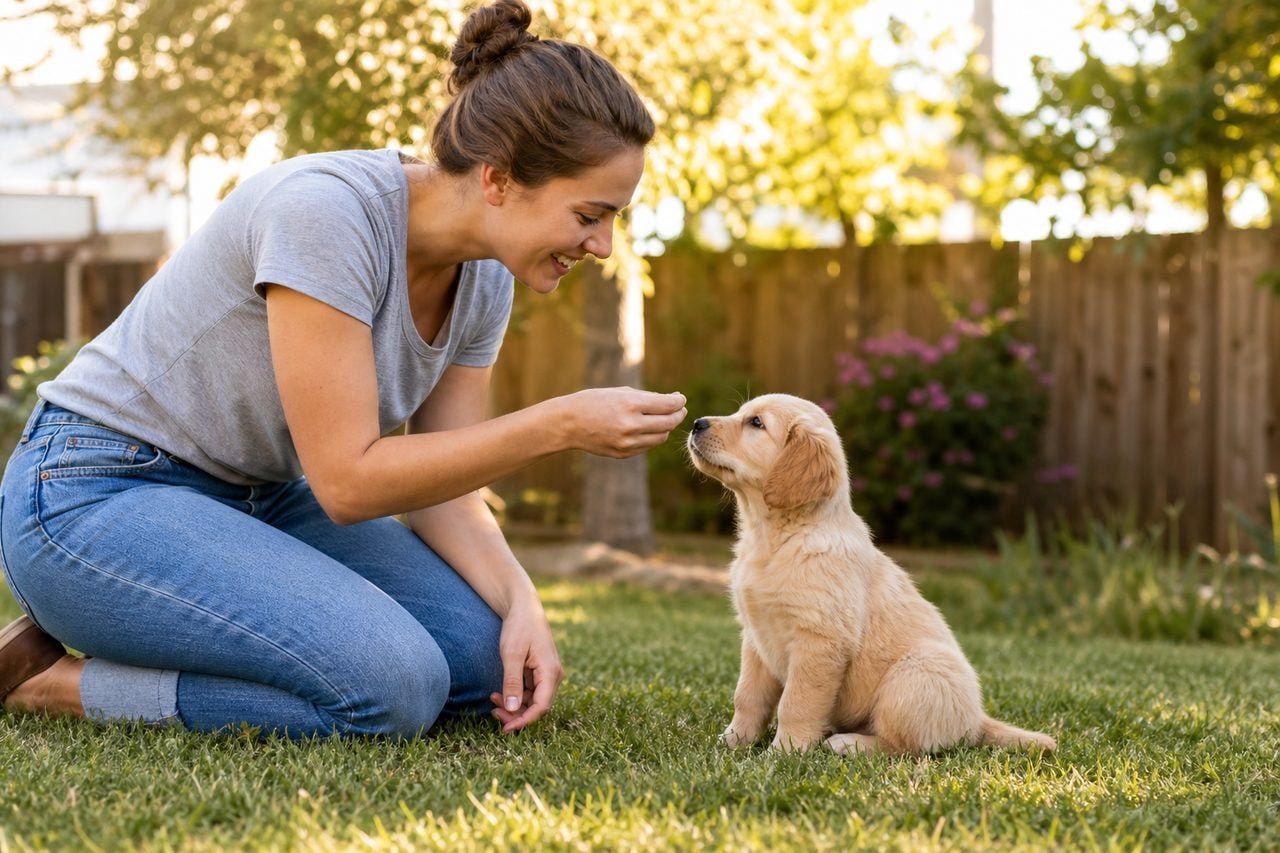
Bringing a new puppy home in the Jackson area means starting a training relationship that will shape the next decade or more of life together. The first few months set the tone for everything that follows, from how your dog greets guests to how it handles a walk along the Falling Waters Trail or a busy Saturday at the farmers market downtown. Good early training is less about strict obedience drills and more about building trust, teaching your puppy how to learn, and gently showing it that the human world is a safe, predictable place.
- When to Start Puppy Training in the Jackson Area
- House Training and Crate Habits That Actually Stick
- The First Skills Worth Teaching
- Reward-Based Methods and Why They Work
- Using Local Parks and Trails as Training Grounds
- Common Puppy Challenges and How to Handle Them
- Building a Realistic Weekly Training Routine
- Reviewed trainers
- FAQ
South-central Michigan offers a genuinely good environment for raising a well-adjusted dog. Owners here range from in-town families near Ella Sharp Park to rural households on the chain of lakes around Michigan Center and Napoleon, and that variety gives puppies plenty of different situations to grow into. This guide walks through what puppy training actually involves in the Jackson area, how to build a realistic routine, and how to work with the seasons, the local geography, and the resources available across Jackson County.
The advice below is general and educational. Every puppy is an individual, and a local trainer or your veterinarian can help you tailor a plan to your specific dog, home, and goals.
When to Start Puppy Training in the Jackson Area
The honest answer is that training starts the moment your puppy arrives home, whether you plan it or not. Puppies are learning constantly, absorbing which behaviors get attention, which spots are comfortable to sleep in, and how the humans around them tend to react. The question is not whether to begin, but whether you will guide that learning intentionally or leave it to chance.
Most puppies come home between eight and twelve weeks of age. That window overlaps with a critical developmental period, which is one reason early, gentle exposure matters so much. You can begin teaching a name, simple attention, and basic house habits right away, using nothing more than food, praise, and patience. Formal skills like a reliable sit, a settled down, or loose-leash walking can be layered in over the following weeks as your puppy matures.
Seasonality plays a real role here in Jackson County. A puppy that arrives in the depth of a Michigan winter will spend more early weeks indoors, which makes it important to create structured enrichment at home and to plan safe socialization that does not depend on long outdoor sessions. A summer puppy, by contrast, can take advantage of early morning walks around Ella Sharp Park before the heat builds. Neither timing is better or worse; each simply calls for a slightly different plan.
One practical note: coordinate the pace of outdoor exposure with your veterinarian, since a very young puppy may not yet be fully protected against common illnesses. Many families balance this by doing early socialization in controlled, clean environments and saving crowded public spaces for a little later.
It also helps to think about training in stages rather than as a single event. The first stage, in the earliest weeks, is really about acclimation: helping the puppy feel safe, learning the household rhythm, and building a bond of trust. The second stage layers in simple, positive teaching once the puppy is settled. The third stage, as the puppy matures toward and past the four-month mark, is where you generalize skills to more places and more distractions. Owners who try to skip straight to polished obedience often get frustrated, while those who respect the sequence tend to find the whole process smoother. Wherever your puppy falls on that timeline, meeting it where it is rather than where you wish it were is the fastest path forward.
House Training and Crate Habits That Actually Stick
House training is the single most urgent skill for most new owners, and it is largely a matter of management and consistency rather than clever technique. The core idea is simple: prevent accidents by controlling access and timing, reward every success generously, and never punish a mess you find after the fact, since a puppy cannot connect a scolding to something it did minutes earlier.
Build a rhythm around the predictable moments when a young puppy needs to relieve itself: shortly after waking, within a few minutes of eating or drinking, after play, and before settling for the night. Take the puppy to the same outdoor spot each time, wait quietly, and reward calmly the instant it finishes. In an in-town Jackson home with a small yard, this is straightforward. On a rural or lakeside property, keep early trips close to the house so the puppy learns a clear routine before it has the run of a larger space.
Michigan winters add a wrinkle. Deep snow, ice, and bitter mornings can tempt both puppy and owner to cut the outdoor trip short. A shoveled, predictable potty path near the door helps enormously, as does going out with your puppy rather than sending it alone, so you can reward the right behavior immediately.
The crate deserves special attention because a well-introduced crate is a house-training ally, a safe travel tool, and a place your dog can rest undisturbed. Introduce it slowly as a good place, feeding meals inside and never using it as punishment. Sized correctly, just big enough to stand, turn, and lie down, a crate taps into a puppy’s natural reluctance to soil its sleeping area. Used thoughtfully, it shortens the whole house-training process considerably.
The First Skills Worth Teaching
Once a puppy is settling in, a handful of foundational behaviors will carry more weight than any long list of tricks. These are the skills that make daily life smoother and that form the base for everything more advanced later.
- Attention and name response: Teaching your puppy that looking at you pays off is the root of all other training. Say the name, reward the glance, and repeat in low-distraction settings before adding challenge.
- Sit: Easy to teach with a food lure and endlessly useful as a default polite behavior at doors, before meals, and when greeting people.
- Recall: Coming when called can genuinely be a safety skill, especially for lake-country and rural dogs with more open space around them. Start in the house and yard, keep it always rewarding, and never call your puppy to something it dislikes.
- Loose-leash walking: Puppies pull because the world is exciting and pulling works. Reward walking near you, stop when the leash goes tight, and build duration gradually on quiet stretches before tackling a busier trailhead.
- Settle and handling: Teaching a puppy to relax on a mat and to accept gentle handling of paws, ears, and mouth pays dividends at the groomer, the vet, and during Michigan mud season.
Keep sessions short, a few minutes at a time, several times a day. Puppies have brief attention spans, and ending while your puppy is still eager keeps training something it looks forward to.
Reward-Based Methods and Why They Work
Modern puppy training leans heavily on positive reinforcement, and for good reason. Rewarding the behavior you want makes that behavior more likely to happen again, while building a puppy that is confident and eager to engage rather than anxious about making mistakes. For a young dog whose personality is still forming, that emotional foundation matters as much as any specific cue.
The mechanics are simple. Mark the moment your puppy does something right, either with a clicker or a consistent word like yes, and follow it immediately with something the puppy values. For most puppies that is a small, soft treat, but praise, play, and access to something fun all work too. Timing is everything: the reward should follow the behavior within a second or two so the connection is unmistakable.
Reward-based training does not mean permissiveness. Boundaries still matter, and structure helps a puppy feel secure. The difference is in how those boundaries are taught. Instead of punishing an unwanted behavior, you prevent it through management and teach a better alternative that earns reward. A puppy that jumps on visitors, for example, is taught that four feet on the floor or a sit is what opens the door to attention.
This approach also travels well across the varied settings a Jackson-area dog encounters. The same puppy might need to be calm in a downtown coffee line, focused on a wooded trail, and relaxed around visiting relatives at a lake house. A dog trained through reward and clear communication generalizes those good habits far more readily than one trained through intimidation.
Using Local Parks and Trails as Training Grounds
Once your puppy has some basic skills and your veterinarian has cleared broader outings, the Jackson area offers excellent places to practice in the real world. The key is to match the difficulty of the location to your puppy’s current ability, starting easy and adding distraction only as skills become reliable.
Quieter corners of larger parks make ideal early practice grounds. Ella Sharp Park has open, grassy areas where you can work on recall and attention at a distance from foot traffic, choosing a low-key time of day. The paved Falling Waters Trail, which runs west from the Jackson area toward Concord and the lakes, is a wonderful place to build loose-leash walking because its predictable surface and steady flow of walkers and cyclists give you a controlled way to add mild distraction. Start on a lightly used section and keep sessions short.
The area around Cascades Falls at Sparks Foundation County Park can be busier, especially in warm months, which makes it a better graduation exercise than a first outing. Use it to test skills your puppy already performs well elsewhere. For lake-country families near Michigan Center, Napoleon, or Clarklake, the water itself is a training opportunity: teaching a calm approach to the shoreline and a solid recall around the distraction of ducks and other dogs is genuinely valuable.
Whatever the location, follow local ordinances across the Jackson area regarding leashes and cleanup, keep your puppy on leash unless you are in a designated, secure space, and always bring water and waste bags. Practicing good public manners early is part of raising a dog that is welcome everywhere.
Common Puppy Challenges and How to Handle Them
Certain challenges show up in nearly every puppy household, and knowing they are normal makes them much easier to work through. None of them mean you have a bad puppy or that you are failing; they are simply developmental stages to manage.
Nipping and mouthing is universal. Puppies explore the world with their mouths and play with their littermates using their teeth, so they arrive expecting to do the same with you. Redirect to an appropriate chew toy, and if the mouthing gets too enthusiastic, calmly end the interaction for a moment so your puppy learns that teeth on skin make the fun stop.
Chewing intensifies during teething, which can be miserable for a puppy and expensive for your furniture. Provide a rotation of safe chew items, manage access to valuables, and consider that a frozen chew can soothe sore gums during the worst weeks.
Overexcitement and jumping reflect a puppy that has not yet learned calm greetings. Reward four feet on the floor and calm behavior, and ask visitors to ignore the puppy until it settles.
Nighttime fussing is common in the first weeks as a puppy adjusts to sleeping away from its littermates. A consistent bedtime routine, a comfortable crate near you at first, and a final potty trip usually settle things within a week or two.
If any behavior feels beyond what you can manage, or if you see signs of genuine fear or aggression, reach out to a qualified local trainer or your veterinarian early. Small problems are far easier to resolve than entrenched ones, and Jackson-area professionals cover a wide travel radius across the county.
Building a Realistic Weekly Training Routine
Consistency beats intensity when it comes to puppy training. A few focused minutes several times a day, woven into normal life, will accomplish more than one long weekend session. The goal is to make training a background habit rather than a separate chore.
A workable routine might look like this. In the morning, a short session on attention and sit before breakfast, followed by a potty trip and a brief, calm walk. Midday, a few minutes of handling practice and a recall game in the yard. In the evening, a slightly longer outing once your puppy is cleared for it, perhaps a quiet stretch of the Falling Waters Trail, followed by settle practice while the household winds down. Threaded through all of it are the countless small teaching moments of daily life: asking for a sit before meals, rewarding calm behavior, and practicing house-training rhythm.
Adjust the plan to the season and your household. Winter weeks lean more on indoor training games and enrichment, while summer favors early outings before the heat. A rural family might build more recall practice into a larger property, while an in-town family focuses on polite behavior around neighbors and sidewalks.
Track progress loosely so you can see growth and spot sticking points. Many owners find that enrolling in a structured puppy class provides the accountability and expert feedback that keeps a routine on track, and it doubles as valuable socialization. Whether you train independently or with local help, the households that succeed are simply the ones that show up in small ways, day after day.
Mental exercise deserves as much attention as physical exercise, and it is easy to underestimate how much it tires a young dog. A puppy that has spent ten minutes working through a food puzzle, practicing a new cue, or sniffing its way along a novel patch of grass is often calmer than one that has simply run in the yard. This matters especially during Michigan’s coldest and wettest stretches, when outdoor time is limited. Scatter-feeding a portion of the daily kibble in the grass, hiding a favorite toy for the puppy to find, and rotating chew items all provide the kind of enrichment that prevents boredom-driven mischief. A tired puppy, tired in the right way, is a well-behaved puppy, and building enrichment into the routine reduces many of the nuisance behaviors owners struggle with.
Finally, expect plateaus and the occasional backward step, because they are a normal part of development rather than a sign of failure. Puppies go through phases where a skill that seemed solid suddenly wobbles, particularly as they approach adolescence. The answer is not to escalate pressure but to briefly make the exercise easier, rebuild success, and stay patient. Consistency through those dips is exactly what separates a dog that ends up reliable from one that stays hit-or-miss.
Reviewed Puppy Training Trainers in Jackson
These reviewed Jackson-area trainers from our directory handle puppy training. Each links to a full profile with specialties, certified credentials, reviews, and contact info:
- Divinity K9 — 4.9★ (136 reviews)
- A1 Positive Dog Training — 5.0★ (3 reviews)
- Passion Fur Paws — 4.2★ (67 reviews)
- All Obedience Dog Training — 3.5★ (8 reviews)
See all Jackson puppy training trainers →
Frequently Asked Questions
How old should my puppy be before I start training?
You can start the day your puppy comes home, typically around eight to twelve weeks. Early training focuses on gentle, positive experiences: name recognition, house-training, handling, and simple cues like sit. Formal skills develop over the following weeks. Coordinate the pace of outdoor socialization with your veterinarian, since a very young puppy may not yet be fully protected against common illnesses.
How long does it take to house train a puppy in Michigan?
Many puppies make solid progress within a few weeks of consistent effort, though full reliability often takes several months as the puppy’s bladder control matures. Michigan winters can slow things down when deep snow and cold make outdoor trips less appealing, so a shoveled potty path and going outside with your puppy to reward success immediately both help keep momentum through the colder months.
Is it better to train my puppy myself or hire a local trainer?
Both approaches can work, and many Jackson-area owners do a mix. Training at home builds your daily relationship and handles the basics, while a professional class or private sessions add structured guidance, socialization, and expert feedback on trickier issues. If you encounter behavior you cannot resolve, or you see genuine fear or aggression, reaching out to a qualified local trainer early is worthwhile.
Where can I safely practice training with my puppy around Jackson?
Start in low-distraction settings like your home and yard, then graduate to quieter areas of larger parks such as Ella Sharp Park and lightly used stretches of the Falling Waters Trail. Busier destinations like Cascades Falls at Sparks Foundation County Park work better once skills are reliable. Follow local ordinances across the Jackson area on leashing and cleanup, and confirm your puppy is cleared for public outings first.
Why does my puppy bite my hands and clothes so much?
Mouthing and nipping are completely normal. Puppies explore with their mouths and are used to playing with littermates using their teeth. Redirect to an appropriate chew toy, and if the mouthing gets too rough, calmly pause the interaction so your puppy learns that teeth on skin end the fun. This behavior typically eases as the puppy matures and learns bite inhibition, often improving noticeably over the first several months.
How much training does a puppy need each day?
Short and frequent beats long and occasional. A few minutes several times a day, plus the natural teaching moments of daily life like asking for a sit before meals, is ideal for a young puppy’s brief attention span. Ending each session while your puppy is still eager keeps training something it enjoys. Consistency across the week matters more than any single long session.
Related: read our complete puppy training guide or the full Jackson dog training overview.
Ready to find the right puppy training pro in Jackson?