
Puppy Training in Columbus, OH — Classes, Costs & How to Choose
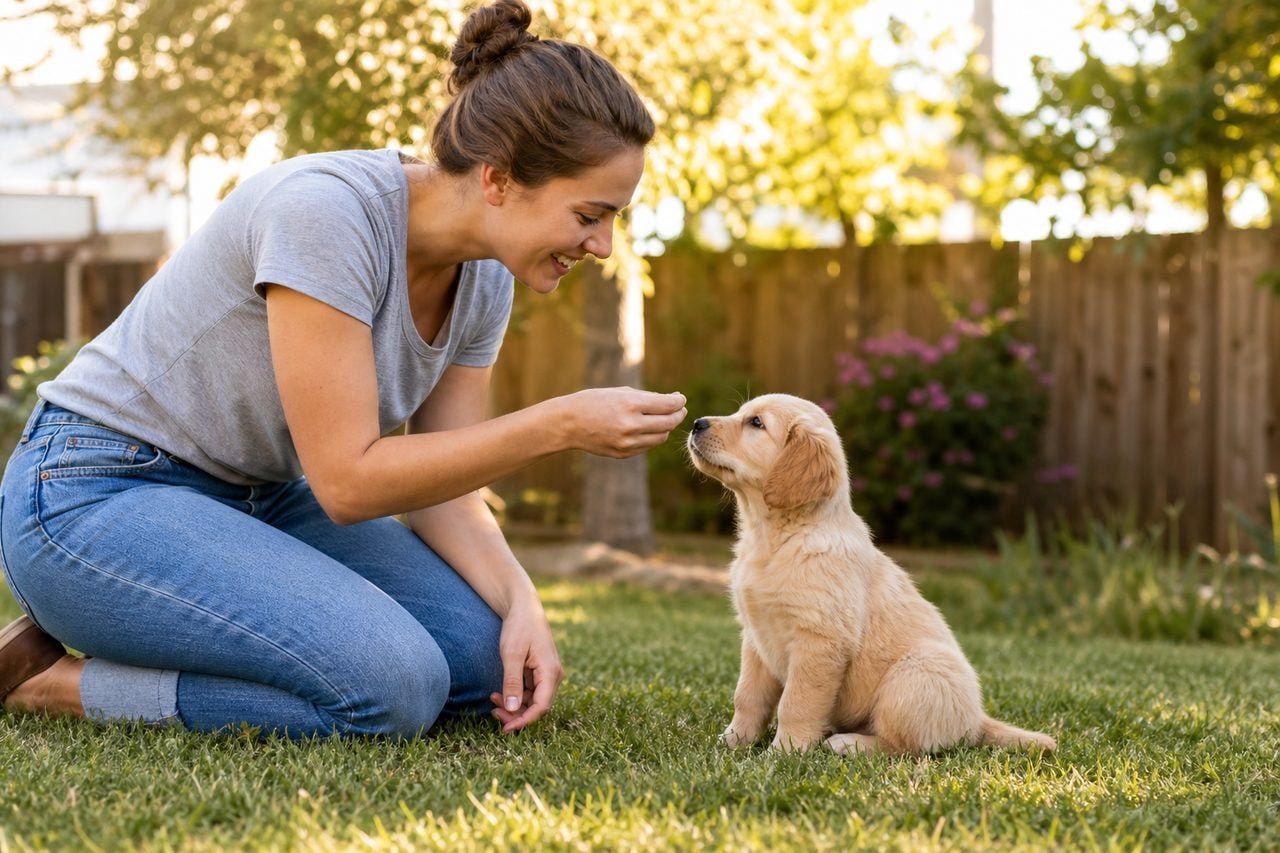
You just brought home a puppy. Everything is adorable for about 72 hours, and then reality sets in — the biting, the accidents, the jumping, the selective deafness when you say “come.” The good news: Columbus has a strong puppy training scene, with solid options across the metro for group classes, one-on-one sessions, and intensive puppy packages.
This guide covers what puppy training actually involves in Columbus, what it costs, when to start, and how to tell a great puppy class from a waste of time. For the bigger picture, see our complete guide to dog training in Columbus.
When Should You Start Puppy Training?
The short answer: as soon as possible after your puppy is home and has had at least their first round of vaccinations (typically 8 to 10 weeks).
The critical socialization window for puppies closes around 14 to 16 weeks. During this period, your puppy’s brain is uniquely wired to absorb new experiences — people, sounds, surfaces, other dogs, environments. What they’re exposed to (positively) during this window shapes their temperament for life.
Most puppy classes in Columbus accept puppies from 8 weeks (with proof of first vaccination) through about 5 months. After that, they’ll typically move into a beginner obedience class for adolescent dogs — see our guide to dog obedience classes in Columbus.
What Puppy Training Covers
A good puppy training program in Columbus should address three areas, not just one:
1. Socialization
This is the single most important thing you can do for your puppy. Controlled exposure to other puppies, adult dogs, different types of people, new environments, and novel stimuli. A well-socialized puppy grows into a confident, adaptable adult dog. A poorly socialized one becomes the dog that lunges at every stranger on the sidewalk. Group puppy classes are particularly valuable here because they provide supervised puppy-to-puppy interaction that you can’t replicate at home. (See our dedicated guide to puppy socialization in Columbus.)
2. Foundation obedience
Sit, down, stay, come, leave it, loose leash walking. These aren’t tricks — they’re the communication framework between you and your dog for the next 10 to 15 years. At the puppy stage, you’re not looking for perfection. You’re building the concept of listening, responding to cues, and working for rewards.
3. Life skills and management
Crate training, housebreaking reinforcement, bite inhibition, impulse control, settling on a mat, handling exercises (ears, paws, mouth — critical for vet visits and grooming). These practical skills prevent the majority of behavior problems that lead people to surrender dogs at 8 to 18 months.
If a puppy class only teaches sit and down and calls it a day, it’s leaving out the most important parts.
Types of Puppy Training Available in Columbus
| Format | Best for | Cost |
|---|---|---|
| Group puppy classes (5–8 puppies, weekly for 5–6 weeks) | Well-rounded socialization; puppies without major behavioral concerns; owners who want to learn alongside their puppy | $150–$275 |
| Private puppy lessons (1-on-1, facility or home) | Specific behavioral concerns; very shy or fearful puppies; owners wanting a customized plan | $100–$175 / session |
| Puppy day school (drop off during the day) | Working owners; puppies needing more intensive socialization | $50–$85 / day |
| Puppy board and train (2–3 week stay) | Owners with extremely limited time; a strong foundation quickly | $1,500–$2,500 |
Puppy board and train is the most intensive and expensive option and produces fast results, but it requires thorough transfer sessions so you can maintain what your puppy learned. See our full guide to board and train in Columbus for details.
What Makes a Good Puppy Class?
Not all puppy classes are created equal. Here’s what separates the great ones from the mediocre:
- Small class sizes. More than 8 puppies means less individual attention and more chaos. The best classes in Columbus cap at 6.
- Off-leash puppy play that’s actually supervised. A good instructor reads body language, interrupts bullying, advocates for shy puppies, and uses play as a teaching moment. If the instructor just lets puppies loose and checks their phone, that’s not socialization — it’s a free-for-all.
- Owner education. You should be learning as much as your puppy. A good instructor explains the “why,” demonstrates before having you try, and gives feedback on your timing and technique.
- Positive experiences, not flooding. Socialization means controlled, positive exposure — not throwing your puppy into overwhelming situations and hoping they figure it out.
- Handouts or homework. The best classes give clear weekly homework. Training happens between classes, not just during them.
- Clean facility. Puppies are immunocompromised. The space should be cleaned between classes, and proof of vaccination required for every puppy.
Puppy Training Costs in Columbus — What to Budget
| Service | Notes | Cost |
|---|---|---|
| Group puppy class (5–6 weeks) | Most Columbus trainers fall in the $175–$225 range; chains run cheaper but quality varies by instructor | $150–$275 |
| Private puppy sessions (per session) | Usually sold in packages of 4–6; full package $450–$900 | $100–$175 |
| Puppy day school (per day) | Full 5-day week runs $250–$425 | $50–$85 |
| Puppy board and train (2 weeks) | Premium option | $1,500–$2,500 |
| In-home puppy training (per session) | The trainer comes to you; worth it for housebreaking or in-home behaviors | $125–$200 |
Common Puppy Training Mistakes
After talking to dozens of trainers across Columbus, these are the mistakes they see most often:
- Waiting too long to start. Every week you wait past 8 weeks is a week of the socialization window you don’t get back. Most classes only require the first round of shots.
- Relying on YouTube. Watching isn’t the same as doing with feedback. Timing, consistency, and reading your puppy’s body language are things you learn from a professional watching you work.
- Expecting too much too fast. A 10-week-old puppy holding a 30-second sit is an achievement. Expecting a reliable off-leash recall at 4 months sets everyone up for frustration.
- Skipping socialization in favor of obedience. Focusing only on “sit, down, stay” produces a dog that performs at home but falls apart in the real world.
- Inconsistency at home. If “off the couch” means one thing to one family member and another to someone else, your puppy isn’t stubborn — your puppy is confused.
How to Choose a Puppy Trainer in Columbus
- Ask your vet. Clinics in Clintonville, Worthington, German Village, and Dublin typically have a short list of trainers they trust.
- Check credentials, but don’t worship them. CPDT-KA is the gold standard; KPA-CTP (Karen Pryor Academy) is another respected credential. Some excellent trainers lack formal certs but have decades of experience — use credentials as one data point.
- Observe a class before signing up. Watch how they handle the shy puppy, the mouthy puppy, the barker. That tells you more than any website.
- Read reviews critically. Look for patterns across multiple reviews, and how the trainer responds to criticism.
- Trust your gut. If a trainer is dismissive of your concerns or pushes you to commit immediately, listen to that instinct.
Frequently Asked Questions
Is my puppy too young for training?
If your puppy is 8 weeks or older and has had their first round of vaccinations, they’re ready. The American Veterinary Society of Animal Behavior recommends puppy socialization classes start as early as 7 to 8 weeks.
My puppy is already 5 months old — is it too late?
No. It’s past the peak socialization window, but training at any age is valuable. You’ll likely enroll in a beginner obedience class rather than a puppy-specific class, which is fine. The important thing is starting.
How often should I practice between classes?
Short sessions, multiple times a day. Three 5-minute sessions are far more effective than one 30-minute session. Puppies have short attention spans — work with that, not against it.
Should I do group classes or private lessons?
For most puppies, start with group classes — the socialization component is irreplaceable. Add private sessions if you’re dealing with specific issues that need individual attention.
My puppy bites everything. Is that normal?
Completely normal. Puppies explore the world with their mouths and teethe from 3 to 6 months. Bite inhibition is a core skill covered in every good puppy class. It’s not aggression; it’s being a puppy.
Every week you wait is a week of your puppy’s critical learning window you can’t get back.
Puppy training trainers in Columbus
Reviewed local trainers from our directory who handle puppy training:
See all dog trainers in Columbus or read the related training guides.