
Board & Train in Erie, PA
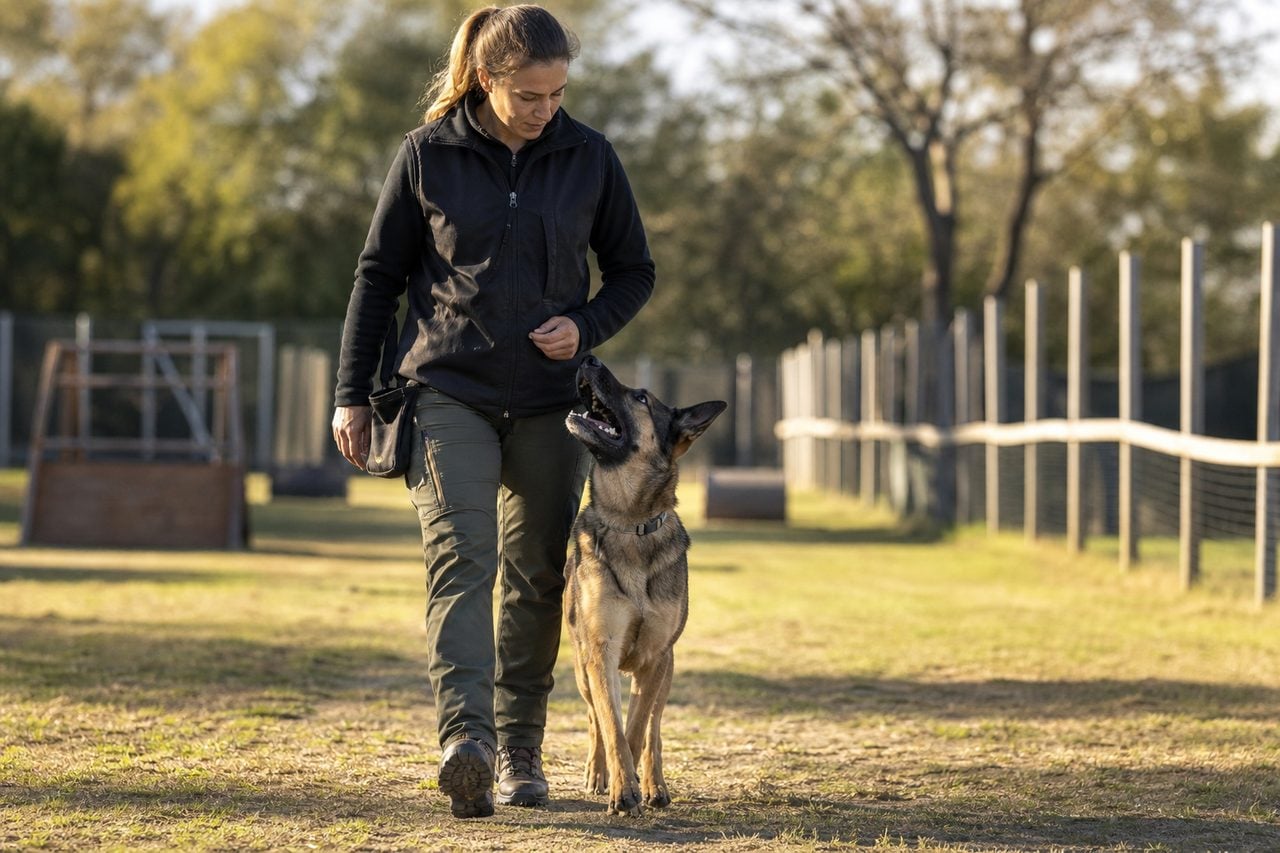
Board-and-train is one of the most intensive options a dog owner can choose. Your dog stays with a trainer for a set stretch — often two to four weeks — living and learning in the trainer’s facility or home while a professional works with the dog daily. For Erie families juggling long shifts at the hospitals, the universities, or the plants along the bayfront, the appeal is obvious: you drop off a dog with a stubborn problem and pick up one that has been through a structured, immersive program. It is not magic, but for the right dog and the right goals it can compress months of scattered homework into a focused block.
Here is the honest picture for Erie, Pennsylvania. Our region — Erie City, Millcreek, Harborcreek, Fairview, Edinboro, and the rural southern tier — has plenty of excellent trainers for group classes and private lessons, but dedicated multi-week residential board-and-train programs are genuinely thin on the ground here. Erie is an isolated Great Lakes city; the nearest large metro is Pittsburgh, roughly two hours south, and that is where the deepest selection of full residential programs and board-certified behavior specialists lives. Some local trainers do offer board-and-train or short intensive stays, so start close to home. But if your dog needs a specialized residential program, the drive south may be worth it, and it is better to know that upfront than to settle for a program that does not fit the problem.
This guide explains what board-and-train really is, how it differs from a day-based boot camp, whether the format suits your dog, where to look across Erie County, what to ask before you hand over your dog, and how to think clearly about the local-versus-Pittsburgh trade-off. It also covers the part most owners underestimate: what you do after your dog comes home, which is what actually decides whether the investment holds. Board-and-train is a big commitment of trust and money, and going in informed protects both your wallet and your dog. GetDogSchool’s editorial team wrote it to help you make a calm, informed decision — not to sell you a program.
What Board-And-Train Actually Means
Board-and-train means your dog boards — lives — with a trainer for the length of the program, typically two to four weeks, sometimes longer for serious behavior work. The dog eats, sleeps, and trains in the trainer’s environment, which lets the professional shape behavior across the whole day rather than in a one-hour weekly slot. That continuity is the core value: reps happen constantly, consistency never slips, and the trainer catches the small moments that owners miss.
Because the dog is away from home, board-and-train is best suited to owners who cannot commit to daily hands-on practice for a few weeks, or to problems that benefit from a clean reset in a controlled setting — leash reactivity, poor impulse control, or shaky foundational obedience. It is not a hands-off fix, though. The single biggest predictor of whether the results last is the handoff: a good program spends real time teaching you to maintain what the dog learned. In snow-locked Erie, where winter can keep a dog cooped up for weeks, that transfer session matters even more, because you will be the one holding the line through a long lake-effect season. Understanding this from the start reframes what you are actually buying: not a finished dog handed back to you, but a strong head start plus the coaching to keep it going.
Board-And-Train Versus Dog Boot Camp
These two terms get used interchangeably in marketing, but they describe genuinely different things, and confusing them leads to disappointment. Board-and-train is residential: the dog stays overnight, for days or weeks, in the trainer’s care. A boot camp is usually an intensive day program: the dog comes in for a full day or a block of hours, then goes home each night, over a compressed schedule of sessions.
The practical difference is who owns the evenings. In board-and-train, the trainer manages the whole 24-hour cycle, including crating, feeding routines, and downtime — useful when the problem shows up outside training windows. In a boot camp, you keep the dog every night, so you are practicing and reinforcing from day one, which some trainers consider a feature because it builds your handling skills alongside the dog’s. For Erie owners, geography often decides it: a day-based boot camp only works if a provider is within a reasonable Millcreek-to-Harborcreek commute, while a residential board-and-train can justify a longer haul, even to Pittsburgh, precisely because you are not driving back and forth daily. Match the format to your schedule and your dog’s specific issue, not to whichever word sounds tougher.
Is Board-And-Train Right For Your Dog?
Board-and-train is a strong fit for some dogs and a poor fit for others, and honest trainers will tell you which you have. Good candidates include dogs with entrenched obedience gaps, dogs whose owners genuinely cannot dedicate daily practice time for a few weeks, and dogs whose problem behaviors are hard to reproduce and correct in a short weekly lesson. A structured residential block gives these dogs saturation practice they would never get at home.
Poor candidates include very anxious or under-socialized dogs who may struggle in an unfamiliar facility, puppies who mostly need normal socialization and household routine, and dogs whose issues are really the household’s habits — because those habits will still be waiting when the dog comes home. Serious aggression is its own category and should start with a veterinary and behavioral assessment before any residential program, not a boot-camp booking. If you are in Edinboro or Corry and weighing a program two hours away in Pittsburgh, be candid about whether your dog handles new environments well; a sensitive dog can find a distant residential stay stressful rather than settling. A thorough trainer will screen for exactly this before accepting your dog.
Erie Neighborhoods And Where To Look
Erie County is bigger and more varied than the city skyline suggests, and where you live shapes your realistic options. In Erie City and the Bayfront, you are closest to the densest cluster of trainers and the most walkable proofing environments near the water. Millcreek and the western suburbs — toward Fairview, Girard, and Lake City — hold much of the county’s population and tend to have the most accessible facilities and space for day programs.
Harborcreek and the North East lakeshore, out toward wine country, are more spread out, so expect to drive a bit for a dedicated program. Edinboro and the southern tier benefit from the university-town foot traffic around Edinboro, useful for real-world proofing, but residential options remain limited. Corry, Union City, and the rural southeast, along with the Crawford County edge toward Meadville, are the most rural — strong for quiet, low-distraction foundation work, but the thinnest for formal board-and-train, which is often where the Pittsburgh drive starts to pencil out. Wherever you are, call local trainers first and ask directly whether they run true residential programs before assuming you must travel.
Questions To Ask Before You Commit
Because your dog will be out of your sight for weeks, vetting a board-and-train program deserves real scrutiny. Ask what training methods the trainer uses and get a plain-language answer — you want approaches you are comfortable with and that you can maintain at home. Ask about the daily schedule: how many training sessions, how much rest, how the dog is housed, and what happens during downtime. Ask what the facility does in an emergency and which local Erie-area veterinarian they use.
Press on the handoff. How many transfer sessions do you get, and are they included? A program that trains the dog beautifully but never trains you is setting you up to lose the gains within weeks. Ask for a written outline of goals and realistic outcomes, and be wary of anyone who promises a guaranteed cure — behavior does not come with guarantees. Ask whether you can visit or receive progress updates during the stay. Finally, ask about credentials and experience with your specific issue. A trainer great with basic obedience may not be the right choice for serious reactivity. If you are considering a Pittsburgh-area program, the same questions apply, plus logistics: drop-off, pickup, and how updates reach you across a two-hour gap.
The Pittsburgh Option And When It's Worth It
Erie’s isolation is a real factor in this decision. With Pittsburgh about two hours south, the metro there simply offers a deeper bench of dedicated multi-week residential programs and specialized behavior professionals than our lakeshore region does. That does not mean everyone should drive south — far from it. For foundational obedience, manners, leash work, and most common issues, an Erie-area trainer is the sensible, convenient, and often equally effective choice, and keeping the work local means easier follow-up.
The Pittsburgh drive earns its keep in specific cases: a dog needing a specialized residential program that no local provider offers, or a behavior problem serious enough to warrant a veterinary behaviorist, which our region lacks. In those situations the extra travel buys access you cannot get here. Weigh it honestly — the cost, the distance, the stress of a far-away stay on a sensitive dog — against the specific benefit. A trustworthy local trainer will tell you when your dog’s needs exceed what they can offer and point you toward the right resource, in Erie or beyond — and that honesty is itself a mark of a professional worth hiring. Remember too that a residential program forgives distance in a way a daily program cannot: because you drop off once and pick up once, a two-hour trip is a pair of drives, not a daily grind, which is exactly why serious residential cases can reasonably reach toward Pittsburgh. Use this directory to start local, and treat Pittsburgh as the escalation path, not the default.
Making Board-And-Train Results Last At Home
The weeks after your dog comes home decide whether board-and-train was worth it. A dog returns from a residential program with new habits, but those habits live inside the trainer’s structure and consistency; drop that structure and the old patterns creep back. Your job is to become the consistency. Keep using the same cues, the same rules, and the same rewards the trainer taught you in the transfer session, and hold every member of the household to the same standard so the dog is not getting mixed signals.
Build practice into normal Erie life. Short daily reps beat occasional marathon sessions. Winter here is long and housebound — plan indoor training games and structured routines to keep skills sharp through the lake-effect months, then use the good-weather windows at Presque Isle, Asbury Woods, or a quiet neighborhood loop to proof behaviors around real distractions like other dogs, cyclists, and wildlife. If a specific problem resurfaces, schedule a follow-up or a tune-up lesson rather than letting it entrench again. The best programs expect this and welcome the check-in rather than treating it as a failure. Keep a simple record of which cues and routines the trainer gave you so nothing gets lost in the weeks after pickup, and revisit that list whenever a behavior starts to drift. Treat the residential stay as a strong launch, not a finish line, and the investment holds.
Board & Train in Erie: Local Options & Nearest Specialists
A few Erie-area trainers can help with milder board & train needs:
- Off Leash K9 Training, Erie — 4.8★ (46 reviews)
Nearest board & train specialists — Pittsburgh
For complex cases, the closest metro with dedicated board & train trainers is Pittsburgh (an easy drive for an assessment or a board-and-train stay). Top-reviewed options:
- Sit Means Sit Dog Training Pittsburgh North — 5.0★ (130 reviews)
- H-D Interactions Dog Training Co. — 5.0★ (72 reviews)
- Paw & Order Dog Training Westmoreland — 5.0★ (66 reviews)
- Paw & Order Dog Training Washington PA — 5.0★ (64 reviews)
- Suburban K9 Dog Training — 5.0★ (53 reviews)
- Paw & Order Dog Training Harmony — 5.0★ (38 reviews)
- McWreath Dog Training – Washington, PA — 5.0★ (36 reviews)
- Control Is Key Dog Training — 5.0★ (36 reviews)
See all Pittsburgh board & train trainers →
Frequently Asked Questions
How long does a typical board-and-train program last?
Most residential board-and-train programs run two to four weeks, though serious behavior work can take longer. The length depends on your dog’s starting point and your goals. Ask any trainer to explain what a given duration is realistically expected to achieve, and treat very short stays that promise big transformations with healthy skepticism.
What's the difference between board-and-train and a dog boot camp?
Board-and-train is residential: your dog lives with the trainer for days or weeks. A boot camp is usually an intensive day program where the dog trains for full days but goes home each night. Residential suits problems that show up around the clock or owners who can’t practice daily; day-based boot camps keep you involved every evening and require a nearby provider.
Are there board-and-train programs in Erie, PA?
Some Erie-area trainers offer board-and-train or short intensive stays, so it’s worth calling local providers first. That said, dedicated multi-week residential programs are limited here compared with the Pittsburgh metro about two hours south, which has the deepest selection. Start local, and consider the drive only if your dog needs something local trainers don’t offer.
Will my dog forget everything once it comes home?
Not if the handoff is done well. Results fade when owners drop the structure the dog learned. A quality program includes transfer sessions that teach you to maintain the training, and lasting success depends on you keeping the same cues, rules, and routines consistently at home, with every household member on the same page.
Is board-and-train a good idea for an aggressive dog?
Aggression should begin with a veterinary check and a professional behavioral assessment, not a booking. Some cases can be addressed through structured programs, but there are no guaranteed cures, and serious cases may need a veterinary behaviorist — the nearest of whom are in Pittsburgh. Never choose a program that promises to fix aggression on a fixed timeline.
How do I choose a trustworthy board-and-train trainer?
Ask about methods, daily schedule, housing, emergency and veterinary plans, credentials, and experience with your specific issue. Insist on included transfer sessions and progress updates, and get realistic goals in writing. Avoid anyone promising guaranteed outcomes. The care your dog receives out of your sight matters as much as the training itself, so vet thoroughly.
Related: read our complete board & train guide or the full Erie dog training overview.
Ready to find the right board & train pro in Erie?