
Board & Train in Lancaster, PA
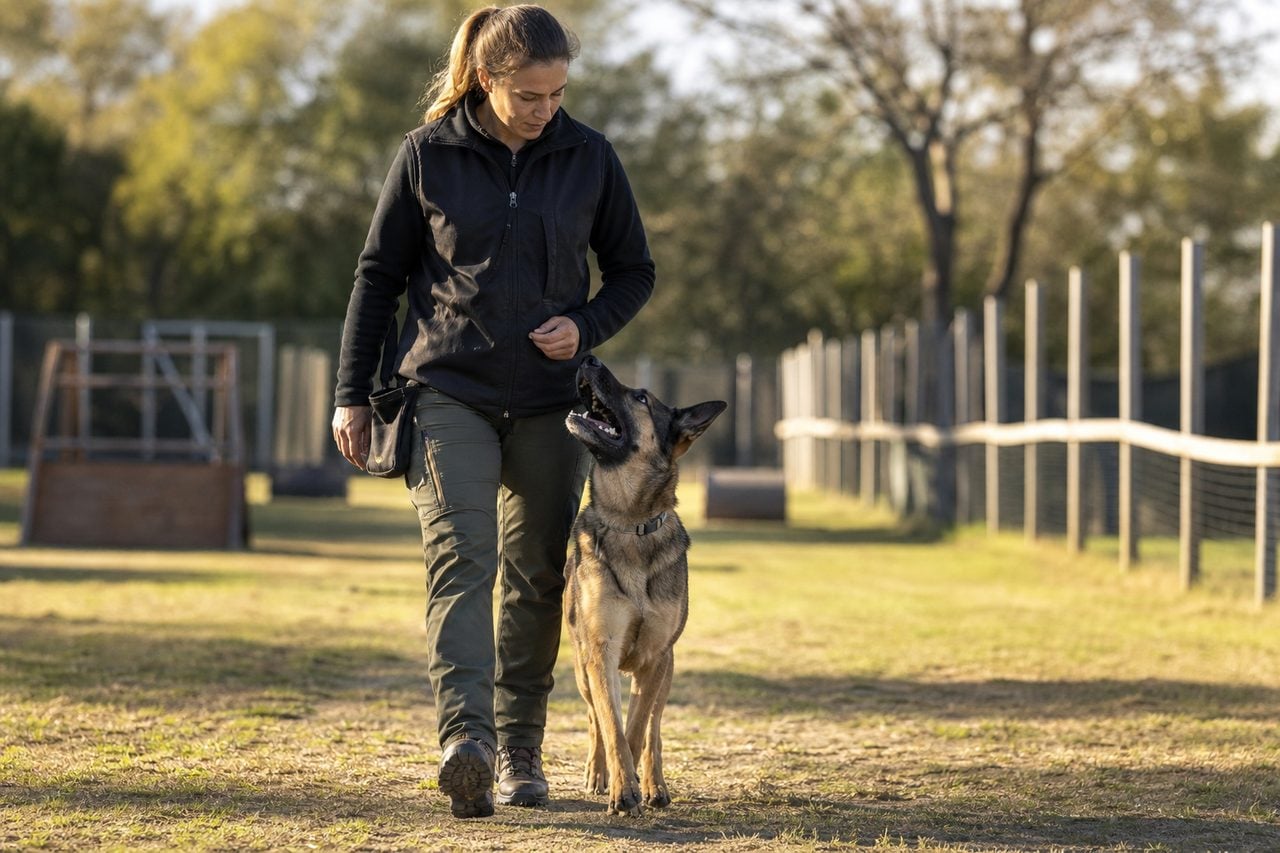
Board-and-train programs in Lancaster, Pennsylvania give your dog a residential stay with a professional trainer, where structured lessons happen every day in a real-world setting rather than once a week in a class. For busy households across Lancaster County — from the rowhouses near Central Market and the campus blocks around Franklin & Marshall to the working farms out past Strasburg — a residential program can compress weeks of obedience work into a focused, immersive stretch, then hand the results back to you with coaching so the gains actually stick at home.
- What Board-And-Train Actually Means In Lancaster County
- How A Residential Program Is Typically Structured
- The Handoff: Transferring Skills Back To Your Family
- Choosing A Board-And-Train Facility In The Lancaster Area
- Which Dogs Benefit Most From Residential Training
- Setting Realistic Expectations And Timelines
- Maintaining The Results At Home In Lancaster
- Reviewed trainers
- FAQ
The appeal in this part of Pennsylvania Dutch country is practical. Many local dogs split their days between tourist-heavy downtown sidewalks, open rural acreage, and snowy winter yards, so they need to respond reliably in very different environments. A good board-and-train trainer in the Lancaster area builds that reliability through repetition: leash manners on busy streets, recall across an open field like the spaces at Lancaster County Central Park, and calm settling when farm equipment or horse-and-buggy carriage traffic rolls by. Because the dog lives with the trainer for the duration of the stay, those lessons get reinforced morning, noon, and night instead of being forgotten in the long gaps between weekly group classes.
This guide explains how board-and-train works in the Lancaster region, what it realistically can and cannot accomplish, how programs are typically structured week by week, what to ask before you hand over your dog, and how the all-important transfer back to your family should happen once the residential weeks are done. The goal is to help you decide whether a residential program is the right fit for your situation, and to choose a local trainer whose methods, facility, and follow-up coaching you genuinely trust — because the lasting value of a board-and-train depends far more on the handoff and your follow-through than on the number of boarding weeks alone.
What Board-And-Train Actually Means In Lancaster County
Board-and-train is a residential program: your dog lives at the trainer’s facility or home for a set period — commonly two to four weeks — while receiving daily, hands-on instruction. The distinguishing feature is immersion. Instead of an hour a week, your dog practices skills across the whole day, in the trainer’s controlled environment, with consistent rules and timing that are hard to replicate in a busy household.
In the Lancaster area, that immersion has a local flavor. A residential program here might rehearse calm leash walking on the brick sidewalks near Penn Square, then practice steady recall on open ground similar to Lancaster County Central Park, then work on settling indoors while household activity continues. Dogs from rural townships around Lititz, Manheim, or Quarryville often arrive needing reliability around livestock, wildlife, and wide-open space, while city dogs from Lancaster Township need composure around foot traffic and noise.
It is important to be clear about what residential training is not. It is not a vacation that magically fixes a dog, and no responsible trainer guarantees a finished product. The dog learns skills in the trainer’s context; transferring those skills to your home, your family, and your routines is the second half of the work. That is why the handoff and follow-up coaching matter as much as the boarding weeks themselves.
How A Residential Program Is Typically Structured
Most board-and-train programs in the Lancaster region follow a recognizable arc. The first days are assessment and acclimation: the trainer learns your dog’s temperament, energy, and triggers while the dog settles into the new environment. From there, the daily schedule fills with short, frequent training blocks — foundation obedience, leash skills, impulse control — spaced with rest, enrichment, and decompression so the dog can absorb what it learns.
As the stay progresses, good trainers raise difficulty deliberately. A sit-stay that started in a quiet room moves to a busier space, then outdoors, then around the kinds of distractions your dog will actually face: other dogs, passing cars, the bustle you might find along a downtown Lancaster block or a trailhead parking lot. This graduated exposure builds genuine reliability rather than a performance that falls apart the moment the dog leaves the training room.
You should expect regular updates throughout the stay — photos, short videos, or progress notes — so the program is never a black box. The final phase is preparation for the transfer home, where the trainer documents exactly which commands and routines your dog now knows, and how you should cue and reward them. Ask any prospective Lancaster trainer to walk you through their week-by-week structure before you enroll.
The Handoff: Transferring Skills Back To Your Family
The single most important part of any board-and-train is what happens when your dog comes home. A dog that performs beautifully for the trainer can backslide quickly if the family uses different words, timing, or rules. That is why reputable Lancaster-area programs build in transfer sessions — sometimes called go-home or turnover lessons — where the trainer coaches you, not just the dog.
In these sessions you learn the exact cues your dog now responds to, how to mark and reward correct behavior, and how to hold boundaries consistently. Expect to practice in your own environment when possible: your living room, your yard, your usual walking route through the neighborhood or along a local trail. Skills generalize best when rehearsed in the place they will actually be used, whether that is a quiet street in Mount Joy or a busy sidewalk near Lancaster’s Central Market.
Good programs also include follow-up. That might be a series of post-program lessons, a check-in schedule, or access to the trainer for questions as new situations arise. When you compare residential options around Lancaster County, weigh the follow-up package heavily. A program with three weeks of boarding but no structured handoff is far weaker than one with two weeks of boarding plus thorough transfer coaching and ongoing support.
Choosing A Board-And-Train Facility In The Lancaster Area
Before you entrust your dog to a residential program, visit the facility in person. Look at where dogs sleep, where they train, and where they rest between sessions. The space should be clean, secure, and appropriately climate-controlled — Lancaster summers get humid and winters get cold and snowy, so heating, cooling, and safe footing matter for a dog living there around the clock.
Ask direct questions about methods and daily life. How many dogs are in the program at once, and how much individual attention does each receive? What training approach does the trainer use, and how do they handle a dog that struggles? What is the daily ratio of training to rest and enrichment? You want a trainer who answers plainly, welcomes your questions, and is comfortable showing you the working areas rather than keeping them off-limits.
Also discuss logistics specific to your situation. Confirm vaccination and health requirements, emergency veterinary arrangements, and how the trainer communicates during the stay. For rural owners out toward Strasburg or the southern end near Willow Street, ask about drop-off and pickup, and whether any transfer sessions happen at your property. The right facility for a Lancaster County dog is one where you would feel comfortable leaving your dog for weeks — and confident the work coming back will hold.
Which Dogs Benefit Most From Residential Training
Board-and-train suits some dogs and situations better than others. It tends to work well for dogs that need a concentrated reset on foundation behaviors — pulling on leash, ignoring recall, jumping, door-bolting — especially when the owner’s schedule makes consistent daily practice hard to sustain. The immersive structure removes the inconsistency that often stalls progress in a busy Lancaster household.
Young adult dogs with energy to burn and adolescent dogs testing boundaries are common candidates, as are newly adopted dogs whose history is unknown and who need calm structure to settle. Rural dogs that must learn to coexist with livestock, wildlife, and open acreage around the county can benefit from a trainer’s controlled exposure work, and city dogs overwhelmed by downtown stimulation can build composure in graduated steps.
Residential training is not the right first step for every issue, however. Serious behavioral concerns — particularly aggression or significant fear — require an assessment-first approach and may be better served by a specialized behavior program rather than a general obedience board-and-train. Very young puppies are usually better served by socialization and foundation classes at home with the family. An honest Lancaster trainer will tell you when a residential program is not the best match for your dog and point you toward a more appropriate path.
Setting Realistic Expectations And Timelines
It helps to enter a board-and-train with clear, grounded expectations. A two-to-four-week residential program can establish strong foundation obedience and noticeably improve manners, but it does not erase a dog’s temperament or guarantee flawless behavior forever. Training is a maintained skill, not a one-time installation — what comes home needs ongoing practice to remain reliable.
Think of the program as a steep head start. The trainer does the intensive foundational work in a controlled setting, then hands you a dog that understands the rules and a roadmap for keeping them. The lasting outcome depends on how consistently your household reinforces the new behaviors afterward. Families that practice the cues daily for the first few weeks home tend to keep the gains; families that revert to old habits often see the dog drift back too.
Costs for residential programs in the Lancaster region vary with length, facility, and the depth of follow-up included, so ask for a clear written outline of what the price covers — boarding, training hours, transfer sessions, and any post-program support. Reputable trainers describe outcomes in terms of improvement and reliability, never in guarantees. If a program promises a perfectly trained dog with no caveats, treat that as a reason for caution, not confidence.
Maintaining The Results At Home In Lancaster
The weeks right after your dog comes home set the tone for everything that follows. Keep the same cues, rewards, and rules the trainer taught, and have every member of the household use them the same way — mixed signals are the fastest way to unravel a residential program’s work. Short, frequent practice sessions woven into daily life beat occasional long ones.
Use Lancaster’s variety of environments to your advantage. Once your dog is solid at home, rehearse skills in gradually busier places: a quiet residential street, then a local park, then a more stimulating setting like a trailhead or a downtown sidewalk near Central Market. This deliberate generalization is what turns living-room obedience into real-world reliability, and it mirrors the graduated exposure the trainer used during the stay.
Plan for maintenance over the long term. Many owners schedule occasional tune-up sessions with their trainer, particularly after winter, when months of cold, snowy weather have cut into outdoor practice. Stay alert to early signs of backsliding — renewed pulling, slower recall — and address them promptly with a brief return to basics rather than waiting for habits to harden. With consistent follow-through, the foundation built during a Lancaster board-and-train can serve your dog for years.
Reviewed Board & Train Trainers in Lancaster
These reviewed Lancaster-area trainers from our directory handle board & train. Each links to a full profile with specialties, certified credentials, reviews, and contact info:
- Carolyn Hart Dog Training — 5.0★ (63 reviews)
- Paw & Order Dog Training Harmony — 5.0★ (38 reviews)
- Ray’s Canine Services — 5.0★ (32 reviews)
- Magnus K9 — 5.0★ (11 reviews)
- Custom Canine — 4.6★ (9 reviews)
- Faithful Companion Dog Training, LLC — 4.3★ (31 reviews)
See all Lancaster board & train trainers →
Frequently Asked Questions
How long does a board-and-train program in Lancaster usually last?
Most residential programs in the Lancaster area run two to four weeks, though the exact length depends on your goals and your dog’s starting point. Foundation obedience and manners can be addressed in a couple of weeks, while more involved work may take longer. Length is less important than the quality of training and the depth of the transfer coaching included — a shorter stay with thorough handoff sessions often outperforms a longer one without them.
Will my dog forget me or bond with the trainer instead?
No. Dogs form lasting attachments to their families and readily reconnect after a residential stay. The trainer becomes a temporary teacher, not a replacement. The bigger risk is not lost attachment but lost skills if the family does not maintain the training. That is exactly why the go-home transfer sessions matter: they teach you to cue your dog the way the trainer did, so your dog responds reliably to you at home in Lancaster County.
Is board-and-train a good choice for an aggressive dog?
Aggression is a specialized concern that calls for an assessment-first behavior approach rather than a general obedience board-and-train. A responsible Lancaster trainer will evaluate the dog before recommending any program and will not promise to ‘fix’ aggression with a residential stay. If aggression is your primary concern, look for a trainer or behavior professional who focuses on it specifically and is upfront that there are no guarantees with serious behavior issues.
What should I look for when visiting a residential facility?
Visit in person and inspect where dogs sleep, train, and rest. Look for cleanliness, security, and proper heating and cooling — important given Lancaster’s humid summers and cold, snowy winters. Ask how many dogs are enrolled at once, how much individual attention each gets, what methods the trainer uses, and how they handle a struggling dog. A trainer who welcomes questions and shows you the working areas is a far better sign than one who keeps the facility off-limits.
What happens after my dog comes home from the program?
The return home is where reliability is made or lost. Good programs include transfer sessions that coach you — the owner — on the exact cues, timing, and rules your dog now knows, ideally practiced in your own home and neighborhood. Expect some follow-up support as well. For the first few weeks, practice the new behaviors daily and keep every household member consistent so the gains from the residential stay actually stick.
How much does board-and-train cost in the Lancaster area?
Pricing varies with program length, the facility, and how much follow-up coaching is included, so ask for a written breakdown of what the fee covers — boarding, training hours, transfer sessions, and any post-program support. Because residential programs are an investment, focus on value rather than the lowest number: a program with strong handoff and ongoing support delivers more lasting results than a cheaper one that simply boards and trains without preparing you to maintain the work.
Related: read our complete board & train guide or the full Lancaster dog training overview.
Ready to find the right board & train pro in Lancaster?