
Board & Train in Lansing, MI
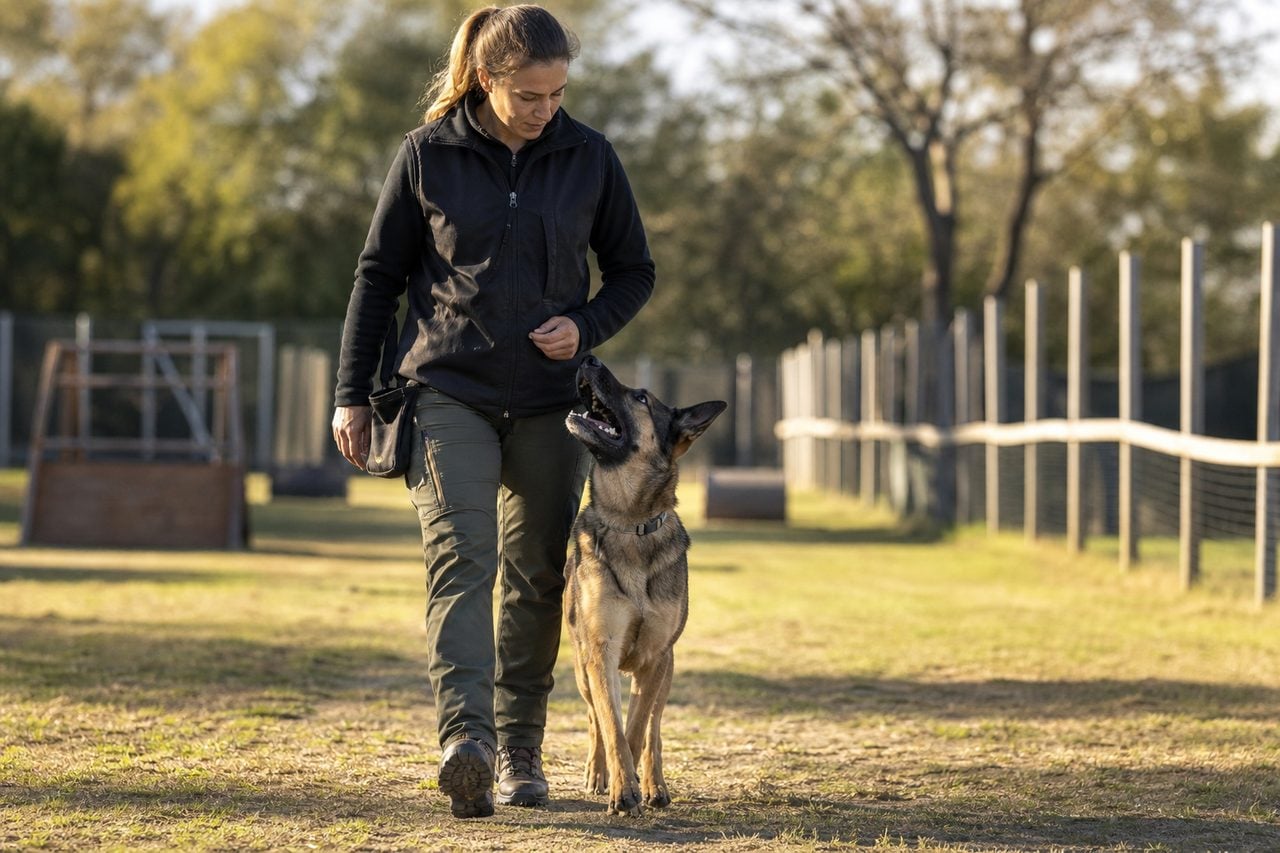
Board-and-train programs ask a lot of a dog owner: you hand your dog to a professional for a stretch of days or weeks, and you trust that they will come back further along than you could have gotten them at home. In the Lansing metro, from the Capitol district downtown to the neighborhoods around Michigan State University, this format has grown popular with owners who work long hours, travel for work, or feel stuck with a behavior problem they cannot seem to move on their own. It is a real tool, but it is not magic, and understanding what it can and cannot do is the difference between a good investment and an expensive disappointment.
This guide walks through how board-and-train actually works, what kinds of dogs and goals it suits, how to evaluate a program in the Lansing, East Lansing, and greater Ingham, Eaton, and Clinton county area, and what your job as an owner looks like before, during, and after the stay. The goal here is not to sell you on the format but to help you decide whether it fits your dog, your budget, and your household.
Throughout, we keep the focus on questions you can ask and standards you can hold a program to. Every dog and every trainer is different, so treat this as a framework rather than a checklist that guarantees a result.
What Board-and-Train Actually Means
A board-and-train, sometimes called an immersion or day-boarding program, is one where your dog stays with a trainer, either overnight for a set number of weeks or during daytime hours only, and receives structured training sessions throughout that period. The idea is concentration: instead of a single weekly lesson competing with the rest of your life, the dog gets consistent handling from an experienced person multiple times a day in a controlled environment.
There are two broad models you will encounter in the Lansing area:
- Overnight board-and-train: The dog lives at the trainer’s facility or home for a defined period, commonly two to four weeks. This suits owners who travel or who want the dog fully removed from the home routines that reinforce a problem.
- Day-train or day-school: You drop the dog off in the morning and pick up in the evening, similar to daycare but with dedicated training built in. The dog sleeps at home, which keeps the family bond intact and lets you practice each evening.
Both models share a core promise: the dog builds skills faster because a skilled handler is drilling them consistently. What neither model can do is transfer that skill to you automatically. A dog that sits reliably for the trainer will not necessarily sit reliably for you until you learn the same mechanics and cues. That transfer, the handoff, is where most of the long-term outcome is decided.
It helps to think of the format in terms of what you are actually buying. You are not purchasing a fixed dog; you are purchasing concentrated, expert repetition and a head start. A skilled trainer working a dog four or five times a day in a distraction-controlled setting can compress weeks of scattered home practice into a much shorter window, and can catch and correct the small handling errors that quietly sabotage most owners. That compression is genuinely valuable, but its value is only realized if you take the baton at the end and keep running. Owners who understand this go in with the right expectations and get the most out of the money. Owners who expect to drop the dog off, pick up a finished pet, and never think about training again are almost always disappointed within a month.
When Board-and-Train Is the Right Tool
Board-and-train tends to earn its cost in a handful of specific situations. If your goal is basic manners on a dog that is otherwise stable, you can usually get there with private lessons or a group class in the Lansing area at a fraction of the price. Where the immersion format shines is when time, consistency, or the owner’s own bandwidth is the bottleneck.
Before defaulting to an immersion program, it is worth honestly asking whether a less expensive format would get you the same result. Group classes are excellent for socialization and for owners who want to learn the mechanics themselves. Private in-home lessons are ideal when the problem is context-specific, because the trainer coaches you in the exact setting where the behavior happens. Board-and-train is the right escalation when those formats are not practical, usually because you genuinely cannot supply the daily consistency the early weeks demand, or because the behavior is so entrenched that a full environmental reset gives the fastest path forward. Choosing the format that fits the problem, rather than the most expensive one, is the mark of a savvy owner.
Common good-fit scenarios include:
- A tight timeline. You are moving, having a baby, or hosting family, and you want a jump on foundation obedience before life gets busier.
- A stubborn, well-established habit. Counter-surfing, door-dashing, or leash pulling that has been rehearsed for months at home can be easier to reset in a fresh environment.
- Inconsistent handling at home. When several family members give different cues, a dog gets muddled. An immersion program installs a clean, consistent baseline that the family can then align to.
- Owner time constraints. If you genuinely cannot commit to daily practice for the first few weeks, letting a professional carry that load can make sense, provided you commit to the follow-through afterward.
Board-and-train is a weaker fit when the core issue is a relationship or communication gap between you and the dog, or when the behavior involves fear or anxiety that is tied to specific triggers in your home. Those often need you in the room, working the problem where it happens, in Holt or Okemos or wherever you live, not in a facility the dog will leave behind.
A useful way to test fit is to ask yourself what would change if the dog behaved perfectly at the trainer’s facility but nowhere else. If the answer is that you would still be stuck, the problem probably lives in your home environment or in how the household interacts with the dog, and an off-site program alone will not solve it. If the answer is that a clean obedience foundation would give you something solid to build on, an immersion program is likely worth considering. Many owners in the East Lansing and MSU-area rentals, where roommates and roommates’ guests come and go, find that inconsistent handling is their real problem, and for them the value of a program is less about the dog learning new tricks and more about resetting a chaotic baseline that everyone can then commit to maintaining.
What It Can and Cannot Fix
Being honest about the ceiling of any training format protects you from disappointment. Board-and-train reliably moves the needle on obedience and on many manners problems. It is far less predictable on deep-seated behavioral issues, and no responsible trainer will promise to eliminate them.
Reasonable expectations for an immersion program:
- Solid foundation obedience: sit, down, stay, recall, place, and loose-leash walking, taught to a level the dog can maintain with practice.
- Meaningful progress on manners: jumping on guests, mouthing, door manners, and general impulse control.
- A calmer default state, since structured routine and clear expectations often settle a dog that was previously over-aroused.
Where you should be cautious:
- Aggression and reactivity. These are management-and-modification problems, not obedience problems. A good program may reduce the intensity, but claims of a permanent cure are a red flag. Trigger exposure in your own environment usually has to be part of the plan.
- Separation anxiety. This is tied to the bond with you and the home setting, so training the dog elsewhere rarely resolves it.
- Fear rooted in specific contexts. A dog afraid of the vacuum or of men in hats needs that fear addressed where and how it occurs.
If a program guarantees to fix aggression in two weeks, treat the guarantee itself as a warning sign. Behavior change is probabilistic, and ethical trainers in the Lansing area will tell you so plainly.
Choosing a Program in the Lansing Metro
The Lansing region has a modest but real set of trainers offering immersion formats, spread across the Capital neighborhoods, the MSU corridor in East Lansing, and the surrounding communities of Okemos, Haslett, Williamston, Holt, Dimondale, Grand Ledge, and up into DeWitt and Laingsburg. Because your dog will spend days or weeks in someone else’s care, vetting matters more here than for a weekly class.
Questions worth asking every program:
- What methods do you use? Ask them to describe how they teach a new behavior and how they respond to an unwanted one. You want a clear, humane answer, not vague reassurance. Look for an emphasis on reinforcing behavior you want.
- Can I see where my dog will stay? Ask for a tour or clear photos of the kennels, crates, and exercise areas. Cleanliness, space, and temperature control are basic and non-negotiable.
- How many sessions per day, and how long? Immersion only works if the dog is genuinely worked several times daily, not simply housed.
- What is the daily routine? Rest, decompression, and enrichment matter as much as drilling. A dog crated 22 hours a day is not being trained; it is being warehoused.
- What does the handoff look like? How many transfer lessons do you get? Is there follow-up support? This is the single most predictive factor in whether results last.
- What are your credentials and references? Ask for owners you can contact who ran a similar program with a similar dog.
Visit in person if you possibly can. A facility near Grand Ledge or Haslett that welcomes a drop-in tour is signaling confidence. One that resists letting you see the space is telling you something too.
The Owner's Job: Before, During, and After
The most common reason board-and-train results fade is that the owner treats the drop-off as the finish line. It is closer to the halfway point. Your involvement bookends the program on both sides, and the after-phase is where the money either pays off or evaporates.
Before: Be specific about your goals. Write down the three behaviors that matter most to you, whether it is a reliable recall on the Lansing River Trail, calm greetings at the door, or walking without pulling around your Holt neighborhood. Share the dog’s real history honestly, including any bites, fears, or medical issues. A trainer working from accurate information builds a better plan.
During: Stay reachable and ask for updates. Reputable programs send progress notes, short videos, or check-in calls. Use these to learn the vocabulary and cues the trainer is installing so you are not starting cold at pickup. If something feels off, say so early.
After: This is the work. Plan to attend every transfer lesson, take notes, and practice daily for the first few weeks. Keep the rules the trainer set, since dogs generalize slowly and will test whether the old permissions have returned. Choose low-distraction settings first, a quiet cul-de-sac in DeWitt or your own backyard, then gradually add difficulty: a busier sidewalk, then Hawk Island Park, then the crowds near MSU on a game day. If the program offers follow-up sessions or a refresher, use them.
Costs, Timelines, and Realistic Outcomes
Board-and-train is typically the most expensive training format because you are paying for boarding, multiple daily sessions, and the trainer’s undivided time over an extended period. Rather than quote figures that vary widely by trainer and program length, it is more useful to understand what drives the cost so you can judge whether a quote is reasonable.
Price generally reflects program length, how many training sessions the dog gets per day, the quality and staffing of the facility, and how much post-program support is included. A cheaper program that skimps on the handoff can end up costing more in the long run if you have to redo the work. Ask exactly what is bundled: how many transfer lessons, whether follow-up visits are included, and what happens if a behavior regresses.
On timelines, most owners see the clearest gains on obedience and manners within the program window, followed by a settling-in period at home where the dog tests the new boundaries. Expect a few weeks of consistent practice after pickup before the new behaviors feel automatic. Behavioral issues, where a program can help at all, take longer and require ongoing management.
A realistic outcome is a dog that is meaningfully more manageable, with a foundation you can build on, not a finished robot. If you maintain the work, the results hold. If you drift back to old routines, the dog will drift with you. Setting that expectation up front is the best way to feel the program was worth it.
Red Flags and Green Flags to Watch For
Because board-and-train involves leaving your dog in someone else’s hands and paying a premium for it, learning to read the signals of a good program versus a questionable one is worth the effort. The same warning signs and reassurances tend to show up again and again, and once you know what to listen for, sorting the serious professionals from the rest becomes much easier.
Green flags that suggest a program takes its work seriously:
- Willingness to say no. A trainer who tells you your dog is not a good candidate for immersion, or that private lessons would serve you better and cost less, is prioritizing outcomes over a sale. That honesty is a strong positive signal.
- A structured intake process. Reputable programs ask detailed questions about the dog’s history, health, diet, and your specific goals before quoting anything. A one-size intake is a warning.
- Clear communication about methods and daily routine. You should come away understanding exactly how the dog will be trained and how its day will be structured, including rest and enrichment.
- A real handoff plan. The program builds in transfer lessons and follow-up rather than treating pickup as the end.
Red flags that warrant caution or a walk-away:
- Guarantees. Promises to fix aggression, cure anxiety, or produce a perfect dog in a set number of days ignore how behavior actually changes. Reputable trainers deal in probabilities, not guarantees.
- Secrecy about the facility. Reluctance to show you where the dog will stay, or to let you observe training, is a serious concern.
- Vague or evasive answers about methods. If you cannot get a straight description of how they teach and how they handle unwanted behavior, keep looking.
- No aftercare. A program that hands the dog back with no transfer lessons and no follow-up is selling you the least durable version of the format.
Trust your instincts during a tour. A clean, calm, well-run facility in Grand Ledge or DeWitt where the dogs look settled tells you a lot. So does a chaotic, stressed environment, or a trainer who seems more interested in closing the deal than understanding your dog. You are the advocate for an animal who cannot vet the program itself, so take the time to do it well.
Reviewed Board & Train Trainers in Lansing
These reviewed Lansing-area trainers from our directory handle board & train. Each links to a full profile with specialties, certified credentials, reviews, and contact info:
- Canine Unifursity Dog Training — 5.0★ (89 reviews)
- Hidden Potential Farm and Kennels — 5.0★ (2 reviews)
- Sit Means Sit Dog Training Lansing — 4.7★ (46 reviews)
- Sam’s Train, Play and Stay — 4.1★ (37 reviews)
See all Lansing board & train trainers →
Frequently Asked Questions
How long does a typical board-and-train program last?
Programs vary widely, but overnight immersion programs commonly run two to four weeks, while day-train formats can be more flexible and open-ended. Length should match the goal: basic obedience needs less time than a stubborn, long-rehearsed habit. Ask any Lansing-area trainer to explain why they recommend a given length for your specific dog rather than selling a one-size package.
Will my dog forget me while staying at the trainer's facility?
No. Dogs form durable bonds and will remember and recognize you after a stay of a few weeks. Some owners worry about this, but the bigger risk is not the dog forgetting you, it is you not learning the new cues and routines. That is why transfer lessons at pickup matter so much.
Can board-and-train fix my dog's aggression or reactivity?
Be cautious with any program that promises to cure aggression. Immersion training can reduce intensity and build impulse control, but aggression and reactivity usually need ongoing management and trigger work in your own environment, often with you in the room. Treat guarantees of a permanent fix as a warning sign.
Should I choose overnight boarding or a day-train format?
Overnight suits owners who travel or want the dog fully removed from home routines that reinforce a problem. Day-train keeps the dog home each night, preserves the family bond, and lets you practice every evening. If your issue is closely tied to your household or your relationship with the dog, day-train or private lessons may serve you better.
What should I look for when touring a facility near Lansing?
Look for clean, spacious, temperature-controlled kennels, a daily routine that balances training with rest and enrichment, and a trainer who welcomes your visit. Ask how many sessions your dog gets each day and how the handoff at the end works. A facility in Okemos, Grand Ledge, or DeWitt that resists showing you the space is a red flag.
How much practice do I need to do after the program ends?
Plan to practice daily for at least the first few weeks after pickup, then taper as behaviors become automatic. Start in low-distraction settings like your backyard, then gradually add difficulty, working up to busier spots like the Lansing River Trail or Hawk Island Park. The follow-through is where the results either stick or fade.
Related: read our complete board & train guide or the full Lansing dog training overview.
Ready to find the right board & train pro in Lansing?