
Board & Train in Muskegon, MI
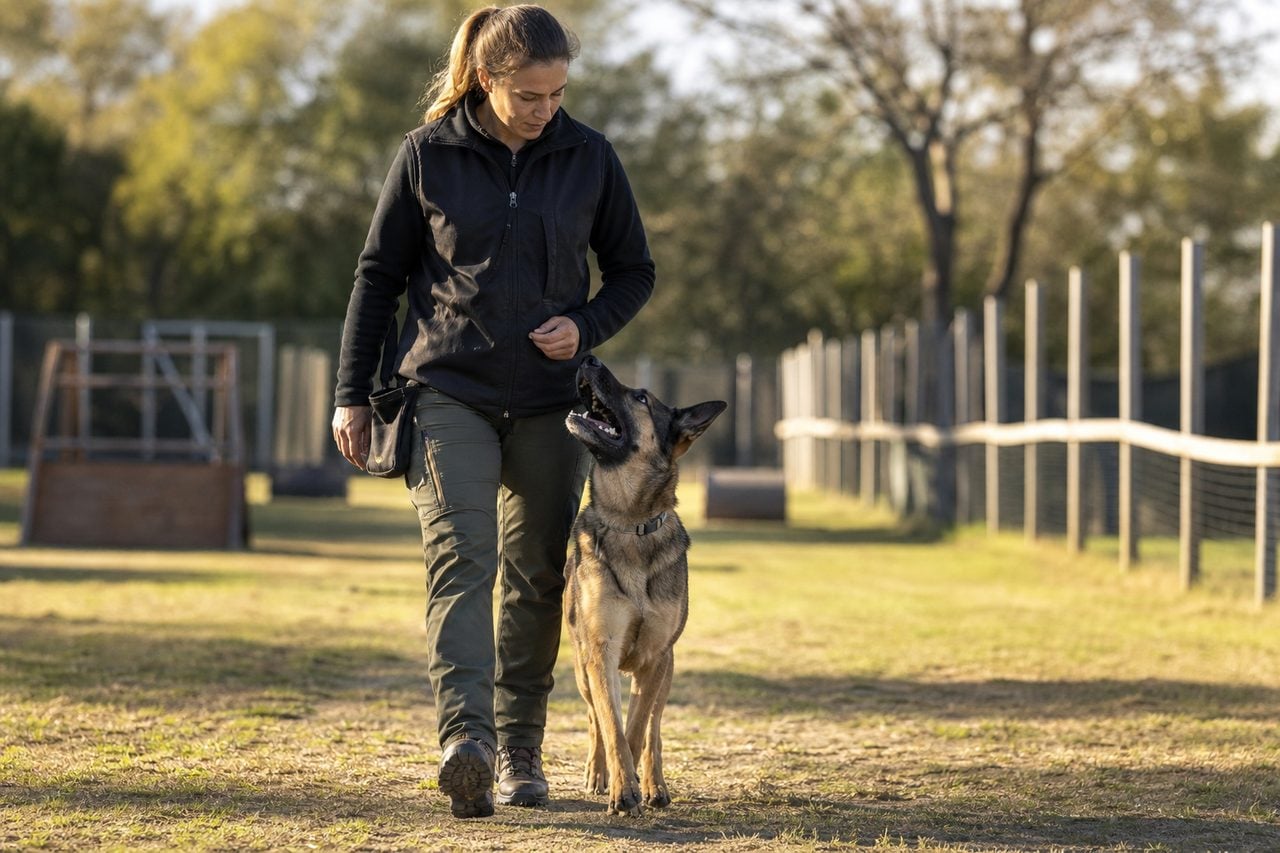
Board-and-train is one of the most intensive ways to get a dog started or unstuck: your dog lives with a professional trainer for a set stretch of days or weeks, works multiple short sessions a day, and comes home with skills already built into a routine. For busy families along the Muskegon lakeshore — whether you are near the Lakeshore Core, up toward Whitehall and Montague, or over in the Grand Haven and Spring Lake area — that concentrated format can compress months of scattered homework into a focused program.
- What board-and-train actually is
- Is board-and-train right for your dog and your goals?
- Choosing a program on the Muskegon lakeshore
- Questions to ask before you hand over the leash
- The transfer: why coming home is the real test
- Costs, timelines, and setting realistic expectations
- Local considerations for lakeshore families
- Reviewed trainers
- FAQ
It is also the format most worth slowing down to understand before you commit. You are handing your dog to someone for days at a time, so the questions you ask, the methods you confirm, and the transfer plan you agree to matter more here than in almost any other kind of training. This guide walks through how board-and-train actually works, what a responsible program looks like, and how to think about it across the wider Muskegon and northern Ottawa County area.
Board-and-train is a strong option for the right dog and the right goal, but it is not a magic reset button. The dogs that hold their training best are the ones whose owners treat the stay as the start of a partnership, not the end of the job.
What board-and-train actually is
Board-and-train means your dog boards with a trainer — usually in the trainer’s home, a dedicated facility, or a kennel with a training program attached — and receives structured instruction throughout the stay. Instead of one class a week with you doing the practice in between, the trainer runs several short sessions a day, folds training into daily routines like feeding and walks, and manages your dog’s environment closely so good habits form quickly.
Programs vary widely in length and focus. A short program of one to two weeks often targets a specific problem: reliable recall, loose-leash walking, crate comfort, or settling calmly around the house. Longer programs of three to six weeks are common for foundational obedience packages, young dogs that need a full skill set, or dogs working through more stubborn behavior patterns. Some trainers offer puppy-specific stays, others focus on adolescent dogs, and a few specialize in reactivity or anxiety cases that need careful, gradual work.
The core promise is time and consistency. A professional working with your dog daily, in a controlled setting, can build clear habits faster than most owners can at home around work and family schedules. But that speed depends entirely on what happens when the dog comes back to you — which is why the transfer phase, covered later, is the part you should scrutinize most.
It helps to picture the day: short reps, plenty of rest between them, real-world practice on a walk through a quiet neighborhood, and controlled exposure to normal distractions. A dog is not being drilled for hours; it is being taught in small, digestible pieces and then given time to consolidate.
Is board-and-train right for your dog and your goals?
Board-and-train fits some situations far better than others. It tends to make the most sense when your schedule genuinely does not allow the daily repetition that in-person classes require, when you are facing a specific behavior that has not budged with weekly lessons, or when you want a strong foundation laid quickly so you can maintain it rather than build it from scratch.
It is a weaker fit when the core issue is really about the household routine or handler habits, because those do not travel to the trainer’s home. A dog that pulls on leash partly because walks are rushed and inconsistent will improve during the stay, but the pattern can creep back unless the home routine changes too. Similarly, fear and anxiety cases need careful evaluation: some dogs do well in a calm, structured program, while others find the disruption of a new environment stressful and are better served by in-home work.
Consider your dog’s temperament honestly. Confident, social dogs usually adapt to a new setting quickly. Highly sensitive or under-socialized dogs may need a trainer who explicitly handles those cases and can describe how they ease a nervous dog into the program. Age matters too — young puppies have different needs around socialization windows and vaccination status than adolescent or adult dogs.
A quick self-check before you commit:
- What single outcome would make this worth it? Name it specifically.
- Can I realistically maintain the skills once the dog is home?
- Does my dog handle new environments and being away from us reasonably well?
- Is the real problem the dog’s training, or our household routine — or both?
If the honest answer is that the routine is a big part of it, a hybrid approach or day-training may serve you better than a full residential stay.
Choosing a program on the Muskegon lakeshore
Availability for true board-and-train is thinner along the immediate lakeshore than for group classes or private lessons, so it is worth looking across the whole region rather than only the town closest to you. Families in Muskegon and the Lakeshore Core often consider programs out toward the inland townships near Twin Lake, Fruitport, and Nunica, where a trainer may have space and quieter surroundings for kennel-based work. Households in Grand Haven, Spring Lake, and Ferrysburg have a slightly different set of nearby options, and some families end up traveling farther — a number look toward Grand Rapids — when a specialty program matches their dog’s needs better than anything on the immediate shoreline.
When comparing programs, weigh a few practical factors. Distance matters more than it seems, because you will likely visit or return for a transfer session and follow-up lessons, so a program an hour away changes how easy that ongoing work is. Facility type matters too: an in-home program offers a household environment, while a dedicated facility may offer more controlled space and equipment. Neither is inherently better — what matters is whether the setting suits your dog and whether the trainer manages it well.
Ask how many dogs are in the program at once and how much individual attention each dog receives, since a stay is only valuable if your dog gets real one-on-one work rather than mostly kennel time. Ask about daily structure, exercise, rest, and how the dog’s living space is set up. A good program should be able to describe a typical day in concrete detail without hesitation.
Questions to ask before you hand over the leash
Because you will not be present for most of the training, the intake conversation is your main window into how a program operates. Treat it like an interview. The goal is not to catch anyone out but to make sure the trainer’s approach, communication, and expectations line up with yours before your dog is in their care.
Cover methods first. Ask the trainer to describe, in plain language, how they teach a new behavior and how they respond when a dog gets it wrong. You want a clear, calm explanation you understand and feel comfortable with. Ask what tools they use and why, and how they decide when a particular tool is appropriate for a particular dog. A trainer who can explain their reasoning is more reassuring than one who leans on slogans.
Then cover the practical and safety side:
- Updates: How often will you hear from them, and in what form — photos, videos, written notes, check-in calls?
- Health and safety: What is the vaccination requirement, how is the dog housed, what happens if the dog gets sick or injured, and is there a veterinarian relationship nearby?
- Daily life: How much of the day is training, exercise, socialization, and rest?
- The transfer: How will they teach you to maintain the training when the dog comes home?
- Realistic outcomes: What specifically do they expect your dog to be able to do by the end, and under what conditions?
Be cautious with any program that promises guaranteed results or a fully fixed dog. Behavior is not a guarantee-able product, and honest trainers describe likely outcomes and the maintenance required, not certainties. Vague answers about methods, reluctance to let you see where dogs stay, or pressure to commit immediately are all reasons to keep looking.
The transfer: why coming home is the real test
The most overlooked part of board-and-train is what happens after the stay ends. A dog can perform beautifully for a skilled trainer in a familiar environment and still struggle at home if the handoff is rushed. Dogs do not generalize automatically — a sit-stay that is rock solid in the trainer’s yard is a different skill in your living room with kids, doorbells, and the everyday chaos of family life.
This is why the transfer phase matters more than the length of the stay. A responsible program builds in one or more go-home sessions where the trainer coaches you directly: showing you the cues, the timing, the rewards, and the corrections they used, then watching you handle your own dog and adjusting your technique. Some programs include follow-up lessons over the following weeks, either at their location or at your home, to reinforce the skills in your real environment.
Plan to practice deliberately once your dog is back. Keep sessions short and frequent in the first weeks, rehearse skills in the places you actually need them, and protect the new habits by not letting old patterns creep back in. If your dog learned calm greetings, do not undo it by allowing chaotic reunions at the door. Take the new skills into the settings you care about — a controlled walk through your neighborhood, a calm outing near the waterfront, a visit to a friend’s house — and build up distraction gradually.
Ask any program how they handle this before you enroll. The best answer is a concrete plan: scheduled transfer sessions, clear written instructions, and a way to reach the trainer with questions in the weeks after. A program that trains your dog but not you is only doing half the job.
Costs, timelines, and setting realistic expectations
Board-and-train is generally the most expensive training format because you are paying for boarding, daily individual instruction, and the trainer’s time and facility over a continuous period. Pricing depends on program length, how specialized the work is, how much individual attention is included, and what follow-up comes with it. Rather than focusing on a single number, look at what the total package includes — the number of training sessions per day, the transfer lessons, and any follow-up support all affect the real value.
Timelines should match goals. A focused one-to-two-week program can make meaningful progress on a specific behavior. A full obedience foundation or work on more entrenched patterns usually needs several weeks. Longer is not automatically better; what matters is whether the length fits the goal and whether the trainer can explain why they recommend a given duration for your specific dog.
Set expectations around maintenance, not perfection. Even an excellent program produces a dog whose new skills need ongoing practice to stay sharp, especially in the first months home. Think of the stay as a strong head start that you then protect and build on, and budget your own time accordingly. Families who go in expecting to keep up daily practice for a few minutes at a time tend to be far happier with the outcome than those expecting a permanently finished dog.
Finally, remember that a good program should leave you more capable, not just your dog. If a year from now you can handle new situations yourself because you understand how your dog learns, that is often the most valuable thing the investment buys.
Local considerations for lakeshore families
Life on the Muskegon lakeshore shapes what you will want your trained dog to handle. Between P.J. Hoffmaster State Park, Muskegon State Park, and the Lake Michigan beaches, many families here want a dog that is reliable around dunes, water, wildlife, and busy summer crowds. Those are exactly the kinds of high-distraction, real-world settings where board-and-train skills either hold up or fall apart, so it is worth telling a prospective trainer about the environments you actually use.
If beach outings and trail walks matter to you, discuss how the program builds toward that. A solid recall and a reliable settle are especially valuable near open water and wildlife, and a trainer who understands the local recreation areas can help you plan how to proof those skills after the stay. Seasonal crowds along the shoreline also matter — a dog that is calm on a quiet March walk still needs practice for a packed July weekend, and that proofing is your job to continue.
Consider the practical rhythm of the region too. Winter weather can limit outdoor practice, so ask how a program handles skills you will mostly rehearse indoors during the colder months, then transfer outside come spring. For families spread across the inland townships toward Twin Lake and Nunica, factor travel time into your plan for transfer and follow-up sessions, since consistent follow-up is what makes the whole investment pay off.
Wherever you land — a nearby lakeshore program or one farther inland — the fundamentals are the same: choose a trainer whose methods you understand, insist on a real transfer plan, and commit to maintaining the skills in the places you and your dog actually spend your time.
Board & Train in Muskegon: Local Options & Nearest Specialists
A few Muskegon-area trainers can help with milder board & train needs:
- Lakeshore K9 Training — 4.9★ (70 reviews)
- Dog Star Ranch — 4.7★ (249 reviews)
Nearest board & train specialists — Grand Rapids
For complex cases, some families travel to the larger pool of specialists in the Grand Rapids area for an assessment or a board-and-train stay. Top-reviewed options:
- Kingseed Kennels & Dog Training — 5.0★ (140 reviews)
- Red Sky Dog Training, LLC — 5.0★ (22 reviews)
- Ganderwood LLC — 5.0★ (1 review)
- West Michigan K9 — 4.9★ (337 reviews)
- Pine Hill Kennel & Dog Training — 4.9★ (51 reviews)
- Kona’s K9 Retreat — 4.9★ (38 reviews)
- House of Paws Dog Training — 4.6★ (9 reviews)
See all Grand Rapids board & train trainers →
Frequently Asked Questions
How long does a board-and-train program usually last?
It depends on the goal. Programs targeting one specific behavior — recall, leash manners, or crate comfort — often run one to two weeks. A full obedience foundation or work on more entrenched patterns commonly takes three to six weeks. Longer is not automatically better; ask the trainer to explain why they recommend a particular length for your dog, and be wary of anyone who cannot connect the duration to a specific outcome.
Will my dog forget everything once it comes home?
Not if the transfer is handled well. Dogs do not generalize automatically, so a skill learned in the trainer’s environment needs to be re-taught in yours through go-home coaching and follow-up practice. This is why the transfer phase matters more than the length of the stay. Choose a program that coaches you directly, gives clear instructions, and offers support in the weeks after, and plan to practice in short, frequent sessions at home.
Is board-and-train available right on the Muskegon lakeshore?
Residential board-and-train is thinner along the immediate lakeshore than group classes or private lessons, so it is worth looking across the whole region — the inland townships toward Twin Lake, Fruitport, and Nunica, as well as the Grand Haven and Spring Lake area. Some families travel farther, including toward Grand Rapids, when a specialty program is a better match for their dog. Factor travel time into your plan, since transfer and follow-up sessions are part of the process.
Can board-and-train fix aggression or severe anxiety?
These cases need careful, individual evaluation rather than a one-size-fits-all stay. Some dogs do well in a calm, structured program; others find a new environment stressful and are better served by in-home work. Look for a trainer who explicitly handles behavior cases, describes how they assess and ease a struggling dog into the program, and sets honest expectations. Be cautious of anyone who guarantees a fix — behavior work is about management and progress, not certainty.
How do I know a program is reputable?
Ask the trainer to explain their methods in plain language, including how they teach a new behavior and how they respond when a dog gets it wrong. Confirm vaccination requirements, how dogs are housed, the veterinary plan for illness or injury, the daily balance of training and rest, and the specific transfer process. Clear answers, willingness to show where dogs stay, and realistic outcome descriptions are good signs. Guarantees, vague method answers, and pressure to commit fast are reasons to keep looking.
What should I do in the first weeks after my dog comes home?
Protect the new habits. Keep practice sessions short and frequent, rehearse skills in the places you actually need them, and avoid letting old patterns creep back — for example, keep greetings calm if your dog learned calm greetings. Gradually add distraction: a controlled neighborhood walk, a calm outing near the waterfront, then busier settings. Stay in touch with the trainer for questions, and treat the stay as a strong head start you maintain, not a finished result.
Related: read our complete board & train guide or the full Muskegon dog training overview.
Ready to find the right board & train pro in Muskegon?