
Board & Train in Port Huron, MI
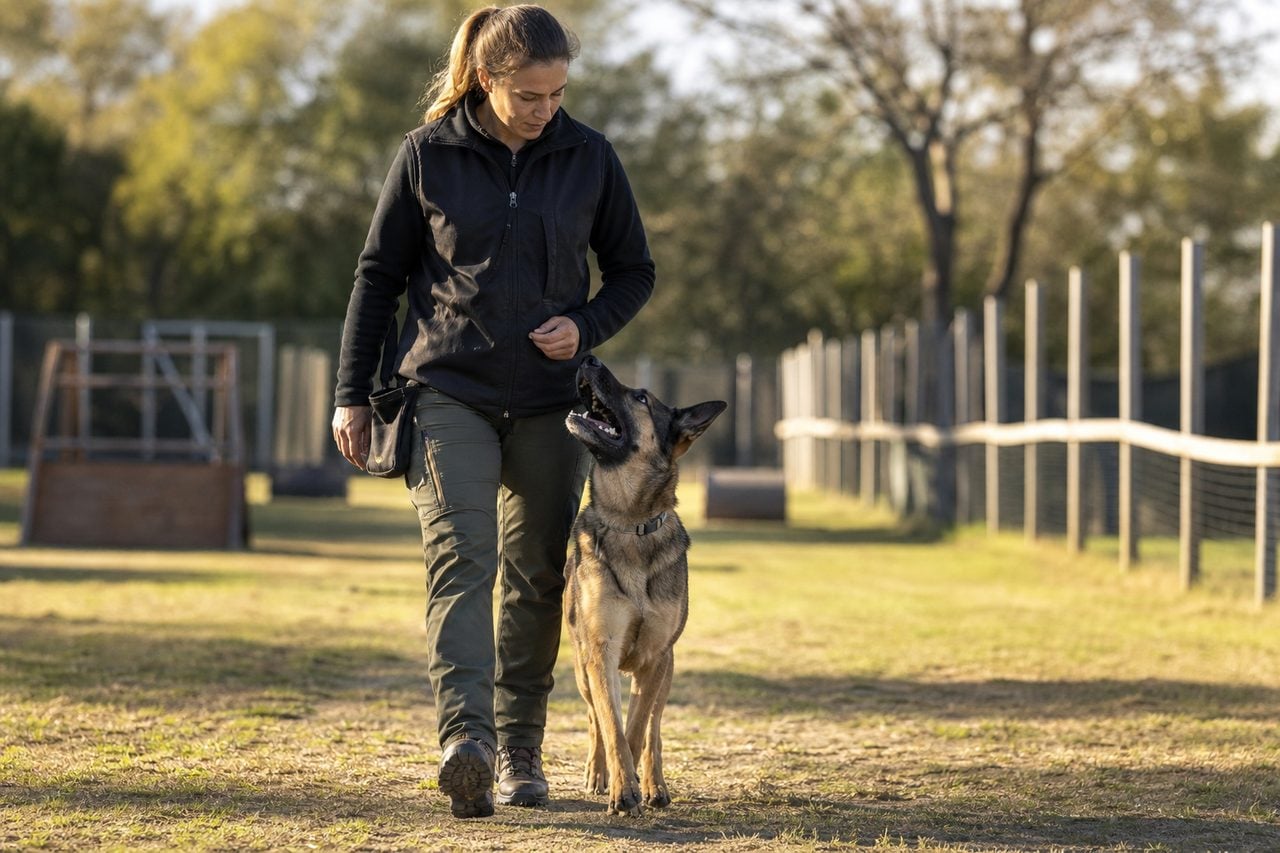
Board-and-train programs, sometimes called in-kennel or live-in training, place a dog with a professional trainer for a set stretch of days or weeks so the animal can learn in a structured, distraction-managed environment before coming home to its family. For owners around Port Huron, where Lake Huron meets the St. Clair River and the pace of life shifts between quiet river towns and busy summer beaches, the appeal is easy to understand: a busy household, a strong-willed dog, and not enough hours in the week to run consistent daily sessions. A board-and-train is meant to compress weeks of that work into a focused block handled by someone who does it for a living.
- What a Board-and-Train Program Actually Is
- When a Board-and-Train Makes Sense for a Blue Water Household
- The Transfer Problem: Why the Handoff Matters Most
- Vetting a Program: Facility, Methods, and Transparency
- Local Realities: Distances, Seasons, and Supply
- Costs, Contracts, and Setting Realistic Expectations
- What to Do Before, During, and After the Program
- Reviewed trainers
- FAQ
This guide explains how board-and-train programs actually work, what they can and cannot deliver, and how to evaluate a program responsibly. It is written for the Blue Water Area specifically, so it accounts for the reality that dedicated in-kennel facilities are thinner on the ground here than in a large metro. St. Clair County has good trainers, but the deepest bench of specialty and residential programs sits about an hour south around Detroit, and some owners choose to travel for the right fit.
The goal throughout is a clear-eyed look at the format, not a sales pitch. A board-and-train is a tool. Used well, it can be a genuine reset for a dog and a household. Used carelessly, it can waste money and, worse, hand back a dog that behaves for the trainer but not for the family.
What a Board-and-Train Program Actually Is
A board-and-train is a residential training program. The dog lives at the trainer’s facility or in the trainer’s home for the duration, and the trainer works the dog on a daily schedule rather than the once- or twice-weekly cadence of a group class or private lesson. Programs commonly run anywhere from about two weeks for a focused obedience tune-up to four, six, or eight weeks for more comprehensive work or serious behavior issues.
The core advantage is repetition and consistency delivered by someone skilled. Dogs learn through clear, frequently repeated patterns. A professional working a dog several short sessions a day, every day, in a controlled setting can build reliable responses faster than most owners manage around jobs, kids, and the rest of life. The trainer also brings a trained eye for timing, reward, and correction that takes years to develop.
It helps to separate three things a board-and-train might target. The first is foundational obedience: sit, down, place, recall, loose-leash walking, and impulse control. The second is manners and household behavior: door manners, not counter-surfing, settling calmly, greeting guests politely. The third is behavior modification: reactivity, fear responses, or aggression, which is a more specialized and slower category of work. Many general board-and-train programs handle the first two well. The third deserves extra scrutiny and often a different kind of professional, which is covered later in this guide and in the companion article on behaviorists.
When a Board-and-Train Makes Sense for a Blue Water Household
The format fits some situations far better than others. It tends to make sense when an owner has a clear obedience or manners goal, a genuine shortage of time to train consistently, and a dog whose issues are rooted in a lack of structure rather than deep fear or trauma. A young adult dog that never learned the basics, pulls hard on the leash along the Fort Gratiot beach paths, and bolts out doors is a textbook candidate.
It also helps in specific life circumstances. A family preparing for a new baby, a household moving into a busier neighborhood in Marysville or St. Clair, or an owner recovering from injury who physically cannot do leash work for a while may all benefit from a concentrated program that establishes structure the family can then maintain.
The format makes less sense in a few cases. A puppy in the middle of a critical socialization window is usually better served by staying home and being socialized carefully by the family, because those early weeks are about positive exposure the owner should be part of. A dog with serious aggression or severe anxiety may need a veterinary behaviorist rather than a general residential trainer. And an owner who is unwilling or unable to do the follow-through work at home should think hard before spending on a program whose results depend entirely on that follow-through.
One honest question separates good candidates from poor ones: is the plan to outsource the problem, or to outsource the heavy early lifting and then take over? Only the second version tends to work.
The Transfer Problem: Why the Handoff Matters Most
The single biggest failure point in board-and-train is the transfer of training from trainer to owner. A dog can become beautifully responsive for a skilled professional and then appear to forget everything within a week at home. This is not the dog being stubborn. Dogs are highly contextual learners. They associate behaviors with the person, the place, the tone, and the cues that were present during learning. Change all of that at once and reliability drops.
This is why the best programs treat the go-home process as a core part of the service, not an afterthought. Look for programs that build in owner training sessions, ideally multiple, where the family learns the exact cues, hand signals, and reward or correction mechanics the trainer used. Look for written materials, video of the dog performing each skill, and a clear plan for the first two weeks at home. Some programs offer follow-up sessions or a period of ongoing support, which is valuable precisely because the home transition is where things wobble.
Practically, an owner should expect to keep working the dog daily after pickup: short sessions, the same cues, the same standards, gradually adding the real-world distractions of a normal household and normal walks. Skills need to be proofed in the environments where they will actually be used, from the driveway to a busy sidewalk in downtown Port Huron to the crowds along the river during a summer festival.
Vetting a Program: Facility, Methods, and Transparency
Because the dog will live somewhere out of the owner’s sight, vetting matters more here than for any other training format. Start with the facility itself. Ask to visit before committing. A reputable operation will let a prospective client see where dogs are housed, how they are exercised, how they are fed, and how many dogs one person is responsible for. Clean, secure, climate-appropriate housing and sensible dog-to-staff ratios are non-negotiable.
Ask directly about methods. A trainer should be able to explain, in plain language, how they teach a behavior and what they do when a dog gets it wrong. Be cautious of anyone who refuses to describe their approach, promises guaranteed results, or leans on vague language. Ask what equipment they use and why, and whether the owner will be expected to use the same tools at home. Reasonable professionals disagree about tools, but they should be able to justify their choices and show that the dog is worked humanely.
Transparency during the stay is another good signal. Programs that send regular photo or video updates, or that offer a mid-program check-in, tend to be more accountable. Ask about their policy if the dog does not respond as expected, whether there is any refund or extension structure, and what happens medically if the dog gets sick or injured while boarding. Finally, ask for references from past clients in the area and actually contact them.
Credentials are worth asking about, though the field is loosely regulated. Certifications from recognized professional bodies, continuing education, and membership in professional associations are positive indicators. They are not guarantees, and their absence is not automatically disqualifying, but they show a trainer invests in the craft.
Local Realities: Distances, Seasons, and Supply
The Blue Water Area has its own texture that affects a board-and-train decision. Geographically, families are spread from the lakeshore towns down through Marysville, St. Clair, Marine City, and Algonac, inland to farm communities like Emmett, Yale, and Capac, and up the Thumb coast to Lexington and Croswell. A residential program means the dog is not coming home each night, so the drop-off and pickup distance matters less on a daily basis than it does for a class, but it still shapes how easily an owner can visit or attend handoff sessions.
Seasonality is a real factor here. Summer brings crowds, boat traffic, beach visitors, and festivals to the waterfront, which is exactly the kind of high-distraction environment where a newly trained dog gets tested. Some owners deliberately schedule a program in spring so the dog is ready for the busy season. Winter along Lake Huron brings ice, snow, and short days, which changes how a dog is exercised and how outdoor proofing gets done. A good local trainer will factor the season into the plan.
Supply is the honest constraint. Dedicated in-kennel residential facilities are less common in St. Clair County than in a large metropolitan market. Some excellent trainers here run smaller, home-based programs that take only one or two dogs at a time, which can be a strength in terms of individual attention. For families who want a wider range of options, or a program with a very specific specialty, the Detroit area roughly an hour south via I-94 or I-69 offers a larger pool of residential trainers. Traveling for the right program is a legitimate choice, especially for a multi-week commitment where fit matters more than proximity.
Costs, Contracts, and Setting Realistic Expectations
Board-and-train is generally among the more expensive training formats because it bundles daily professional labor with boarding, food, and facility overhead across weeks. Pricing varies widely by program length, the trainer’s experience, the intensity of the work, and the region, so owners should get a written quote that spells out exactly what is included. Beware of a price that seems far below the market; the economics of housing and working a dog daily are hard to shortcut, and a suspiciously cheap program may be cutting corners somewhere.
Read the contract carefully before signing. It should state the program length, what skills are targeted, what the daily routine looks like, what happens if goals are not met, the medical and emergency policy, and what post-program support is included. Vague contracts protect the trainer, not the owner. A specific one signals a professional who has thought the process through.
Expectations deserve equal care. A board-and-train can reliably build obedience and manners in a normal dog. It cannot rewire genetics, erase a dog’s fundamental temperament, or guarantee a specific outcome, and anyone promising otherwise should raise a flag. Behavior work in particular is a process, not a one-time fix; even a strong program is the beginning of ongoing management at home. Framed correctly, the program buys a household a well-started dog and a clear roadmap, and the family’s follow-through determines how far that start carries.
It also helps to think about what success looks like in measurable terms before signing. Rather than a vague goal like a better-behaved dog, define specifics: the dog walks on a loose leash past another dog, comes when called off a mild distraction, settles on a mat while the family eats, and does not bolt when the door opens. Concrete targets let both the owner and the trainer judge honestly whether the program delivered, and they give the family a clear list of skills to keep practicing afterward. A program that helps you define those targets at the outset is one that takes the outcome, not just the stay, seriously.
What to Do Before, During, and After the Program
A little preparation improves outcomes. Before the program, get the dog current on vaccinations and a health check, because reputable facilities will require proof and because a healthy dog trains better. Write down the specific behaviors that matter most to the household so the trainer can prioritize them. Gather the dog’s normal food and any medications, and be honest with the trainer about the dog’s history, including any bites, fear triggers, or medical issues. Withholding history helps no one and can be dangerous.
During the program, stay engaged. Attend any scheduled updates or check-ins, watch the videos, and start learning the cues the trainer is using so the handoff is not starting from zero. If the program allows a mid-stay visit, use it to observe rather than to disrupt the dog’s routine.
After pickup, protect the investment. Keep the first days low-key and structured, run short daily practice sessions, and hold the same standards the trainer held. Reintroduce distractions gradually, starting quiet and building toward the real chaos of a summer sidewalk or a family gathering. Schedule any follow-up sessions the program offers, and do not hesitate to call the trainer with questions in the first weeks. The households that stay the course, keep sessions short and frequent, and treat the go-home period as active training rather than a finish line are the ones that keep the results.
Board & Train in Port Huron: Local Options & Nearest Specialists
A few Port Huron-area trainers can help with milder board & train needs:
- Recon K9 — 5.0★ (8 reviews)
- Cool Spring Farm Kennel, LLC — 4.9★ (67 reviews)
Nearest board & train specialists — Detroit
For complex cases, some families travel to the larger pool of specialists in the Detroit area for an assessment or a board-and-train stay. Top-reviewed options:
- From The Heart Dog Training — 5.0★ (82 reviews)
- Smart Dog Obedience — 5.0★ (54 reviews)
- My Sidekick Dog Training — 5.0★ (50 reviews)
- K9 AdvantEDGE Dog Training — 5.0★ (40 reviews)
- Connected Canine Academy — 5.0★ (16 reviews)
- Iron Clad K9 Training — 5.0★ (13 reviews)
- Tip Top K9 Sterling Heights Dog Training — 5.0★ (7 reviews)
- Sit Means Sit Dog Training Detroit — 4.9★ (688 reviews)
See all Detroit board & train trainers →
Frequently Asked Questions
How long should a board-and-train program last?
It depends on the goal. A focused obedience or manners tune-up for a basically sound dog might run about two weeks. More comprehensive work, or programs addressing entrenched habits, commonly run four to eight weeks. Longer is not automatically better; what matters is that the length fits the specific goals, that the trainer can explain why they recommend that duration, and that real owner-handoff time is built in. Be wary of a program that promises to fix deep behavior problems in a very short stay.
Will my dog forget everything once it comes home?
Dogs do not forget, but they are contextual learners, so skills can appear to fade when the person, place, and cues all change at once. This is normal and manageable. The fix is a strong handoff: learning the exact cues the trainer used, practicing daily at home in short sessions, and gradually proofing the skills in real environments. Programs that include owner training, written materials, video, and follow-up support make this transition far smoother, which is why that support is worth prioritizing when choosing a program.
Is board-and-train safe for my dog?
It can be, with a reputable program. Safety comes down to vetting: visit the facility in advance, confirm the housing is clean, secure, and climate-appropriate, ask about dog-to-staff ratios, confirm vaccination requirements, and get the medical and emergency policy in writing. Ask directly how the trainer handles mistakes and what equipment they use and why. A professional who welcomes questions and lets you see where your dog will live is showing you the accountability you want. Refusal to allow a visit or explain methods is a warning sign.
Are there board-and-train options right in the Port Huron area?
There are trainers in St. Clair County who offer residential or in-home programs, though dedicated in-kennel facilities are less common here than in a large metro. Some local programs are small and home-based, taking only one or two dogs at a time, which can mean strong individual attention. Owners who want a wider range of options or a specific specialty sometimes travel to the Detroit area, roughly an hour south via I-94 or I-69, where the pool of residential trainers is larger. For a multi-week commitment, choosing the right fit is worth some travel.
Can a board-and-train fix aggression or severe anxiety?
Serious aggression and severe anxiety belong in a different category from obedience and manners. Some experienced trainers do behavior modification work, but these cases are slower, higher-stakes, and often benefit from a veterinary behaviorist or a certified applied animal behaviorist, sometimes alongside a medical workup, because underlying pain or a treatable medical condition can drive behavior. If aggression or severe anxiety is the main concern, treat a general board-and-train with caution, ask pointed questions about the trainer’s experience with such cases, and consider the guidance in the companion article on dog behaviorists.
How much does a board-and-train cost?
This guide does not quote fixed prices because they vary widely by program length, the trainer’s experience, the intensity of the work, and the region. As a category, board-and-train tends to be among the more expensive formats because it bundles daily professional labor with boarding across weeks. The practical advice is to get a written, itemized quote, understand exactly what is included, and be skeptical of pricing far below the local market, since housing and working a dog daily is genuinely labor-intensive and hard to shortcut cheaply.
Related: read our complete board & train guide or the full Port Huron dog training overview.
Ready to find the right board & train pro in Port Huron?