
Board & Train in Reading, PA
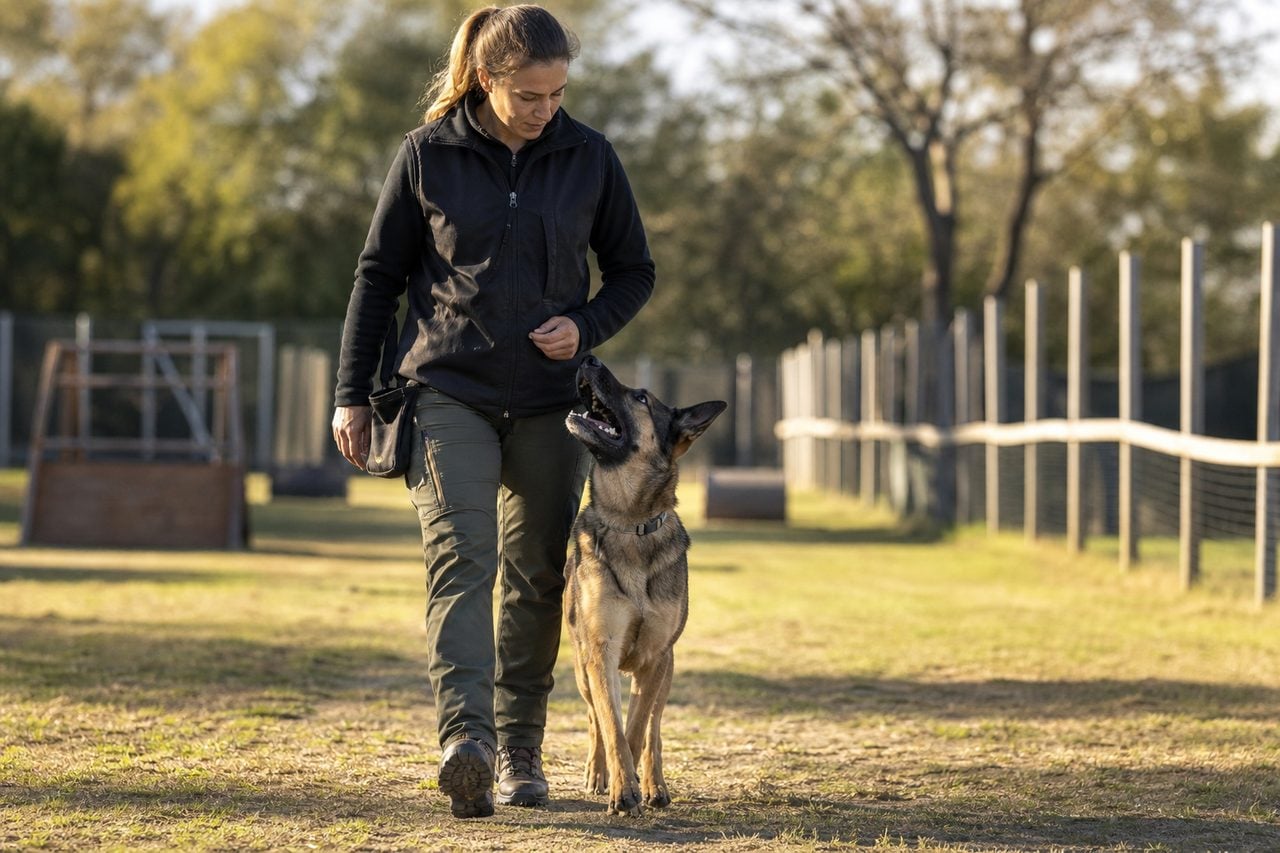
Board-and-train is the most immersive way to address a dog’s behavior in the Reading area: your dog moves in with a professional trainer for a residential stay — commonly two to four weeks — and returns home with a foundation of skills already built. For busy Berks County households, from row homes near downtown Reading to spread-out properties out in the Oley Valley, the appeal is straightforward. Instead of squeezing daily practice into a packed schedule, you hand the heavy lifting to someone who works with your dog every day, in a controlled environment, until new habits start to stick.
- What Board-And-Train Actually Means In Berks County
- Board-And-Train Versus Day Boot Camp: Picking The Right Format
- Which Dogs Benefit Most From A Residential Stay
- What A Typical Program Covers, Week By Week
- The Handoff: Why Go-Home Lessons Make Or Break Results
- How To Vet A Board-And-Train Facility Near Reading
- Reading-Area Neighborhoods And What To Expect Locally
- Reviewed trainers
- FAQ
The model fits the rhythm of life in Berks County. Reading sits at the seat of the county where the old Reading Railroad once ran — the namesake of the famous Monopoly square — and the region spreads out from the Pagoda on Mount Penn into Pennsylvania Dutch farm country. Commuters who drive into Philadelphia or up to the Lehigh Valley, families managing kids and work, and rural owners with long to-do lists often find that a residential program removes the “I didn’t have time to train today’’ problem entirely. The dog trains whether or not your week cooperates.
This guide explains what a board-and-train program in the Reading and Berks County region actually involves, how it differs from a day-based boot camp, what kinds of dogs it suits, what a typical multi-week program covers, and how to evaluate a facility responsibly before you trust it with your dog for weeks at a time. The goal here is honest expectations: a good residential program is a powerful head start, not a permanent fix you can walk away from. The final, lasting results depend just as much on what happens after your dog comes home — to a Wyomissing cul-de-sac, a Kutztown side street, a Birdsboro property near French Creek, or wherever you live across Berks. Throughout, we’ll keep the focus on the questions that actually protect you: what’s included, what’s realistic, and how to tell a careful professional from a confident salesperson.
What Board-And-Train Actually Means In Berks County
A board-and-train is a residential program: your dog lives at the trainer’s facility or home for the duration of the stay, typically ranging from a couple of weeks to a month or more depending on the goals. During that time the trainer handles feeding, exercise, structured training sessions, and the daily routine that turns repetition into reliable behavior. This is the central distinction from any day-program option — the learning continues around the clock, including the calm downtime and rest periods that help a dog consolidate what it learns.
In the Reading area you’ll find this format offered in a range of settings. Some programs run from dedicated kennels on properties out toward Bernville or the Oley Valley, where farm-country acreage gives room for long-line work and real-world distraction practice. Others operate from suburban homes around Wyomissing or Sinking Spring, emphasizing house manners in a domestic setting that mirrors where most dogs actually live. Neither setting is automatically better; what matters is the structure, the trainer’s methods, and how closely the environment resembles the life your dog will return to. A dog trained only in an empty kennel may need extra generalization work once it’s back among the noise of a Mount Penn neighborhood or a busy household.
Board-And-Train Versus Day Boot Camp: Picking The Right Format
The two intensive formats are easy to confuse, so it helps to separate them clearly. A board-and-train is residential — your dog stays overnight for the full program. A dog boot camp, by contrast, is usually a day program: you drop off in the morning and pick up in the evening, much like daycare with a heavy training component, and your dog sleeps at home every night. Both compress a lot of training into a short window, but they suit different households and different dogs.
Residential board-and-train tends to make sense when the home environment itself is part of the problem — a dog that has rehearsed bad habits for months, a household that genuinely cannot find daily practice time, or owners who travel and want the stay to double as boarding. The full-immersion environment removes the inconsistency that often stalls progress. A day boot camp suits owners who want intensive work but prefer their dog home each evening, who live close enough to a Reading-area facility for a daily round trip, or who want to stay more hands-on throughout. For separation-sensitive dogs or very young puppies, many trainers will steer owners toward the day format or private lessons first. The right choice depends on your dog, your schedule, and how far you are from the facility — a daily Pottstown-to-Reading commute changes the math.
Which Dogs Benefit Most From A Residential Stay
Board-and-train is a flexible format, but it shines for particular situations. Adolescent dogs — roughly the six-month-to-two-year stretch when energy outpaces impulse control — often benefit enormously from concentrated, consistent handling. So do dogs whose owners have tried piecemeal training without sticking to it; the residential structure breaks the start-stop cycle that undermines so many well-intentioned plans. Dogs that need to build a reliable recall before being trusted off-leash on the Schuylkill River Trail or around Blue Marsh Lake are common candidates, as are pullers who make neighborhood walks miserable.
It’s equally important to know where a residential program is not a first choice. Serious aggression, severe separation anxiety, or fear-based reactivity usually call for an assessment-first approach and often a different format — sometimes including a veterinary behavior consult — rather than dropping the dog into a board-and-train and hoping for the best. Responsible Reading-area trainers will evaluate a dog before accepting it into any program and will tell you honestly if residential isn’t the right fit. Be cautious of any facility that promises to “fix” deep behavioral issues in a fixed number of weeks with a guarantee; behavior change is rarely that tidy, and no ethical trainer can guarantee an outcome that depends partly on what happens after the dog goes home.
What A Typical Program Covers, Week By Week
While every trainer structures things differently, most Reading-area board-and-train programs follow a recognizable arc. The first days are about decompression and assessment — the dog settles into the new environment, and the trainer gets a read on temperament, drives, and any problem behaviors before serious work begins. Rushing a nervous dog straight into drilling tends to backfire, so a good program builds rapport first.
From there, training typically layers foundational skills: attention and name response, loose-leash walking, sit and down with duration, place or station behaviors, and a reliable recall. Many programs build distraction gradually — starting in quiet indoor space, then moving to a yard, then to genuinely busy environments like a parking lot or park where the dog must hold focus despite snow, squirrels, and strangers. Mid-program is usually when behaviors get proofed against real-world chaos. The final stretch shifts toward consolidation and, crucially, preparation for the handoff: the trainer documents what the dog can do, on what cues, and begins planning the transfer of those skills to you. A program that spends zero time on owner preparation is leaving out the part that determines whether any of it lasts once your dog is back home in Berks County.
The Handoff: Why Go-Home Lessons Make Or Break Results
The single most overlooked factor in board-and-train success is the transfer of skills from trainer to owner. A dog can return from a residential stay responding beautifully — to the trainer’s timing, body language, and cues — and then appear to “forget” everything within a week at home. The skills didn’t vanish; the dog simply hasn’t learned to perform them for a new handler in a new context yet. That’s normal, and it’s exactly what the go-home process exists to fix.
This is why the best programs in the Reading area include one or more transfer sessions — sometimes called go-home or turnover lessons — where the trainer coaches you on the exact cues, marker words, and mechanics your dog now knows. Some include follow-up sessions in the weeks after pickup, and a few will visit your home to help the behaviors generalize to your own kitchen, yard, and street. When you evaluate facilities, ask specifically what owner instruction is included and whether follow-up support is built into the price or billed separately. A residential stay with no structured handoff is half a service. The reputable operators treat your education as central, because they know their reputation in Berks County rides on whether the dog is still behaving months later — not just on the polished demo at pickup.
How To Vet A Board-And-Train Facility Near Reading
Because your dog will live somewhere out of your sight for weeks, due diligence matters more here than for almost any other service. Start by asking to tour the facility before you commit — see where dogs sleep, how they’re housed, how clean it is, and how the resident dogs behave. A trainer who welcomes an in-person visit is signaling confidence; one who deflects every request to see the space is a flag. Ask how many dogs are in the program at once and how much individual attention each receives, since a packed kennel can mean less real training than the brochure implies.
Get specific about methods. Ask what tools and techniques the trainer uses, how they handle mistakes, and whether they can explain their approach in plain terms. You’re looking for someone who can describe what they do and why, who keeps you updated during the stay (photos or progress notes are common), and who sets realistic expectations rather than selling guarantees. Ask about their experience with dogs like yours and what happens if your dog isn’t a fit once it arrives. Snowy Berks winters and the area’s mix of rural and suburban settings mean facilities vary widely in their exercise and turnout setups — ask how dogs are exercised in bad weather. Finally, weigh cost against what’s included: residential programs are a significant investment, and the value lies as much in the handoff and follow-up as in the boarding weeks themselves.
Reading-Area Neighborhoods And What To Expect Locally
Berks County’s geography shapes how owners use board-and-train. In Reading City & Mount Penn, where homes sit close together and the Pagoda watches over dense neighborhoods, owners often turn to residential programs to build the leash manners and impulse control that city living demands. Out in Wyomissing & the Western Suburbs — including Sinking Spring and Wernersville — the priority is frequently polished household manners and reliable behavior around the steady foot traffic of suburban streets.
To the north, Kutztown & Northern Berks — reaching toward Fleetwood and Hamburg, near Kutztown University — blends college-town energy with farmland, and recalls that hold up around livestock and open fields are a common goal. In Birdsboro, Boyertown & the East, with French Creek State Park nearby, owners want dogs that behave on trails and around wildlife. The Pottstown & Schuylkill Edge follows the river toward the Schuylkill River Trail, where off-leash reliability and calm trail behavior matter. And in the Oley Valley & Berks Farm Country, with acreage and Pennsylvania Dutch farms all around, residential programs help working and family dogs learn boundaries on properties without fences. Wherever you are, match the program’s training environment to the life your dog actually leads.
Reviewed Board & Train Trainers in Reading
These reviewed Reading-area trainers from our directory handle board & train. Each links to a full profile with specialties, certified credentials, reviews, and contact info:
- Cappuccino Dog Training Inc. — 5.0★ (109 reviews)
- For Them Dog Training — 5.0★ (30 reviews)
- Alpha U dog training — 5.0★ (23 reviews)
- Happy Wags Dog Training LLC — 5.0★ (20 reviews)
- AHAS Dog Training — 5.0★ (12 reviews)
- Peacock Bridge Kennels — 4.8★ (226 reviews)
- Joe’s Dog Training and Boarding — 4.7★ (3 reviews)
- Equidus K9 — 4.6★ (25 reviews)
- D and D Kennel — 4.3★ (22 reviews)
See all Reading board & train trainers →
Frequently Asked Questions
How long does a board-and-train program usually last?
Most residential programs in the Reading area run somewhere between two and four weeks, though some extend longer for complex goals. The right length depends on your dog’s starting point and what you’re aiming to accomplish. Shorter stays can build solid foundations; deeper behavior work generally needs more time. Ask any trainer to explain how they set program length and what realistically can — and cannot — be achieved in the proposed window.
Will my dog forget the training once it comes home?
Dogs don’t truly forget, but skills can look shaky at home until your dog learns to perform them for you in your own environment. That’s why the go-home or transfer lessons are essential — they teach you the exact cues and mechanics your dog now knows. Plan to practice consistently for the first weeks, and choose a program that includes structured owner instruction and, ideally, follow-up support.
How is board-and-train different from a dog boot camp?
Board-and-train is residential — your dog stays overnight for the whole program. A dog boot camp is typically a day program: drop-off in the morning, pickup in the evening, with your dog sleeping at home. Both are intensive, but residential immersion removes the home-environment inconsistency that stalls some dogs, while a day camp keeps you more hands-on and avoids overnight separation. The right choice depends on your dog, schedule, and distance from the facility.
Is board-and-train appropriate for an aggressive or anxious dog?
Not as an automatic first step. Serious aggression, fear-based reactivity, and severe separation anxiety usually call for an assessment-first approach and sometimes a veterinary behavior consult, rather than dropping the dog into a residential program. Responsible Reading-area trainers evaluate a dog before accepting it and will tell you honestly if residential isn’t the right fit. Be wary of any facility that guarantees to fix deep behavioral issues in a set number of weeks.
How do I know a facility near Reading is reputable?
Ask to tour the space before committing — see where dogs sleep and how clean and calm the environment is. Ask how many dogs are in the program at once, what methods the trainer uses and why, how they communicate during the stay, and what owner instruction and follow-up are included. A trainer who welcomes visits, sets realistic expectations, and avoids outcome guarantees is generally a safer bet than one who only sells results.
What does a board-and-train program cost in the Reading area?
Residential programs are a significant investment, and pricing varies widely with program length, the trainer’s experience, what’s included, and the goals involved. Rather than chasing the lowest number, compare what each price actually covers — especially the go-home lessons and any follow-up support, which largely determine whether results last. Ask each facility for a clear, itemized explanation of what is and isn’t included before you decide.
Related: read our complete board & train guide or the full Reading dog training overview.
Ready to find the right board & train pro in Reading?