
Board & Train in Scranton, PA
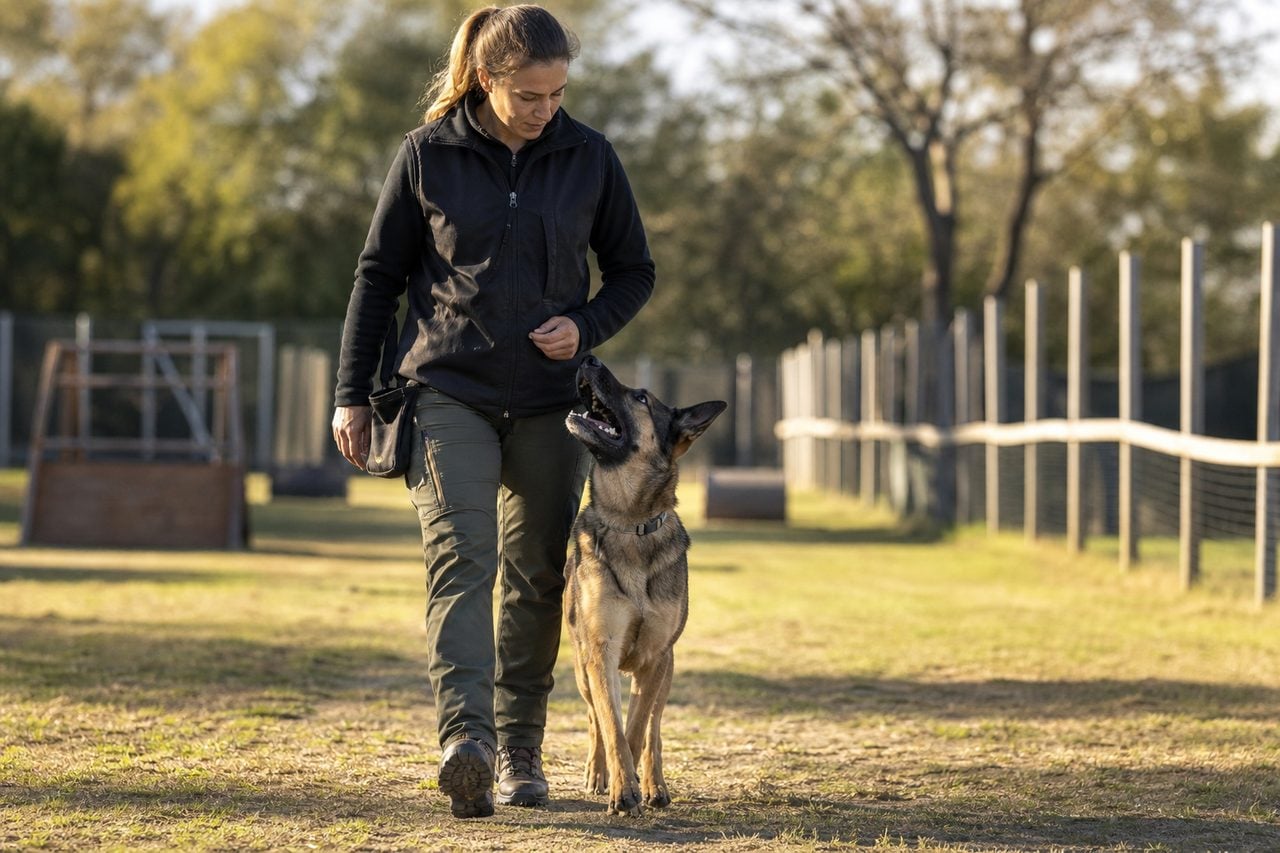
Board-and-train is a residential training program where your dog stays with a professional trainer or facility for a set stretch of time — commonly two to four weeks — while the training happens as part of daily life. For families across the Scranton and Wilkes-Barre metro, from the Lackawanna Valley down to the Wyoming Valley on the Susquehanna, it is the option people reach for when a dog needs more structure than a once-a-week class can deliver, or when a busy household simply cannot commit to the daily repetitions that shape reliable behavior. Instead of you doing the early heavy lifting, a trainer builds the foundation, then hands the skills back to you.
- What Board-And-Train Actually Means
- Board-And-Train Versus Dog Boot Camp
- When A Residential Stay Makes Sense
- What A Responsible NEPA Program Includes
- The Owner Transfer — Where Results Are Kept Or Lost
- Costs, Contracts, And Fair Expectations
- Finding And Vetting Board-And-Train Near You
- Reviewed trainers
- FAQ
The appeal in Northeastern Pennsylvania is practical. Long, snowy winters make consistent outdoor practice hard from December through March, and many local owners juggle shift work, commutes along I-81 and the Casey Highway, and family schedules that leave little room for structured daily sessions. A residential stay compresses weeks of foundation-building into an immersive block, so the dog returns already living the routines you want — reliable house manners, leash skills, and responsiveness to cues in a variety of settings. For households in Dickson City, Forty Fort, or the Abingtons that would otherwise lose momentum over a cold, dark winter, that head start can be the difference between a plan that sticks and one that quietly stalls.
This guide explains what board-and-train genuinely is and is not, how it differs from a day-based boot camp, what a responsible program in NEPA should include, and the questions to ask before you hand over your dog and your money. GetDogSchool.com is a directory, not a training provider — our goal here is to help you evaluate local options with clear eyes, understand fair expectations, and avoid the common traps that leave owners disappointed once the dog comes home.
What Board-And-Train Actually Means
Board-and-train combines boarding — your dog lives at the trainer’s facility or home — with a structured, ongoing training program woven into every day of the stay. The defining feature is immersion: the dog is not just practicing skills for an hour, it is living inside a consistent set of rules and routines around the clock. That continuity is what lets a good program build habits faster than a weekly class, because there is no gap between sessions for old patterns to reassert themselves.
A typical stay runs two to four weeks, though some programs offer shorter tune-ups or longer stays for more complex goals. The trainer generally handles the daily work, layering in obedience, impulse control, and real-world exposure. Crucially, the dog is not the only one who needs to learn: reputable programs build in owner transfer sessions so you can maintain what was taught once the dog is back in your Dunmore, Kingston, or Clarks Summit home.
It is worth being honest about what board-and-train cannot do. It is not a way to outsource a relationship, and it is not a permanent fix that runs on autopilot. Skills fade without practice, and a dog that behaves beautifully for a trainer will test boundaries at home if the household does not keep the same structure. The stay buys you a strong foundation and a head start — the follow-through is still yours.
Board-And-Train Versus Dog Boot Camp
People often use “board-and-train” and “boot camp” interchangeably, but in practice they describe different structures, and knowing the difference helps you pick the right fit. Board-and-train is residential: your dog stays overnight, usually for multiple weeks, and the training is spread across the full day and integrated into living. Boot camp, as most NEPA providers use the term, more often refers to an intensive day-program — your dog attends for concentrated sessions and comes home each evening, or attends a compressed multi-day intensive without the extended overnight residency.
The residential model suits dogs whose issues are tied to home routines, or owners who want the environment reset entirely for a stretch. The day-program model keeps the dog in its own home each night, which some owners prefer for peace of mind and which can make the eventual transfer of skills feel more continuous. Neither is inherently superior; they solve slightly different problems.
Cost and logistics differ too. Residential stays generally cost more because they include boarding, feeding, and around-the-clock care in addition to training. Day-based programs may cost less per week but require daily drop-off and pickup — a real consideration if you are driving in from Carbondale, Hazleton, or the Back Mountain in January weather. When you contact a provider, ask plainly which model they run so you are comparing like with like rather than a shared label.
When A Residential Stay Makes Sense
Board-and-train tends to fit a few clear situations. The first is the busy or overwhelmed household — owners who genuinely want a well-behaved dog but cannot realistically run daily structured sessions because of work, family, or health. A residential stay does the intensive early work so the daily maintenance that remains is lighter and more sustainable.
The second is the dog that needs a full environmental reset. Some behaviors are so tied to the home context — a specific door-dashing pattern, counter-surfing, or over-the-top reactivity to the mail carrier — that changing the environment for a few weeks helps break the loop and rebuild it correctly before the dog returns. The neutral setting of a facility removes the usual triggers while new habits take hold.
A third fit is the puppy or young dog whose owners want a strong foundation laid quickly during a critical developmental window. Front-loading manners, crate comfort, and leash basics can pay off for years. That said, residential care is not right for every dog. Very anxious dogs, those with separation issues, or dogs with health concerns may find the separation more stressful than helpful, and a responsible trainer in the Scranton or Wilkes-Barre area will tell you so during an honest intake conversation rather than simply taking the booking.
What A Responsible NEPA Program Includes
Before choosing a residential program, look for a few markers of a well-run operation. Start with an intake or assessment: a good trainer wants to meet your dog, understand its history, and set realistic goals before quoting a stay. Be wary of any program that promises guaranteed outcomes sight unseen — behavior is individual, and no ethical trainer can promise a specific result on a fixed timeline.
Ask about the daily routine. How many training sessions per day, and how much rest, enrichment, and free time? Where do the dogs sleep, and how are they housed — individual kennels, indoor runs, in-home? What happens during NEPA’s cold snaps and snow days when outdoor work is limited? A trainer who can describe the day hour by hour is far more reassuring than one who is vague.
Communication matters. Reputable programs send regular updates — photos, short videos, progress notes — so you are not left in the dark for weeks. Confirm vaccination and health requirements, and ask how they handle a dog that gets sick or injured, including which local veterinary clinic they use. Finally, insist on transfer sessions: the value of the stay is only realized if you are taught how to maintain the training once your dog is home in Olyphant, Pittston, or Mountain Top.
The Owner Transfer — Where Results Are Kept Or Lost
The single biggest predictor of whether board-and-train “works” long term is not what happens during the stay — it is what happens in the first weeks after your dog comes home. A dog learns to respond to cues in the trainer’s context, with the trainer’s timing and consistency. Bring that same dog back to a household with different rules, softer boundaries, or inconsistent follow-through, and the polished behavior erodes fast. This is not a failure of the program; it is simply how learning works.
That is why the transfer, or handover, is the most important part of the whole process. A quality program spends real time teaching you the cues, the timing, the rewards, and the routines the dog now knows. Some offer go-home lessons, written plans, or follow-up sessions in the weeks after pickup. Treat these as essential, not optional extras — a stay without a solid handover is a short-lived investment.
Plan for the adjustment period at home. Keep the structure tight for the first few weeks, use the same cues the trainer used, and reintroduce freedoms gradually as the dog proves reliable. Expect some testing of boundaries — it is normal, and the fix is calm consistency, not frustration. If your provider offers refresher or maintenance support, use it. The families who get the most from a residential stay are the ones who treat pickup day as the beginning of their own work, not the end.
Costs, Contracts, And Fair Expectations
Residential training is a meaningful investment, and pricing in the Scranton and Wilkes-Barre market varies with program length, the trainer’s experience, the goals involved, and what is bundled in. Because residential stays include boarding, feeding, and full-time care on top of the training itself, they sit at the higher end of dog-training pricing. Rather than chasing the lowest number, focus on what the fee actually covers — number of weeks, sessions per day, transfer lessons, and any follow-up support — so you can compare programs meaningfully.
Get the details in writing. A clear agreement should spell out the length of stay, what is and is not included, health and vaccination requirements, the update schedule, and the policy if the dog needs veterinary care. Ask what happens if goals are not met in the planned window, and whether follow-up or refresher sessions are included or billed separately. Vague verbal promises are a red flag; a professional operation documents its terms.
Set fair expectations from the start. Board-and-train can transform a dog’s foundation, but it is not magic and it does not run forever without maintenance. Be skeptical of anyone guaranteeing a “fixed” dog or a specific outcome by a specific date — ethical trainers describe likely progress, not certainties. The right mindset is that you are buying a strong head start plus the knowledge to maintain it, and that the results depend on the partnership continuing after your dog is back home in NEPA.
Finding And Vetting Board-And-Train Near You
The Scranton/Wilkes-Barre metro spans a wide area — from the Lackawanna Valley and the Mid-Valley through the Abingtons, across the Wyoming Valley, and out to the Back Mountain, Mountain Top, and Hazleton — so “local” can mean a very different drive depending on where you live. Because your dog will be staying overnight, proximity matters less than it would for weekly classes; many owners will travel farther for the right residential fit. Still, factor in the drop-off and pickup trip, and any go-home lessons, when weighing options across the region.
Vet thoroughly before booking. Visit the facility in person if you can — see where the dogs are housed, gauge cleanliness, and watch how staff interact with the animals. Ask about the trainer’s methods and philosophy, and make sure they align with how you want your dog handled. Request references and read a range of reviews rather than relying on a single glowing testimonial. Trust your read of the place: a trainer who welcomes questions and is transparent about their routine is a better sign than one who is evasive or over-promises.
Use this GetDogSchool.com directory as a starting point to identify board-and-train and residential programs serving the NEPA area, then do your own diligence — call, ask the questions in this guide, and confirm the specifics for your dog. We list options to help you begin the search; the final judgment about who is right for your dog and your household is always yours to make.
Reviewed Board & Train Trainers in Scranton
These reviewed Scranton-area trainers from our directory handle board & train. Each links to a full profile with specialties, certified credentials, reviews, and contact info:
- Loose Leash Canine — 5.0★ (52 reviews)
- Little Bear Canines Dog Training — 5.0★ (4 reviews)
- Dunmore Barks
- K-9 Academy Dog Training School — 4.8★ (46 reviews)
- Off Leash K9 Training, Scranton — 4.8★ (42 reviews)
- The Dog People — 4.8★ (18 reviews)
- Pawsitive Pup
- Springbrook Kennels
- Awesome Pawz Inc
- Lackawanna Kennel Club
See all Scranton board & train trainers →
Frequently Asked Questions
How long does a board-and-train program usually last?
Most residential board-and-train stays in the Scranton/Wilkes-Barre area run between two and four weeks, though some programs offer shorter tune-ups or longer stays for more complex goals. The right length depends on your dog’s starting point and what you want to accomplish, which is why a good trainer discusses it during an intake assessment rather than quoting a fixed duration blindly. Longer is not automatically better — what matters most is the quality of the daily work and the owner handover afterward.
What is the difference between board-and-train and a dog boot camp?
Board-and-train is residential — your dog stays overnight for multiple weeks while training is woven into daily life. A dog boot camp, as many NEPA providers use the term, more often means an intensive day-program where your dog attends concentrated sessions and comes home each evening, or a short compressed intensive without extended overnight residency. Because the same words get used loosely, always ask a provider directly which model they run so you are comparing the same thing.
Will my dog stay trained after coming home?
Only if the training is maintained. A dog learns to respond in the trainer’s context, and skills fade at home without consistent follow-through. That is why the owner transfer sessions are the most important part of the process — they teach you the cues, timing, and routines to keep the behavior alive. Families who keep structure tight in the first weeks home, use the same cues, and reintroduce freedoms gradually get lasting results; those who expect autopilot are usually disappointed.
How much does residential training cost in the Scranton area?
Pricing varies with program length, the trainer’s experience, the goals, and what is bundled in, and residential stays sit at the higher end of dog-training costs because they include boarding, feeding, and around-the-clock care on top of training. Rather than focusing on a single number, ask exactly what the fee covers — weeks of stay, sessions per day, transfer lessons, and follow-up support — and get the terms in writing so you can compare programs fairly.
Is board-and-train right for every dog?
No. It suits busy households, dogs needing an environmental reset, and young dogs where owners want a fast foundation. But very anxious dogs, those with separation issues, or dogs with health concerns may find the separation more stressful than helpful. A responsible trainer will assess your dog first and tell you honestly if a residential stay is not the best fit, rather than simply taking the booking. If a program promises guaranteed results without meeting your dog, treat that as a warning sign.
How do I choose a trustworthy program in NEPA?
Start with an intake assessment, and be wary of guaranteed outcomes offered sight unseen. Visit the facility if you can to see how dogs are housed and how staff treat them, ask about the daily routine and how they handle cold-weather snow days, confirm vaccination and veterinary policies, and insist on regular updates plus owner transfer sessions. Read a range of reviews and request references. Use this directory to find candidates serving the Scranton and Wilkes-Barre region, then do your own diligence before committing.
Related: read our complete board & train guide or the full Scranton dog training overview.
Ready to find the right board & train pro in Scranton?