
Board & Train in Valparaiso, IN
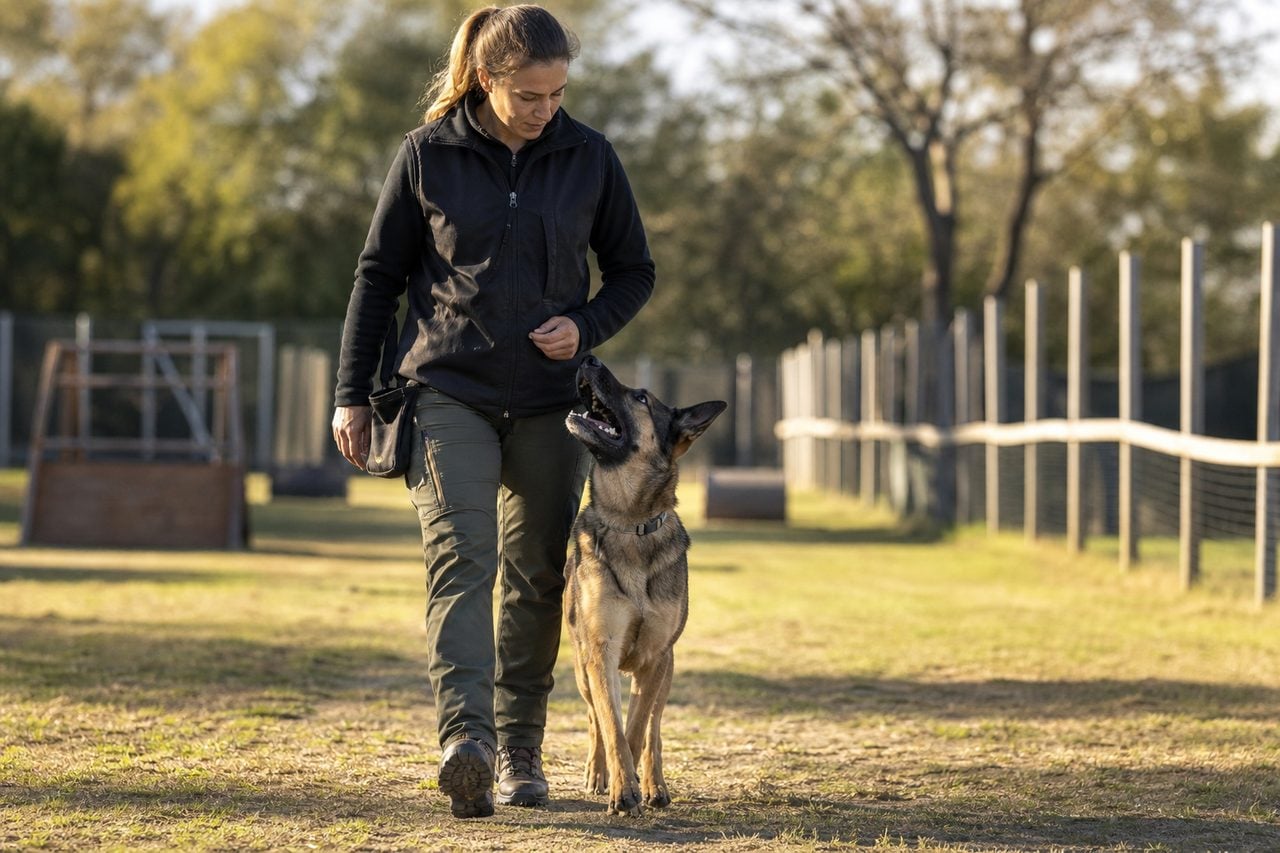
Board and train programs send your dog to live and learn with a professional trainer for a set stretch of time — often two to six weeks — while the trainer builds obedience, manners, and reliability into daily life. For busy families across Valparaiso and the wider Northwest Indiana Region, the appeal is obvious: the intensive, repetition-heavy work that usually takes months of weekly classes gets compressed into a focused block, and the dog comes home with skills already installed rather than skills that still need to be taught.
- What a Board and Train Program Actually Is
- Who Board and Train Suits — and Who It Doesn’t
- What to Look For in a Northwest Indiana Facility
- Training Methods and Why They Matter
- The Handoff: Why the Owner Transfer Is Everything
- Costs, Duration, and Setting Realistic Expectations
- How to Vet a Program Before You Commit
- Reviewed trainers
- FAQ
But board and train is not a magic box, and it is not the right fit for every dog or every goal. The programs that actually deliver share a few things in common: a trainer who explains their methods plainly, a facility you are allowed to see, a written plan tied to your specific goals, and — most importantly — a serious commitment to transferring the skills to you at the end. This guide walks through how in-kennel programs work in Porter, Lake, and LaPorte counties, what separates a strong program from a weak one, and how to decide whether sending your dog away is the right move for your household.
What a Board and Train Program Actually Is
A board and train — sometimes called an in-kennel or immersion program — means your dog boards at the trainer’s facility or home and receives daily training sessions throughout the stay. Instead of one lesson a week with six days of inconsistent practice in between, the dog gets multiple short, structured sessions every day from a professional who knows exactly how to time rewards, shape behavior, and raise the difficulty at the right pace.
The core advantage is consistency. Dogs learn fastest when the rules never change, when good choices are reinforced immediately, and when the handler reads the dog accurately session after session. Most owners, through no fault of their own, cannot deliver that level of consistency at home — life gets in the way, family members enforce different rules, and the dog learns that behavior is negotiable. A skilled trainer removes that variability for the length of the program.
Programs vary widely in structure. Some are built around foundational obedience — sit, down, place, recall, loose-leash walking, and impulse control. Others target specific problems like door-dashing, jumping, leash reactivity, or an unreliable come command. A few in the Region specialize in off-leash reliability, which is a longer and more demanding process. Before you commit, get clear on which category your goals fall into, because a two-week manners tune-up and a six-week off-leash program are very different products.
Who Board and Train Suits — and Who It Doesn’t
Board and train tends to work best for owners who are motivated but time-poor: professionals with long commutes toward Chicago, families juggling kids and work, or people who simply learn better by having a trained dog handed back with a clear maintenance plan than by attending weekly classes. It also suits dogs whose owners have accidentally reinforced bad habits and need a clean reset with a neutral handler.
It is a strong fit when the goal is concrete and skills-based — solid obedience, reliable recall, calm behavior around the house, better leash manners for walks on the Prairie Duneland Trail or through downtown Valpo. It is a weaker fit — and sometimes the wrong tool entirely — for deep-seated behavior problems rooted in fear or anxiety. A dog with genuine separation distress, severe fear, or a bite history may not be well served by being removed from home and placed in an unfamiliar kennel environment. Those cases often call for a behavior professional working with the dog in its own context (covered in the behaviorist guide).
Be honest about your own follow-through, too. The single biggest predictor of whether board and train results last is what the owner does after the dog comes home. If you know you will not practice or maintain the structure, no program will hold. The best trainers screen for this and will tell you plainly if they think a different format — private lessons or a day-training arrangement — would serve you better.
Age and life stage factor in as well. A young dog in the middle of a critical socialization window may benefit more from graduated exposure and puppy classes than from a stint away from home, while an adolescent dog barreling through its most challenging months often responds well to the structure an intensive program provides. Senior dogs, or dogs with medical conditions that make kennel life stressful, are usually poor candidates. A conscientious trainer asks about your dog’s age, health, and history before recommending a program, because those details change what will actually work. If a trainer takes any dog for any goal without those questions, that lack of curiosity is itself informative.
What to Look For in a Northwest Indiana Facility
Because your dog will live at the facility, the physical environment matters as much as the training method. Ask to tour the space before booking. A trainer who welcomes visits and shows you where dogs sleep, eat, and exercise is signaling confidence; one who refuses any visibility is a warning sign.
Look for clean, temperature-controlled kennels, secure fencing and double-gated entries, and a sensible ratio of dogs to staff so each dog gets real daily attention rather than a token session. Ask how many training sessions your dog gets per day, how long they are, and what the dog does the rest of the time — enrichment, rest, and decompression all matter. In the Region’s climate, ask specifically about hot-weather and cold-weather protocols, since Porter and LaPorte county summers can be humid and winters bitter off the lake.
- Vaccination and health requirements — a reputable program requires proof of core vaccinations and has a clear plan for veterinary emergencies.
- Communication cadence — will you get photos, videos, or written updates during the stay? Regular updates are standard practice now.
- Emergency and vet arrangements — know which local clinic they use and who makes decisions if your dog gets sick or hurt.
- Written agreement — scope, duration, what is included, and what happens if goals are not met should all be in writing before money changes hands.
Trust your read of the place. If the dogs on site look relaxed and the staff handle them calmly, that tells you more than any brochure.
Ask about the first few days, too. Any dog needs time to decompress when it arrives somewhere new, and a good program builds in a settling-in period before pushing hard on training. A facility that acknowledges this — rather than promising instant results from day one — understands how dogs actually adjust. Ask how they help an anxious newcomer settle, whether dogs are ever left unsupervised in group play, and how they separate dogs that do not get along. The Region draws a wide mix of dogs from Valparaiso, Portage, Chesterton, and across Lake and LaPorte counties, and the way a facility manages that variety day to day is a fair proxy for the care your dog will receive.
Training Methods and Why They Matter
Trainers in Northwest Indiana use a range of approaches, and the label a trainer uses matters less than whether they can explain what they do and why. Ask directly: how do you teach a new behavior, how do you handle a dog that gets it wrong, and what tools do you use? A professional should answer clearly and without defensiveness.
Many modern programs lean heavily on positive reinforcement — rewarding the behaviors you want so the dog repeats them — and build reliability through structure, repetition, and gradually harder distractions. Some programs also use correction-based tools such as slip leads, prong collars, or e-collars, particularly for off-leash reliability work. These tools are not inherently abusive, but they can cause real harm in unskilled hands. If a trainer uses them, they should be able to describe how they condition the dog to the tool humanely, how they avoid fallout like fear or suppression, and how they fade reliance on it.
Be cautious of anyone who promises guaranteed results in an unrealistically short window, who cannot articulate their method, or who dismisses your questions. Good trainers educate; they do not gatekeep. You are entrusting a living animal to this person for weeks, and you have every right to understand exactly what will happen during that time.
A useful question to ask is how the trainer keeps a program humane and low-stress even while pushing for results. The best trainers talk about reading a dog’s stress signals, adjusting the pace to the individual, building in rest and play, and stopping a session before the dog shuts down. A dog that is over-faced or worked into exhaustion does not learn faster; it learns to shut off. Progress and welfare are not in tension when the training is done well, and a professional who understands that will describe both in the same breath rather than treating the dog’s comfort as an afterthought.
The tools conversation deserves the same openness. If a program uses a slip lead, prong, or e-collar, ask to see how it is fitted and introduced, and ask what the trainer does to make sure the dog understands how to turn the pressure off rather than simply enduring it. Ask, too, what the plan is for fading the tool so the dog is not permanently dependent on it. A trainer who walks you through this calmly, and who can show you a dog that works happily rather than one that looks shut down, is demonstrating skill. Evasiveness or annoyance at the question is the opposite signal, and on a matter this important you are entitled to a straight answer before you commit.
The Handoff: Why the Owner Transfer Is Everything
Here is the part that separates programs that stick from programs that fade: the transfer of skills back to you. A dog can be flawlessly obedient for the trainer and completely ignore the owner if that owner was never taught how to give commands, time rewards, read the dog, and enforce the structure. Dogs are context learners — they will happily hold one set of rules for the trainer and a looser set for the person who feeds them.
Strong board and train programs build the handoff into the price. Expect one or more go-home sessions where the trainer coaches you through every command, watches you handle the dog, and corrects your mechanics. Many include follow-up lessons in the weeks after pickup and expect you to come practice on the trainer’s field. Ask exactly what post-program support is included before you book, and get it in writing.
Your job at home is maintenance. Keep the commands, the structure, and the boundaries consistent across everyone in the household — a dog that gets firm rules from one person and mush from another will drift back toward the path of least resistance. Practice in the real settings you care about: the driveway, the neighborhood, Sunset Hill Farm County Park, the pet-friendly patios in downtown Valparaiso. Skills generalize to new environments only through deliberate exposure, so the more places you practice, the more reliable your dog becomes.
Costs, Duration, and Setting Realistic Expectations
Board and train is one of the more expensive training formats because you are paying for boarding, daily professional instruction, facility overhead, and follow-up support all at once. Pricing across the Region varies with program length, the trainer’s experience, the complexity of the goals, and what is bundled in. Rather than chase the lowest number, evaluate value: a slightly pricier program that includes multiple go-home sessions and months of follow-up may cost less in the long run than a cheap one that hands your dog back with no support.
On duration, match the timeline to the goal. Basic manners and foundational obedience often fit a two- to three-week window. Reliable off-leash work, stubborn reactivity, or ingrained habits generally need longer — four to six weeks or more — because behavior change requires enough repetitions to become the dog’s default. Be skeptical of a program that promises to fix everything in a few days.
Set expectations honestly. A board and train gives your dog a strong foundation and a big head start, but it is the beginning of a maintenance relationship, not a finished product. Dogs are not appliances; they need ongoing practice, reinforcement, and clear leadership to stay reliable. The families who get the most out of these programs treat pickup day as the start of the real work, not the end of it.
It also helps to think about the season and your own routine when you schedule a program. Northwest Indiana winters can limit where you comfortably practice outdoors, so returning your dog in a stretch when you can get out on the trails and sidewalks makes generalization easier. If you pick your dog up in the depth of winter, plan indoor practice and short outdoor sessions until conditions ease. Matching the program timing to when you will realistically have the time and weather to maintain the skills is a small piece of planning that pays off in how well the training holds.
How to Vet a Program Before You Commit
Do the legwork before you hand over your dog. Ask for references from past clients and actually contact a couple of them. Ask what the trainer did well, whether the results held, and how responsive the trainer was after the program ended. Look for recent reviews that mention lasting results and good communication rather than just a nice-sounding testimonial.
Prepare a short list of questions and ask every candidate the same ones so you can compare: What is your method? How many sessions per day will my dog get? Can I tour the facility? What happens if my dog does not meet the goals? What follow-up is included, and for how long? How do you handle a medical emergency? A confident professional answers all of these without hesitation.
Finally, make sure the trainer’s specialty matches your need. Some Region trainers are outstanding at pet obedience and manners; others focus on sport, protection, or serious behavior cases. A mismatch is not about competence — it is about fit. Use the directory to compare local options, read through their programs, and shortlist two or three whose approach and specialty line up with what your dog actually needs before you make the call.
When you narrow the field, a brief phone or in-person consultation before booking tells you a great deal. Notice whether the trainer asks about your dog and your goals or launches straight into a sales pitch, whether they set honest expectations or promise the moon, and whether they seem genuinely interested in the right outcome for your dog rather than simply filling a kennel. The trainer you choose will shape weeks of your dog’s life and months of your own routine afterward, so it is worth investing an hour in that conversation. A professional who welcomes your scrutiny and answers everything plainly has already shown you the transparency that predicts a good experience.
Reviewed Board & Train Trainers in Valparaiso
These reviewed Valparaiso-area trainers from our directory handle board & train. Each links to a full profile with specialties, certified credentials, reviews, and contact info:
- Region K9 – Dog Training — 5.0★ (23 reviews)
- chicagolandprotectiondogs dog training — 5.0★ (13 reviews)
- Kriegerhund K9 Services — 5.0★ (5 reviews)
- Lakefront K9 — 4.9★ (16 reviews)
- Landheim Training And Boarding Center — 4.8★ (353 reviews)
- Stoney Run Canine Camp and Academy — 4.8★ (152 reviews)
- Foundation K9 NWI — 4.8★ (69 reviews)
- dogs of the dunes — 4.8★ (41 reviews)
See all Valparaiso board & train trainers →
Frequently Asked Questions
How long should a board and train program last?
It depends entirely on the goal. Foundational obedience and manners often fit a two- to three-week program, while reliable off-leash work, reactivity, or deeply ingrained habits usually need four to six weeks or more. Longer is not automatically better — what matters is that the timeline gives the dog enough repetitions for the new behavior to become its default. Be wary of any program promising to fix everything in just a few days.
Will my dog forget everything once it comes home?
Dogs do not forget skills, but they will test which rules apply with which people. Because dogs learn by context, a dog can be reliable for the trainer and loose with the owner if the owner was never coached. That is why the go-home transfer sessions and your own consistent follow-through matter more than anything. Keep the commands and structure consistent across the whole household and practice in real settings, and the results hold.
Is board and train safe for my dog?
It can be very safe at a reputable facility, but you should verify that yourself. Tour the space, check that kennels are clean and secure, confirm vaccination requirements, ask about the dog-to-staff ratio, and find out which local vet they use in an emergency and who makes decisions if your dog gets sick or hurt. A trainer who welcomes visits and answers these questions openly is showing you the transparency you want.
Can board and train fix aggression or severe anxiety?
Sometimes, but often it is not the right tool. Deep-seated fear, genuine separation distress, or a bite history are frequently made worse by removing the dog from home and placing it in an unfamiliar kennel. These cases usually call for a behavior professional working with the dog in its own environment, and the most serious ones may involve a veterinary behaviorist. If a trainer guarantees to cure aggression through a standard board and train, treat that as a red flag.
What should be included in the price?
At minimum, boarding, daily professional training sessions, and at least one go-home session where the trainer coaches you through handling the dog. Strong programs also include follow-up lessons in the weeks after pickup and access to come practice on the trainer’s field. Get the full scope in writing before you pay, including what happens if the stated goals are not met.
How do I choose between board and train and weekly classes?
Choose board and train if you are motivated but short on time, want skills installed quickly, and will commit to maintenance afterward. Choose weekly private or group lessons if you want to be hands-on throughout, learn alongside your dog, or are working on issues best addressed in the home environment. Many Region trainers offer both, and a good one will tell you honestly which format fits your dog and your schedule best. If you are unsure, start with a consultation and describe your goals, your dog, and your daily routine, then let the trainer recommend the format rather than committing to one in advance.
Related: read our complete board & train guide or the full Valparaiso dog training overview.
Ready to find the right board & train pro in Valparaiso?