
Dog Boot Camp in Charlottesville, VA
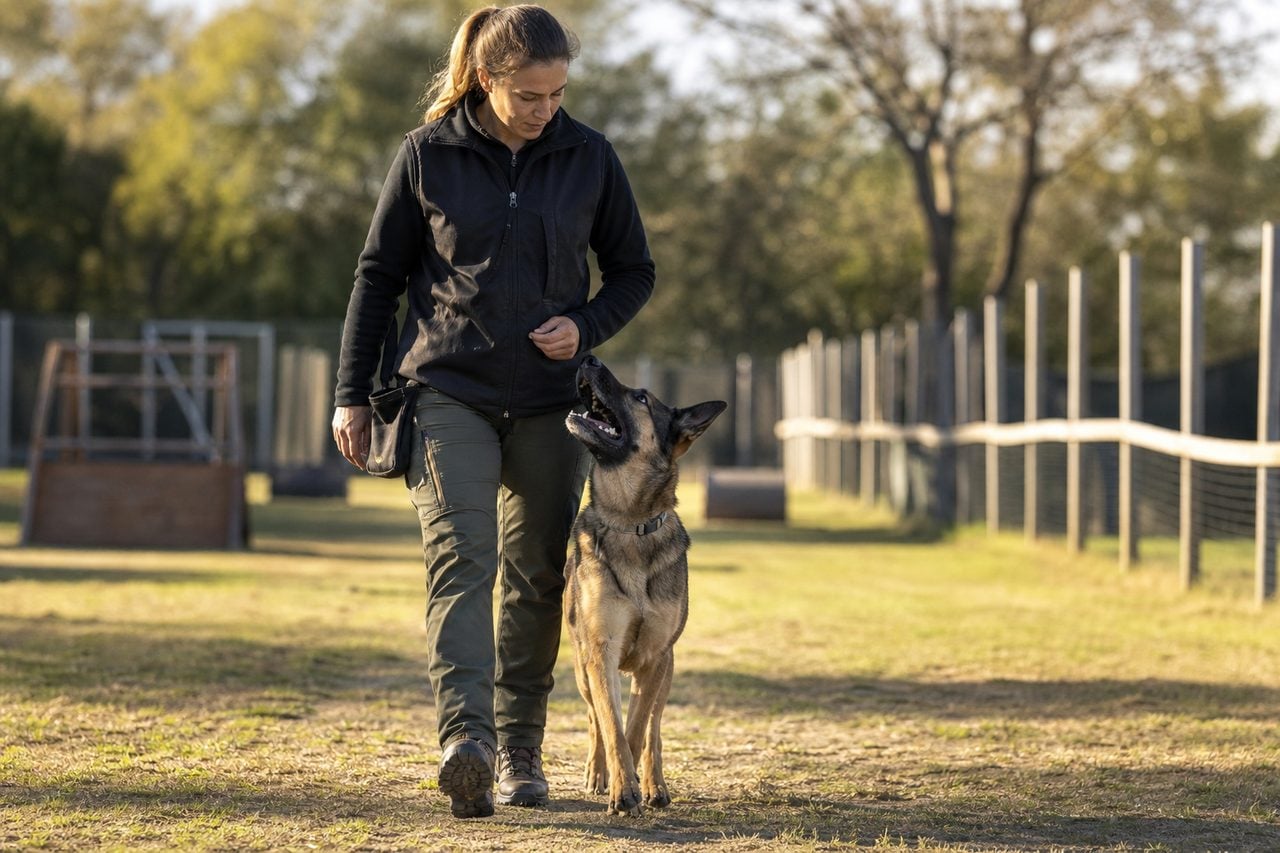
If you have come here looking for a dog boot camp in Charlottesville, the honest answer is that nobody in this metro sells one under that name. Not one of the twenty-six businesses in this directory publishes the words "boot camp" anywhere on its own website, booking page or price list. That is not a gap in supply. It is a difference in vocabulary, and the product you are looking for is here in quantity under a different label.
Eleven local businesses publish a residential training programme — the dog lives with the trainer for a fixed period and comes home with a curriculum installed. Locally it is called board-and-train, and the Board & Train page for this metro is where you should go next. This page explains what the term usually means, what it should and should not imply about how a dog is treated, and what to look at instead of the name.
What people usually mean by boot camp
"Boot camp" is a marketing term rather than a technical one, and it is used in two quite different ways. Most often it simply means residential training: the dog goes away, trains intensively, and comes back. That is board-and-train, and it is what almost everybody typing the phrase is actually looking for.
Occasionally it is used to signal something about method — fast, strict, correction-led, the dog straightened out. That connotation is where the term earns its bad reputation, and it is worth separating from the first meaning. Intensity of schedule and harshness of method are independent variables. A dog can train six times a day in a residential programme built entirely on food and play, and a dog can be handled harshly in a once-weekly private lesson. The word conflates them, which is one reason careful trainers avoid it.
The market here has quietly voted on this. The local residential programmes describe themselves as board-and-train, adult board-and-train, puppy board-and-train, weekday board-and-train, residential behaviour modification — concrete descriptions of duration and content. That is a better vocabulary and it makes comparison possible.
The residential market that does exist here
Eleven local businesses publish residential programmes, and they are spread across the metro rather than concentrated in the city — northern Albemarle, Greene County, Fluvanna, Orange County and Nelson County all have them, because residential training needs land and this metro has land fifteen minutes from its centre.
Published durations run from a single week to eight. Published prices run from $750 per week for a weekday programme to $6,050 for an eight-week behaviour-modification programme, with the common two-to-four week band published between $1,500 and $4,400. Puppy-specific residential programmes are published at $1,950 for ten days and $2,050 for two weeks. The structures vary meaningfully: some programmes run from a purpose-built facility, at least one runs from the trainer’s own home on the argument that family dogs should learn in family environments, and one runs a weekday model with a lesson and homework every Friday.
That is a real market with real choice, and it is far more useful to you than the label you searched for.
Geography is doing most of the work in that spread. A residential programme needs somewhere for a dog to sleep, somewhere for it to work off lead safely, and enough separation from neighbours that a barking dog at six in the morning is not an incident. In a dense city that is expensive; in northern Albemarle, Greene, Fluvanna, Orange and Nelson counties it is ordinary. That is why the residential half of this metro’s training market sits outside the city while the class and consultation half sits inside it, and it is why a Charlottesville household looking for intensive training is almost always going to be driving out rather than in.
What to ask instead of asking for a boot camp
Four questions get you further than the term ever will.
How long, and why that long? Local operators match duration to problem and will tell you so: two weeks for foundation obedience, three to four for obedience plus behavioural work, six to eight for serious cases. A programme that offers the same duration for every dog has not assessed yours.
What happens when my dog gets something wrong? This is the question the word "boot camp" is really asking, so ask it directly. The answers in this metro range from purely food-and-play-based to balanced programmes that publish the use of prong and electronic collars. Both camps exist locally and both publish their approach; you are entitled to a specific answer rather than a philosophy.
What is the handover? Local programmes publish three to four hours of owner lessons included, go-home lessons plus follow-ups, weekly lessons, and lifetime support. Without one of those you are buying a dog that listens to somebody else.
What will you not take on? One local operator publishes a list of things it does not train. That is a mark of competence, not a limitation.
When intensity is genuinely the right answer
There are dogs for which a residential programme is not a luxury but the only realistic route, and it is worth being clear about them rather than treating intensity as inherently suspect.
Dogs whose problem needs more repetitions than a weekly hour can deliver — serious reactivity, long-practised aggression, severe separation distress — benefit from daily, structured, professional handling in a way that a class cannot replicate. One local operator publishes a six-week programme for exactly that population and an eight-week programme for the hardest cases. Households in genuine crisis, where the dog’s behaviour has become a safety question, need something to change faster than a six-week course can change it. And rural households forty minutes from the nearest facility, for whom a weekly commitment is unrealistic, often find a single residential block is the only thing they can actually complete.
None of those arguments is an argument for harshness. They are arguments for concentration of time, which is what residential training sells.
The bad version, and how to spot it
The reason the term makes people uneasy is that there is a bad version of residential training, and it has recognisable tells.
No handover, or a token one. A refusal to say what tools are used, or a vague answer about "whatever the dog needs" that never becomes specific. A guarantee of a result in a fixed time regardless of the dog. No assessment before the programme — every local operator here publishes an evaluation or consultation step, two of them priced at $200 and $50. No answer to the question of where the dog sleeps and how many dogs are there. And a refusal to let you see the premises at all, at any point, before or after.
Set against that, the local market looks reasonable: the residential operators in this directory publish durations, prices, inclusions, evaluation steps and handover structures on their own websites. That level of disclosure is the thing to demand, and it is available here.
If you want the term because you want speed
A fair number of people search for a boot camp because they want the problem solved quickly, which is an entirely reasonable thing to want. Two honest observations about speed in this market.
First, residential training genuinely is faster in wall-clock terms, because it compresses months of weekly sessions into weeks of daily ones. The local published durations reflect that: things that would take a six-week course plus homework are done in a two-week residential block.
Second, it is not faster in total. The handover, the homework and the maintenance are the same work, just moved. The local programmes that publish lifetime support, monthly refresher sessions and pack walks are not upselling — they are telling you that the programme is the beginning of the process rather than the end of it. An owner who books a residential programme expecting to receive a finished dog and do nothing afterwards will get the same disappointment from the best programme in this metro as from the worst.
There is one more thing worth saying about speed, because it is the part that most often disappoints. The published local durations describe how long the dog is with the trainer, not how long until the household is comfortable. Every residential operator in this metro that publishes a handover also publishes something that follows it — a follow-up lesson, monthly refreshers, tune-up boarding that includes refresher training, pack walks, lifetime support. Those exist because the four weeks are the intensive phase of a longer process, and reading them as optional extras is the commonest way an expensive programme ends up looking like a waste of money.
Where to go from here
For the product you are actually looking for, the local page is Board & Train in Charlottesville — eleven businesses, published durations from one to eight weeks and published prices from $750 to $6,050, spread across the city, northern Albemarle, Greene, Fluvanna, Orange and Nelson counties.
If what you want is specifically intensive behaviour rehabilitation, the aggressive dog training and separation anxiety pages cover the local providers who publish that work. If you want fast results without sending the dog away, the in-home training page covers the fifteen local businesses that will come to you.
And if you want the term itself — a programme marketed as a dog boot camp — the nearest Virginia metro in this directory with businesses publishing it is Hampton Roads, about a hundred and thirty miles east. That is a long way to drive past eleven local residential programmes doing the same job, and we would not recommend it, but it is the honest answer to the question as asked.
Reviewed Dog Boot Camp Trainers in Charlottesville
These reviewed Charlottesville-area trainers from our directory handle dog boot camp. Each links to a full profile with specialties, certified credentials, reviews, and contact info:
See all Charlottesville dog boot camp trainers →
Frequently Asked Questions
Is there a dog boot camp in Charlottesville?
Not under that name. No business in this metro publishes the words "boot camp" on its own website or price list. Eleven local businesses publish residential training programmes under the name board-and-train, which is the same product: the dog lives with the trainer for a fixed period and comes home with a curriculum installed. See the Board & Train page for this metro.
Is a boot camp harsher than board-and-train?
The name implies it, but the name is marketing rather than method. Intensity of schedule and harshness of handling are independent — a residential programme can be built entirely on food and play, and a weekly private lesson can be handled harshly. Ask the specific question instead: what exactly happens when my dog gets something wrong? Local operators publish answers ranging from force-free to balanced programmes that name prong and electronic collars.
How long does an intensive residential programme take?
Local published durations run one week to eight. The pattern here is two weeks for foundation obedience, three to four weeks for obedience plus behavioural work, and six to eight weeks for serious behaviour cases such as long-practised aggression or severe separation anxiety. One local operator runs a weekday model that continues for as many weeks as the goals require.
What does it cost?
Published local residential prices run from $750 per week for a weekday programme through $1,500 to $3,050 for two weeks, $3,000 to $3,200 for three weeks and $4,400 for four weeks, up to $5,050 and $6,050 for six- and eight-week behaviour-modification programmes. Puppy residential programmes are published at $1,950 for ten days and $2,050 for two weeks.
Will my dog be miserable?
In a well-run programme, no — but that is a question to settle before booking rather than to hope about. The disclosure to demand is concrete: where the dog sleeps, how many dogs are on site, what the daily schedule is, what tools are used, and whether you can see the premises. Every residential operator in this directory publishes an evaluation or consultation step before the programme begins, and that meeting is where you should ask all of it.
What if I do not want to send my dog away at all?
That is a common and reasonable position, and this metro serves it well. Fifteen local businesses publish in-home or one-to-one training, several of them mobile-only, and the local class market runs six-session courses at $175 to $265 with published syllabuses. One local practice explicitly publishes private lessons, group lessons and online courses as the alternative path for owners who would rather train the dog themselves.
Related: read our complete dog boot camp guide or the full Charlottesville dog training overview.
Ready to find the right dog boot camp pro in Charlottesville?