
Dog Boot Camp in Crystal Lake, IL
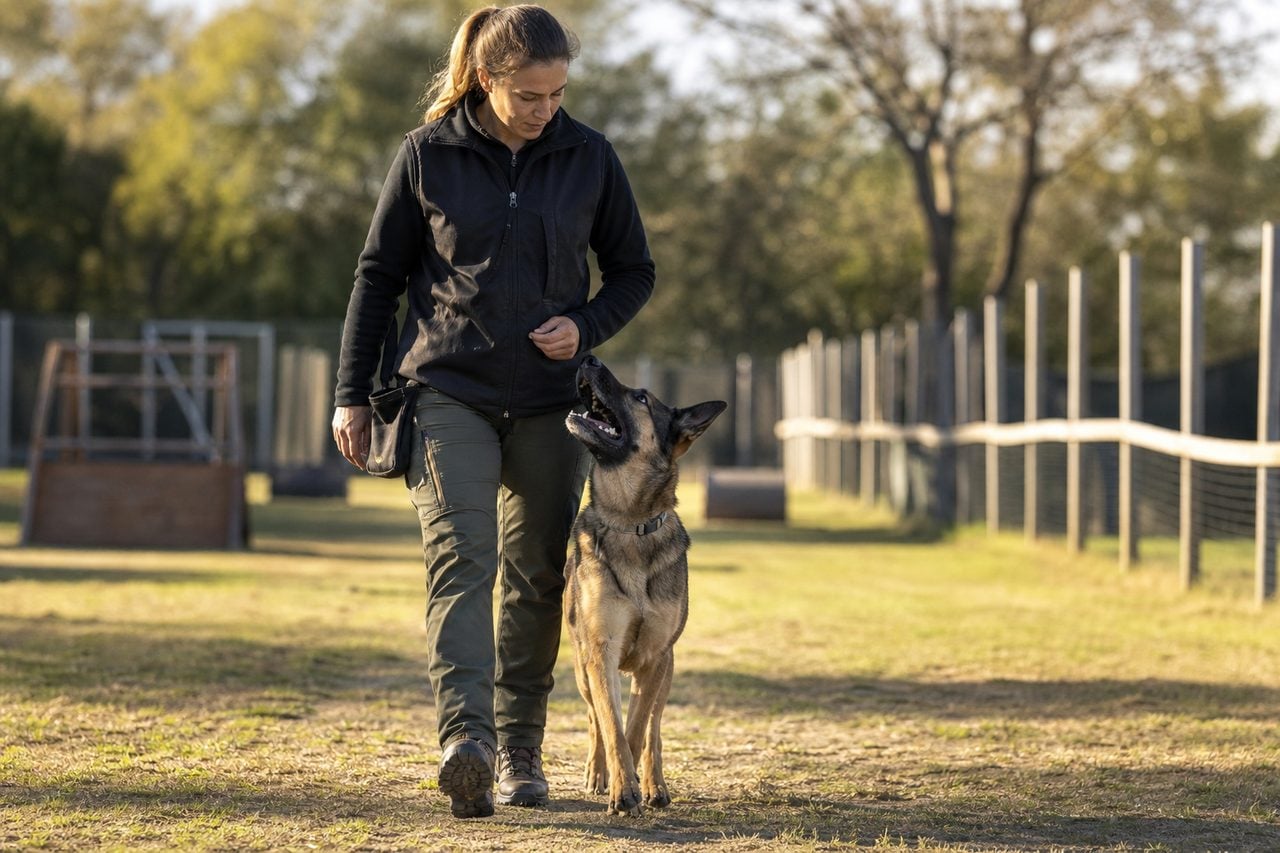
‘Dog boot camp’ is a search term rather than a training category, and the gap between what people mean when they type it and what the industry sells under that name is where most of the disappointment in this part of the market comes from. Owners searching for a boot camp near Crystal Lake are almost always in the same situation: something has escalated, patience has run out, and they want an intensive intervention that returns a manageable dog. That is a legitimate need. The question is whether the thing being sold matches it.
- Start with what actually happened, not what you want fixed
- Claims a good local program will make, and claims it will not
- Welfare questions for a dog you will not see for three weeks
- The specific risk of buying intensity for an anxious dog
- Cheaper things to try first, and when to stop trying them
- What handover should look like when the intensive ends
- Choosing between local programs
- Reviewed trainers
- FAQ
In practice, a McHenry County boot camp is a residential training program — the same product covered on our board and train page — marketed toward urgency. Some are excellent. The purpose of this page is not to describe the format again but to do the thing the format most needs and least often gets: apply pressure to the sales pitch. What claims are reasonable, what claims are not, what welfare questions to ask about a dog you cannot see for three weeks, and how to tell the difference from the outside.
If you have arrived here calm and researching, read the board and train page instead. If you have arrived here at the end of your tether, this page is written for you, and the first section is the important one.
Start with what actually happened, not what you want fixed
Urgency compresses diagnosis, and compressed diagnosis is how the wrong program gets bought. Before contacting anyone, write down what actually occurred: what the dog did, to whom, in what context, how many times, and what changed in the weeks beforehand. That document is worth more than any amount of browsing.
The reason is that these situations sort into categories with genuinely different answers. A dog that has become uncontrollable on the lead and destructive at home is usually an under-exercised, under-trained adolescent, and an intensive residency is a reasonable and effective response. A dog that has bitten someone is a different case entirely and needs assessment before enrollment, not after. A dog that has suddenly changed behavior over weeks — new irritability, new fear, new guarding, a previously reliable dog becoming unreliable — needs a veterinary examination first, because pain and illness produce behavior change and no training program will resolve a medical cause.
That last category catches more dogs than people expect, and it is the one urgency most reliably skips. A vet visit costs a fraction of a residency and rules out the thing that would otherwise waste it.
Once you know which category you are in, the conversation with a trainer becomes short and useful rather than long and hopeful.
Claims a good local program will make, and claims it will not
Reasonable claims sound boring. A credible program will tell you it can build reliable obedience, install structure, improve impulse control, teach a solid recall foundation, and change entrenched household habits — and that the durability of all of it depends on what you do afterwards. It will give you a timeline in weeks and it will describe what happens at handover before you ask.
Unreasonable claims sound exciting. Be sceptical of guarantees of behavior, of any promise that aggression will be eliminated, of very short timelines for off-leash reliability, and of language that implies the dog will come back a fundamentally different animal. Behavior is not a product with a warranty, and no honest trainer guarantees another organism’s future conduct. A guarantee of service — a promise to keep working with you until a defined standard is met — is a different and much more reasonable thing, and some local programs offer exactly that.
Be equally sceptical in the other direction. A program that will not tell you what tools it uses, or answers the question about corrections vaguely, is not being sensitive; it is avoiding a conversation you are entitled to have. Trainers in this county are generally direct about method, and the ones who are direct are easier to evaluate.
The best single signal is a trainer who tells you, unprompted, what they cannot do and who they would refer you to instead.
Welfare questions for a dog you will not see for three weeks
You are handing an animal to a stranger and losing all visibility. That deserves a specific set of questions, and asking them politely is entirely normal.
Where do the dogs sleep, and can I see it? How many dogs are in residence at one time, and how many people are handling them? McHenry County residencies range from two or three dogs on a private property to considerably more at a commercial facility, and the ratio determines how much individual attention your dog gets.
What does a day look like — how many training sessions, how long each, and what happens in the hours between? A dog in a crate for twenty-two hours with two twenty-minute sessions is being boarded, not trained, regardless of what the invoice says.
How is the space heated and cooled? This is not a trivial question here: winters are cold, summers are humid, and outdoor kennelling has real limits in both.
What updates will I receive and how often? Photo and video updates are now the norm in this market, and their absence is worth querying.
What is the vet arrangement, who authorizes treatment, and what happens if my dog is injured or becomes ill? Get the answer before you need it.
Finally: under what circumstances would you send my dog home early? A program with a clear answer has thought about welfare. One that cannot imagine the situation has not.
The specific risk of buying intensity for an anxious dog
The single most common mismatch in this corner of the market is an anxious or fearful dog enrolled in an intensive residency because the owner has run out of options. It is worth stating the problem plainly.
A frightened dog removed from its household, placed among unfamiliar dogs and handled by a stranger for three weeks is experiencing the exact conditions its behavior is a response to. Some cope. Some become quieter, which owners read as improvement and which is sometimes learned helplessness rather than confidence. And a dog that suppresses is a dog whose warning signals have been reduced without the underlying state changing — which is the least safe outcome available.
This is not an argument that no anxious dog should ever go to a residency. It is an argument that the decision needs a trainer who works with fear specifically, who will tell you what they will do differently for a fearful dog, and who will tell you if the answer is that a residency is the wrong tool.
Several McHenry County trainers list behavior, fear and anxiety work explicitly, and at least one local program states plainly which case types it will not accept. Both are signs of a professional. If you are told your anxious dog is a straightforward candidate with no caveats, that is the answer to be worried about.
Cheaper things to try first, and when to stop trying them
A residency is the most expensive intervention available locally, and there is a shorter list of things worth exhausting first than most owners realize.
Exercise and enrichment, honestly assessed. A large share of the ‘uncontrollable’ adolescent dogs in this county are physically under-worked, and McHenry County is unusually well supplied with places to fix that: the Prairie Trail, Moraine Hills State Park, Glacial Park, The Hollows, Veteran Acres. Two weeks of genuine daily exercise changes some dogs enough to change the diagnosis.
A veterinary check, as above. Non-negotiable if behavior changed rather than persisted.
One or two private in-home sessions. This is the highest-value diagnostic money you can spend: a trainer in your house, watching the actual behavior, will tell you within an hour whether you have a training problem, a management problem or a behavior problem, and a residency is only the answer to one of those.
Management changes. Baby gates, a different lead, a crate routine, feeding separately, closing a curtain so the dog cannot see the sidewalk. Unglamorous and frequently decisive.
The point at which to stop trying and book the residency is when you have done the diagnostic session, the trainer has told you the plan requires daily consistent handling, and you have honestly concluded that your household cannot deliver it. That is a legitimate reason and there is no shame in it.
What handover should look like when the intensive ends
The end of a boot camp is the beginning of your work, and how a program structures that moment is the clearest quality signal available to you.
A weak handover is a demonstration. The trainer shows you the dog performing beautifully, you are impressed, you take the dog home and within ten days it stops working. Nothing was transferred except your expectations.
A strong handover is a lesson in which you are the student. You hold the lead. You get corrected on your timing, your posture, your voice. You practice until the dog responds to you rather than to the person standing behind you. Everyone in the household who will handle the dog is present, because the dog will test each of them separately within a fortnight and the one who was not there is the one it will ignore.
It also includes written material: what the commands are, what the rules are, what the dog is and is not allowed to do, and what the maintenance schedule looks like. Ask for it.
And it includes a follow-up schedule with dates, not an offer to ‘reach out any time’. Ask specifically how many sessions are included, over what period, and what happens after that. Where a local program advertises long-term support for graduates, ask what that means concretely — it varies from a phone line to genuine ongoing sessions, and the difference is large.
Choosing between local programs
Once you have filtered for honesty, welfare and handover, the remaining choice in McHenry County is largely about environment and method, and both should be matched to your actual life.
Environment first. A dog that will live on acreage near Marengo, Bull Valley or Harvard is better served by a program with a field, because the training environment resembles the one it is going home to. A dog that will live in a Crystal Lake subdivision or on a Cary bluff street benefits more from a program that includes work in town, on sidewalks, around traffic and other dogs. Ask where the training actually happens and whether the dog leaves the property during the stay.
Method second, and ask it directly: what equipment will be used, what happens when the dog is wrong, and what will I be expected to keep using at home. The county contains explicitly positive-reinforcement programs and explicitly balanced ones, and you will be maintaining whatever was installed.
Then check the boring things: insurance, what happens if you need to cancel, deposit terms, and whether vaccination requirements match what your vet has actually given your dog.
Finally, sleep on it. Every strong program in this county will still have a place next week, and the decisions people regret in this category are the ones made on the day the dog did the thing.
Dog Boot Camp in Crystal Lake: Local Options & Nearest Specialists
Right now there are no listed Crystal Lake trainers focused specifically on dog boot camp. Many general Crystal Lake dog trainers can help you get started, and the nearest specialists for this focus are below.
Nearest dog boot camp specialists — Chicago
For complex cases, some families travel to the larger pool of specialists in the Chicago area for an assessment or a board-and-train stay. Top-reviewed options:
- Suburban K9 Dog Training — 5.0★ (592 reviews)
See all Chicago dog boot camp trainers →
Frequently Asked Questions
Is a dog boot camp different from board and train?
Not really — in this county they describe the same product, which is a residential training program where your dog lives with the trainer and is worked daily. ‘Boot camp’ is marketing language aimed at owners who want an urgent, intensive fix. The format is identical; what varies between providers is the length, the number of dogs in residence, the method used and how much follow-up is included. Judge on those, not on what the program is called.
Can a boot camp fix an aggressive dog?
A dog with a bite history needs a behavior assessment before it is enrolled anywhere, and a veterinary examination if the behavior is new or escalating. Some intensive programs accept aggression cases and some explicitly do not; a trainer who tells you a case is outside their scope is behaving professionally. Be very wary of anyone who guarantees that aggression will be eliminated. No honest trainer guarantees another animal’s future behavior.
My dog is anxious. Is an intensive program a good idea?
Proceed carefully. A fearful dog removed from home, housed with unfamiliar dogs and handled by strangers is being placed in the conditions its behavior responds to, and a dog that goes quiet under that pressure may be suppressing rather than improving. If you go this route, use a trainer who works with fear specifically, ask what they will do differently for an anxious dog, and take a recommendation against a residency seriously if you get one.
How do I check a program is looking after my dog?
Ask before you book: where the dogs sleep and whether you can see it, how many dogs are in residence versus how many handlers, what a full day looks like including the hours between sessions, how the space is heated and cooled, which vet they use and who authorizes treatment, and what updates you will get. Photo and video updates are standard in this market now. Also ask under what circumstances they would send a dog home early — a clear answer means they have thought about welfare.
What should I try before paying for an intensive program?
A veterinary check if the behavior is new or has changed, since pain and illness cause behavior change. An honest look at exercise and enrichment, which is the actual problem for a lot of adolescent dogs in this county. One or two private in-home sessions as a diagnostic — the highest-value money in this whole category, because a trainer in your house will tell you within an hour whether you have a training, management or behavior problem. And simple management changes. Book the residency when a trainer has told you the plan needs daily consistency you honestly cannot provide.
Related: read our complete dog boot camp guide or the full Crystal Lake dog training overview.
Ready to find the right dog boot camp pro in Crystal Lake?