
Dog Boot Camp in Detroit, MI
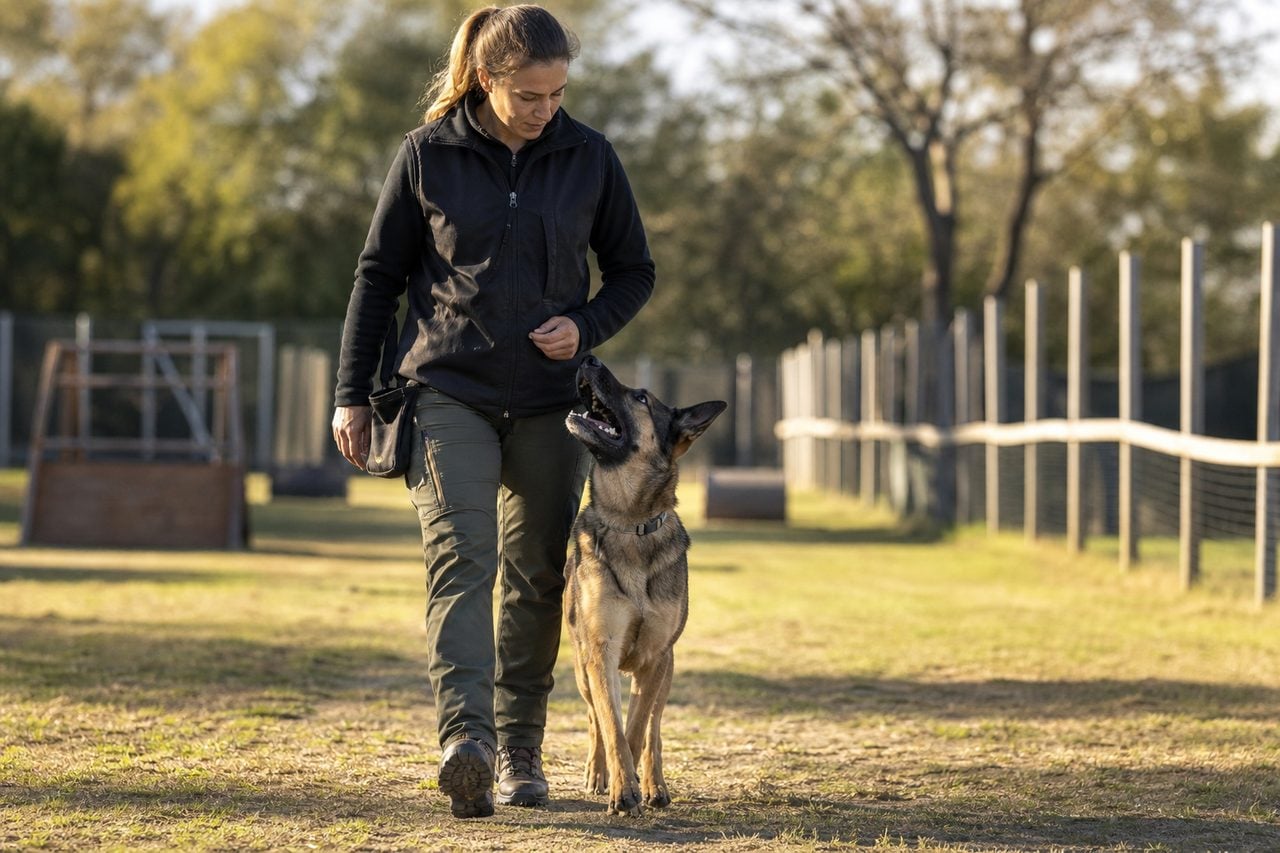
Dog boot camp — often called board-and-train — is one of the most intensive ways to work through stubborn behavior problems. Your dog lives with a trainer for a set stretch of time, usually one to several weeks, and comes home with a foundation of skills already in place. For busy metro Detroit households juggling work, kids, and a long commute across the tri-county area, the appeal is obvious: hand off the heavy lifting and get a calmer dog back.
- What Dog Boot Camp Actually Means
- When Boot Camp Is Worth It — And When It Isn't
- How to Vet a Board-and-Train Program in Metro Detroit
- What a Typical Program Looks Like Day to Day
- Making the Results Last After Homecoming
- Alternatives Worth Considering First
- Preparing Your Dog and Household for Drop-Off
- Reviewed trainers
- FAQ
But boot camp is not a magic reset button, and it is not right for every dog or every problem. The results depend as much on the owner’s follow-through and the trainer’s quality as on the dog, and the format carries a higher cost than most alternatives — so it pays to go in informed rather than sold. This guide explains what board-and-train actually involves, when it makes sense for Detroit-area owners, what to look for in a program, how to prepare, and how to make the results stick once your dog is back home in Royal Oak, Livonia, or wherever across the metro you happen to be.
What Dog Boot Camp Actually Means
“Boot camp” is a marketing term, not a technical one. In practice it almost always refers to a board-and-train program: your dog stays at a trainer’s facility or home for a defined period while the trainer works on specific goals every day. The dog eats, sleeps, and trains in that environment, which lets the trainer build habits through consistent repetition that most owners struggle to match at home.
The length varies widely. A short program might run one to two weeks and target a single issue, such as leash manners or a reliable recall. Longer programs — three to six weeks or more — usually take on a fuller obedience package or deeper behavioral work like reactivity toward other dogs. The longer the stay, the more the trainer can layer skills and proof them in different situations.
Some programs are residential at a dedicated kennel-style facility. Others are in-home board-and-train, where your dog lives in the trainer’s house as part of the family. Neither is automatically better. A dog that will spend its life as a house pet often benefits from learning in a home setting, while a facility may offer more controlled distraction work. The right fit depends on your dog’s temperament and the specific problem you’re solving.
What all legitimate boot camps share is a plan. Before drop-off, a good trainer assesses your dog, defines measurable goals, and explains their methods. If a program can’t tell you clearly what your dog will be able to do at the end and how they’ll get there, that’s a red flag regardless of how the facility looks.
When Boot Camp Is Worth It — And When It Isn't
Boot camp earns its cost when the problem is significant, when time is genuinely scarce, and when the owner is committed to follow-through. If your dog pulls hard enough to hurt you on walks through Hines Park, bolts out the front door toward Woodward Avenue traffic, or has serious reactivity that makes daily life stressful, an intensive program can compress weeks of stop-and-start home training into a focused block.
It’s also a reasonable choice for owners who know themselves. Plenty of well-meaning people never quite find the consistency that training requires. If you’ve started and abandoned training a few times already, having a professional build the foundation — then teaching you to maintain it — can break the cycle.
Boot camp is a poor fit in a few situations. Very young puppies usually do better with owner-led socialization during their critical development window; shipping an eight-week-old off to camp means the owner misses formative bonding time. Dogs with fear-based aggression or complex anxiety may need a slower, relationship-driven approach rather than an intensive away-from-home stay, which can add stress. And if the household won’t do the homework afterward, the investment largely evaporates.
Be honest about your goals, too. Boot camp produces trained behaviors, not a personality transplant. A high-energy working breed will still need daily exercise and mental work when it comes home. If your real problem is that the dog needs a job and doesn’t have one, no program will fix that permanently — you will, through ongoing routine.
It’s also worth weighing cost against the alternative honestly. Boot camp is the priciest common format, so it makes the most sense when the problem is genuinely disrupting your life and cheaper approaches have already failed or clearly won’t fit your circumstances. If you’ve never actually tried structured training with professional guidance, a round of private lessons or a class may resolve the issue for far less. Reserve the intensive, premium option for the situations that truly warrant it, and you’ll get better value from it when you do commit.
How to Vet a Board-and-Train Program in Metro Detroit
The single most important step is seeing where your dog will actually live. Ask to tour the facility or, for in-home programs, the home. Look at the kennels or crates, the play and rest areas, and general cleanliness. A trainer who won’t let you see the space before booking should be off your list. This is non-negotiable — your dog will spend the entire program there.
Ask specific questions about methods. What happens when the dog gets something right? What happens when it gets something wrong? You want a trainer who can describe their approach in plain language and who leans on rewarding correct behavior. Be cautious of anyone who promises guaranteed results in a fixed number of days or who is vague about what tools they use and why.
Ask about daily structure. How many training sessions per day? How much rest, play, and decompression time? A dog drilled all day with no downtime learns poorly and comes home stressed. You want balance. Also ask about the trainer-to-dog ratio — how many dogs are in the program at once, and who handles yours.
Finally, ask what happens at handoff. The best programs build in owner lessons — sometimes called go-home sessions or transfer training — where the trainer teaches you the commands, timing, and body language so the dog responds to you, not just to them. Without this, you get a dog that listens to a stranger and slowly reverts at home. Ask for references from local clients across the tri-county area and actually call them.
What a Typical Program Looks Like Day to Day
While every program differs, a well-run board-and-train follows a rough arc. The first day or two is decompression and assessment. Your dog settles into the new environment, and the trainer gauges its baseline — how it responds to handling, what it already knows, where the sticking points are. Serious training rarely starts at full intensity on day one because a stressed dog doesn’t learn well.
From there, the trainer builds foundation behaviors: attention on the handler, a solid sit and down, place or bed, loose-leash walking, and recall. These get introduced in a low-distraction setting first, then gradually challenged. A dog that will sit calmly indoors isn’t finished until it can hold that sit while another dog walks past — that layering of difficulty is where the real value lives.
Mid-program, a good trainer proofs behaviors in varied environments. That might mean training in a parking lot, near foot traffic, or around the controlled distractions of other dogs at the facility. The goal is a dog that responds not just in a quiet room but in the messy real world it’ll actually live in — a busy sidewalk in Ferndale or a crowded weekend at Belle Isle.
Throughout, expect updates. Photos, short videos, or written notes let you see progress and keep you emotionally connected during the separation. Regular communication is also a quality signal: a trainer proud of the work will want to show it. As the program winds down, the focus shifts to preparing you for the handoff and building the maintenance plan you’ll follow at home.
Making the Results Last After Homecoming
The most common way board-and-train fails is not in the program — it’s in the weeks after. A dog comes home with a beautiful set of skills, the owner relaxes, old habits creep back in, and within a month the dog is halfway to where it started. Preventing this is entirely within your control.
Start by honoring the transfer training. Whatever cues, hand signals, and timing the trainer taught you, use them exactly. Dogs are precise about context; if the trainer said “place” and you say “go to your bed,” the dog may not connect them at first. Consistency across the whole household matters too — everyone who lives with the dog needs to use the same words and the same rules. One family member who lets the dog on the couch undermines the whole system.
Build the new behaviors into daily life rather than treating training as a separate event. Ask for a sit before meals, a wait at doorways, loose-leash walking on every outing. These small, constant reps keep skills sharp far better than occasional formal sessions. Your walks around the neighborhood or through Stony Creek Metropark become the maintenance program.
Keep up the exercise and enrichment, especially for active breeds. A trained dog that’s under-exercised will still find outlets you don’t like. And don’t hesitate to schedule a follow-up or tune-up session with your trainer a few weeks in. Most reputable programs expect this and many include some post-program support. Catching drift early is far easier than re-training later.
Alternatives Worth Considering First
Boot camp is the most intensive and usually the most expensive training format, so it’s worth knowing what else exists before committing. For many Detroit-area owners, a less intensive path solves the problem at lower cost with the bonus of building the owner’s own skills along the way.
Group obedience classes are the traditional starting point and are widely available across the metro. They’re economical, socialize your dog around other dogs, and teach you to be the trainer — which pays off for the dog’s whole life. The tradeoff is that you do the daily work between classes, and a highly reactive dog may struggle in a group setting.
Private lessons, either at a trainer’s location or in your home, sit in the middle. You get customized attention for your dog’s specific issues and hands-on coaching, without the separation and higher cost of board-and-train. In-home private training is especially useful when the problem shows up in your house — door-dashing, resource guarding, or chaos when guests arrive — because you’re solving it in the exact environment where it happens.
Day training or day school is a hybrid worth knowing about: your dog goes to a trainer during the day and comes home each night, so it gets professional daily reps without a full residential stay. This can be a strong middle option for owners who want intensive work but don’t want to send their dog away entirely. Weigh these against boot camp honestly — sometimes the intensive option truly is the right call, but often a lighter-touch approach, applied consistently, gets you there just as well.
One useful exercise before you commit is to write down the specific behaviors you want changed and picture your dog three months out. If the goal is “knows a reliable recall and walks nicely,” a class or private lessons will likely get you there. If it’s “went from unmanageable to livable” and you genuinely can’t invest the daily time yourself right now, that’s where boot camp starts to look like the right tool rather than just the expensive one.
Preparing Your Dog and Household for Drop-Off
Once you’ve chosen a program, a bit of preparation makes the whole experience smoother for everyone. Start with your veterinarian. Most reputable board-and-train programs require your dog to be up to date on core vaccinations before a stay, since it’ll be around other dogs, and it’s simply good practice. Sorting this out early avoids a last-minute scramble the week before drop-off.
Talk honestly with the trainer about your dog’s quirks and history before the program begins. If your dog has food sensitivities, medical needs, a fear of thunderstorms, or a history of resource guarding, the trainer needs to know. Full disclosure isn’t a liability — it lets the trainer plan appropriately and keeps your dog safe and comfortable. Pack whatever the program asks for, which often includes your dog’s regular food to avoid stomach upset from a sudden diet change.
Prepare yourself for the separation, too. It’s normal to feel anxious dropping your dog off, and a good program eases this with regular updates. Agree in advance on how often you’ll hear from the trainer and through what channel. Resist the urge to check in constantly — trust the process you vetted — but know that a quality program welcomes reasonable communication and won’t leave you in the dark for weeks on end.
Finally, use the time your dog is away productively. Ask the trainer what you can be doing to prepare for the handoff — reading materials, videos, or even practicing your own timing and mechanics. The owners who hit the ground running when their dog comes home are the ones who treated the program as a shared project from the start, not a drop-off-and-forget service. A little groundwork here directly improves how well the results hold once your dog is back in the daily routine.
Reviewed Dog Boot Camp Trainers in Detroit
These reviewed Detroit-area trainers from our directory handle dog boot camp. Each links to a full profile with specialties, certified credentials, reviews, and contact info:
- From The Heart Dog Training — 5.0★ (82 reviews)
- Smart Dog Obedience — 5.0★ (54 reviews)
- My Sidekick Dog Training — 5.0★ (50 reviews)
- K9 AdvantEDGE Dog Training — 5.0★ (40 reviews)
- Connected Canine Academy — 5.0★ (16 reviews)
- Iron Clad K9 Training — 5.0★ (13 reviews)
- Tip Top K9 Sterling Heights Dog Training — 5.0★ (7 reviews)
- Sit Means Sit Dog Training Detroit — 4.9★ (688 reviews)
- Canine College — 4.8★ (1001 reviews)
- Tip Top K9 Troy — 4.8★ (54 reviews)
See all Detroit dog boot camp trainers →
Frequently Asked Questions
How long does dog boot camp usually last?
Most board-and-train programs run somewhere between one and six weeks. Shorter programs target a single issue like leash manners or recall, while longer ones cover a full obedience package or deeper behavioral work such as reactivity. The right length depends on your dog’s starting point and your goals — a good trainer will recommend a duration after assessing your dog rather than selling a one-size-fits-all package.
Will my dog forget everything once it comes home?
Not if you do the follow-through. The skills a dog learns in boot camp stick when the owner uses the same cues, keeps the household consistent, and builds the behaviors into daily routine. Regression happens when owners relax and let old habits return. That’s why the go-home transfer lessons — where the trainer teaches you how to maintain the training — are the most important part of any program.
Is board-and-train safe for my dog?
It can be very safe with a reputable trainer, which is why vetting matters so much. Tour the facility or home before booking, ask about daily rest and decompression time, and confirm the trainer-to-dog ratio. Look for balance between training and downtime, clear communication during the stay, and reward-based methods. A program that won’t show you where your dog will live or is vague about its methods is one to avoid.
Is boot camp right for a puppy?
Usually not for very young puppies. The early weeks are a critical socialization and bonding window that’s best handled by the owner at home, exposing the puppy to new people, places, and experiences. Sending a young puppy away means missing that formative time. Puppies are often better served by owner-led socialization plus a puppy class. Boot camp tends to make more sense for adolescent and adult dogs with established problems.
How is boot camp different from private lessons?
In boot camp your dog lives with the trainer and gets intensive daily reps for the whole program, then you learn to maintain it at handoff. Private lessons keep the dog at home while you do the daily training with a professional’s coaching. Boot camp is faster and more hands-off up front but costs more and requires strong follow-through; private lessons build your own skills and cost less but ask more of your time day to day.
What should I ask before choosing a Detroit-area board-and-train?
Ask to tour the space, how many training and rest sessions happen daily, the trainer-to-dog ratio, what methods and tools they use and why, whether go-home owner lessons are included, and what post-program support they offer. Request references from local clients and call them. Clear, specific answers and a willingness to show you the facility are strong signs; guarantees of results in a fixed number of days and vagueness about methods are warning signs.
Related: read our complete dog boot camp guide or the full Detroit dog training overview.
Ready to find the right dog boot camp pro in Detroit?